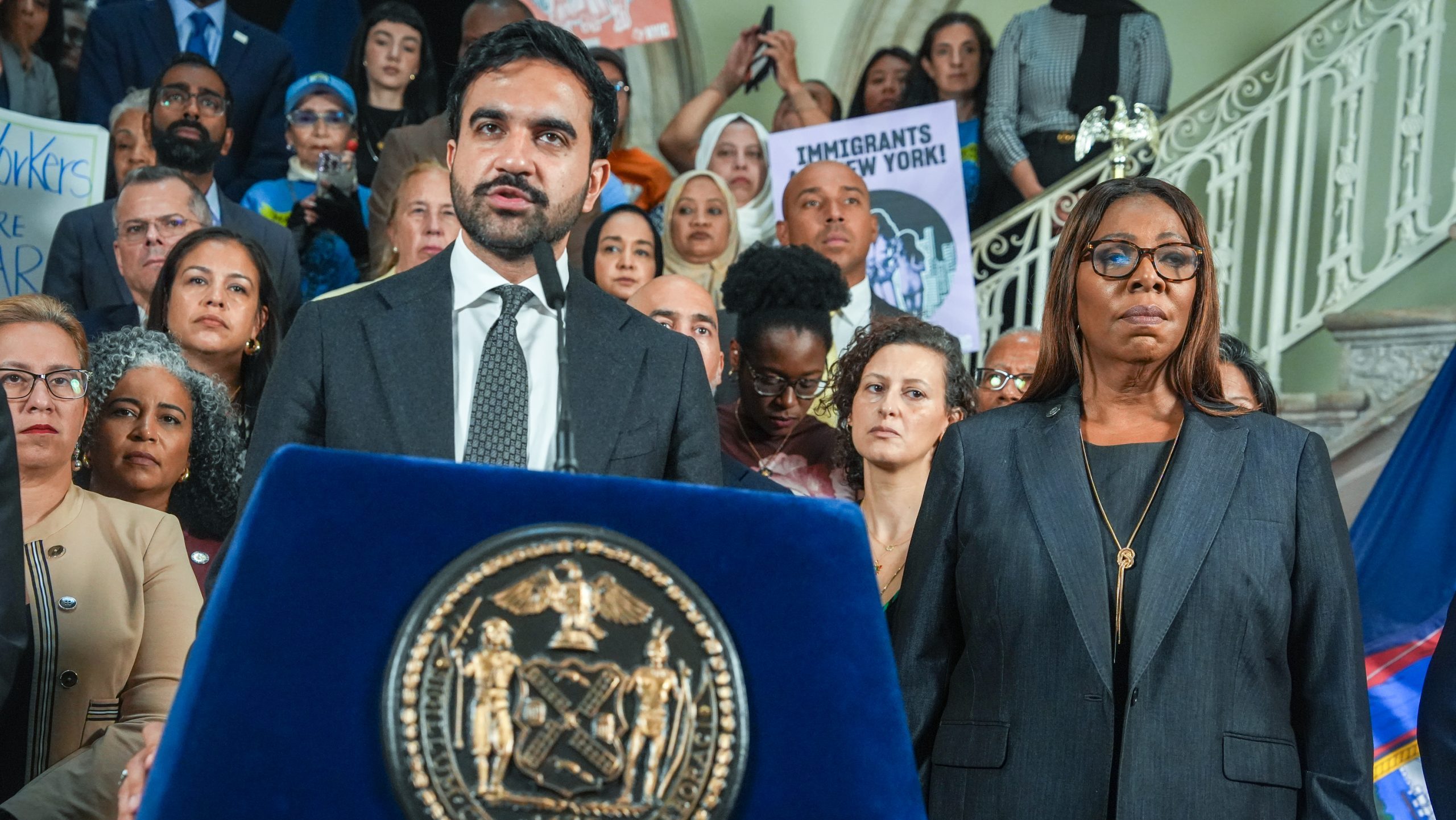


Late at night, inside Life of Hope nonprofit in Brooklyn, sewing machines whirred long after work shifts had ended.
Rain was forecast for the weekend’s annual Haitian Culture Day parade, but the Haitian immigrant volunteers were undeterred — continuing to cut fabric, paint decorations and stitch costumes together.
Some showed up to help after punching out of their day jobs — wrapping up long shifts working at supermarkets or as home health aids. In one corner, skirts bearing the image of the Statue of Liberty hung beside Haitian flags, waiting to be mounted on floats.

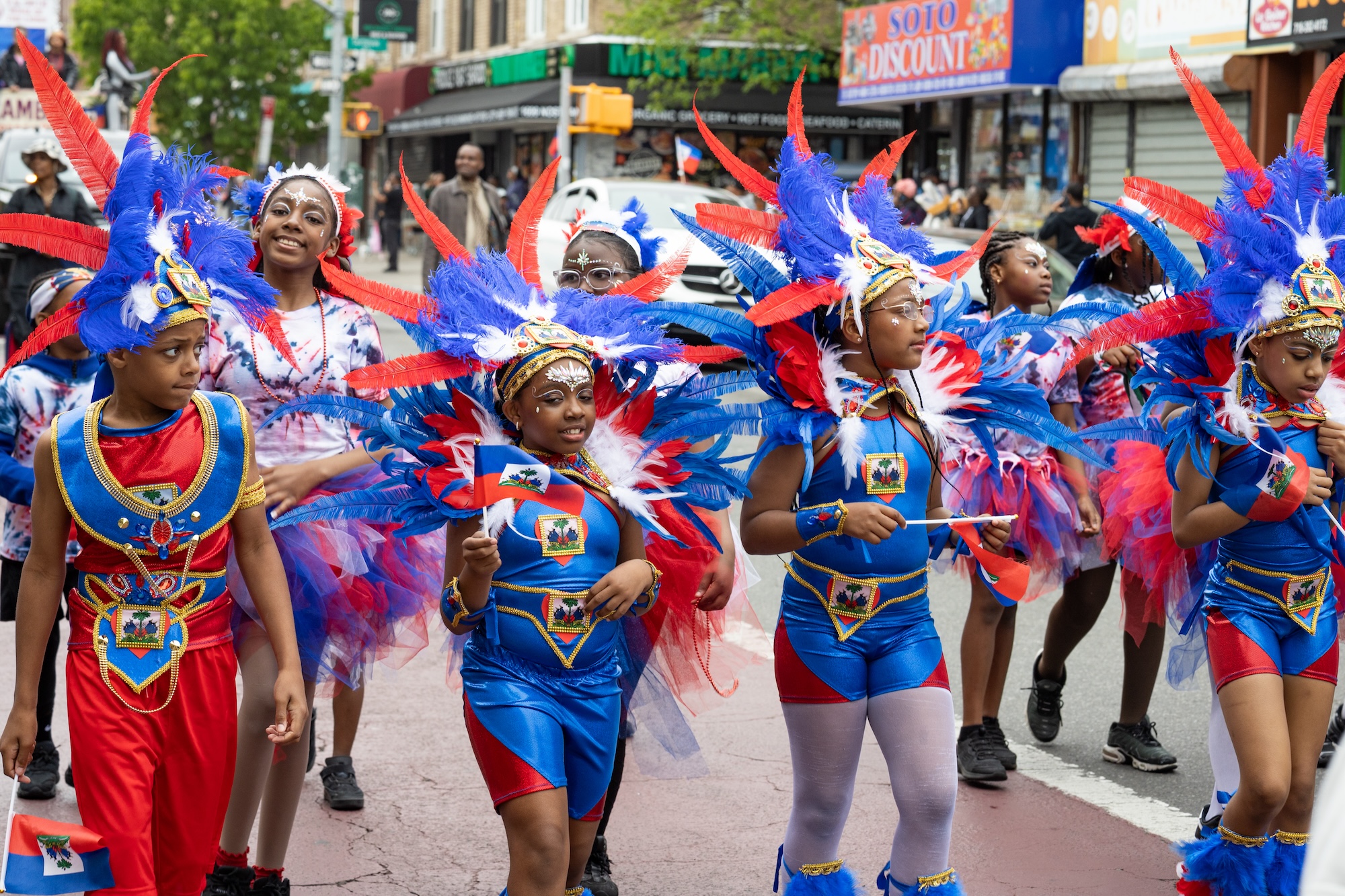
For those Haitian immigrants preparing Brooklyn’s 7th annual parade, this year’s celebration carried an urgent and resolute message — beyond music and dance.
The organizers chose the theme “We Belong” as Haitian immigrants across the United States face growing uncertainty over their legal future in this country.
More than 350,000 Haitians currently protected under Temporary Protected Status, known as TPS, remain in limbo after the Trump administration moved to terminate the country’s designation. TPS protects immigrants from deportation and allows them to work legally in the United States when conditions in their home countries are considered unsafe.
Federal courts temporarily blocked the administration’s effort to end the protections, and the Supreme Court is expected to weigh key questions related to the case in the coming weeks. Meanwhile, lawmakers introduced bipartisan legislation in Congress to extend TPS protections for Haitians for three years.
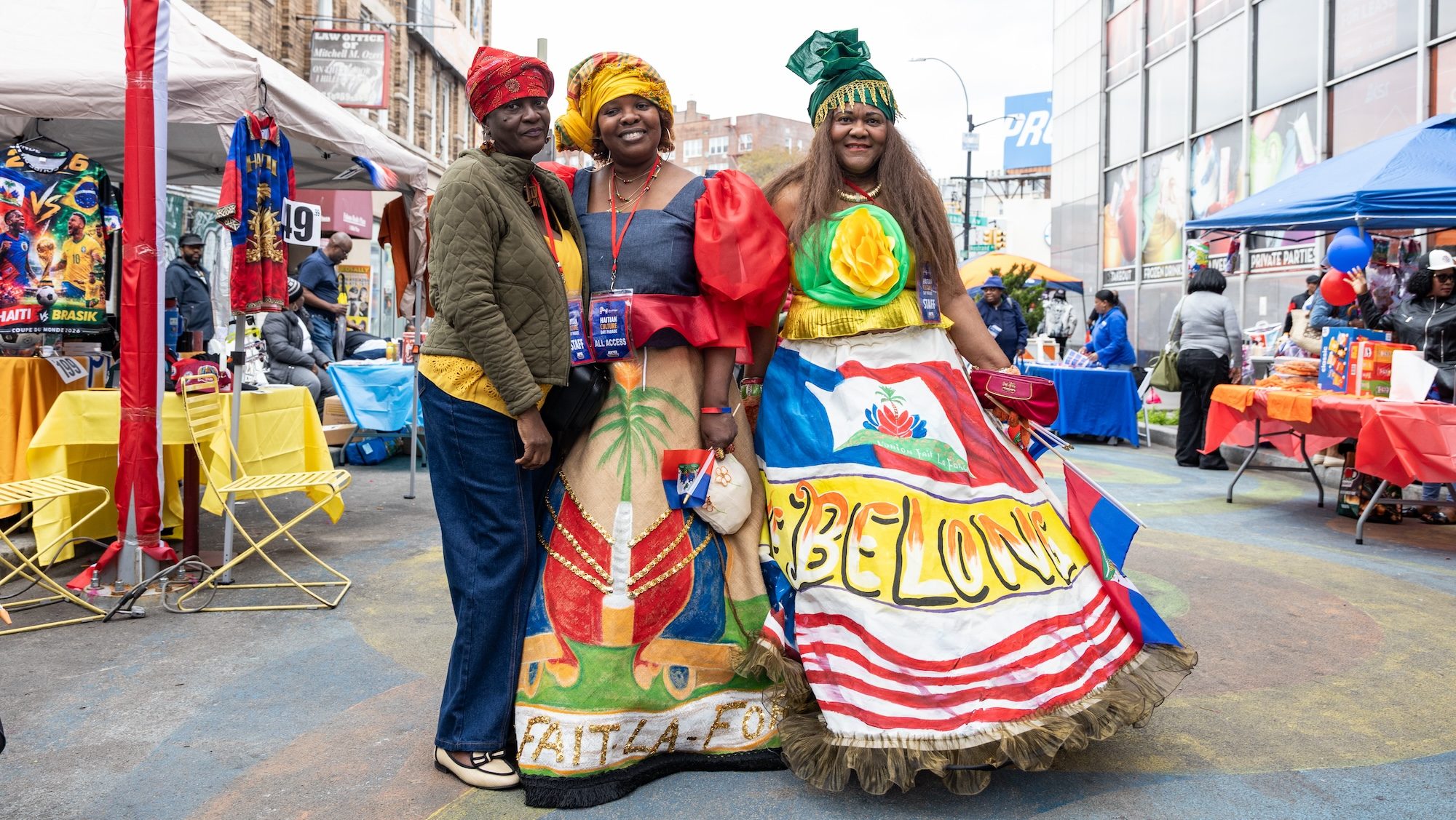
Amid all of this confusion and unease, this year’s Haitian Culture Day parade became an empowered celebration and a public assertion of belonging.
“We chose ‘We Belong’ to honor our vibrant community, especially to highlight the beauty of our heritage, the history, the contributions of our people, especially in New York City,” said Porez Luxama, president of Life of Hope (LOH), which provides vocational skills and other services to immigrants in Brooklyn.
‘It’s a work of love’
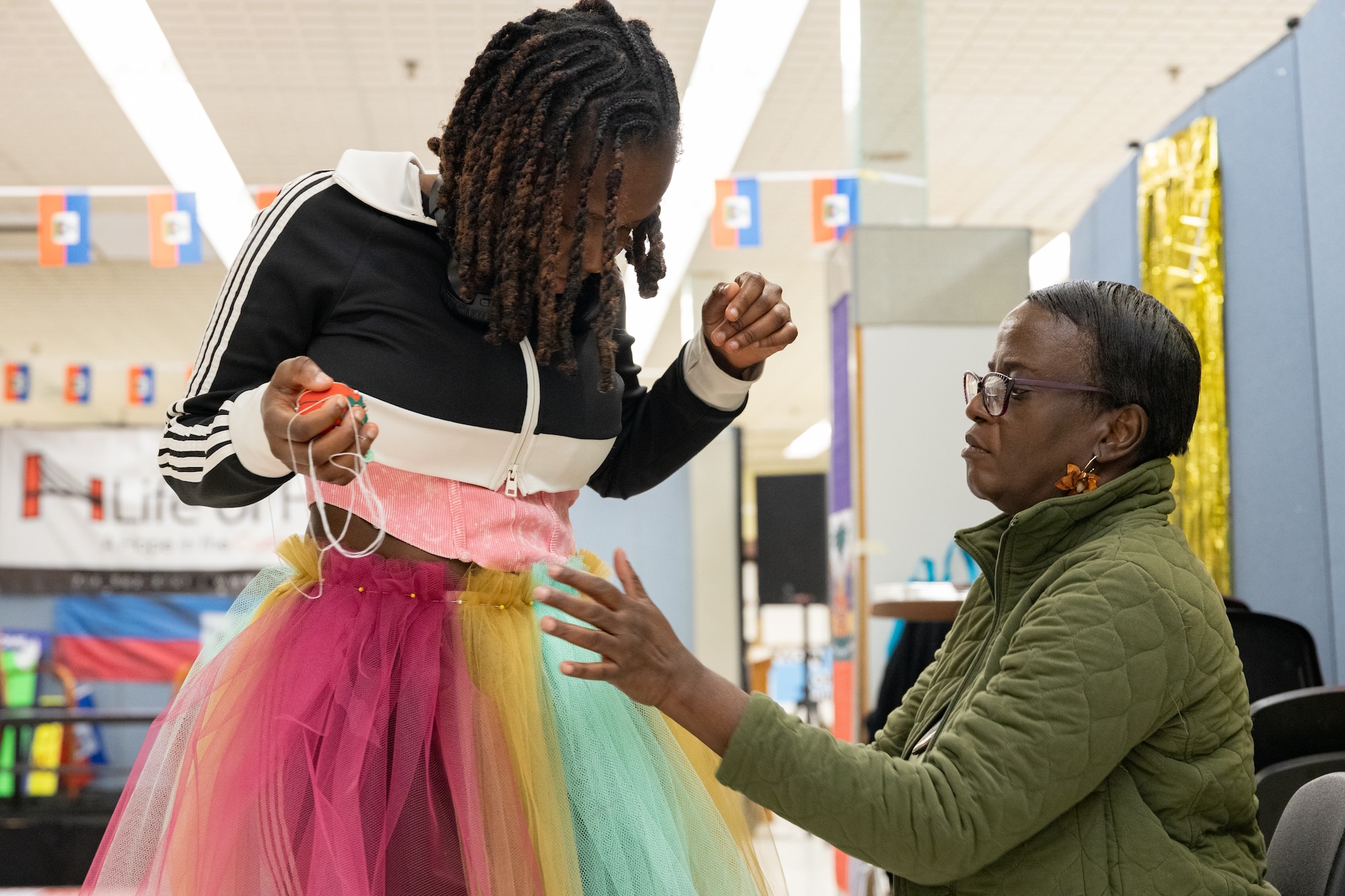
In the weeks leading up to the parade, Life of Hope was filled with industrious immigrant volunteers, whose professional lives in Haiti looked far different from many of the jobs they now hold in New York.
Among them was Michelle Bonhomme, a 60-year-old professional stylist who spent decades designing costumes in Haiti for carnival celebrations, schools and organizations. Before coming to New York six years ago — first on a visitor visa then she applied for TPS — she operated her own workshop with 45 sewing machines and dozens of employees. She said she left Haiti after receiving threats surrounding the country’s 2021 carnival celebrations, before the assassination of President Jovenel Moïse.
In New York, she now works as a home health aide three days a week. And for the last few weeks, she has spent the bulk of her free time preparing costumes for the parade.
“It’s a work of love,” she said in Haitian Creole. “That’s why I don’t feel tired when I’m doing this.”
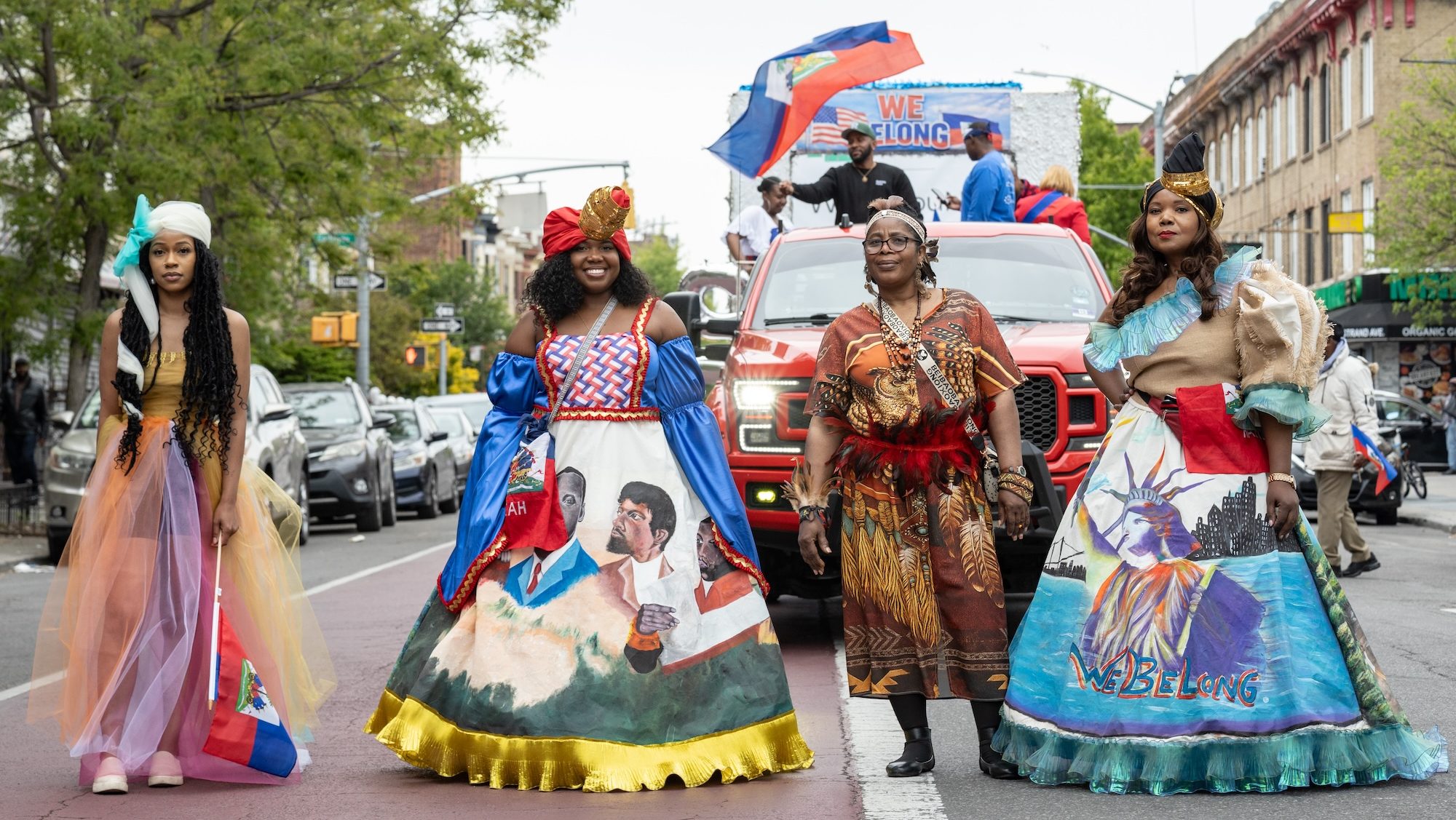
Bonhomme recruited one friend and met other artisans at LOH to help complete the work. Together, they designed large skirts and costumes emblazoned with symbols linking Haiti and the United States. On one large skirt, she stitched the Statue of Liberty on one side, and on the back, she designed the image of a Haitian peasant farmer.
“It’s a message to say that Haiti and the United States, we’re all here, we’re one people,” she said. “It’s a message related to the treatment of immigrants and the racism they are victims of.”
The anxiety surrounding immigration policy followed many volunteers into the workshop like a dark shadow. Since reports of immigration raids began circulating in the community, Bonhomme said she carries all her immigration documents with her whenever she walks the streets of New York.
“We are sending a message this year,” she said. “A message of union and fraternity.”
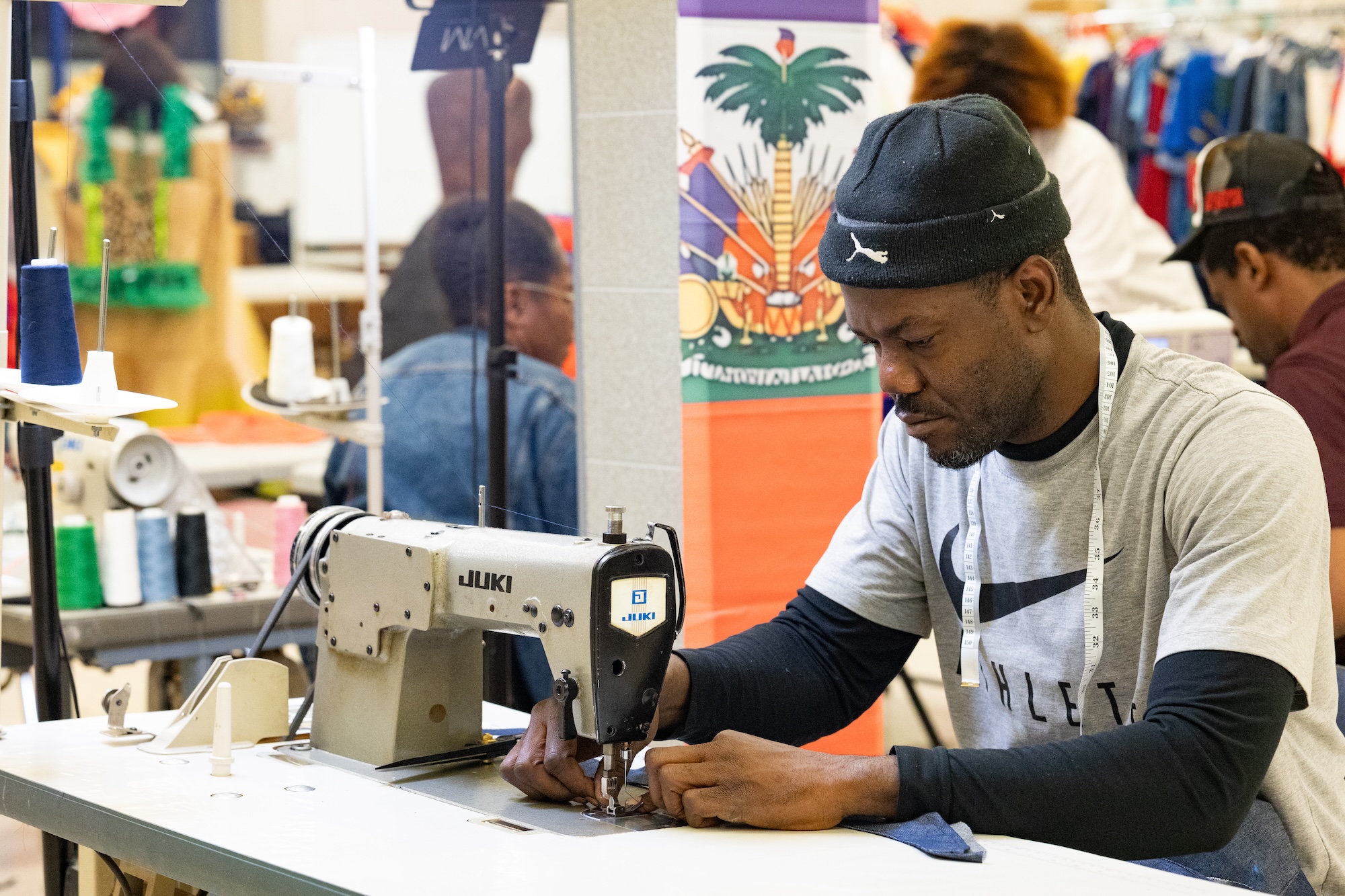
For Nitho Pierre, a 44-year-old tailor who arrived in New York in July 2024 under the CHNV parole program, uncertainty is a feeling he carries with him daily. Pierre left behind his wife and four children back in Haiti.
Since 1998, he has been working as a professional dress maker. When he came to New York, he hoped to eventually open his own sewing shop. But he first focused on finding stable work — these days he works at a kosher supermarket in Coney Island. After finishing up a shift, Pierre came to LOH to repair sewing machines, cut fabric and sew shirts for the parade.
“I keep on working hard while this current immigration situation deeply impacts me,” he told Documented.
Three days before the parade, Pierre remained seated behind a sewing machine late into the evening, finishing shirts for marchers.
“One can only feel proud of this parade,” he said in Haitian Creole.
‘It may be my first and last parade’
By Saturday morning, hundreds of marchers gathered despite the threat of rain. Seventeen floats lined Church Avenue near Nostrand Avenue as Haitian music echoed through the streets. People waved Haitian flags from sidewalks and car windows while marchers dressed in bright costumes.
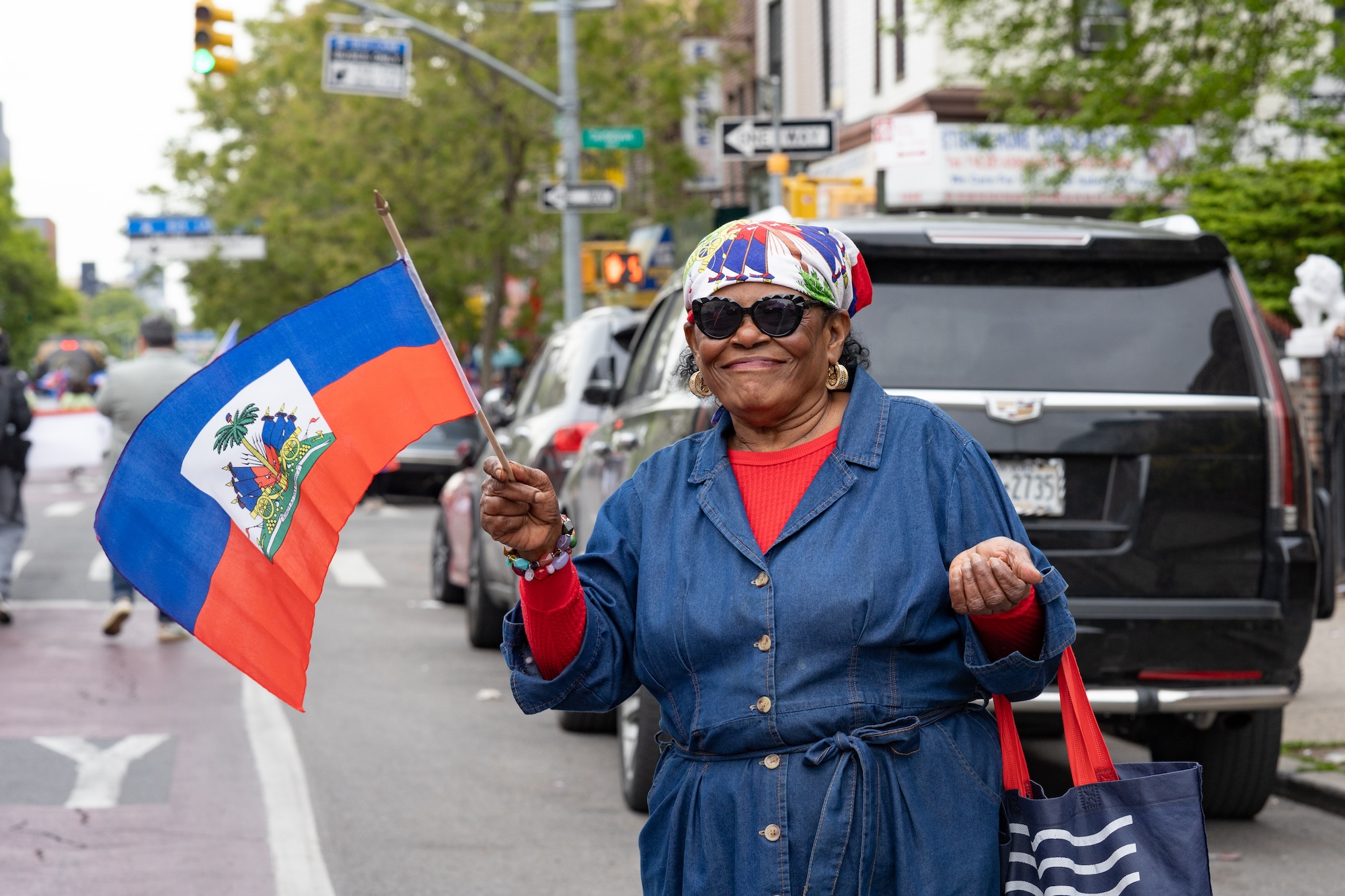
Elected officials including Congresswoman Yvette Clarke, Public Advocate Jumaane D. Williams and Lieutenant Governor candidate Adrienne Adams attended alongside community organizations and city agencies.
With an NYPD escort, the parade moved toward Flatbush Junction, where DJs and Haitian bands performed for crowds gathered at Hillel Plaza.
Throughout the afternoon, Bonhomme moved from float to float, adjusting costumes she had spent weeks helping create. She stopped often to take photographs with strangers wearing her designs.
For many participants, the celebration also carried a political purpose.
“It’s a movement sending a message to those who are making decisions to remind them that we’re here and this country was built by immigrants,” Luxama said. “During this tough time, we remain strong.”
A Supreme Court decision on Haiti’s TPS designation is expected by the end of June. If the Trump administration wins, protections for Haitians could be terminated. If the court upholds the lower court’s stay or if the Senate passes the pending bill, hundreds of thousands will be spared from deportation — at least for now.
In the wake of this uncertainty, Bonhomme does not know if she will be here next year.
“It may be the first and last parade,” she said, “but it was worth it.”