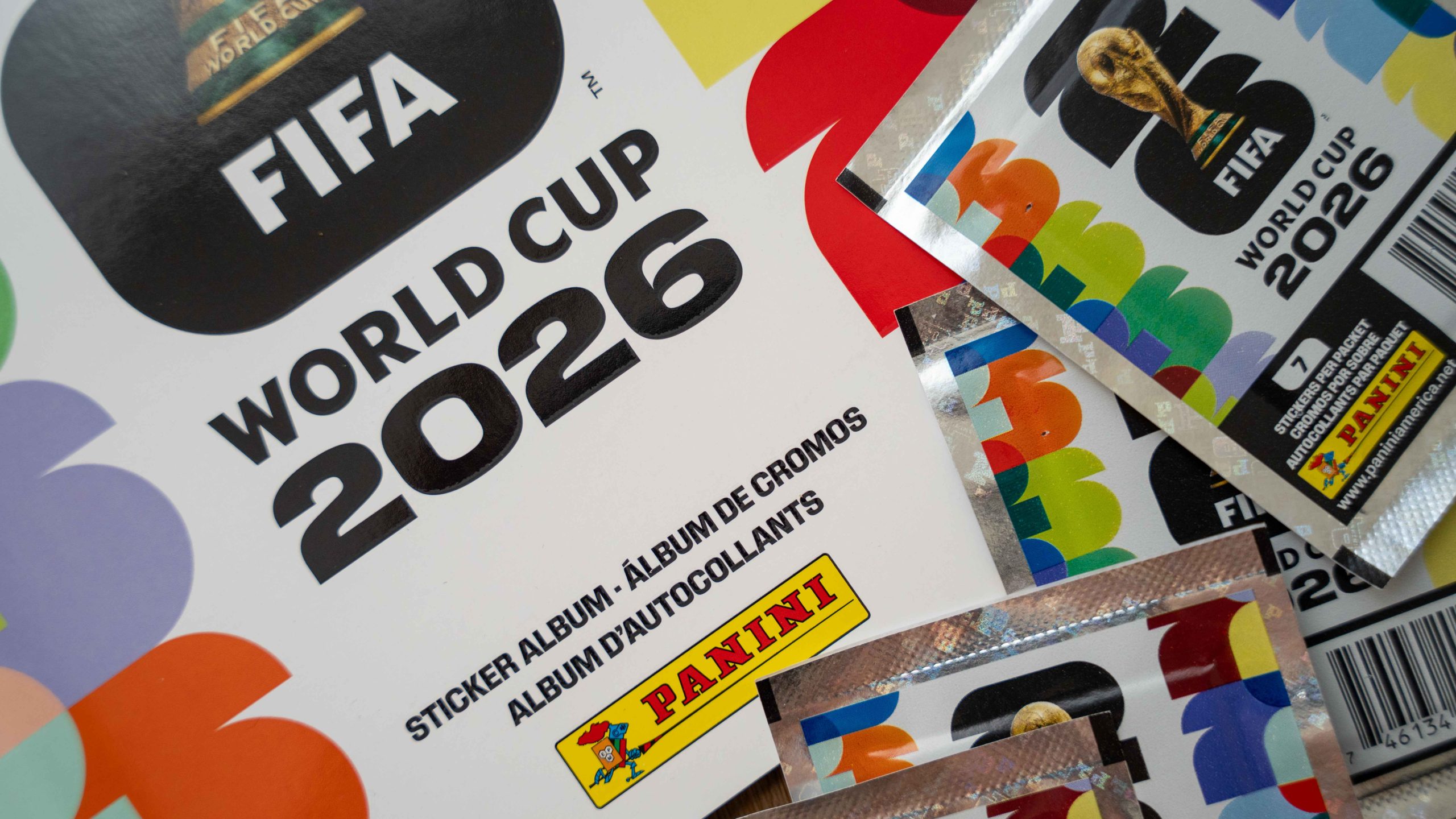


Santiago Ramírez remembers scouring the roads of Quetzaltenango, in Guatemala, when he was 8, looking for as many Coca-Cola caps as possible. It was 1990, the year the World Cup took place in Italy, and the soft-drink-company had a promotion where three recycled caps could be traded for a pack of stickers made by the Panini company featuring famous soccer stars.
This meant a chance at pulling stickers of the iconic Argentine player Diego Maradona or German top scorer Lothar Marrthäus, both legends who were at their peak, and displaying them in his Panini sticker album. “I was very happy with that because I did not have the ability to buy stickers to complete an album,” said Ramírez, who has lived in Queens since migrating to the United States in 1999. “I always feel very nostalgic because as a kid I always wanted to collect the album.”
Thirty-six years and eight World Cups later, Ramírez drove slowly along Roosevelt Avenue in Jackson Heights several weeks ago. This time, it was his 22-year-old son darting in and out of corner stores, searching for Panini stickers and albums ahead of the 2026 World Cup. Through the windshield of their car, he watched his son run along the sidewalk the same way he once ran through the roads of Quetzaltenango.

As soccer’s biggest tournament inches closer, aficionados across New York have embarked in their journey to collect stamps for Panini albums: books of 980 stickers, listing every player of the 40 participating teams in the World Cup. But for immigrant New Yorkers who spoke with Documented, tracking down in-demand stickers goes beyond the gratification of completing the albums. They say it is a cherished tradition from their childhood, one that they pass down to their children who share the same passion for the sport.
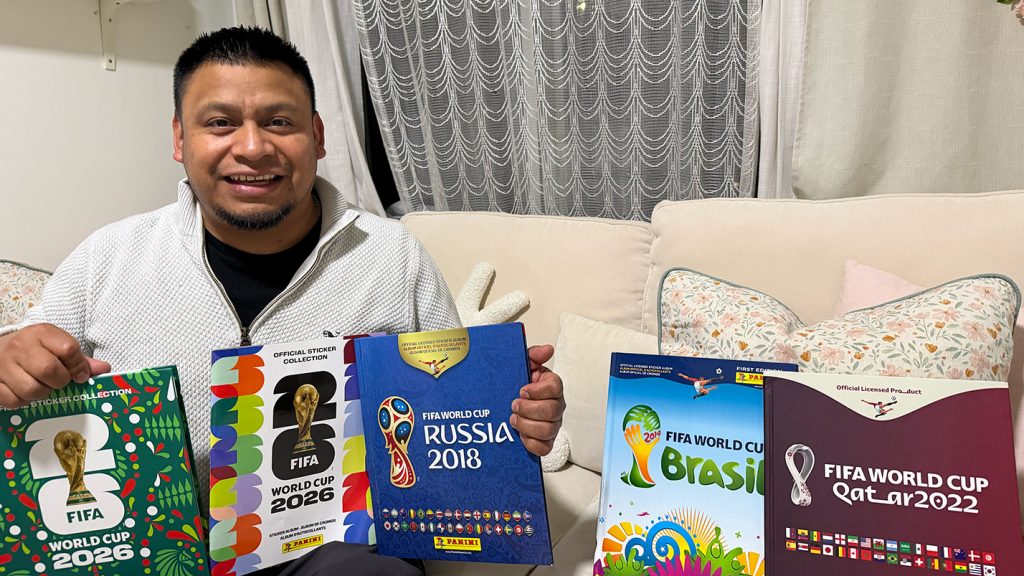
Albums and stickers are known to sell out, so Ramírez began searching for the album the first week of May. He saw online that people were already collecting the stamps and decided to invite his son for lunch at a Mexican taco stand in Roosevelt Avenue and then to go store-by-store looking for them. He said that after 20 blocks of searching, he finally found a store that had an album in stock. He purchased an album for $6 and a box of 100 sticker packets for $200 — which he said was a good deal.
Each packet has seven random stickers, with packets retailing for $2 each when purchasing a box of 25 or 50 online through the website of Panini, the Italian company printing and selling the stickers. Due to the demand, however, packets can sell for upwards of $5 on the streets and at pharmacies and bodegas.
“I bought the stickers but when we opened them, the stickers were from Latin America — they are Panini stickers but not the ones from the United States,” he said in Spanish, explaining that Panini has three different versions of stickers that are sold in Latin America, United States and Europe. “My son said: ‘no wonder it was cheaper.’”
Although at first he felt like he was scammed, he decided to add the challenge of also completing the Latin American version of the album. As for the U.S. stickers, for a week he looked for them in bodegas and pharmacies and was not able to find anything. “They did not have it anywhere.”
Mohammed, 55, a book vendor at 82nd Street and 37th Avenue in Jackson Heights who asked to only use his first name, said the demand for the stickers — especially among young Latino men — has been so high that his stock usually runs out within two days. “People are crazy about this,” he said, adding that he has been selling the Panini stickers and albums since May 4, when he received the first delivery.
“But a lot of people are crazy about it, boys, girls and even adults,” he remarked.
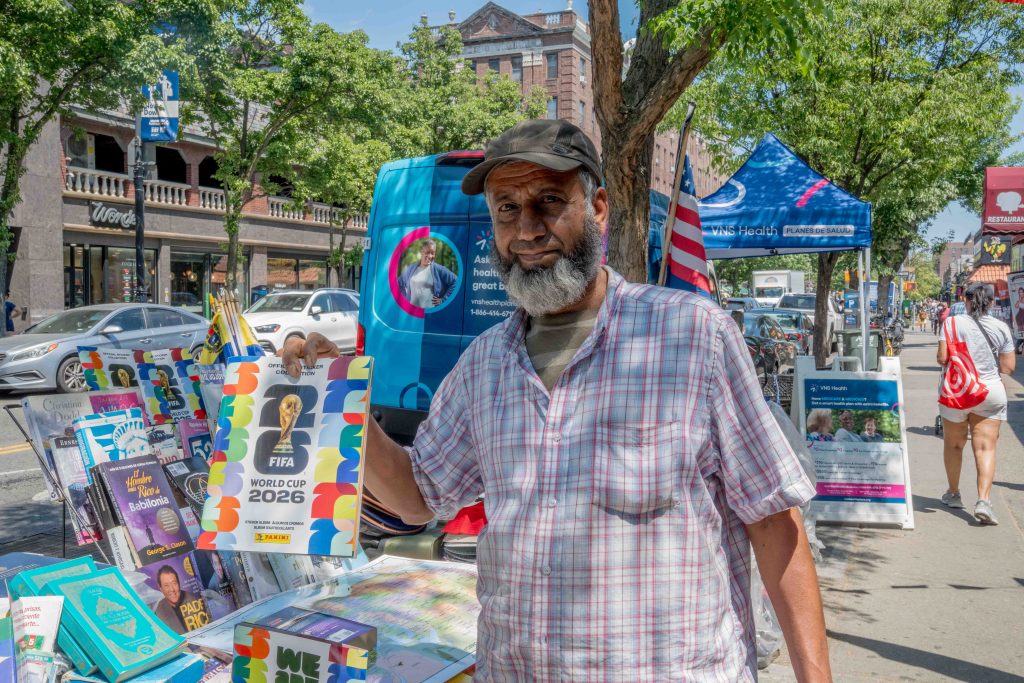
During the interview with Documented, a student asked Mohammed if he had any stickers in stock. “We will have it in a couple of hours. Two or three hours,” Mohammed replied. He emphasized that the avenue gets crowded with students from a nearby high school who come to the area looking to purchase packets or to exchange stickers with other aficionados.
The hobby of exchanging stickers does not only take place in person but also online in platforms like Facebook and WhatsApp, where groups like “Panini Trading Center USA” have emerged to connect thousands of collectors based on location.
“My phone is blowing up all the time,” said Hiten Rawal, 47, who is also completing the album this year, along with his 11-year-old-daughter and her au pair. “There are a lot of messages in Spanish about trading stickers, I cannot keep up with it at all. Obviously I don’t speak Spanish, so I need to kind of put it through a translator.”
Rawal remembers growing up in Park Royal, in North West London, playing soccer on the pitches and collecting stickers of the Premier League and the World Cup albums. “Those days my dad used to only be able to afford to buy me one or two packs,” he said, adding that he would take those stickers to his school and trade them with classmates.
“I still remember the excitement of opening up a package. … You don’t want to get a duplicate, but then it is exciting when you get a duplicate,” he said, adding that he would swap the duplicate stickers with his friends over lunch. “At our school it was almost like currency. In the playgrounds, during break time, before and after school, me and my friends would be trading stickers.”
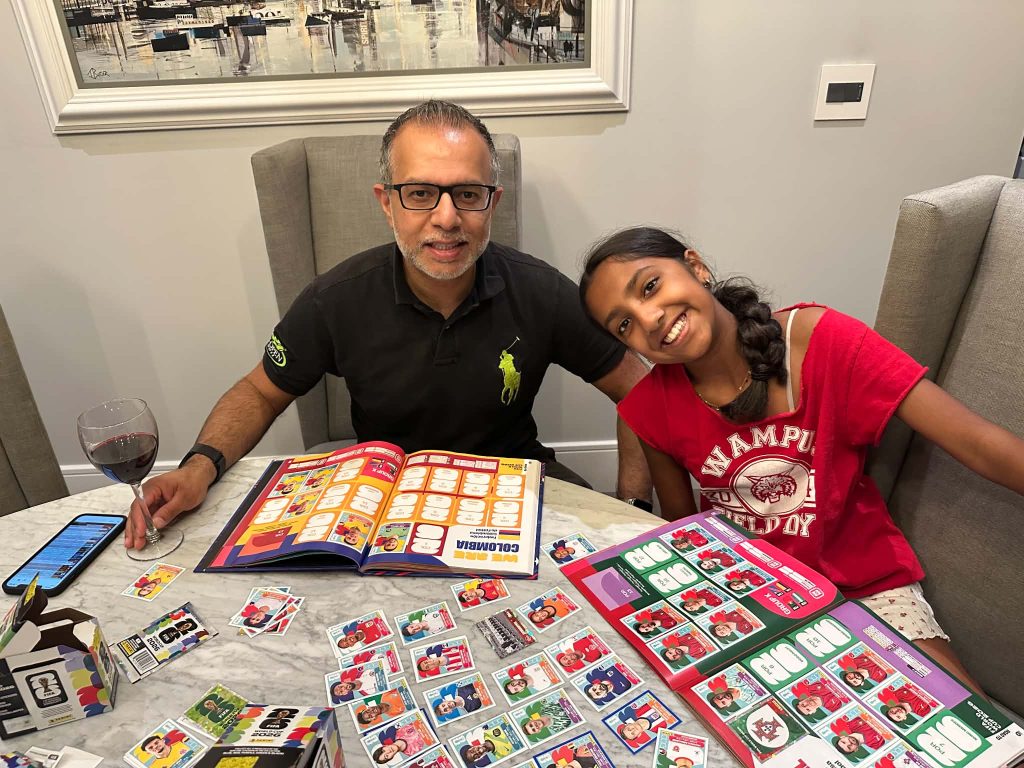
He said he found a box of stickers in Manhattan at Dave and Adams New York City, near where he works as a senior engineer for a tech firm. He purchased a soft cover Panini album, which he is completing with his soccer-playing daughter, and he also ordered a special hard cover version — a limited-edition print of only 2,026 copies.
“I got her some stickers and she has been opening up a few packs a day and sticking them,” Rawal, who lives in Westchester, said. “My other daughter is a bit jealous, so she now also wants to get involved as well.”
Ramírez’ daughter — who is 19 — has also gotten into the sticker game. As a florist, she turned a box of stickers into a bouquet of flowers. Many people started to place orders for bouquets after she posted a photo online.
Ramírez said it feels like he has already been enjoying the World Cup even before the games have started. He traveled to Jackson Heights to buy a box from a woman at retail price; he visited the FIFA Store in Hudson Yards; he purchased jerseys of each Latin American country participating in the tournament; and he purchased two tickets for the Senegal and France game and plans to go with a family member who is traveling from Guatemala.
“It only comes every four years. We want to enjoy this World Cup as much as possible, because everything is on God’s time,” he said.
A highlight for him was seeing his son running on Roosevelt Avenue saying, “Dad, they don’t have it!” At one point, his son told him that they should stop looking for stickers because they had already placed an order online for stickers that would arrive on July 1.
“I told him, ‘I know, but this is exciting. The day you have your kids, you will tell this story about how their grandpa went on Roosevelt looking for stamps.’”