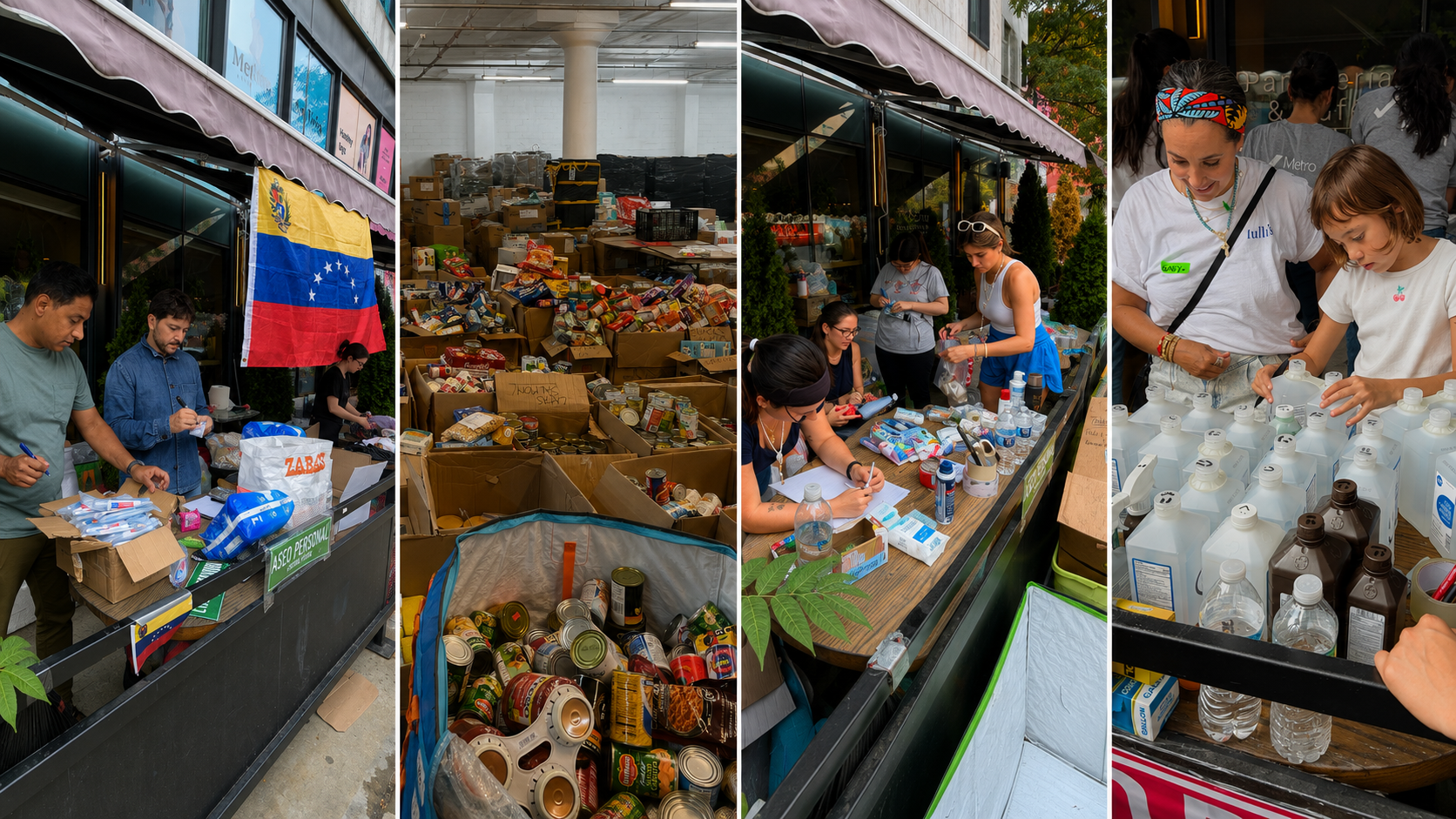


Inside the kitchen of Arepa La Newyorkina, a Venezuelan catering company in Astoria, Queens, Marly Quiroga and her employees are usually busy at work. Some might be preparing the dough for hallacas, while others might be responsible for the parrilla criolla.
But since June 24, Arepa La Newyorkina has stopped preparing its popular Venezuelan dishes. Instead, it has transformed itself into a hands-on establishment full of dozens of volunteers, organizing and packing donations of food, clothes, and medical supplies for those impacted by the twin earthquakes that hit Venezuela two weeks ago.
“I turned my business into a relief center, so that the communities in New York can come together to help.” Quiroga, 50, told Documented in Spanish. “It’s been a positive response, a lot of people from all nationalities have come to donate. Because solidarity does not have borders.”
The two earthquakes, magnitudes 7.5 and 7.2, caused damages to the Venezuelan capital, Caracas, and nearby La Guaira. Nearly 5,000 people have died, according to figures from the Venezuelan government, with approximately 17,000 people injured and 18,000 people displaced, seeking shelter in makeshift camps inside schools, stadiums, or sidewalks.
Across New York City, businesses like Arepa La Newyorkina — staples of the Venezuelan community — have worked around the clock to collect donations, organize volunteers, fundraise, and coordinate the delivery of essential items and medicine to those impacted by the earthquake.
Business owners who spoke with Documented said the outpouring of support from local residents has been unlike anything they have seen before. Still, they emphasized that humanitarian needs will extend well beyond the immediate aftermath of the disaster, requiring sustained support as Venezuela begins its long recovery.
Quiroga, who has been in New York for nine years, first heard about the earthquakes through WhatsApp when friends in New York texted her. She said she tried to contact her family in Caracas but could not reach them.
“The telephone towers had collapsed,” she said. “No one answered me, and I was afraid for my family. It was horrible. It was a moment of a lot of anxiety, not knowing anything about my family.”
Her 93-year-old mother needed two people to carry her out of the building during the earthquake.
“They didn’t sleep [for days]. We were very worried because the families told us that the country could not stop shaking,” Quiroga said, adding that hours passed before she heard from her family in Venezuela.
It was around the same time that businesses around the city began talking about transforming into relief centers. By the next day, Arepa La Newyorkina, like other establishments around the country, began collecting donations. With the help of volunteers, they organized the items donated and brought them to El Budare Café, another relief center in Queens that could coordinate logistics of donated goods to Miami, and then to those impacted in Venezuela.
At the start, Quiroga planned to accept donations from 10:00 a.m. until 9 p.m., but the interest from people who wanted to make donations was so high that she decided to extend the hours until nearly midnight.
“The spirit of trying to help was beautiful to see,” she said.
Within two days her space was already full. People brought clothes, baby supplies, canned food, and medical supplies. She said that some were sending her lists full of items directly from Amazon to her address, too. Others contacted her and said that while they cannot donate, they were available to offer their help by volunteering to help separate clothes, organize and pack the donations.
“We had a lot of people volunteering with us. One time we prepared pabellón,” said Quiroga, referring to Venezuela’s national dish which features shredded beef, sweet plantains, and black beans with rice. “That way they can have energy and strength to continue. We are a team.”
Pedro Alvarado, the owner of Kween, a Venezuelan restaurant and cocktail lounge in Astoria, also turned his restaurant into a relief center after seeing a huge interest from residents around the city who wanted to help those affected by the earthquake.
“Many people came to help from all the countries. Not just Latinos, but from a lot of places came to help from Astoria and even Manhattan,” said Alvarado, who migrated from Venezuela 28 years ago. “I felt really emotional to see the fast response from people and the positive spirits of all the people … Everyone was asking ‘What can we do to help? What can we donate?’”
Helping Venezuelans is not new to Alvarado, as he had previously organized drives to collect toys and basic necessities. In 2017, he organized a donation drive to help those affected by the economic crisis in Venezuela.
Since the day the earthquakes hit on June 24, Kween has been collecting non-perishable food, first aid items, and medical supplies. It paused its relief efforts on July 8 to organize and ship the items it had already collected, part of a coordinated effort across the five boroughs among Venezuelan businesses and restaurants.
“It’s a process depending on the need. We send the items from here to Brooklyn, from Brooklyn to Miami,” Alvarado said. “What we need right now are volunteers in Lulla’s in Brooklyn, the Venezuelan restaurant, because they receive almost all the donations from the relief centers in the area.”
Alejandra Ramos, chef at Lulla’s and one of the organizers for the relief effort at the restaurant, said Lulla’s has become one of the largest relief centers in the area. Since the first day it began receiving donations, Ramos said that more than 200 people began asking for volunteer opportunities to help the efforts.
She said that the list has grown in the last two weeks and that now they have a WhatsApp group with 600 people who are interested in volunteering. “We post volunteer opportunities there, along with the hours needed … The other organization, Fundave NYC, also has their own WhatsApp group and they send volunteers here,” she told Documented in Spanish.
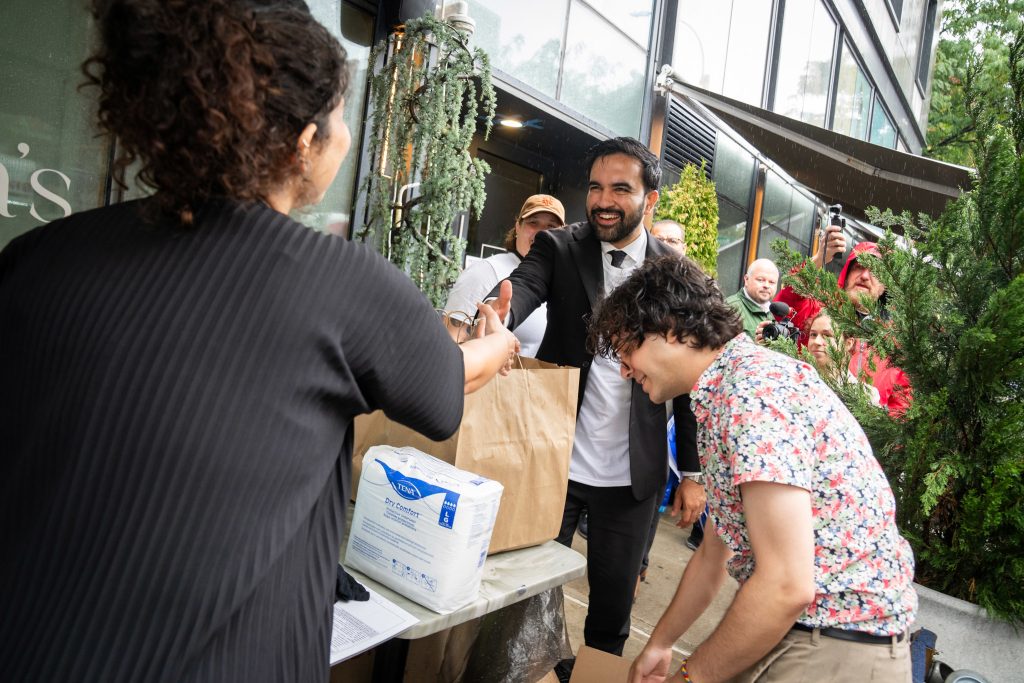
Mayor Zohran Mamdani and other officials have also visited Lulla’s and encouraged New Yorkers to volunteer.
“New Yorkers are stepping up to care for people they’ve never met because they understand our humanity does not end at our borders,” Mamdani said in a press release on July 6. “And we will keep demanding that the federal government redesignate Temporary Protected Status for Venezuela and restore humanitarian protections for those living in the United States.”
After someone offered Lulla’s a warehouse space in Brooklyn, the restaurant became one of the central locations for collecting donations from relief centers around the city.
Ramos said that the warehouse fits 600 shipping pallets, and that volunteers engage in various tasks — like crossing out barcodes from packages to avoid resale in Venezuela, and packing boxes to ship in trucks to Miami. She said that eight containers, fitting 28 pallets each, had already been shipped to Venezuela.
“The priority right now is monetary donation because each truck shipment to Miami costs at least $9,000,” Ramos said.
She added that Lulla’s was taking donations every day but that now they have limited to only weekends because of their limited space. They are also taking specific items, like medicine, camping supplies, solar-powered fans, and clothes based on the needs in Venezuela. “Because people lost everything and they are living on the streets,” she said.
People can send items directly from Amazon’s wishlist or donate to their fundraising efforts. Fundave NYC and Aid For Life, nonprofit organizations that have for a long time helped immigrant communities in New York City, have been collecting donations to cover the cost for shipping and immediate needs.
Ramos said that she is grateful for the support from the community and that she feels the Latino community can relate to Venezuelans’ struggles with national disasters and political corruption. “In the long run, I believe people will continue to help,” she said. “We have to ensure that this story doesn’t fade away.”
Also read: Here’s How You Can Help Victims of the Venezuela Earthquakes