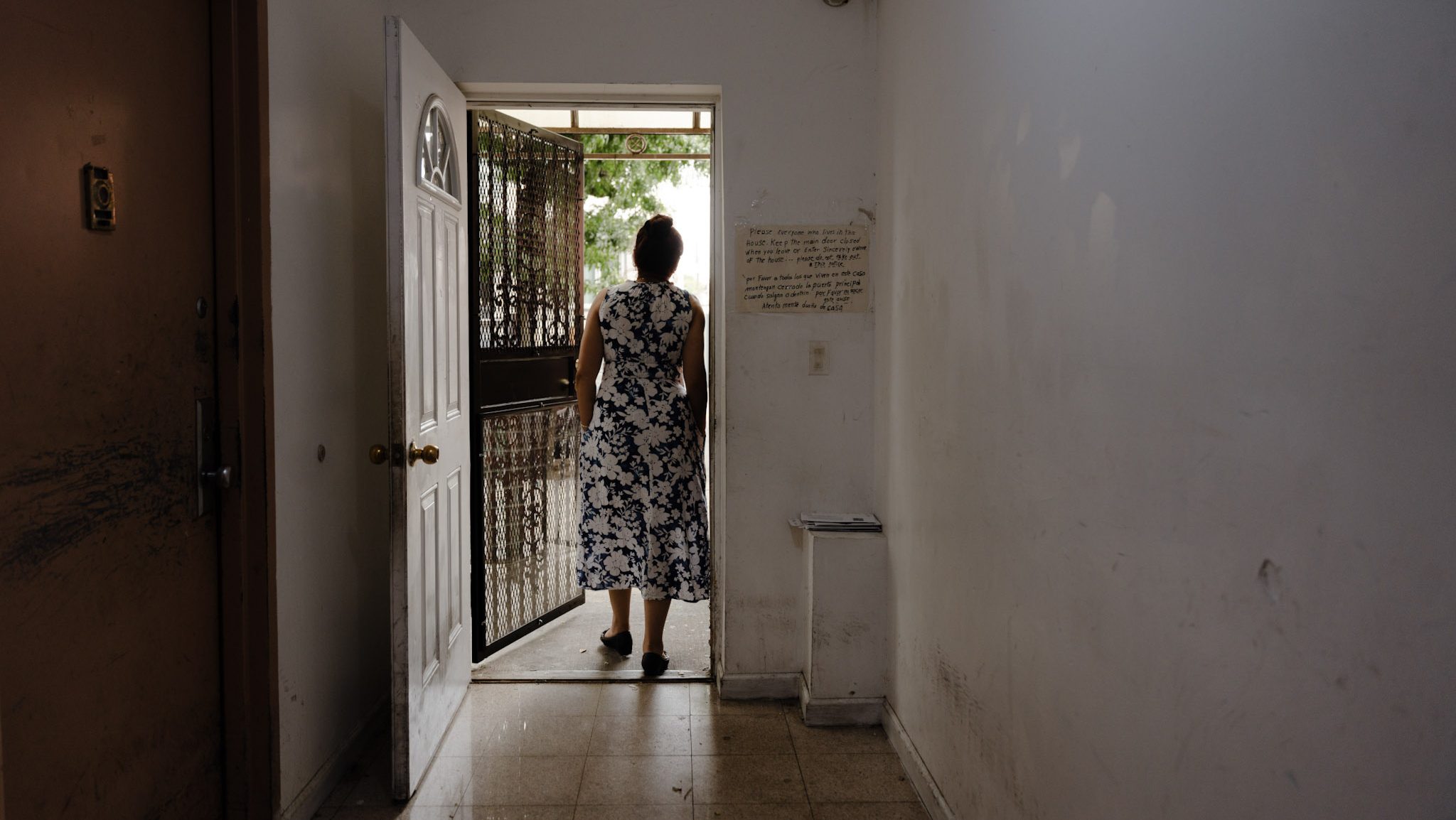


Carmen Zurita, 50, was living at a migrant shelter in Corona, Queens, in late 2022 when she was introduced to La Jornada, an organization serving immigrants that made headlines as a food bank during the pandemic and then expanded its services to help a wave of asylum seekers navigate the immigration process.
She said the organization was there to provide food and resources to the clients at the shelter, including assistance with immigration matters. Zurita – who came to New York after facing persecution and a violent run-in with an armed paramilitary group in Venezuela – needed help submitting her asylum petition within the required 12 months of her arrival here.

La Jornada founder Pedro Rodriguez recommended that Zurita come by the organization’s Corona offices, where she was prompted to fill out forms and was quoted $600 for an asylum application, according to an affidavit that she filed with the New York attorney general.
She said it took her several weeks to come up with the 50 % down payment of $300, which she said she paid to a female staffer in cash.
“Trusting that I was doing the right thing, I gave her half of the money and she didn’t give me any receipt. … What seems like very little money was a lot for me at the time,” said Zurita in Spanish.
“Trusting that I was doing the right thing, I gave her half of the money and she didn’t give me any receipt…What seems like very little money was a lot for me at the time.”
—Carmen Zurita
Whenever Zurita asked whether La Jornada had filed her asylum application, she said she did not receive a clear answer from staff. Zurita said she learned in documents she received from the government that she had two appointments she needed to attend — a court hearing and Immigration and Customs Enforcement check-in triggered by entering the country without proper paperwork.
“I was able to go on my own after seeing the address and asking someone at the shelter,” she said. “They never told me these things. They didn’t explain anything to me.”
Concerned, Zurita did not pay the remaining balance of $300 and looked for an attorney, who eventually helped file her asylum petition and obtain a work permit while her asylum case continued. She didn’t receive her money back from La Jornada, according to her affidavit.
She is not alone in questioning the services offered by La Jornada. Documented interviewed five immigrants, viewed receipts, and reviewed five affidavits submitted to the state attorney general’s office alleging clients paid La Jornada between $300 and $1,000 for asylum petitions and work-permits, only to experience miscommunication and confusion.
Two of the immigrants said they paid La Jornada to file their asylum applications and told Documented that the organization failed to do so.
The state Attorney General’s office said it is looking into five complaints against La Jornada. The office added that its Charities Bureau has contacted the organization twice for delinquent filings.
New York State Rep. Catalina Cruz, a former attorney who represents several neighborhoods in Queens, including Corona, told Documented that her office has directly helped 15 constituents who had issues with La Jornada’s services.
The former La Jornada clients had a variety of issues with their cases, Cruz said. Some said they had difficulty obtaining copies of their paperwork, while others said they were being charged more than what La Jornada had quoted them at the start. Some had orders of deportation, and are now being assisted by nonprofit-legal providers in the area, she said.
“Some of them were saying: ‘They won’t give us copies of our documents,’ or, ‘They won’t give us our documents back,’ or, ‘They’re asking us for additional money in order to give us our documents,’” Cruz said. She added that her office first heard these reports in the summer of 2024. “That’s basically how we began hearing that the organization was behaving in a problematic way.”
Leaders at the Jackson Heights Immigrant Center told Documented that they had seen several people who complained about services from La Jornada. Another nonprofit that provides legal advice to immigrants in Queens said they had seen around 100 former La Jornada clients who had come to their offices for help.
During an hourlong interview, Rodriguez said he was unaware of dissatisfied clients and other problems raised by Documented in a letter detailing all the allegations in this story and said he would rectify issues if former clients gave him the opportunity. He said he started doing this work because “the need was unbelievable,” with thousands of migrants arriving in New York.
When Documented presented him with the immigrants’ accounts included in this story, Rodriguez said he could not recall the specific cases. Later in a text message, he said he could not comment without the clients’ full name and alien registration number, a unique seven- or nine-digit identification number assigned to non-citizens who interact with the immigration system. Clients who spoke to Documented either did not want to provide this sensitive information for privacy reasons. He told Documented that “it is also not fair to say someone is saying something and not being able to face your accuser.”
Rodriguez said that he never represented himself as a lawyer and that, if people asked him if he was a lawyer, he would say he wasn’t. He also said he employed between one and three lawyers at a time, though he acknowledged that those lawyers could not have possibly been involved with all cases, of which there were thousands, he said. Some of the staff, he said, had diplomas posted behind them showing that they were paralegals, not lawyers.
When Documented told Rodriguez that clients said they had to present their information multiple times, and asked him who was overseeing the operation of filing asylum claims, he said that if “somebody made a mistake, I am responsible. I am the director of La Jornada, I have to take full responsibility of everything that happened. That’s why I’m trying to make things right.” He added, “It’s not that we are trying to do something on purpose, to do something bad to those people. That was not our intention.”
La Jornada is one of many organizations that began helping immigrants with the asylum process several years ago, when millions of migrants sought asylum at the southern border of the U.S. during the Biden administration. Roughly 237,000 asylum seekers arrived in New York City between 2022 and 2025 and were struggling to navigate the U.S.’s complex immigration system.
To meet the need, in June of 2023, Eric Adams’ administration set up an Asylum Application Help Center housed at the American Red Cross Greater New York in Hell’s Kitchen, and the city also provided $5 million in funding to support non-profit legal service providers and pro se clinics.
Despite these efforts, the influx put a strain on the already limited resources available to immigrants. Lawyers were overworked and legal nonprofits were at capacity. And so, many migrants started seeking help wherever it was offered, including from people who were not accredited immigration lawyers and could not represent them in immigration court. Having an attorney in immigration court dramatically reduces the likelihood of being deported, according to a report by the American Immigration Council.
But as more and more organizations entered the field, complaints started to mount. Data provided by the city’s Department of Consumer and Worker Protection showed an increase in the number of complaints received about immigration assistance service providers, from 23 in 2022 to 46 in 2024. The numbers could be even higher since, the agency said, “some people do not come forward to report harm by predatory immigration assistance service providers.”
“Complaints of immigration services fraud in New York have increased and advocates have consistently been ringing the alarm on these growing threats,” said Council Member Alexa Avilés at a City Council Meeting on immigration services fraud in April of 2025, adding, “Oftentimes immigration services fraud becomes more rampant in periods where demand for legal services increases.” (The Council Member was speaking generally and not specifically about La Jornada).
In 2025, the City Council passed Intro-980A, which, along with increasing civil penalties to immigration service providers not complying with the law, required the providers to visibly advertise what services they can and cannot provide. Following the passage of this law, Rodriguez said his organization now displays signs that say staff members are not immigration lawyers.
“Somebody comes in, and they sit down with me. Okay, behind me there is a sign that says I am not an attorney,” he said.
Issues around the need for proper legal representation are only more significant now, as Trump’s intensified crackdown has mobilized ICE to conduct unprecedented arrests during court hearings.
The ever-changing missions of a nonprofit
La Jornada was founded in 2011 as a nonprofit that provided services for immigrants, from career development to language and other essential skills. During the pandemic, the organization pivoted to providing food to neighbors, calling itself “one of the most important Food Pantry Services” in the city on its website.
Between 2022 and 2024, when asylum seekers traveled to New York City in record numbers, La Jornada redefined its mission on its website to “assisting migrants with their paperwork and legal needs, providing them with the guidance and support they require during a crucial time in their lives.”
On Instagram, La Jornada posted as early as September 2023 advertising that staff can help people apply for temporary protected status, asking users to contact them through a now deleted instagram account with the handle @LaJornadaLaw in the post’s caption.
Nuala O’Doherty-Naranjo, the founder of the Jackson Heights Immigrant Center, a legal clinic she runs out of the basement of her house, remembers when Rodriguez started to show an interest in providing immigration services to migrants. As an attorney who retired after practicing law for 28 years , O’Doherty-Naranjo decided to help migrants navigate the asylum application process, often for free or charging $20 to $60 to cover some related costs.
She had gotten to know Rodriguez through her mutual aid work during the pandemic when he was providing food for Queens residents. In 2023, Rodriguez asked O’Doherty-Naranjo to give him and some of his team members a workshop on how to file asylum paperwork for migrants, she said. She agreed to help him but, she said, he arrived late with several people and she had to speed through her instructions.
“It wasn’t until the end of the meeting that he was talking about how much he’s gonna charge for this. I’m like, ‘Wait a minute, Pedro, are you gonna charge for this?’” recalled O’Doherty-Naranjo about that day. She said she remembers him saying he would charge $400 for this work. “And I thought, whoa.”
Rodriguez said La Jornada’s prices were much less than the thousands of dollars that immigration lawyers would charge. He said he charged below the market rate at the time, saying that he would look at the prices of similar organizations and charge less than them. When Documented asked which organizations he considered similar, he said he could not remember any specific organization.
“We [would] never even think about charging what a lawyer charges, which is thousands of dollars,” said Rodriguez.
While it’s not uncommon for immigration lawyers to charge for services, La Jornada was listed as a pro-bono legal services provider by the Justice Department in 2024. Rodriguez said that the organization was providing free legal assistance during the time they were listed in the DOJ’s page due to a grant they received. Those free services stopped after the grant finished, he said.
“All the money was reinvested into the foundation for food or for other things that were needed, people that were doing the work,” Rodriguez said of the money he charged his clients. “We were probably charging less than everybody else. Because we always tried to be less than everybody.”
Mounting Concerns
After receiving a number of complaints, Cruz said her office asked La Jornada to turn over documents from dissatisfied clients and called for a meeting with Rodriguez. “I warned him that he needed to be really careful with how he was doing the work he was doing so that there would be no misunderstanding about his ability to represent people,” Cruz said.
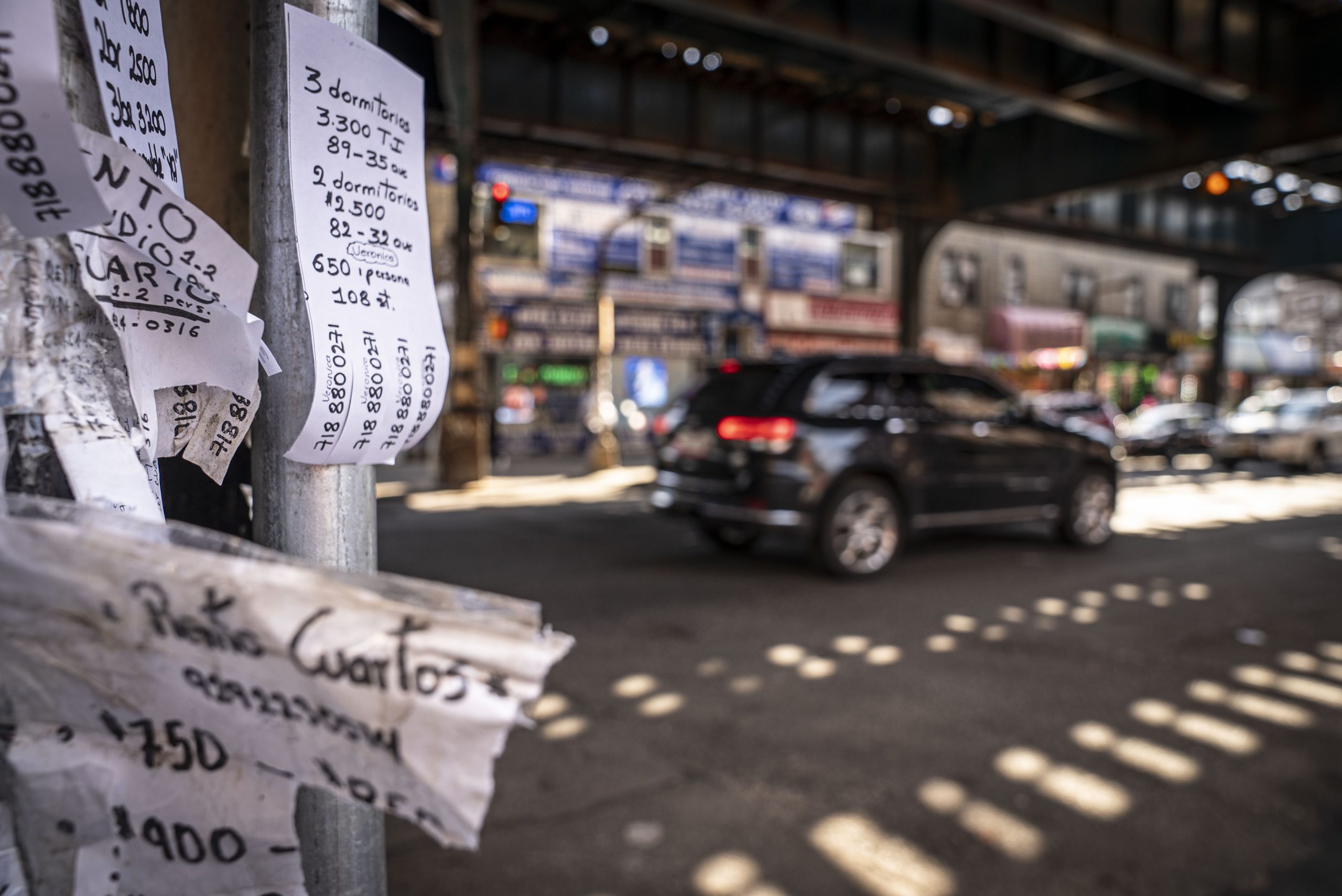
Other migrants who went to La Jornada for assistance said they have also been negatively impacted after using the organization’s services.
An Ecuadorian mother working with La Jornada on her family’s immigration cases told Documented and wrote in an affidavit that she was erroneously told that she had a deportation order in absentia, causing stress and anxiety. Rodriguez said that while he cannot comment without having all the details, he said that if someone called La Jornada and said they had missed their court hearing, “I will tell them that they had an order in absentia.” He added that it would be up to the judge to make that decision.
S.P., a Colombian migrant, had missed her first court hearing and sought help from La Jornada in February 2024 to reopen her asylum case after receiving a deportation order in absentia. Two receipts show she made two payments to the organization totaling $900. She said it made her uneasy that she always saw a new person every time she visited.
After the third visit to La Jornada, the organization still had not re-opened her case, she said. Instead, she was being asked to retell all the details of the case.
She said that she doesn’t care about the money she paid, but that she did not like how neglectful they were of her case. S.P has sought an immigration attorney to oversee her case.
“I said ‘I will never return. You are not doing anything for me and are putting me in danger,’” recalled S.P., who asked to be identified by her initials because her case is ongoing. “That’s when this struggle started. I no longer had anywhere to go, nor anyone to trust.”
“I no longer had anywhere to go, nor anyone to trust.”
—S.P.
Another client of La Jornada’s, Charo, who requested that Documented use her nickname for privacy concerns, had been in New York for six months when she learned about La Jornada. She had been having trouble finding affordable immigration lawyers, and La Jornada’s low-cost assistance sounded like just what she needed.
She left Peru in the fall of 2022 with her husband and two children after she said extortionists threatened to hurt her daughter. When she entered through the U.S.-Mexico border, the four of them were placed in removal proceedings, but she still made her way to Queens where another of her daughters had already started a new life.
She said she worked with Rodriguez — who, she wrote in an affidavit to the AG’s office, told her that he was a lawyer — to adjust the addresses on her asylum petitions and filed an asylum petition for her family for $1,600, a hefty sum but one that was still less than what she saw elsewhere.
Everything was proceeding smoothly, but then the political tides turned: Trump became president in 2025 and made good on his campaign promise to clamp down on immigrants, including asylum seekers like Charo and her family. One of Charo’s daughters had an immigration court hearing, and headlines of ICE arrests at these courts were rampant.
“You feel really desperate. You do it for your children.”
—Charo
Though La Jornada had disclosed to her early on that they could not represent the family in immigration court, Charo turned to them for advice because of their role in filing her family’s asylum petitions. She said they, once again, told her they could not accompany her daughter to immigration court. In the affidavit she wrote in Spanish that Rodriguez said it was not necessary for him to go with her. He also told her, according to the affidavit, that if he went with her, she would have to pay a lot of money.
Charo said she sought advice from a former La Jornada employee, who recommended that she not take her daughter to immigration court because of the recent arrests in court. So she decided not to send her daughter to the appointment. “You feel really desperate. You do it for your children,” Charo said.
Three days later, on June 27, Charo received a letter saying that her daughter was ordered removed in absentia, which her new lawyer confirmed to Documented by sending a screenshot of the judge’s decision.
She said she felt abandoned by the organizations she had trusted with her immigration matters.
As of date of publication, her daughter is undergoing the process to reopen her asylum case in immigration court.