

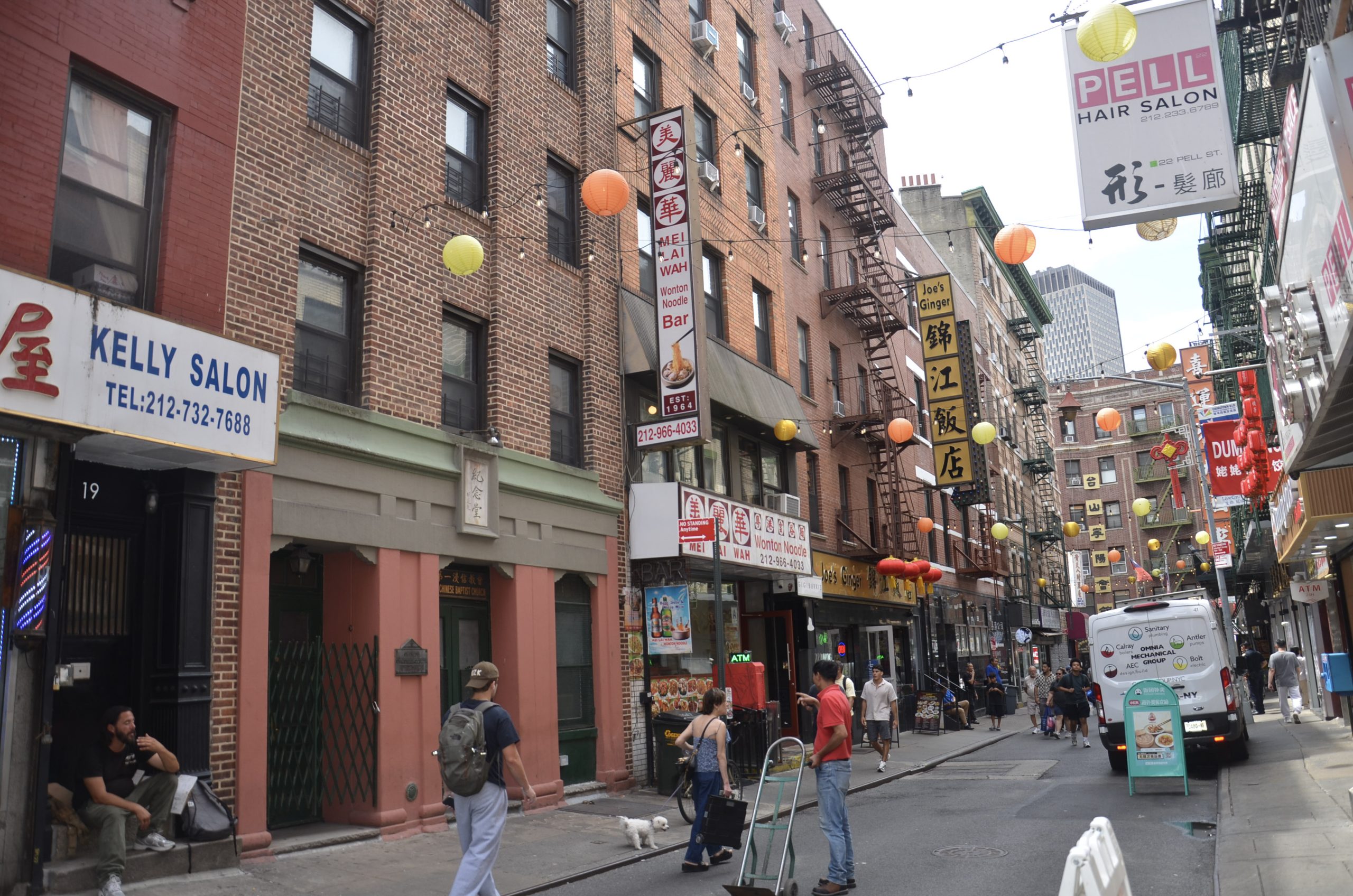


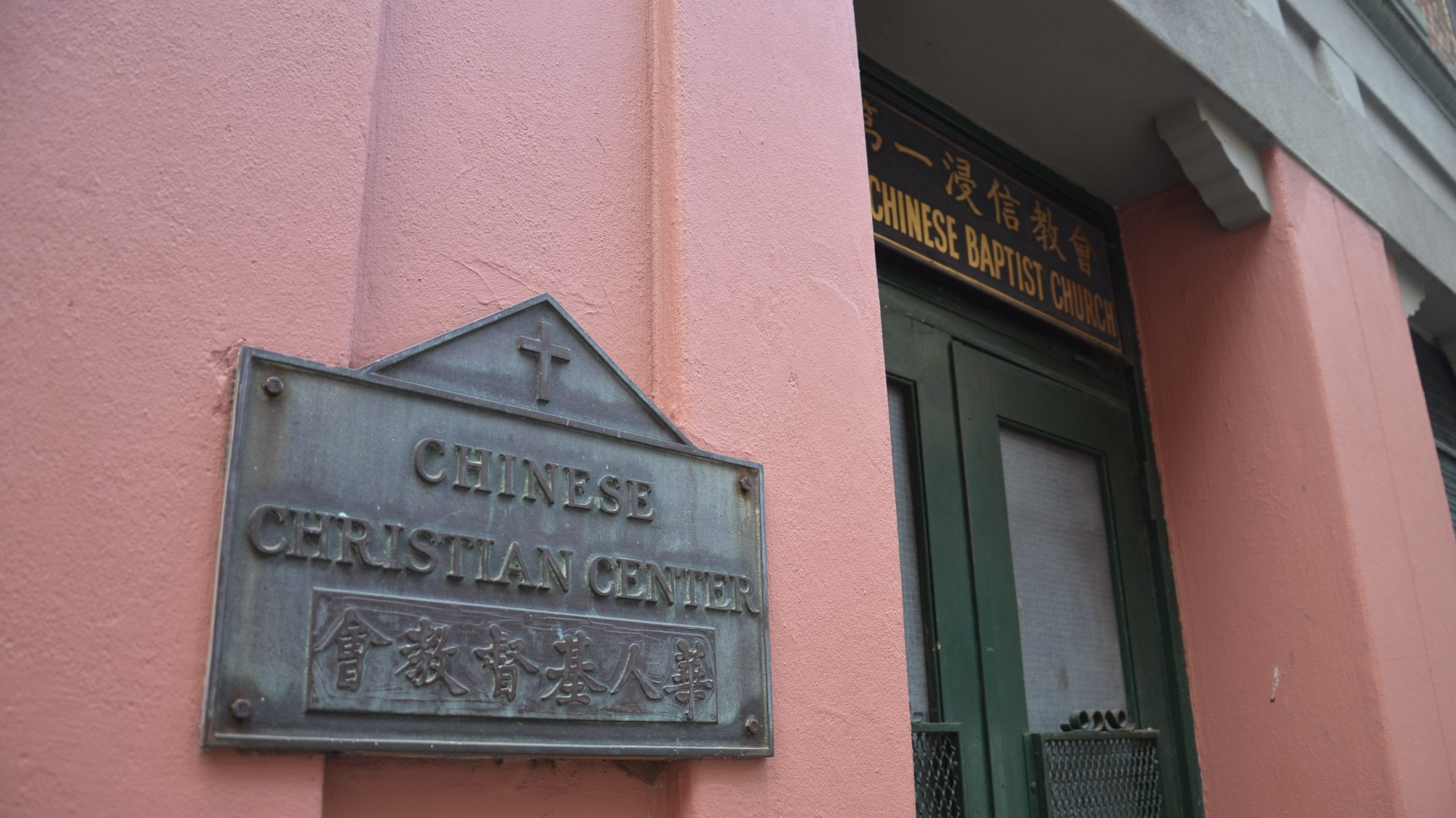
Down Manhattan Chinatown’s bustling Pell Street, a modest five-story building sits tucked between a neighborhood barbershop and a wonton noodle restaurant. Its weathered crimson façade and forest green doors almost blend into the surrounding streetscape of aging buildings that line the block. Yet on closer inspection, clues reveal an extraordinary past. The building at 21 Pell Street remains one of the most historically significant landmarks in Chinese American history: First Chinese Baptist Church.
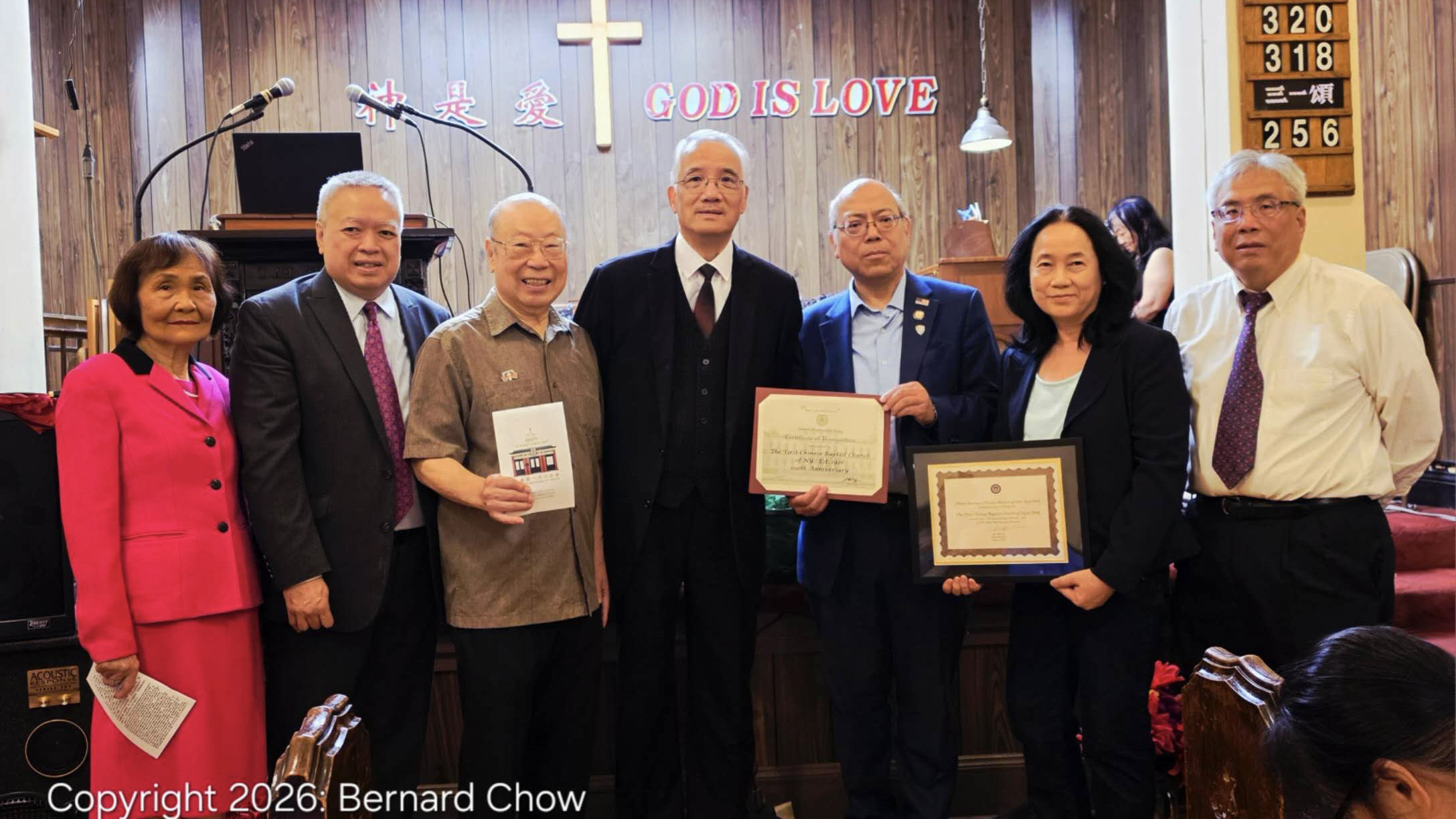
Early this month, on Aug. 2, the church celebrated its 100th anniversary. Hymns in Cantonese, Mandarin and English echoed throughout the sanctuary as neighbors, current and former congregants, historians and civic leaders gathered to commemorate the milestone. The celebration honored not only the church’s longevity, but also the generations of Chinese immigrants whose lives were transformed within its storied walls.
Above the church’s entrance, a stone plaque hangs inscribed with Chinese characters reading “Memorial Hall,” written by the internationally renowned philosopher and former Republic of China Ambassador to the United States, Hu Shih. Inside, visitors marvel at the cherry wood furnishings crafted in a traditional Chinese style, reflecting the church’s unique identity of being a distinctly Chinese institution rooted in both faith and community.

The church’s celebration featured a long list of notable attendees. Sitting in the church pews were City Council member Phil Wong, the first Chinese immigrant elected to represent the city’s 30th Council District in Queens. There was also Po-ling Ng, who devoted five decades to the Chinese-American Planning Council, one of the nation’s largest Asian American social service organizations, and Wai Wah Chin, founding president of the Chinese American Citizens Alliance of Greater New York (CACAGNY) and a longtime advocate for Chinese American civil rights. Amy Chin, president of the Board of Think!Chinatown, a nonprofit dedicated to strengthening intergenerational community through neighborhood engagement, storytelling and the arts, was also in attendance.
Throughout the ceremony, one name surfaced again and again: Dr. Mabel Ping-Hua Lee. As the founder of the church, her influence has rippled far beyond the institution’s walls.
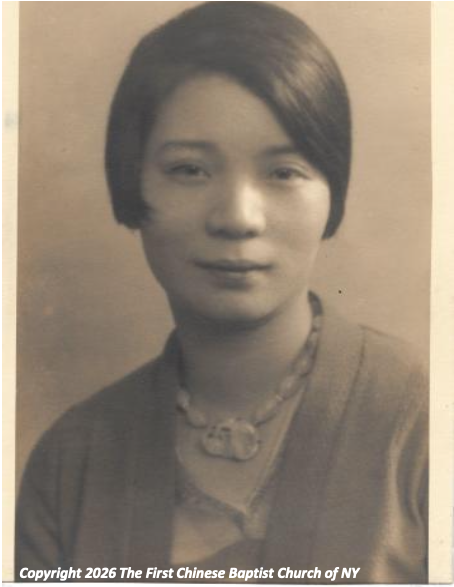
“There are thousands of stories out there of people whose lives Mabel Lee impacted so they could have a better life,” Deacon Robert Gee, a third-generation church leader, told Documented.
Mabel Lee’s Vision
Born in Guangzhou in 1896, Mabel Lee arrived in the United States at the age of 9 after her father Rev. Lee Towe entered under one of the few exemptions to the Chinese Exclusion Act as a Baptist missionary.
The family settled in New York’s Chinatown, where her father led the Morning Star Mission on Doyers Street. The religious outreach group provided newly arrived Chinese immigrants hot meals, a warm shower and a roof over their heads.
Even as a teenager at Erasmus Hall Academy, Lee displayed a sense of civic duty. She was active in the women’s suffrage movement despite being barred from becoming a U.S. citizen under the Chinese Exclusion Act, and thus unable to vote.
When she was 16, Lee rode horseback to lead nearly 10,000 marchers in New York City’s landmark women’s suffrage parade in 1912. Images of the young Chinese American activist captured national attention, demanding voting rights for American women years before the 19th Amendment became law.
Lee continued breaking barriers in higher education. After graduating from Barnard College in 1917, she earned a Ph.D. in economics from Columbia University in 1921, becoming the first Chinese woman in the U.S. to receive a doctorate in economics.
Fresh from Columbia, Lee planned to return to China — which had recently overthrown imperial rule and established the Republic — to apply what she had learned to women’s education and national development.
But her plans were quickly derailed.
On Nov. 23, 1924, Lee’s father unexpectedly died. As a Baptist missionary, her father led Morning Star Mission and became the first Christian elected president of the Chinese Consolidated Benevolent Association, a position long regarded as the unofficial “Mayor of Chinatown.”
Shortly before his death, he organized a landmark peace conference that helped end years of deadly Tong warfare, where fights broke out over territories and profits among rival Chinese fraternal organizations, some of which were associated with organized crimes, in the late 19th and early 20th centuries.
Following her father’s death, Mabel Lee chose to stay in New York. She inherited not only her father’s ministry but also his vision for serving the Chinese immigrant community. Two years later, on Aug. 1, 1926, she founded the First Chinese Baptist Church of New York.
Despite the hardships of the Great Depression and resistance from some missionary organizations, she eventually transformed the Morning Star Mission into the first self-supporting Chinese church in the U.S. to give support and a feeling of freedom to Chinese community members.
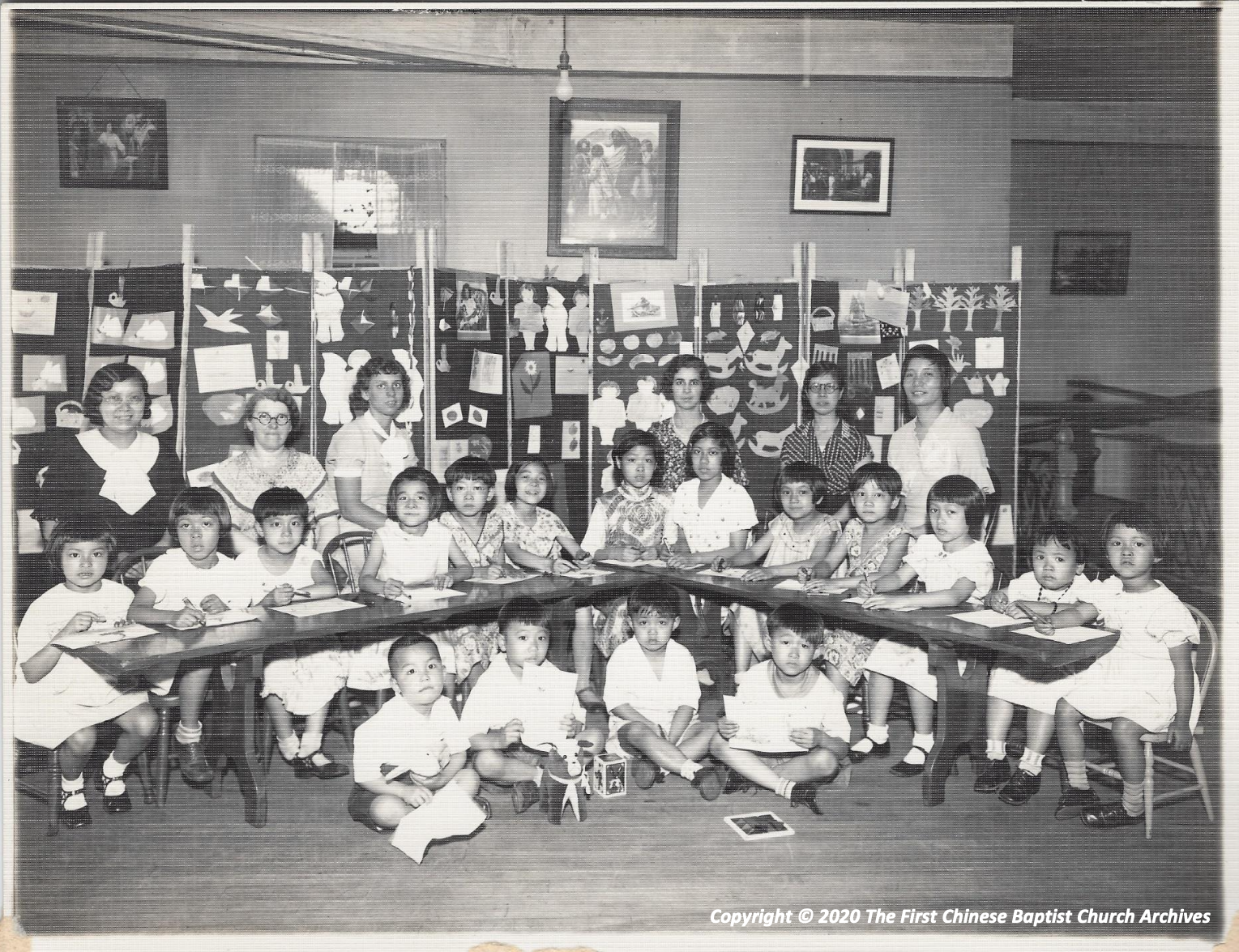
Through its Chinese Christian Center, the church launched many of Chinatown’s earliest community programs, including the neighborhood’s first Chinese American kindergarten, the first Girl Scout troop, health clinics and vocational training classes. Under Mabel Lee’s four decades of leadership, the church taught English to newcomers, who in turn helped teach the next wave of immigrants, creating a cycle of mutual support that community members say strengthened Chinatown for decades.
A Church That Built a Community
Gee, who emceed the centennial celebration, said his family’s story is just one of many shaped by Mabel Lee’s legacy.
Gee’s father, Steven Gee-Mah, arrived in New York from Taishan, Guangdong, in 1937. The day after, he was sent by his father to the First Chinese Baptist Church to begin learning English. The lessons helped him become one of the few Chinese American electrical engineers in the U.S. during the 1950s.
For Gee and his five siblings, childhood weekends revolved around the church. Every Sunday, the family drove from Queens into Manhattan, or what Gee jokingly recalled as their weekly “day trip.” Unlike their father, who attended English classes, Gee and his siblings, who were born in the U.S., spent their Sundays in the church’s Chinese language classes. “My father wanted us to never forget our culture and our roots,” Gee said.
Although Chinatown was still periodically plagued by violence at the time, the church provided Gee and his siblings with a safe, peaceful place to learn and grow. All six children eventually went on to earn master’s degrees, a testament, Gee said, to the opportunities the church helped create.
One of his Chinese teachers was Po-ling Ng, now director of the Chinese-American Planning Council’s Open Door Senior Center.
Ng arrived in New York from Hong Kong in 1967 knowing few people but soon began teaching Chinese at the church. For the next three years, the classes introduced her to generations of Chinatown residents and gave her a firsthand understanding of the challenges facing newly arrived immigrants, particularly the lack of culturally and linguistically appropriate social services, Ng told Documented.
The experience inspired her to pursue graduate degrees in bilingual education and social work. Fifty years later, she is still serving the Chinese American community.
Wong, the City Council member, credits Mabel Lee’s legacy with shaping his own life as well. As a child, Wong attended Chinese school at the Chinese Consolidated Benevolent Association, where many of the Chinese-language books had been donated by Mabel Lee. Those books helped him build the bilingual skills he now relies on to represent thousands of Chinese-speaking constituents in his district. “The ability to speak Chinese allows me to communicate directly with my community,” Wong told Documented.
Over the past century, the church has continually reinvented its programs to meet the changing needs of Chinatown’s immigrants, Gee said.
From the 1920s through the 1950s, the church helped newcomers learn English and adjust to life in America. As more immigrant families settled in Chinatown, it expanded its focus to supporting their children through Chinese language classes and, in the 1970s, Chinatown’s first Summer Day Camp. For just $3 to $5 a day, restaurant workers could leave their children in a safe place while they worked long hours. “It also kept the kids off the streets and away from the gangs,” Gee said.
Many of those children later attended New York City’s elite public high schools and prestigious universities before returning as volunteers, teachers and leaders, community members say.
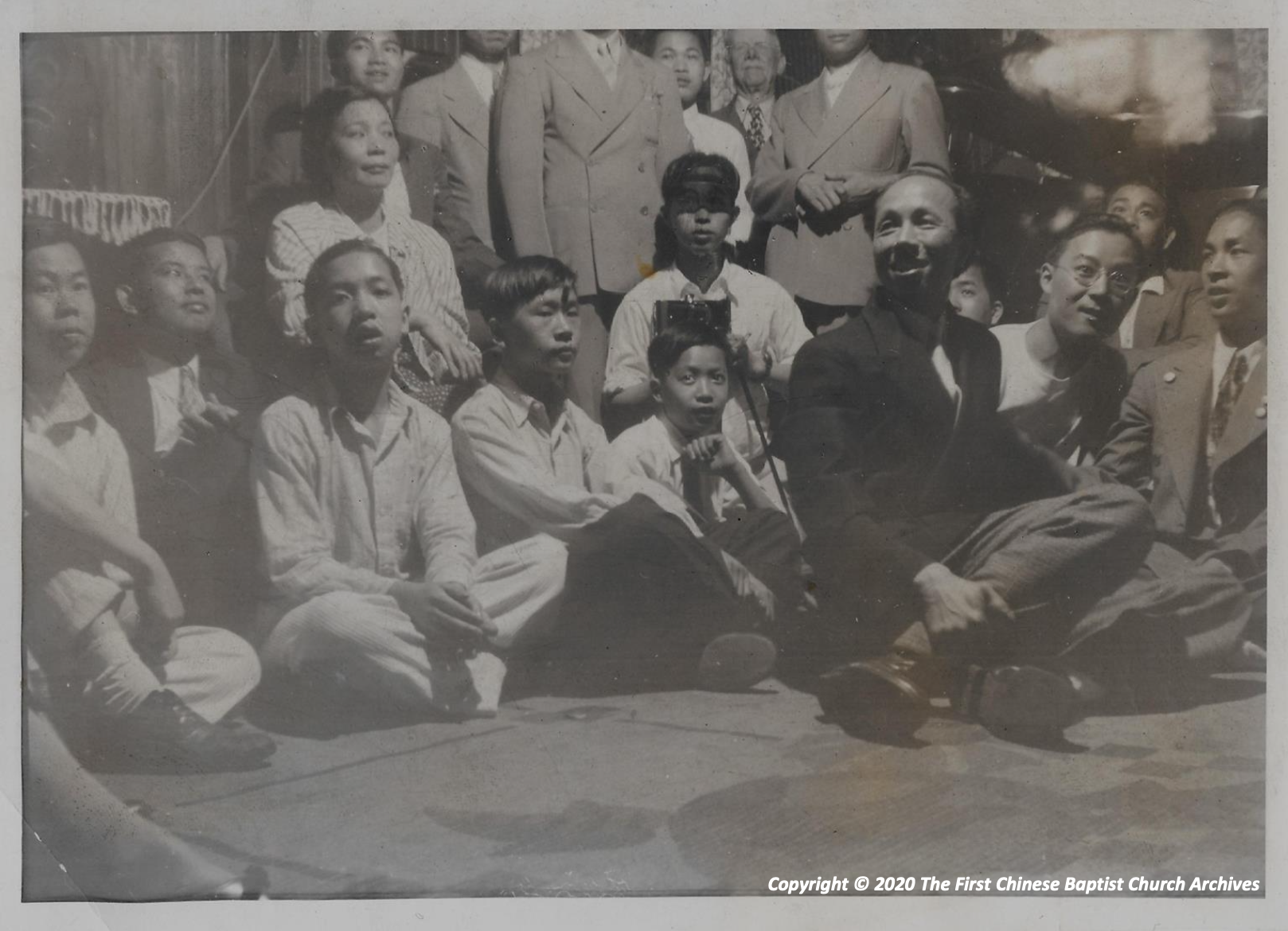
Gee himself embodies that cycle. Following in his father’s footsteps, he now serves as a deacon at the church.
In recent years, the church faces a new set of challenges. As more Chinese American families have moved out of Chinatown, the congregation’s local base has shrunk, church leaders say. Rising costs and congestion pricing have also made it more difficult to draw people back to Chinatown.
Even so, Gee remains optimistic about the church’s future. “We’re very hopeful that things will come back, and if we offer the right programs for folks to come and preach and have a great fellowship where it’s a sense of family, I don’t think we have a problem,” Gee said.
Today, Chinese immigrants in Chinatown can access a wide range of social services with relative ease. Many of those programs were inspired by the initiatives pioneered by the First Chinese Baptist Church, community leaders say.
Among its signature initiatives is the 21 Pell Movie and Performing Arts Program, co-founded in 2015 by the Rev. Bayer Lee and legendary photojournalist Corky Lee. The monthly series has transformed the church’s century-old chapel into a cultural venue, welcoming internationally acclaimed Asian artists and performers, including Tzi Ma, Perry Yung and Ronny Chieng, to share their work with the community.
The church has also opened its doors to community organizations.
Since 2016, Wai Wah Chin of CACGNY said the church has provided classroom space for Chinese parents and community groups to hold discussions about the Specialized High Schools Admissions Test, civic engagement and educational equity. She praised the church’s role in fostering youth engagement and community service. “For the church to be able to continue to address that shared history and think about our shared future, that is what it’s about: taking that shared past and helping it grow,” said Chin.
For a century, the church has weathered changing neighborhoods, shifting immigration patterns and the passage of generations under three generations of leadership. Yet its mission has remained unchanged. “The game is the same. It’s just the players have changed,” said Gee. “We have continued their vision that they set out 100 years ago.”