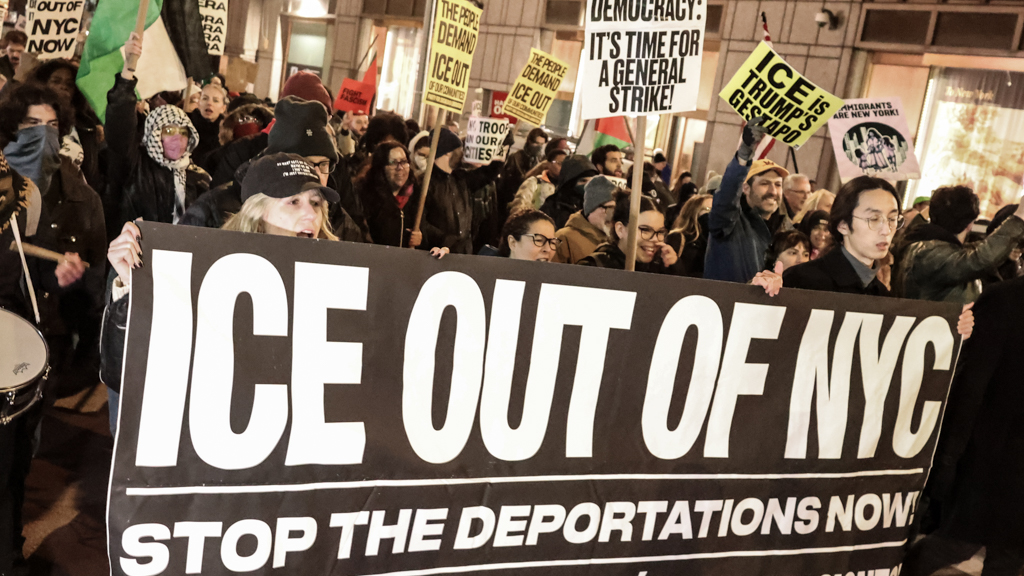


Monthly ICE arrests of people from Asian and Pacific Islander countries have more than quadrupled in New York under the Trump administration compared with the previous administration, according to a new public data tool from Stop AAPI Hate, a leading organization combating racism against Asian Americans and Pacific Islanders (AAPI).
The AP/I ICE tracker, launched Tuesday, breaks down ICE activity involving people from 35 Asian and Pacific Islander countries and territories by state, country of origin, age and gender. According to the tracker, since the beginning of Trump’s second term, ICE arrests of Asian immigrants rose 436% compared to the previous administration, with a 219% increase for immigrants of all nationalities. Detentions increased 512% respectively, compared with 280% overall, while deportations of Asian immigrants increased 1,103%, compared with a 356% increase across all immigrants.
About 65% of Asian Americans are foreign-born, making Asian Americans the only racial group in the U.S. that is majority foreign-born, while about 27% of Pacific Islanders are foreign-born, according to AAPI Data. Cynthia Choi, co-founder of Stop AAPI Hate and co-executive director of Chinese for Affirmative Action, said that the large foreign-born populations mean immigration policies and enforcement directly affect AAPI communities.
“The Trump administration has been framing the Asian immigrant community as a threat, and when you look at their policies and programs and how they’re ramping up ICE actions, it is directly impacting our communities,” Choi told reporters at Tuesday’s press conference announcing the launch of the tracker. “I want to note that behind every one of these numbers is a person, and the human toll is devastating. Families are being torn apart without warning.”

This trend has been particularly pronounced in New York, which accounted for 9.4% of all ICE arrests of Asian immigrants since the beginning of the second Trump administration — the third-highest share among states, after California and Texas.
The average monthly number of arrests of AAPI immigrants in New York increased more than 400% under the second Trump administration, to 103 each month up from an average of 24 during the previous administration, according to data from October 2022 to July 2026. The average monthly number of arrests of Chinese immigrants in New York also increased more than tenfold, to 34 under the second Trump administration from about three during the previous administration.
The data also shows that South Asian and East Asian communities accounted for the majority of Asian arrests in New York, with 1,586 people arrested between Jan. 20, 2025, and Aug. 6, 2026, representing more than 80% of all Asian arrests in New York during that period. Since Jan. 20, 2025, ICE has arrested 899 immigrants from South Asian countries in New York, more than half of them from India, followed by 687 immigrants from East Asian countries, including China and South Korea.
The trend is also reflected nationwide. Stop AAPI Hate’s analysis found that ICE arrests of Asian immigrants peaked in July 2026, reaching 1,950 arrests, the highest monthly level during Trump’s second term.
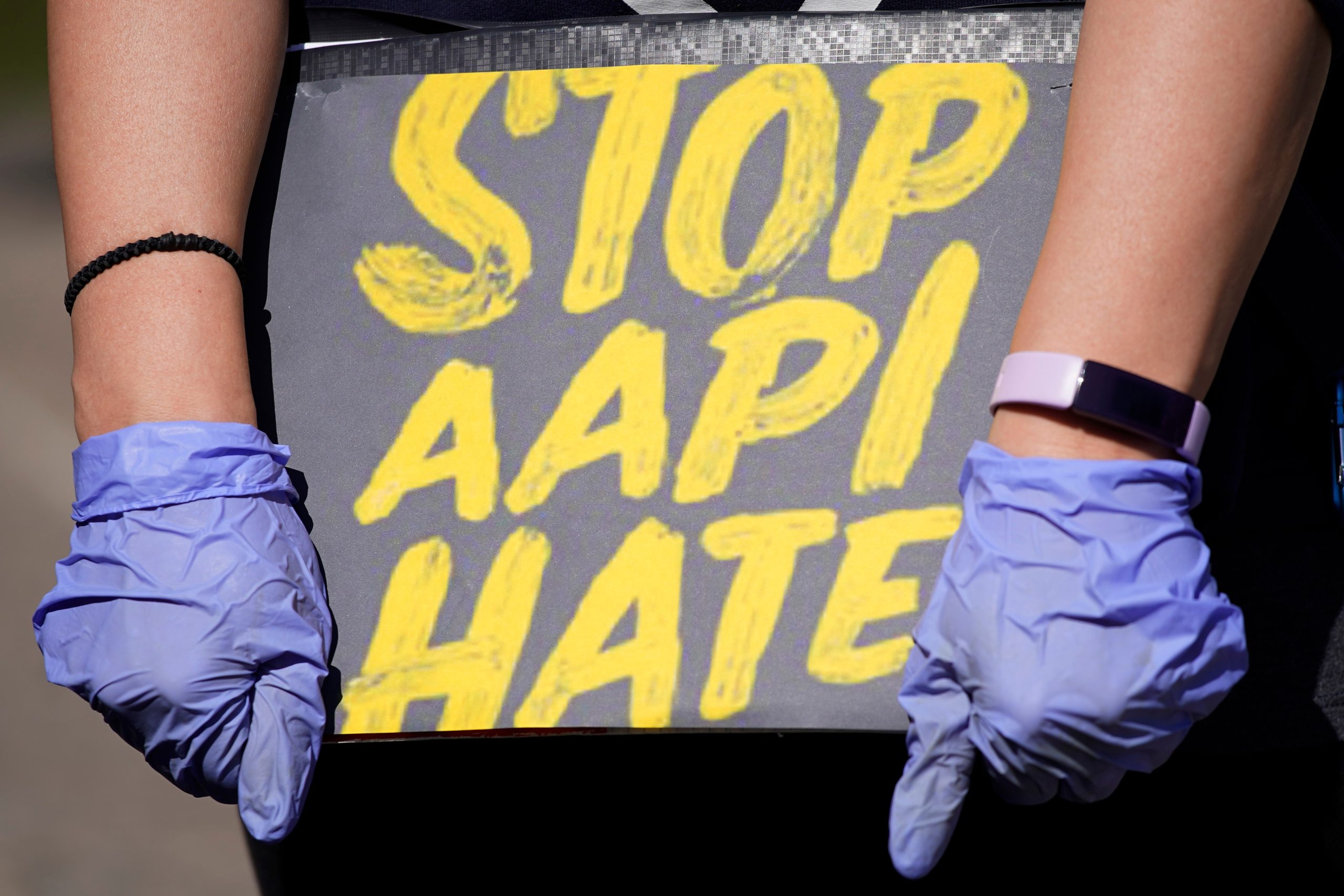
People from India and China accounted for the largest shares of Asian ICE arrests across the country, at 29% and 25%, respectively, followed by people from Vietnam, Uzbekistan and Laos. Stop AAPI Hate reported that some Central and Southeast Asian communities, including people from Uzbekistan, Kyrgyzstan and Laos, experienced ICE activity disproportionately relative to their shares of the Asian noncitizen population. Stephanie Chan, director of research at Stop AAPI Hate, said working-age Asian men were among those most affected by immigration enforcement.
“When the country talks about who is being harmed by the administration’s immigration agenda, Asian and Pacific Islanders are left out of the conversation,” Chan said at the press conference. “This is why we have built the tracker we’re launching today, because data makes the invisible Visible, you cannot fight what you cannot see.”
California, Texas and New York accounted for the largest shares of ICE arrests of Asian immigrants. Chan said those shares roughly correspond to the states’ large Asian noncitizen populations. In contrast, Oklahoma, Indiana, Minnesota and Pennsylvania had disproportionately high shares of Asian arrests relative to their Asian noncitizen populations. Stop AAPI Hate attributed the higher numbers in Oklahoma and Indiana in part to increased immigration enforcement targeting commercial truck drivers, while the higher share in Minnesota was linked to a major ICE operation in the Twin Cities that targeted refugee communities.
Eleven people from Asian countries died in ICE custody between Jan. 20, 2025, and Aug. 6, 2026. Stop AAPI Hate later reported that the number had risen to 12 after a Chinese man died in ICE custody on Aug. 23.
Chan said the tracker uses processed datasets from the Deportation Data Project, which obtained the underlying information from ICE through Freedom of Information Act requests. The tool is intended to allow journalists, advocates, policymakers and the public to examine ICE activity affecting AAPI communities.
Pramila Jayapal, Democratic U.S. Representative for Washington’s 7th congressional district, said the data provides a way to examine the scale of immigration enforcement affecting AAPI communities. “These are stunning numbers, not anecdotal, but patterns of violence and cruelty,” Jayapal told reporters at the press conference. “This A/PI ICE tracker helps us to educate our communities and the general public about the magnitude of what is happening.”