

Immigration Judge Shana Chen was in a hurry.
That wasn’t good for Bronx resident Elmer Gonzalez Altamirano, who seemed to qualify for release when Chen called his case for a bond hearing on Feb. 11 in Newark immigration court.
The Mexican immigrant had no criminal record, had been in the country for 20 years, and his job as a restaurant cook supported his ailing wife and five children, all of whom were U.S. citizens. Furthermore, a federal judge had ordered on Feb. 5 that he receive a bond hearing from the immigration court within seven days.

But Chen never let Altamirano present his case, blaming him and his attorney — falsely as it turned out — for filing evidence late. When his lawyer refused to withdraw the bond request, Chen abruptly denied it for lack of evidence.
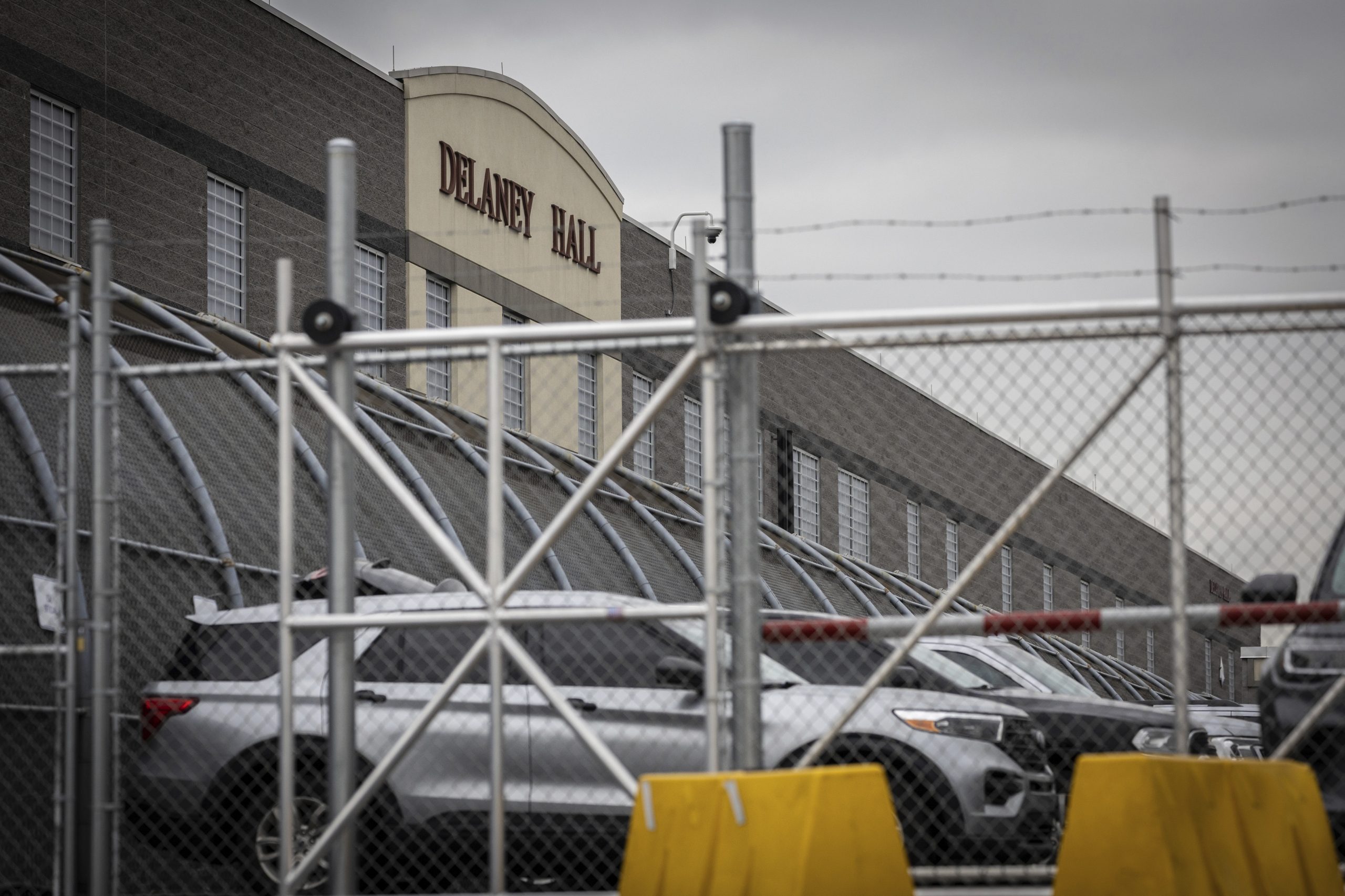
It’s one of four similar instances that Documented identified where Judge Chen accused immigration lawyers of wasting her time, and then rushed into making a decision that denied bond or forced withdrawal of a bond application. According to federal court rulings, those hearings deprived people seeking release from the Delaney Hall Detention Facility in Newark of the fair, individualized consideration the Constitution requires.
Altamirano’s case reflects “a recent and disquieting trend of government defiance of court orders in habeas cases, like this one,” a federal judge wrote, noting that the U.S. attorney’s office for New Jersey had admitted to defying 56 such orders. Federal judges have determined in scores of cases across the country that immigration court bond hearings they ordered were so unfair that they violated the right to due process.
Chen, a Georgetown Law graduate and former assistant U.S. attorney, was appointed to the court in 2019 during the first Trump administration after winning Justice Department and Department of Homeland Security awards for helping shut down human trafficking rings as a federal prosecutor in New Jersey. Recent data show that she’s more likely to reject asylum claims than most other judges in both New Jersey and the rest of the United States.
When asked about the four federal court rulings, Chen didn’t respond to a request for comment. The Department of Justice agency that runs the immigration courts, the Executive Office for Immigration Review (EOIR), also would not comment on an immigration judge’s decisions.
A spokesperson for EOIR said in a statement that immigration judges are “independent adjudicators” who decide cases impartially and asserted that if “rogue judges” — referring to the federal judges who ruled against the Trump bond policy — followed the law as written, “there wouldn’t be an ‘overwhelming’ habeas caseload.”
‘Meaningless’ Hearings
In Altamirano’s case, Chen refused to accept evidence on grounds that his lawyer filed it late. Chen blamed the attorney for the mix up, saying that Altamirano’s lawyer failed to file the required notice to appear in the case on time — a claim that a federal judge later determined was false.
Chen said at first that she would reset the hearing for a different time. “I can’t spend 10 minutes with every single attorney who appears before me complaining that they didn’t have notice when they didn’t properly file the entry of appearance,” she told Nora Searle, Altamirano’s lawyer and a senior staff attorney at Bronx Defenders.
The government’s lawyer, James Horning, then argued that Altamirano had been given “ample time” to file evidence. He called the proceedings “a waste of the court’s time.” Chen agreed, telling Altamirano that since his lawyer wouldn’t drop the request for bond, she was denying it for lack of evidence.
Judge Madeline Cox Arleo of U.S. District Court in Newark, who’d ordered that Altamirano receive the bond hearing, found that the proceeding Chen conducted was “meaningless.” She ordered on March 25 that ICE free Altamirano before 10 the next morning. He was released at 7:55 a.m.
“It is clear that no actual bond hearing occurred here and that the proceeding before Judge Chen was fundamentally unfair,” Cox Arleo wrote. “It is hard to imagine a person who is less likely to flee or pose a danger to others. And it is hard to fathom a more flagrant disregard of due process rights by those sworn to uphold constitutional principles.”
Further, the federal judge wrote, it was clearly the government’s fault, and not Searle’s, that she hadn’t gotten notice of the case. Court records show that the information about Searle’s notice of appearance got lost when the immigration court transferred the deportation case from New York to Elizabeth and EOIR never alerted the lawyer.
The judge noted in her ruling that while her order required the government to hold the bond hearing within seven days, it could have gone back to federal court to request more time instead of insisting that Searle drop the bond request.
‘A Failure to Properly Understand and Apply the Law’
Much the same occurred to Aboubacar Barry, a 29-year-old Manhattan resident and native of Guinea.
Barry’s attorney, Rebecca Press, said that EOIR didn’t notify her about Barry’s hearing. According to court records, Press said she only learned about the hearing after the government sent her a copy of its evidence the morning of the hearing, March 9.
Although she quickly submitted evidence to the court an hour after the government did, she said, the court’s computer system hadn’t formally accepted it by the time the hearing began at 8:30 a.m. With few options left, Press asked Chen to recall the case later in the day.
Chen refused: “Counsel, it’s one way or the other! You cannot force me to review documents that have not been accepted,” she told Press in court, according to the transcript. “You don’t want to acknowledge that the court has other pressures,” Chen added.
Those “other pressures,” Chen said, included the “pressure” of having to respond to habeas corpus petitions such as the one Press’s client had filed to vindicate his constitutional rights.
“I was forced to ‘withdraw’ the bond request rather than risk the judge ruling without the benefit of the evidence we had submitted,” Press told the federal court in a statement filed March 13, adding that the EOIR computer system accepted the records by 12:40 p.m. the day of the immigration court hearing.
On March 16, Judge Brian R. Martinotti of U.S. District Court in Newark ordered the government to release Barry.
“It’s a perfect example of the lack of due process in immigration courts,” Press told Documented, adding that it shows “a failure to properly understand and apply the law even when receiving specific orders from the federal court.”
Mistaken Assumptions
In another case, a federal judge found that Chen failed to follow the federal court’s instructions in weighing the evidence for Jose Ulloa Bueno, a 46-year-old carpenter from Ecuador who had lived in the U.S. for nearly three decades with no criminal record.
Judge Karen Williams of U.S. District Court in Newark reviewed Chen’s Feb. 5 ruling, which she had required the government to provide to her. Williams then concluded — on her own, without a motion from Ulloa Bueno’s attorney — that Chen had applied the wrong legal framework, “contrary to this Court’s order.” She ordered a new proceeding and specified that the burden of proof must be on the government.
At the next hearing on Feb. 11, Chen mistakenly assumed that Ulloa Bueno’s attorney had asked Judge Williams for a new hearing (as the attorney had the right to do), and further claimed, wrongly, that his attorney had “falsely misrepresented” what happened at the Feb. 5 hearing.
“Additionally, today’s misrepresentation affirms the concern that Respondent [Ulloa Bueno] would not comply with future orders,” Chen said, according to a transcript filed in federal court.
Emely Santana, the attorney for Ulloa Bueno, said in court papers that Chen “did not allow me to speak and instead told me that I was ‘wasting time.’”
Judge Williams rejected Chen’s handling of that hearing as well, finding that she had failed to follow her order requiring the government to prove by the standard of “clear and convincing evidence” that Ulloa Bueno would be a flight risk if released.
The U.S. attorney’s office, which represented the government in the federal court lawsuit, also acknowledged that Chen had put the burden of proof on Ulloa Bueno rather than the government, court records show.
Sending the case back to the immigration court “would be futile under these circumstances,” Williams said in a Feb. 24 decision that ordered Ulloa Bueno’s immediate release. “The writ of habeas corpus is not an empty formality; it is a substantive safeguard against unlawful executive restraint.”
In an interview, Santana told Documented that Chen had yelled at her during the hearing. After it ended, she said, she tried to explain that she hadn’t lied to the federal court. “She shut me down and told me to leave,” Santana said, calling Chen “very biased.”
‘I Don’t Check My Messages After I Leave the Office’
In another case, Chen hastily denied bond to Santiago Arias Alonzo, a 49-year-old Guatemala-born landscaping contractor from Westchester County whose incarceration prevented him from being with his wife and six children, including a two-month-old baby.
Arias Alonzo was unable to tell his lawyer about the hearing because of an error on the docket at the immigration court, as a federal judge later found. The court had failed to record contact information for Arias Alonzo or his lawyer.
At a hearing on Feb. 26, Chen refused to consider Arias Alonzo’s evidence because it was filed after she left the office the previous evening. “I don’t have the flexibility to sit and wait,” she said, according to a transcript. “And I don’t check my messages after I leave the office.”
When the lawyer, Craig Relles, asked her to hold the hearing later in the day, she refused, hollering that “today I have 30 bond hearings on the calendar. You’re just not the only one.” The transcript continues:
Relles: “I’m not sure why you’re yelling — ”
Chen: “I’m on the bench all day.”
Relles: “— at me, your Honor.”
Chen: “Because you’re not listening.”
Relles: “You don’t need to yell at me.”
Chen: “Then don’t act like a child.”
Federal Judge Susan Wigenton, who had ordered the Feb. 26 bond hearing, ruled that it was unfair. There was no indication that Arias Alonzo or his attorney broke the rules for filing evidence, Wigenton wrote in her May 28 decision at federal court in Newark. “Instead, Immigration Judge Chen deemed the documents late because they were filed after she left the office for the day, stating she did not `have the flexibility to sit and wait’ and did not check her messages after leaving the office.”
Wigenton ordered a new bond hearing “before a different immigration judge to avoid the appearance of bias.”
On June 11, Immigration Judge Charles Conroy of Manhattan’s Varick Street Immigration Court released Arias Alonzo on a $15,000 bond. He had spent 120 days in detention.