

For once in the history of this column, I’m going to do exactly what Donald Trump wants: talk about noncitizen voting.
I wish I didn’t have to give this topic any oxygen. We all know that noncitizens illegally casting votes in state and federal elections is an almost entirely fictional phenomenon. Even the Heritage Foundation, in an analysis that they claim shows how serious the problem is, has managed to identify only eighty-nine cases since 2000 in which noncitizens were confirmed to have voted in presidential elections. (To be clear, that averages out to 12 or 13 votes for each of the seven last presidential elections.)
This year, the federal government has poured unprecedented resources into trying to identify cases in which noncitizens are registered to vote or who have actually voted in the past. Over the summer, prosecutors were pulled en masse onto voter fraud investigations — which have netted a few dozen cases so far where people have actually been charged with crimes. More recently, ICE agents have not only been asking detained immigrants if they voted as noncitizens, but in several states have literally been going door to door to “hunt for noncitizen voters” — asking people if they are U.S. citizens and if they voted in past elections. (That tactic has been ruled illegal by a federal judge, though the Trump administration is expected to appeal.)

But both the actual phenomenon of noncitizen voting and the noise campaign the Trump administration has pursued to make this issue seem like a big deal, end up in the same place: even though there’s a legal bright line between citizenship and noncitizenship, and even though voting is one of the few privileges reserved for U.S. citizens (indeed, it’s probably the only thing that most people know about the difference between a U.S. citizen and a green-card holder), in practice it’s awfully easy to mix up people who have the right to vote and people who aren’t legally eligible.
More on this in a moment.
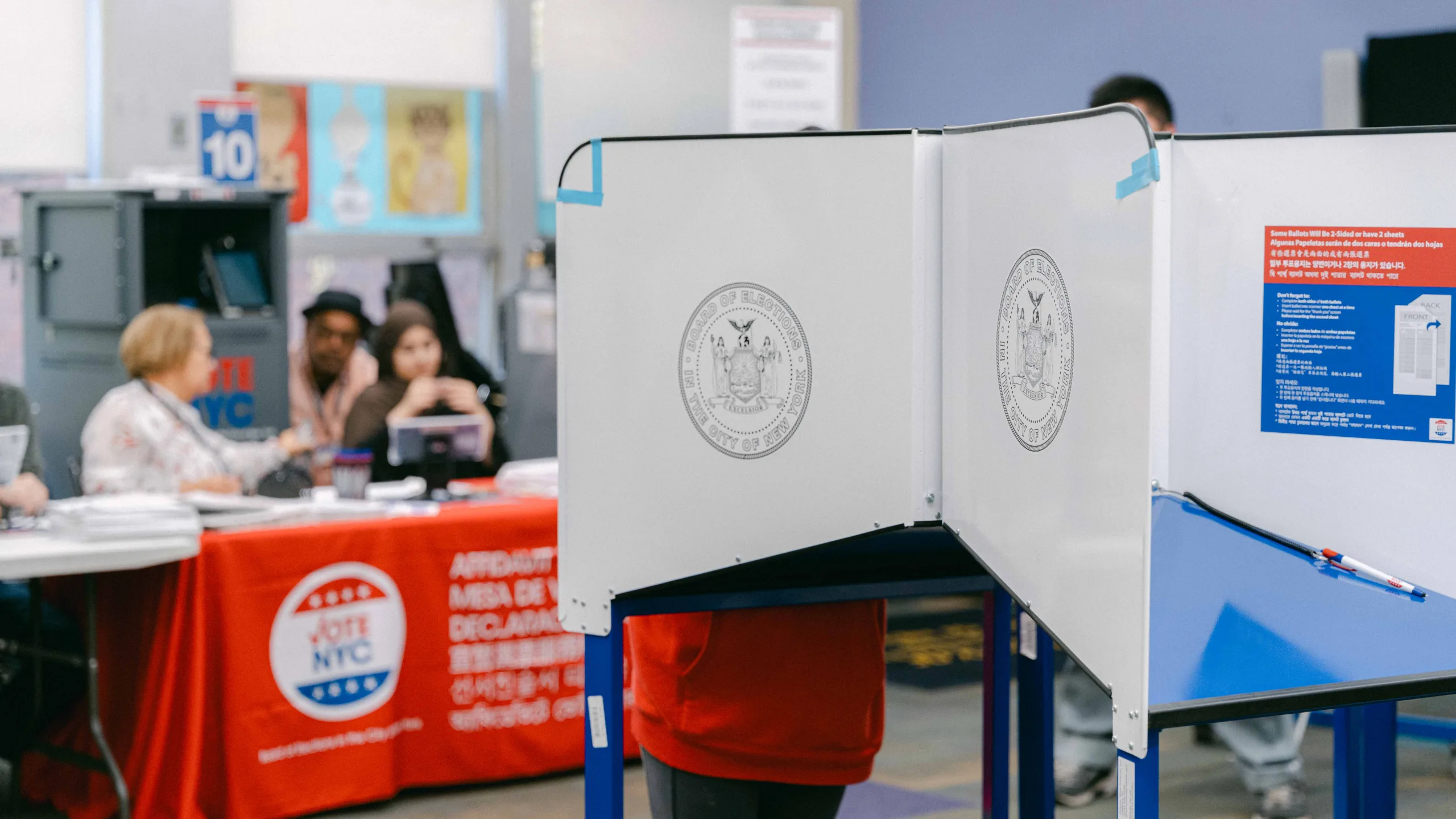
A sidebar for New Yorkers: you may recall that in 2021, the New York City Council passed a law that would have allowed noncitizens to vote in local elections. That law was stalled by the courts before it ever went into effect, and was ultimately found in 2025 to be a violation of the state constitution. Federal law strictly prohibits noncitizens from voting in presidential or congressional elections, but it specifically doesn’t apply to local elections, leaving cities and states to decide whether they want to allow noncitizens to vote for local office.
Even when noncitizens somehow do get registered and actually cast a ballot — it almost always turns out to be the result of a mistake, rather than a deliberate effort to sneak in an illegal vote.
Back to how mix ups happen: In nearly all cases of confirmed noncitizen voting, the voter was a lawful permanent resident, and believed — or had even been told — that their status qualified them to vote in an election. Now, that’s still a violation of the federal law that prohibits a noncitizen from voting in a presidential or congressional election. It is not, however, a violation of federal laws criminalizing fraudulent registration, for example, because those laws require you to “knowingly” give false information to an election official in order to cast your vote.
Many state voting laws, similarly, criminalize noncitizen voting only when the voter knows they’re ineligible but lies about it. The question of what standard the law requires for knowing you’re committing wrongdoing is a pretty common one in criminal law, and often requires closely parsing individual words in the text of a statute. In Alaska, for example, it’s a state misdemeanor to “knowingly” give false information to an election official, but it’s a felony to “intentionally” misrepresent your citizenship in order to vote.
This isn’t a cute law-school hypothetical. It’s a very real distinction at the heart of a case that’s been fought out in Alaska courts this year, after state prosecutors charged eleven people with felony voter misconduct for voting as noncitizens. All eleven are American Samoans, which makes them American by nationality, but not by citizenship — but all eleven have maintained that they were told that, as Americans, they had the right to vote. One even ran for, and was elected to, her local school board, which is what brought the cases to the attention of state officials to begin with, since in Alaska noncitizens are not allowed to hold office either.
Alaska, like other states, has a “motor-voter” program that allows people to register to vote while applying for or renewing drivers’ licenses. Ironically, the federal government requires states to provide motor-voter programs, though states vary in how easy motor-voter registration is. For example, in some states, you could have to check a box to be registered to vote; in other states you could be automatically registered to vote unless you check a box opting out.
Theoretically, these programs are only supposed to register people who are actually eligible to vote. But mistakes happen. The Alaska Beacon has identified dozens of cases in which noncitizens were accidentally added to the voter rolls. In one case, a couple had been approved for naturalization, but had their citizenship ceremony canceled when the federal government found out that they’d previously been accidentally registered to vote — even though they had never voted, and canceled their registration as soon as they found out they were ineligible.
In the case of the Samoans, state prosecutors argue that “intentionally” in the felony statute meant the same thing as “knowingly” in the misdemeanor statute. But lawyers for the defendants — and, ultimately, the state court of appeals — said otherwise: that you do, in fact, need to be aware that you’re committing fraud in order to act “intentionally.” The alternative, the appeals judges found, would be to criminalize people for innocent mistakes.
Like any law, there are reasonable questions about where to strike the balance between permissiveness and strictness. Is it okay to penalize people for innocent mistakes, in the hopes that everyone else will be more careful in future to avoid prosecution? Or is it worse for noncitizens to believe they are eligible to vote, or for recently-naturalized citizens (for example) to believe they’re not?
But that is not, by any means, how the Trump administration is presenting the issue.
For as long as I’ve been covering immigration, there have been right-wing rumors every election cycle about people getting bused in from Mexico to cast votes, about widespread illegal voting in California, etc. etc. It predates Trump. But after he lost the 2020 election, it appears to have become Trump’s personal obsession — and as we have seen with everything from attacks on Minnesota’s Somali community to the presidential ballroom, the president’s personal obsessions tend to get a ton of money and personnel thrown at them.
Which is why, even with the full might of the federal government behind them, it’s particularly remarkable that they still can’t identify with a whole lot of precision who these supposed ineligible voters are.
Earlier this month, the Department of Justice sued California to try to force the state to set aside ballots cast by anyone on a list of people they believe may be noncitizens registered to vote — a list that is some 100,000 names long — until the government can verify their citizenship. But in its court filings, the DOJ says that it would be unrealistic to expect them to check all those names before Election Day.
The awkward truth is that there just isn’t a single data source that can be relied upon to perfectly reflect who is and isn’t eligible to vote. Records may specify whether someone was born in the U.S. or not — which lumps naturalized citizens in with noncitizens. Similarly, when someone gets naturalized, it may take a while for relevant databases to be updated to reflect that.
The door-to-door interrogations about voting are, of course, even less well targeted and an even more obvious waste of time and personnel. (It is tempting, sometimes, to conclude that Congress has given ICE and CBP more money than they know what to do with, and sometimes they’re just trying to spend out their budgets. But I digress.) By selecting which neighborhoods to go into, the administration is, of course, sending a clear message about what kinds of people it believes cannot legitimately vote. And in an environment in which even U.S. citizens are being arrested by ICE agents, it’s not implausible that some citizens will be afraid to show up on Election Day for fear of “looking illegal” while voting.
You might conclude that the intimidation is actually the true purpose of all the administration’s saber-rattling. Or you might conclude that it’s a government in thrall to a myth they’ve told themselves enough times that they actually believe it now. But as always, what the government’s intention is, is kind of irrelevant. Whether it’s “intentionally” intimidating voters or merely making innocent mistakes which scare people into staying home, the ballots remain uncast all the same.