

After hearing dozens of public comments opposing Metropolitan Park, an $8 billion casino and entertainment complex that has raised concerns among Queens residents about its potential environmental and social impacts on the borough’s immigrant-majority communities and floodplain, the city’s Public Design Commission on Tuesday deferred a vote on the project’s proposed building design, saying it needed more details before deciding on the project’s technical and aesthetic elements.
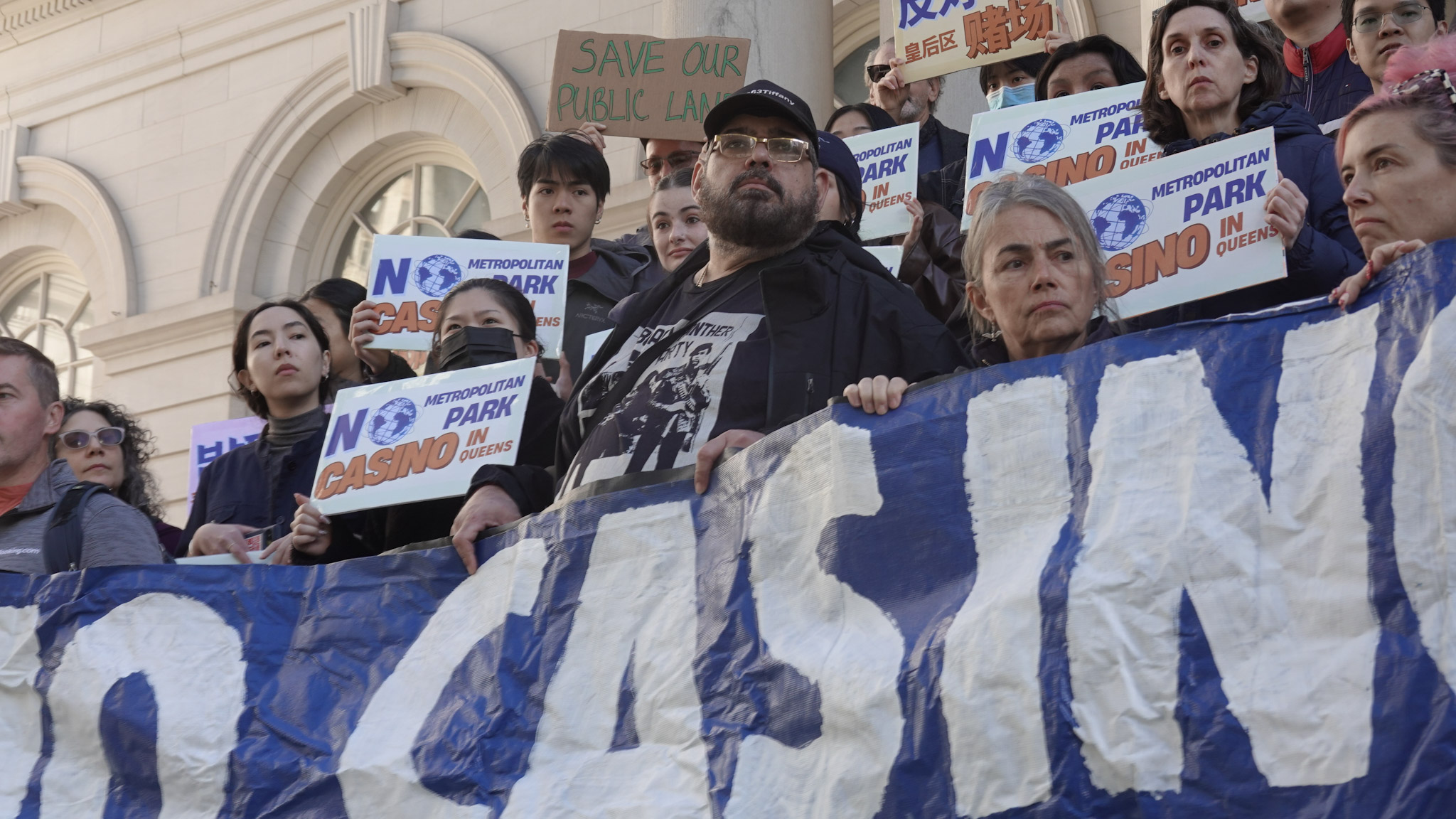
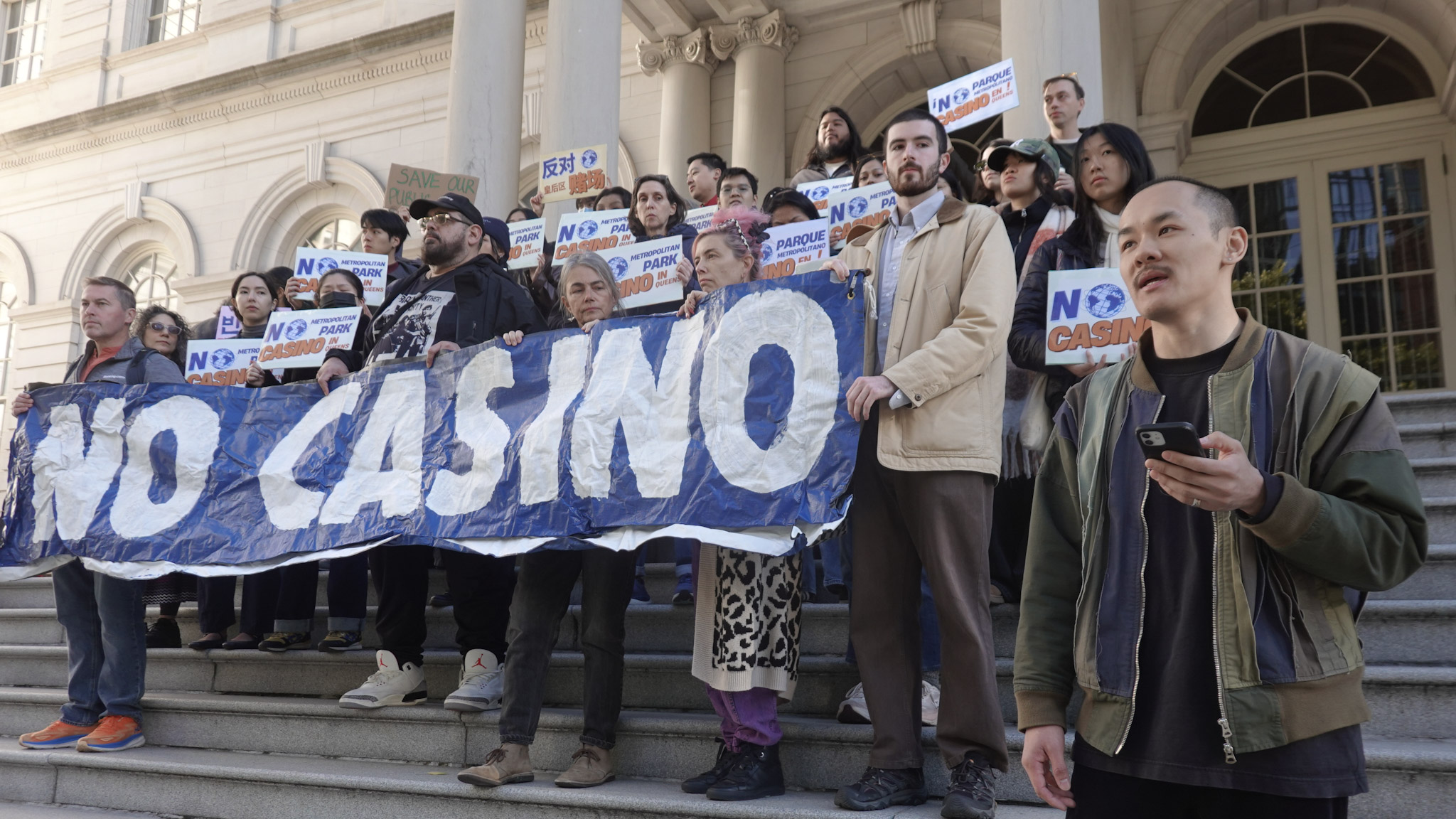
Directly before the hearing, more than 50 Queens residents, organizers and advocates rallied outside City Hall, urging the commission to vote against the project’s preliminary submission and establish minimum standards for meaningful public input, including at least 90 days’ notice before public hearings and providing accessible opportunities for the public to participate.
The Public Design Commission, the city agency responsible for reviewing the design of permanent structures, landscape architecture and art proposed on or over city-owned property, ultimately voted unanimously to defer its decision on Metropolitan Park.

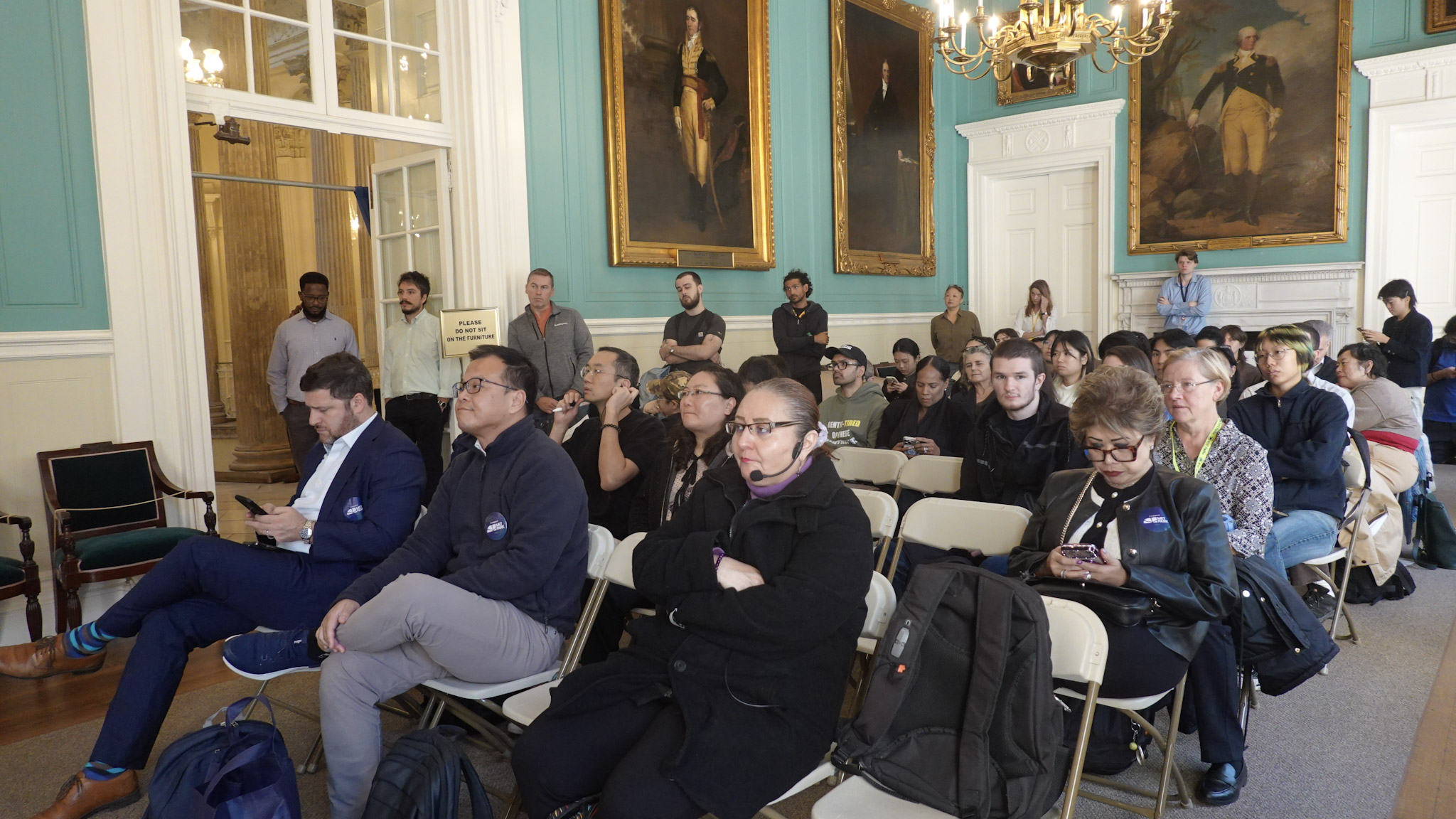
During the roughly four-hour hearing, opponents dominated the public comments. Many residents and advocates from Flushing, Jackson Heights, Elmhurst and Fresh Meadows reiterated their fears that the massive development, put forth by Mets owner Steven Cohen and one of the largest proposed in Queens’ history, would further burden communities already disproportionately affected by flooding and climate injustice.
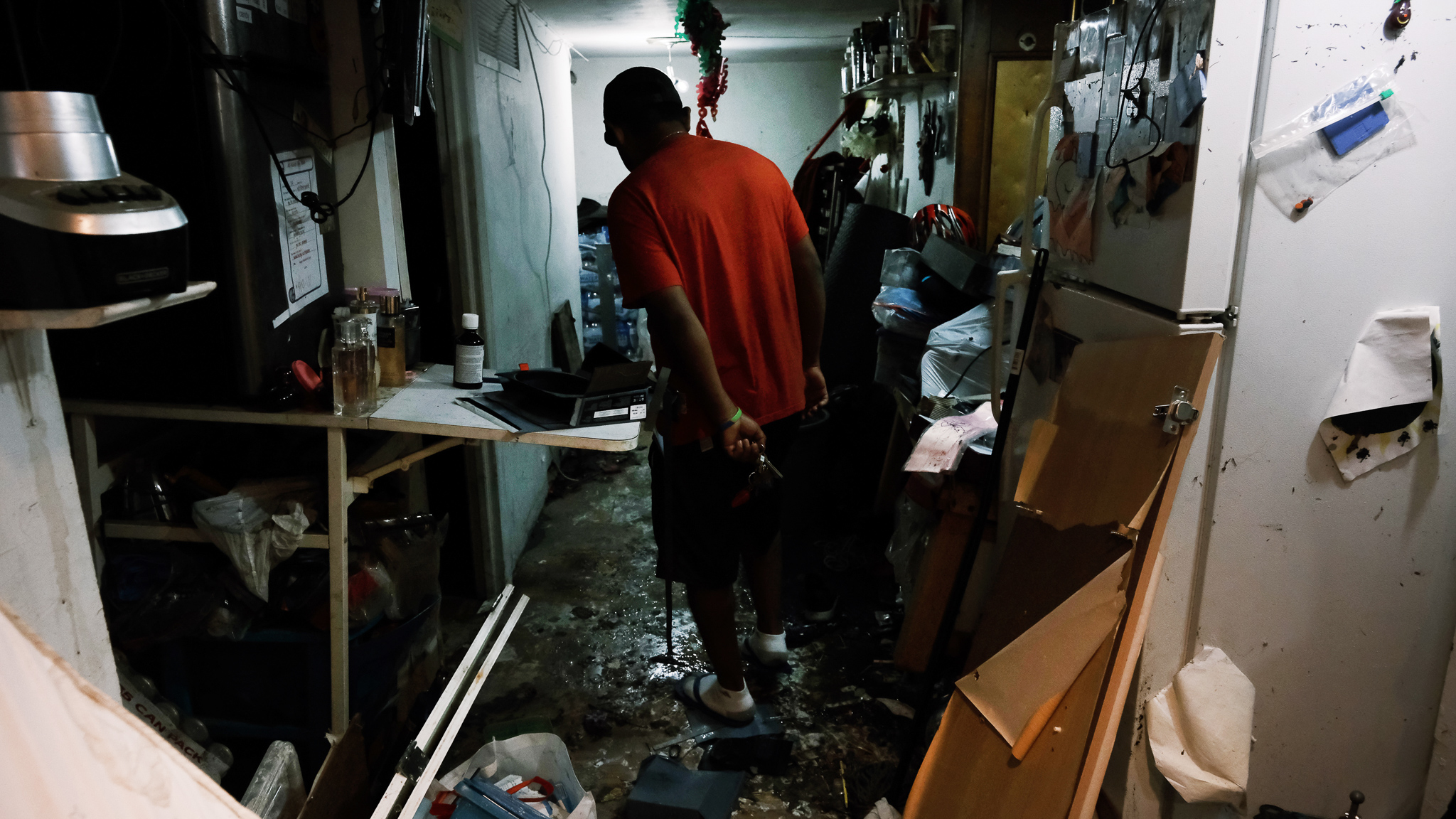
Over the summer and into early fall, Queens has already been hit by several severe flash flood events. According to Queens Eagle, the borough has experienced at least four significant flooding events in recent months amid intensifying storms linked to climate change.
“Our residents walk knee-deep in polluted stormwater and sewage overflow every time it rains,” said Jack Hu, a Flushing resident and organizer, at the rally before the hearing. “Steve Cohen’s project would add a massive casino, up to 2,300 hotel rooms on a floodplain, putting further strain on our aging sewage infrastructure, redirecting polluted stormwater and sewage into Flushing Bay and into the roads and basements of our homes. They have not demonstrated how they would comply with the city to mitigate environmental impacts.”
Some community members also questioned whether the project’s earlier approval process was flawed, a concern that has repeatedly surfaced at rallies over the past several years. The project is proposed to be built on top of public parkland, a 50-acre city-owned parking lot adjacent to Citi Field in Flushing.
Annie Lo, an attorney at the Asian American Legal Defense and Education Fund (AALDEF), criticized what she described as a lack of meaningful community input during the casino licensing process. She said working-class immigrants faced particular hurdles to participation, including weekday hearing schedules and language barriers that left some residents unaware of opportunities to weigh in.
Lo said AALDEF and the MinKwon Center for Community Action conducted an exit poll at Flushing polling sites in 2025, asking Asian voters about their ability to provide input on the casino proposal. “A staggering 83.5% of the voters we polled were not able to voice their opinion on the casino or were not even aware that there was a public input process,” Lo said.
Last year, the New York State Gaming Commission granted licenses to three downstate casino projects, including Metropolitan Park. Both the state commission and a spokesperson for Metropolitan Park previously told Documented that the casino siting process had provided substantial opportunities for public input.
In contrast, Helina Lo, a youth member of the MinKwon Center, expressed disappointment over what she saw as a lack of public awareness and opportunities for meaningful participation in the approval process.
“Most of the people I spoke to were elderly and are working-class immigrants who were often too depleted by the demands of survival to be civically engaged. […]I also learned that they’re simultaneously the most desperate to be heard, and yet the New York State Gaming Commission voted unanimously to recommend the plan, claiming the process was fair and that the community had their chance to voice their concerns,” said Lo.
Other opponents raised concerns about the project’s potential social harms, including gambling addiction, displacement and rising living costs, as well as a rise in crime and exploitation. Some parents worried that their children might be drawn to the casino while visiting the park for recreation.
But not all community members oppose the project. Supporters point to its promised economic benefits, including more than 23,000 construction and permanent union jobs and a $163 million community impact fund intended to support community organizations across Queens.
Johanna Flores, founder and CEO of Comunidad Latinx, a New York-based nonprofit that supports immigrant and Latino families, said the development could bring much-needed resources and employment opportunities to the borough.
“A job is more than a paycheck. It gives families financial stability, independence, and hope for a better future. With job training and good wages, we can help families build a stronger future,” Flores said. “This investment could make a real difference in our neighborhoods. But most importantly, we must make sure these promises become real opportunities for the people of Queens.”
At the end of the hearing, commissioners unanimously voted to defer their decision on the project’s proposed building designs. They cited concerns raised during the hearing, including stormwater runoff, pedestrian and traffic flow through public spaces, proposed gates and the use of opaque glass around the casino.
“It’s just the sequence of things that makes it so that we don’t understand the underlying conditions,” said Public Design Commission president Deborah Marton. “We can’t really think about this until [we] make sure we understand the site as a whole.”
The commission asked the project’s design team to submit a report detailing an integrated stormwater management plan for the entire site. The report must also address how the plan relates to the project’s pedestrian and vehicle pathways, buildings and landscaping, as well as the site’s relationship to the surrounding landscape.
“It was really heartening to have commissioners actually listen to and address our concerns.”
—Jack Hu, Flushing resident and organizer
Hu welcomed the commissioners’ decision after the hearing. “It was really heartening to have commissioners actually listen to and address our concerns, and we appreciate that they continue to put the public first,” he said. “We continue to call on commissioners to commit to meaningful public input standards that we share with them.”
However, the deferral and subsequent delay may not change the project’s underlying land-use approvals. During the hearing, one commissioner noted that the site’s intended use had already been determined. “And PDC, as a part of our city government, understands that that use has been determined and has received previous requisite approvals from the local community boards, elected officials, and government agencies,” the commissioner said.
Karl Ricket, a spokesperson for Metropolitan Park, said the project was “well underway.”
“For over 80 years, this area has been nothing but parking lots. Metropolitan Park will finally transform this asphalt into 25 acres of actual public park space and help to address the climate issues facing the area. Environmental advocates, unions, elected officials, and the local community all overwhelmingly support Metropolitan Park,” Ricket said.
He also pointed to an endorsement from the Waterfront Alliance, which described the project as “one of the most forward-thinking, climate-resilient, public-private partnerships.”
Ricket said the existing 50 acres of asphalt surrounding Citi Field absorb heat, contributing to higher temperatures in nearby neighborhoods, and allow polluted stormwater to flow unfiltered into Flushing Bay.
He contended that the project would incorporate climate resilience measures, including the replacement of impermeable asphalt with landscaped open space to retain water and reduce runoff, the installation of green roofs and solar power, the planting of hundreds of trees, the raising of new development above the existing grade and out of the floodplain, and the upgrading of stormwater infrastructure to comply with state and city requirements under the Unified Stormwater Rule.
As of publication, the Public Design Commission had not responded to Documented’s inquiry about when it would vote on the project.