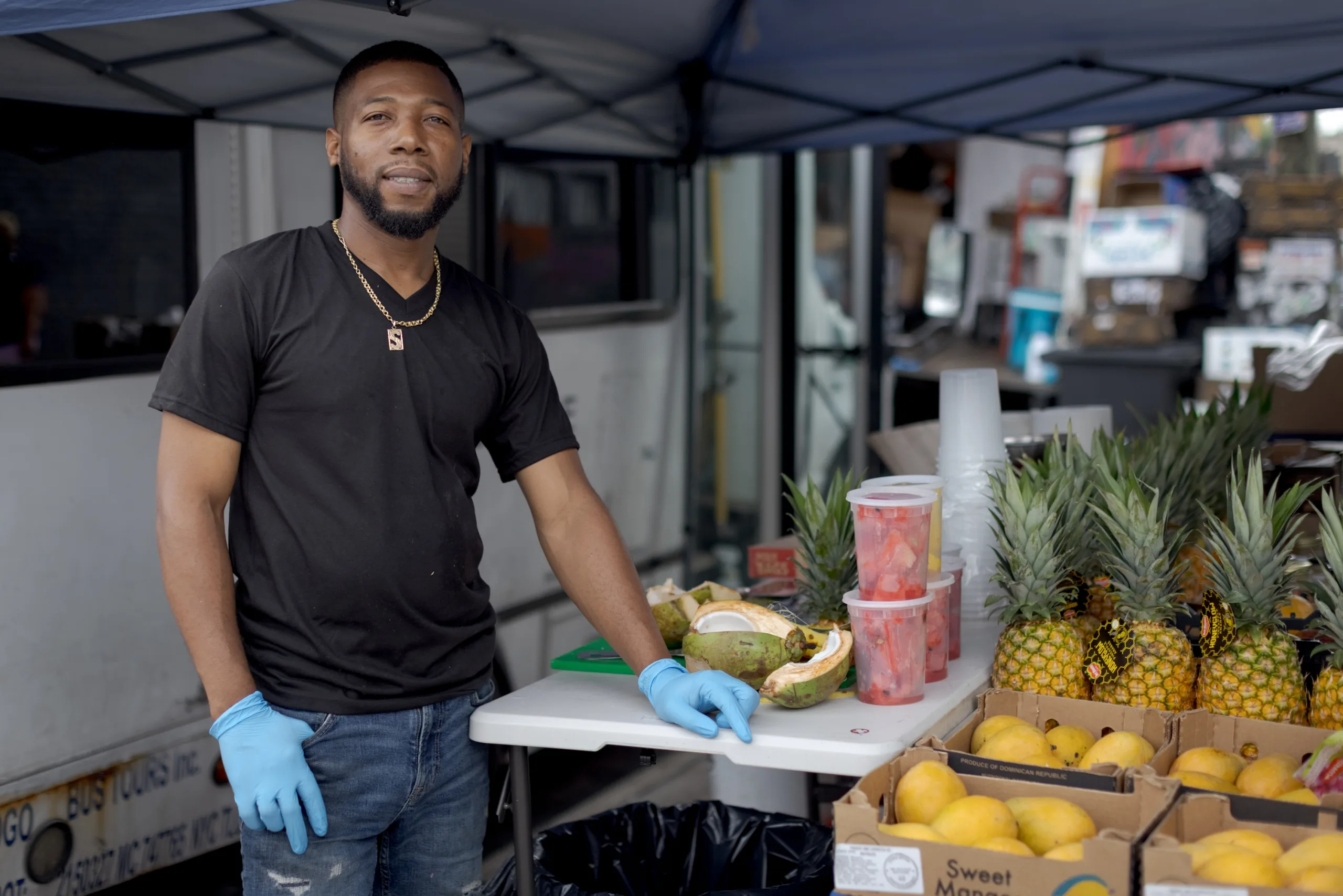


Each morning, before the city stirs, Sherwin Williams is already in motion.
By 3 a.m., he’s often out the door, deftly navigating the wholesale markets of Brooklyn, Queens, or the Bronx in search of the freshest produce.
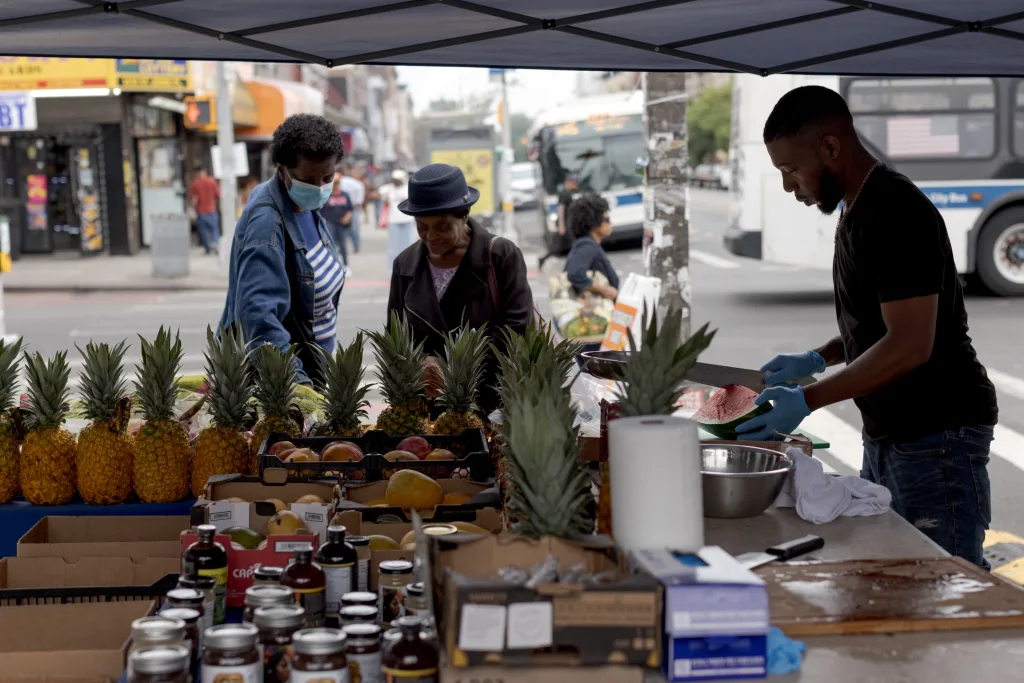
Once satisfied with his haul, he drives back to his spot — the corner of Utica Avenue and St. John Avenue in Crown Heights, Brooklyn — unloads his two trucks, sets up his tables, and officially opens the Disturbance Ital Market for the day. He then stocks fresh seasonal fruits and gets to work blending fresh juices for his early morning customers.

It’s grueling and often thankless work, he says, but he remains determined and in some ways, his daily grind has become a meditation.
“I mean, time is your best friend or your worst enemy,” he says. “You could lose money, but you can’t win back time.”
Williams was born and raised in Gonzales, Laventille, a small but tough neighborhood in Port of Spain, the capital of Trinidad and Tobago. He learned early in his childhood that survival depended on instinct and initiative.
“It was fun until you get a little older,” he said of where he grew up. “Crime gets out of hand — as kids, we had to learn how to feed ourselves, how to defend ourselves.”
As a young kid in a poor neighborhood he always dreamed of a better life. One where hard work would lead to security and a chance to support his family. “Just like everybody, I dreamt of making a better life, to do something different,” he said.
In Port of Spain, beginning when he was just 16 years old, Williams worked as a construction worker, then ran a car wash business and did property maintenance and landscaping at the same time. “It wasn’t the best, but it wasn’t the worst things,” he recalls.
Before settling in New York in 2019, when he was 31 years old, he often traveled to the United States on school breaks, visiting family under a valid visa. Since his life and business were rooted in Trinidad, he never intended to stay in the U.S. permanently.
But that year, he came to spend time with his wife, just months before the COVID-19 pandemic hit. As borders closed and his business back home came to a halt, returning to Trinidad and Tobago was no longer an option.
“I was forced to start over from scratch,” he said.
In New York, he found work managing construction sites across Queens, until a contractor’s illegal dealings brought it all crashing down.
“He did some shady work. Got caught. I took the blame,” Williams recounts. “That’s when I decided I couldn’t let my future depend on anybody else. I had to do something for myself.”
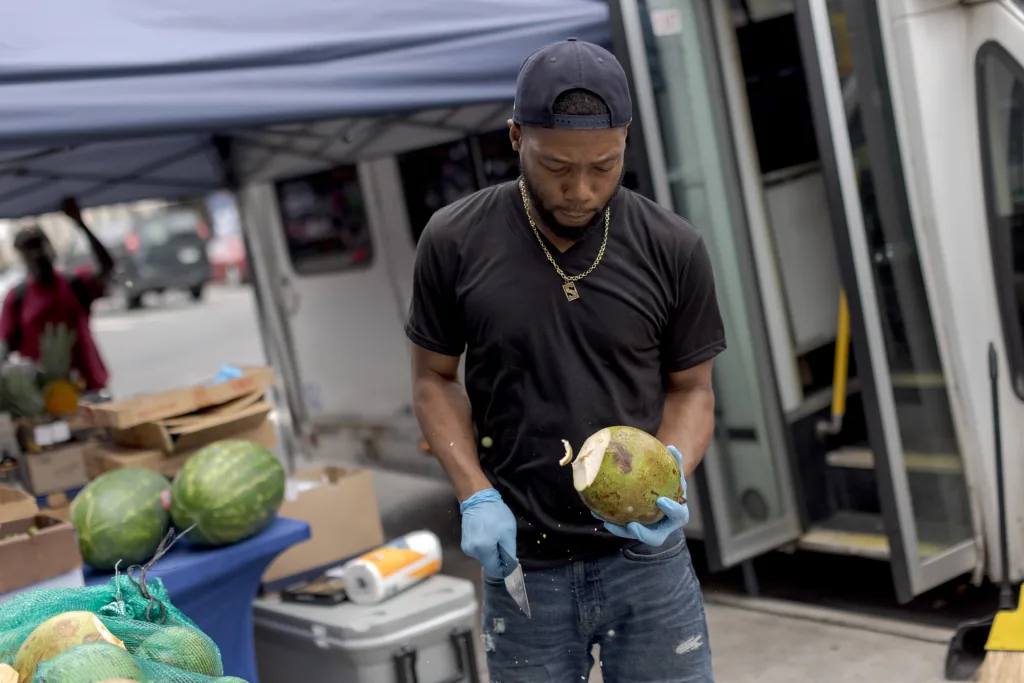
So he turned to fruit. Williams knows from experience that in the punishing heat of summer, clients need to hydrate, therefore, he prioritizes fruits like watermelon, pineapple, soursop and electrolyte-heavy beverages like coconut water.
Selling fruit is more difficult in the winter, he says, especially produce like watermelons that thrive in warmer months. Tropical fruits such as bananas, avocados and peppers don’t hold up well in cold weather, making them harder to source and sell. But with four years of experience under his belt, Williams learned which fruits to buy, and which ones to avoid, depending on the season.
Also Read: From Peru with Love: This Family is Bringing a Taste of Arequipa to Queens
On his tables, customers will also find sea moss, governor plums, tamarind, okra and Spanish lime among other products that look, feel and smell of the Caribbean islands.
“I make my choice based on the products I see and based on how good the quality of the products is,” he said.
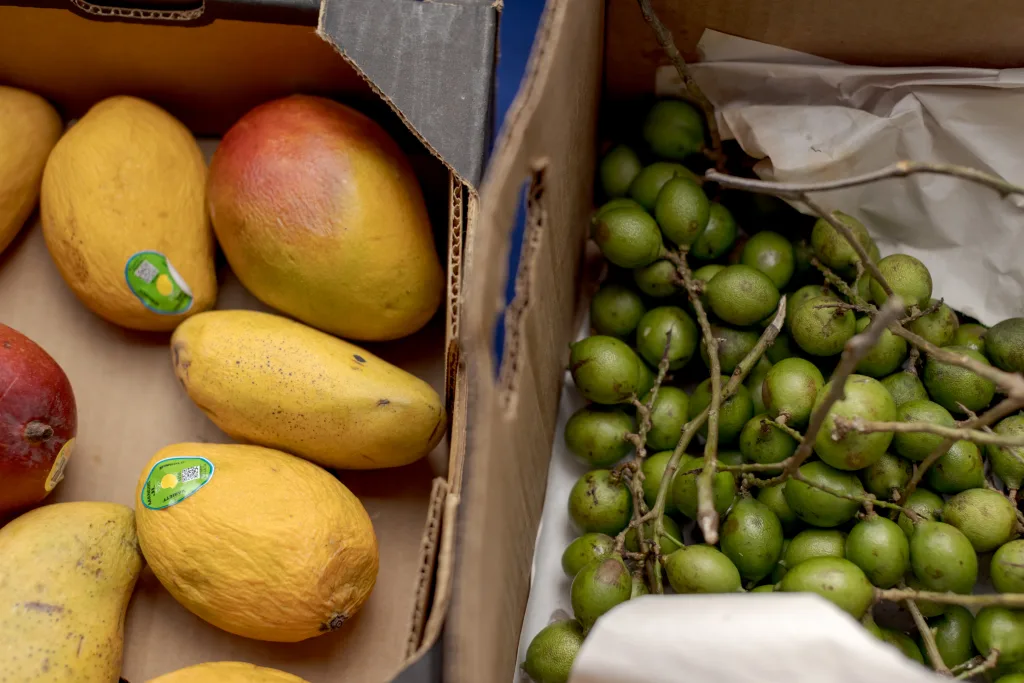
But selling in the streets does not come without challenges. “People come with short money. If you turn your back, they try to take your stuff. People try all kinds of games on you out here,” Williams said.
But his biggest challenge has been interacting with people everyday. Williams understands that everyone has their own personality and that they, on any given day, may be dealing with personal struggles. So, he tries to focus on managing his emotions and says he aims to be the coolest vendor.
“You cannot have a bad day when you’re in the streets. You can have a bad moment. You can have a bad hour. But to have a bad day, you better close up and go home,” he said.
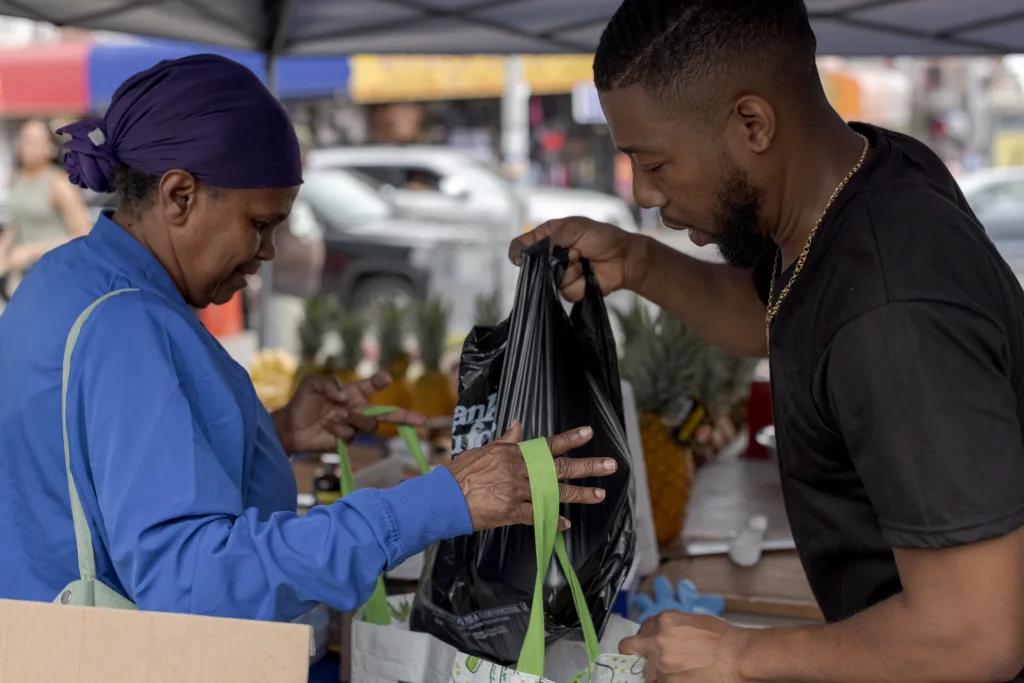
His corner hustle on Utica Ave. has become a touchstone where people from different Caribbean countries come together, share stories and feel a sense of belonging.
“I spread my Caribbean wings,” he says, smiling. “We laugh, talk some slang. Everybody have a good little vibes. It’s one big family.”
But success didn’t come without struggle. In 2022, after being invited to set up shop in front of a neighboring business, Williams found himself arrested when those same shop owners called the police on him. “They said I threatened them,” he said. “Got locked up for selling juice.” After about six months, the case was dismissed and Williams moved on with his business to the opposite corner of the street.
The arrest, he believes, was more about jealousy than justice. “Their place was empty. Mine had a crowd.”
At the time, Williams didn’t yet have a vending license. He was in the process of securing one, but the incident led to the confiscation of his products, a $1000 fine and a brief but notable tarnishing of his reputation.
“Coming from where I come from, you learn to survive,” he said. “So I got back up. I moved to a new spot and kept going.”
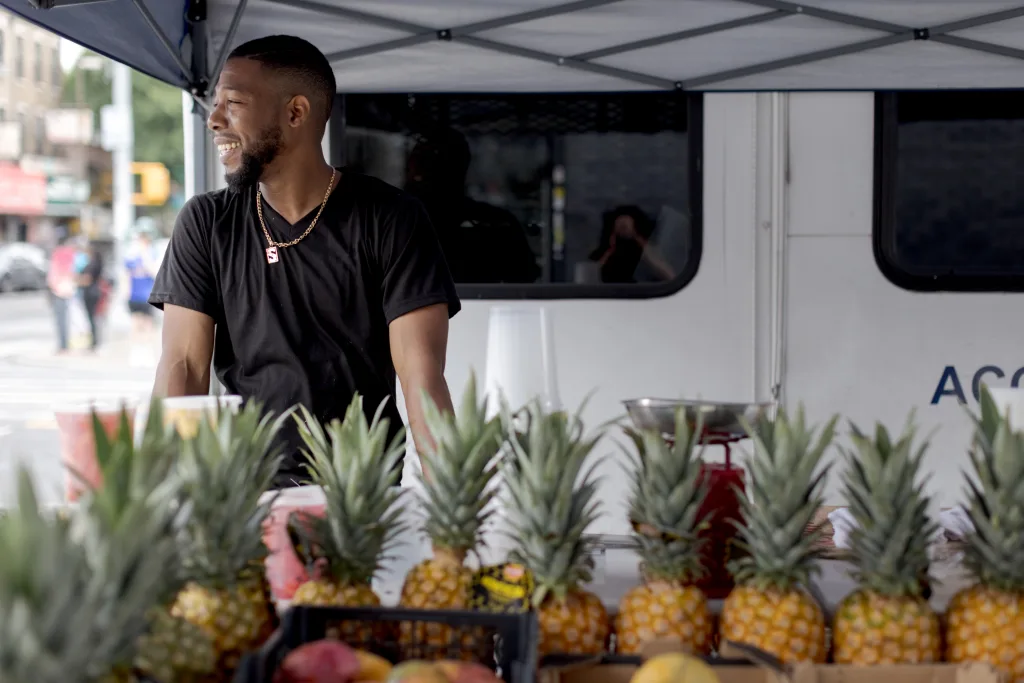
Williams has been hawking fruits, juices, and other Caribbean favorites from his current location for three years. And he does everything himself — from sourcing, to transporting, to setting up shop, chopping coconuts with ease — all while keeping his chin up and keeping up with customer demand.
“It used to be hard,” he said. “Now I can cut a coconut like riding a bike.”
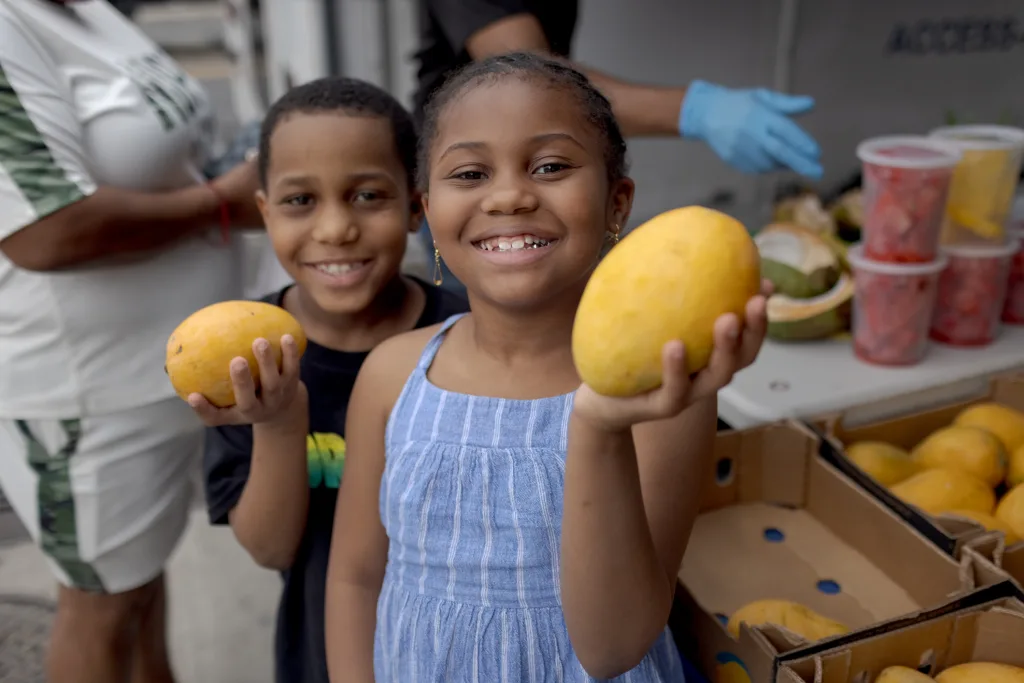
His clientele is just as diverse as his produce. “I serve Trinidadians, Grenadians, Jamaicans, Haitians, Dominicans, even Americans,” he said. “People support. If they didn’t, I wouldn’t be here. Shout out to the people who make it possible.”
Also Read: Malatang Vendors Bring Sichuan Heat to the Streets
Though Williams serves the community with pride, he says the challenges of street vending are relentless. “The weather is the biggest enemy,” he said. “Wintertime, your fingers go numb. Your body wears down. It’s hard. I can’t see myself doing this on the street in five years.”
That’s why he says he needs a storefront that offers warmth, protection and, above all, permanence.
The sidewalk is his workplace. His stand, weather-beaten but resolute, not only dishes out coconuts and carrot juice — but a Caribbean tenacity as well.
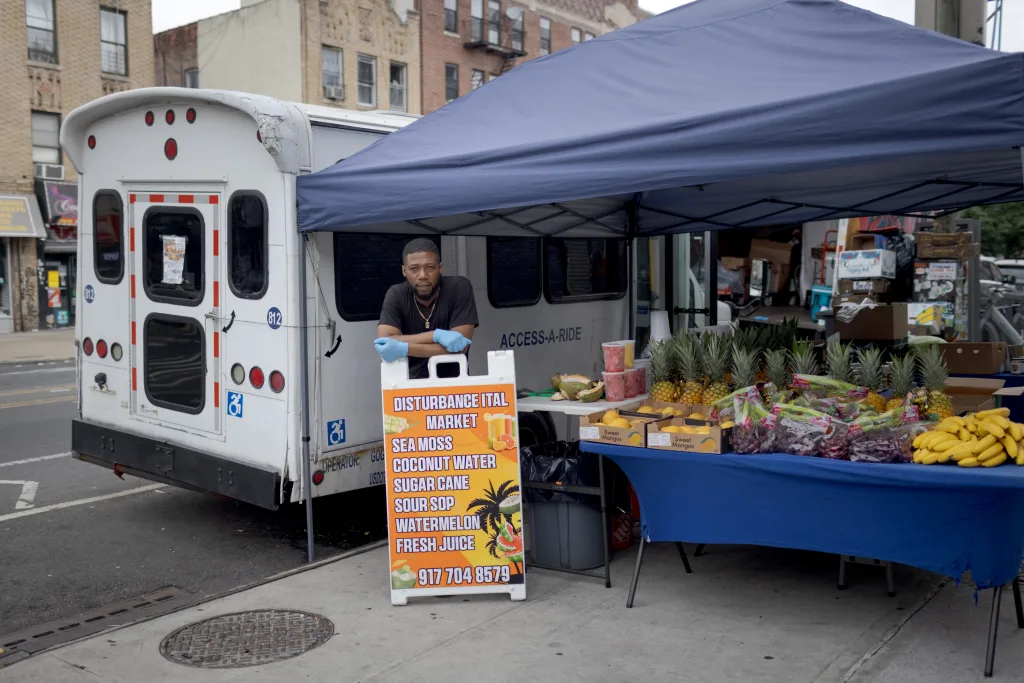
“I want to build something stable. For me. For my daughters. For my mom back home in Trinidad. I want to show that if you believe in yourself, if you don’t give up, you can make it.”
When asked what this stand means to him, he paused. “It represents believing in yourself,” he said. “Don’t give up. Invest in yourself. God will provide.”