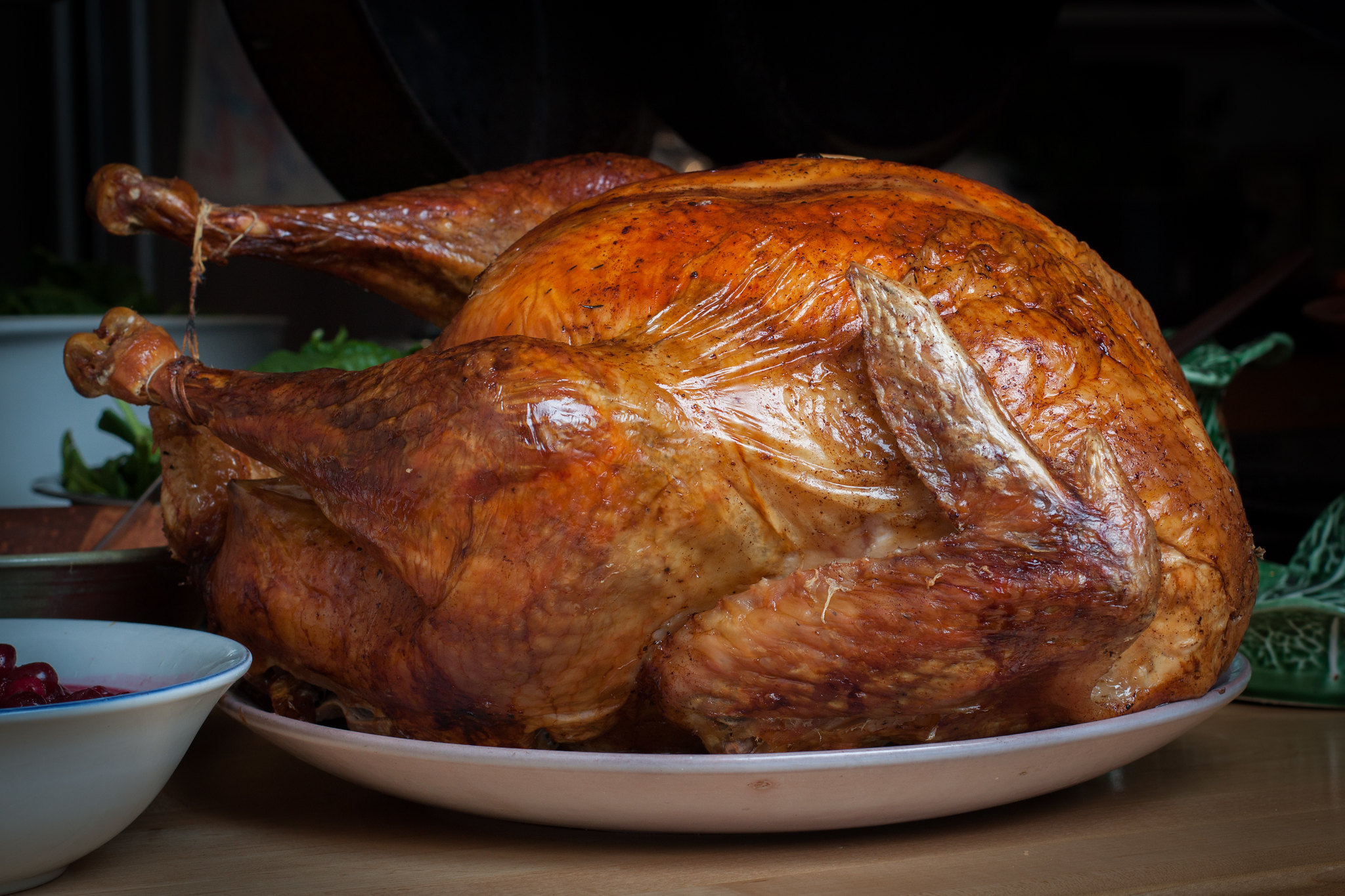


Inside her Bronx kitchen, Esperanza Cid leans over the table, finalizing the last step of her Thanksgiving ritual. The small space is warm from the oven, and the scent of roasted turkey fills the room. The sound of her blender rumbles steadily as she grinds together cloves, cumin, pepper, onion, garlic, chile guajillo and chile pulla, which she had been softening in water for two days. She strains the mixture in a pot and heats it on the stove.
She opens the oven and brushes the turkey with the deep red sauce, stroke by stroke, the way she had been taught to do as an eight-year-old in her hometown of Pachuca, Mexico.
Cid, now 49, remembers her grandmother preparing for Christmas celebrations in her hometown, inviting more than 30 neighbors and family members to come together for a holiday meal. During the day-long preparation, she said her grandmother taught her how to make the potent mixture she now uses to marinate her Thanksgiving turkey. This “Pavo Enchilado,” or chile marinated turkey, has become a favorite for her four children.

“For me it has been beautiful and important for my children to know where I come from and to know our roots. They were born here but I want them to know that we are from Mexico,” Cid said.
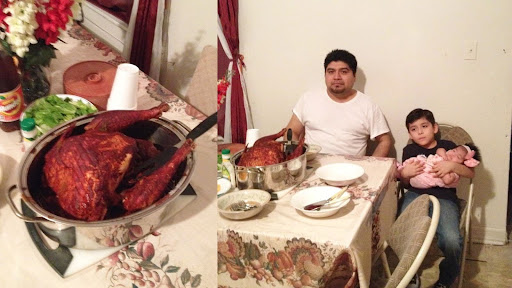
Millions of people in the United States will celebrate Thanksgiving this Thursday, a holiday filled with gratitude for friends and family. For those who are celebrating away from their home countries, like Cid, the holiday has become emblematic of their immigrant journey, often seen as an opportunity to mingle the traditions of the American holiday with their own cultural flavors. Those who spoke with Documented say Thanksgiving has become a way to respect the culture of their new home, while maintaining the richness of their heritage.
Back in Mexico, Cid said elderly women used to gather during the Christmas season to prepare feasts for holiday celebrations. There, she recalled, they would have the younger girls of the family — some as young as 7 years old — watch the older women cook. “They used to say that a woman needed to know how to cook,” Cid said. “They used to say ‘You have to separate this, you have to blend this, and you have to chop this,’” she recalled, referring to the different tasks she used to be assigned as a young girl during Las Posadas celebrations, a nine-day advent that is celebrated from Dec. 16 to 24. “We all used to [work together] and seeing [them cook] is how we learned.”
Cid first learned about Thanksgiving at 16, when she migrated to the United States from Mexico 35 years ago. Her cousin took her to their apartment in Queens and taught her about the U.S. holiday, explaining to her that people in the U.S. expressed their gratitude through family gatherings and a turkey feast. Cid celebrated Thanksgiving with her cousins and friends and six years later, as a wife and new mother, began to consider hosting herself.
Her first Thanksgiving turkey with her husband was a failure. “We did not know [the turkey] would take time. We put it in the oven too late and it did not cook. We did not eat turkey because it was not cooked until one in the morning,” she said. “We were embarrassed because we told the godparents to come eat turkey and it just wouldn’t cook.”
To save the day, her husband bought three rotisserie chickens from a nearby restaurant to serve it with the rice they had made.
Cid says that celebrating Thanksgiving with her children reminds her of the time she spent cooking with her grandmother, when she would help in the kitchen. Her oldest son— now 27 — would join her in the kitchen when he was a child, and would ask to bathe the turkey with the red sauce. “He used to say ‘I cooked the Turkey!’”
“He used to be so happy because everyone would be eating and he would ask: ‘How does it taste? I cooked it,’” she said with a smile. Her other children — ages 18, 15, 13 — also enjoy participating in the feast preparation. “They ask me every year if I will do the turkey,” Cid said, adding that she likes to stuff the turkey with boiled potatoes and chorizo, a Mexican spicy sausage.
Holiday and heritage
At first, Cid said the holiday felt strange because it was not one she grew up with and it was not part of her culture. With time, however, Thanksgiving has become more meaningful to her. Her experience mirrors that of Diana Fajardo, who only started celebrating the holiday three years ago after arriving in the U.S. from Colombia in the summer of 2022.
Fajardo, 42, said she first learned about the holiday from her son’s school calendar that had listed Thanksgiving as a day off. She did not know what it meant until both of her children, who were in 3rd and 9th grade at the time, arrived home each with a turkey in hand. “They came home saying that we needed to celebrate ‘el día del pavo’ (day of the turkey) on Thursday.”
One of her neighbors in Staten Island — to this day she still doesn’t know who it was — also dropped off a turkey in front of their house, along with other groceries. “At that point we had three turkeys, so we had to go online to learn and we understood that for the majority of the people it was a very meaningful moment to share and be thankful,” Fajardo said.
“So we celebrated the first ‘day of the turkey’ — like my children say — on November 24, 2022.”
Fajardo, along with her husband and three children, were joined by another Colombian family. They roasted two of the turkeys, assembled salad, and paired the food with mashed potatoes. During dinner they clinked their glasses and cheered for being together, and each person shared what they were thankful for. “We played a board game before the family left the house around midnight,” she said.
Also Read: Immigrants Grateful for ‘Belonging’ on Their First Thanksgiving
This year Fajardo says her family will celebrate Thanksgiving with the intention of highlighting dishes from Colombia. It will include lechona, roasted pig stuffed with rice, peas and spices, and tamales, which is a traditionally steamed dish made of corn dough, wrapped in plantain leaves, and filled with a type of meat or vegetables. She said they will cap the menu with natilla, a sweet and creamy milk-custard-like dessert made with cinnamon, panela, and cornstarch.
“Keeping in mind the holidays of the United States, we like to participate and be respectful to the meaningful dates,” Fajardo said. “While also not forgetting the cultural heritage from our country of origin, Colombia.”
Other immigrants have also found ways to blend their own traditions with the traditional American holiday. María Cifuentes, who’s lived in Jackson Heights for two decades, said infusing her turkey with seasoning from her home country of Peru helps her honor the food of her childhood.
“I add ají colorado [red chili paste], pepper, cumin, and garlic. I add a little bit of beer and wine. I also inject a bit of liquor [pisco and orange juice] into the turkey so that it’s really flavorful. I stuff it with fruits,” said Cifuentes, who migrated to the U.S. 20 years ago. She added that she likes to baste the turkey with butter to give it a golden color.
Cifuentes told Documented that this year she is very thankful to be alive, healthy and employed. Although she lives alone, she said she likes to roast the turkey and go out and share it with people on the street who are homeless or who do not have food to eat during the holiday season. “I like that I can share it with some people that need [food] more than me.”