

It was the middle of the night in late 2024 when loud bangs jolted Johane up from a deep sleep. Bleary eyed and disoriented, she thought her neighbors were shooting off firecrackers. But she soon realized the sounds were gunshots being fired outside her door in Port-au-Prince, Haiti. Armed groups were massacring civilians.
Johane, who requested that Documented not publish her last name due to fear of retribution, immediately fled from her house and caught a bus to her family’s home in Cap-Haitien, shaking and terrified throughout the winding, eight-hour journey. A medical student in Port-Au-Prince, she quickly realized that continuing her education in the capital was too unsafe.
But her relatives and friends living in New York City pooled money to send back home and support Johane, enabling her to reapply to a different program that would have otherwise been financially out of reach in the safety of Cap-Haitien. Now a doctor providing much-needed medical care in Haiti, Johane says the remittances she received from New York allowed her to accomplish this goal. “I am so grateful for that,” she told Documented.

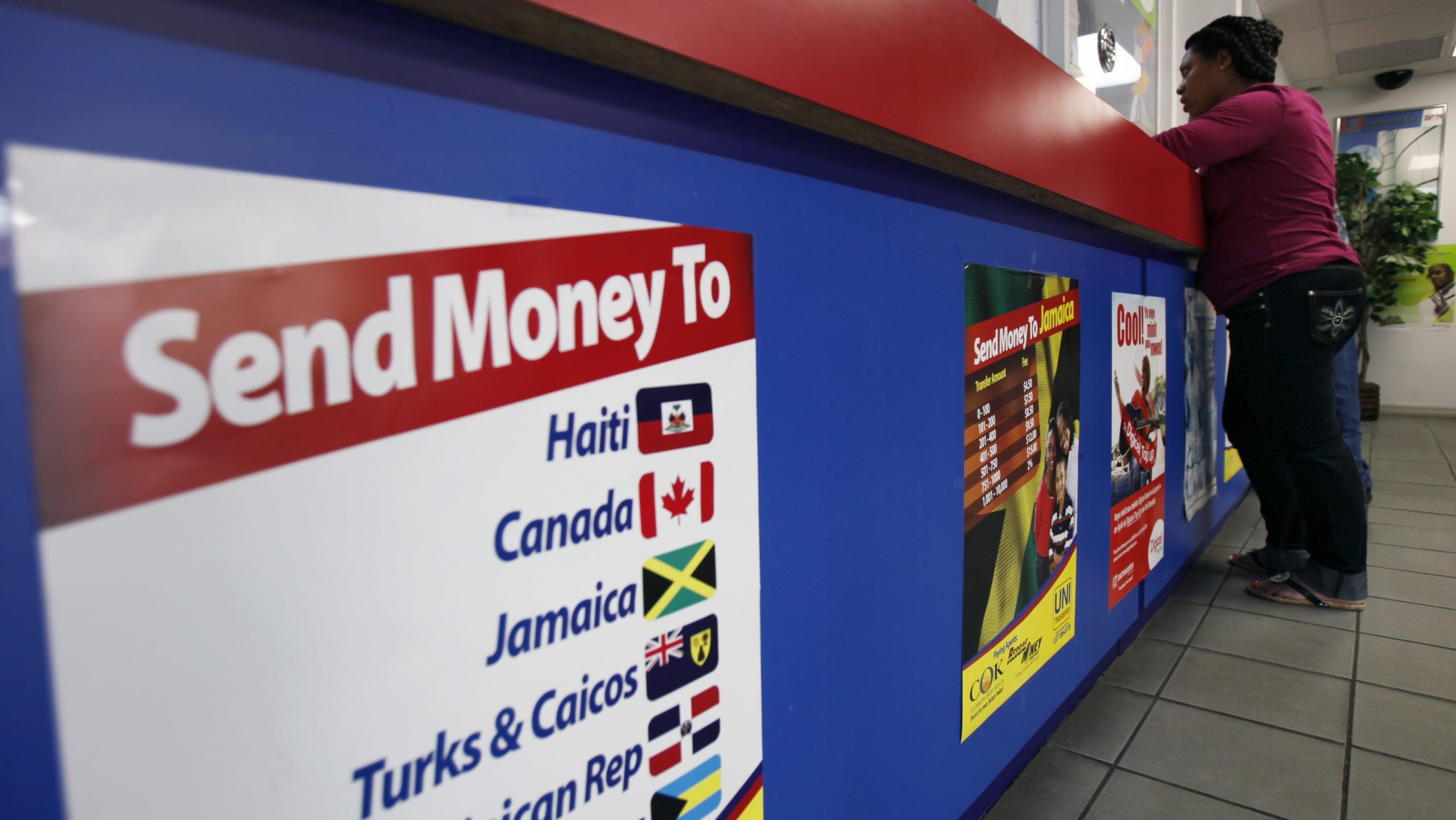
Remittances sent home from family members in the U.S. are a lifeline for about a third of families in Haiti. The funds help cover the costs of basic living expenses like food, school fees, and healthcare amid a worsening humanitarian crisis.
But on March 2, the U.S. Department of Homeland Security (DHS) announced via social media that it would work to end remittances sent from the U.S. to Haiti. “American dollars should NOT be used to subsidize foreign economies,” read the DHS post, suggesting that Haitians in the U.S. who send money back home are “taking $6.1 billion from America” every year. Documented was not able to verify the data cited by DHS, but available data from the IMF and the World Bank suggests remittances to Haiti totalled around $4.2 billion in 2024, with a majority coming from the U.S.
The announcement prompted a wave of fear, anxiety, and outrage from both Haitian New Yorkers and their families in Haiti. “When a person leaves Haiti, they become the sole provider for their entire family back home,” said Guerline Jozef, Executive Director of the nonprofit Haitian Bridge Alliance, citing the extreme instability and difficulty that Haitians face when trying to find a sustainable job. Around 90 percent of workers in Haiti are informally employed in precarious jobs, earning barely enough to cover a few meals amid extreme inflation. Nearly 60 percent of Haitians live on less than $3.65 per day. “Without support from the diaspora, people will just starve to death,” Jozef added. “That’s the bottom line.”
Accelerated by the Trump administration’s abrupt cancellation of most USAID funding in January 2025, the humanitarian crisis in Haiti continues to deteriorate, according to Human Rights Watch. The World Bank estimates more than half of Haiti’s population is living with acute food insecurity as a result. In addition, as the country grapples with rampant homicide, sexual violence, and outbreaks of disease, more than six million people in Haiti, including 3.3 million children, are in need of urgent humanitarian assistance.
Johane said she is already struggling to provide the necessary medicine to her patients. If remittances from the United States cease, she posited, “it would be worse than the earthquake,” referencing the catastrophic 7.0 magnitude earthquake that struck Haiti in 2010, killing over 220,000 people and forcing hundreds of thousands to seek refuge abroad.
While remittances make up a significant percentage of Haiti’s GDP — around 16 percent in 2024, according to World Bank data — many countries receive far more remittance money from the United States than Haiti does. In 2021, Haiti received around $2 billion in remittances from the U.S, according to the International Organization for Migration. Other countries, meanwhile, received similar or higher sums from the U.S. without enduring the same attacks by the Trump administration. According to the IOM, France received $3 billion dollars in 2021, for example, and $8 billion went to the Dominican Republic, Haiti’s neighbor, that same year. Mexico received $53 billion in remittances in 2021 — more than any other country.
Haitian immigrants contribute more financially to the U.S. economy than they send abroad, advocates say. Haitian TPS holders alone contribute $5.9 billion to the economy and pay over $1.5 billion in taxes annually, by some estimates. Across New York City, which is home to one of the country’s most established Haitian communities, Haitian immigrants fill crucial roles in nursing, home health care, transportation, food services and a range of other industries.
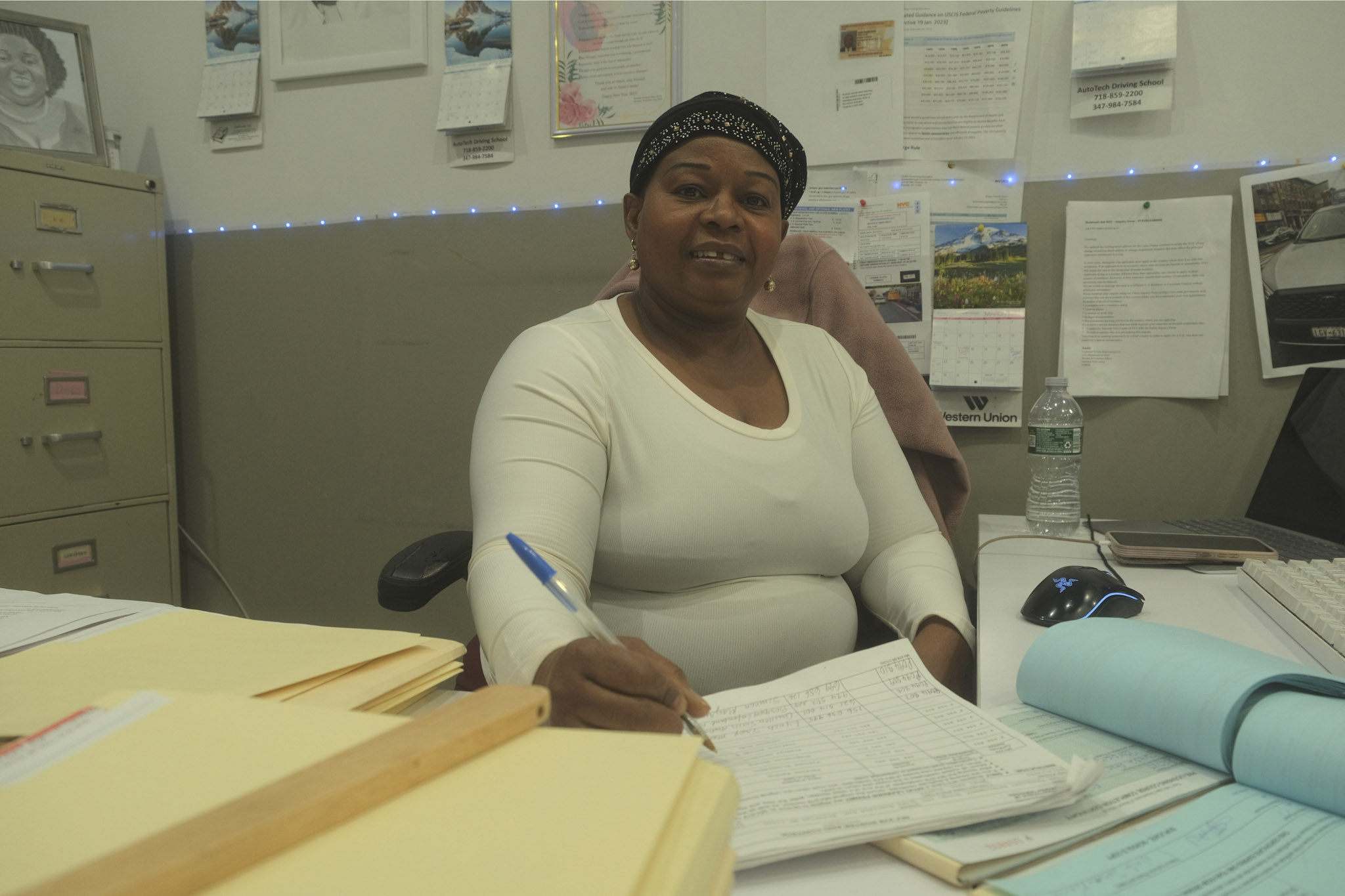
Judith Polidor, executive director of the Haitian Technical Development Group, which files immigration paperwork and teaches driving lessons in Flatbush, said her friends and neighbors were indignant about the Trump administration’s overreach.
“Haitians are hard workers. We are not staying here just to ask for food,” she said between taking client calls and organizing stacks of paperwork in her office in Flatbush. “If I’m waking up at five o’clock in the morning to work and earn my money, then I can do anything that I want with it.”
Trump’s targeting of Haitians aligns with his political strategy, suggested Gabrielle Apollon, Coordinator of the Hemispheric Network for Haitian Migrants’ Rights. “It’s a way to quickly activate a part of his base that is very racist and anti-immigrant,” she said.
During Trump’s second term, the administration has repeatedly tried to end Temporary Protected Status (TPS) for Haitian immigrants, which threatens the legal status of approximately 350,000 Haitians living in the U.S.
Additionally, while the Trump administration has previously limited remittances for other countries, it has not been done with the blanket restrictions that DHS has recently proposed for Haiti. In 2019, new limits on U.S. remittances to Cuba effectively caused Western Union, the country’s primary remittance sender, to cease operations in the country. On Jan. 1, 2026, a one percent tax on all remittances came into effect under Trump’s “Big Beautiful Bill” budget, adding another financial hurdle for immigrants looking to help support their families back home.
“If I’m waking up at five o’clock in the morning to work and earn my money, then I can do anything that I want with it.”
—Judith Polidor, executive director of the Haitian Technical Development Group
Advocates say this potential policy is hypocritical as well, suggesting that the United States bears some responsibility for the violence and instability unfolding in Haiti. “Due to U.S. foreign policies that have destroyed the agriculture in Haiti, the rice farming in Haiti has been completely dismantled,” Jozef said.
Armed groups in Haiti, she added, receive many of their weapons from the United States. The Haitian military has allied with U.S. private military contractors like Blackwater — and killed hundreds of civilians in the process.
Experts say that banning remittances to Haiti would likely have the opposite effect of the administration’s stated goals of stemming immigration from Haiti. “One of the main reasons people are migrating is due to the lack of suitable conditions in their home country,” Apollon said. Remittances allow Haitians to meet their basic needs while offering some stability, she added. Stopping the transfer of funds could worsen already dangerous conditions in Haiti, forcing them to flee to the U.S.
For now, Haitians in both the U.S. and Haiti are unsure if the ban will go into effect. In the meantime, out of caution, some Haitian New Yorkers have preemptively transferred extra funds to their families. Others called the Trump administration’s proposal “absurd,” suggesting that it was meant purely to instill fear.
If the Trump administration does attempt to implement the ban, advocates plan to fight back. “We are willing to sue them,” said Jozef.

Jules Barreau, who immigrated from Haiti to the United States in 1990, sends between $100 and $200 to his daughter and three grandchildren in Haiti every month. Sitting on a bench on Nostrand Avenue in Brooklyn, he told Documented that he does not want to give in to the Trump administration’s fearmongering, but if remittances become banned, his family in Haiti would simply not be able to eat. “It would be a disaster,” he said. “I’m their only hope.”