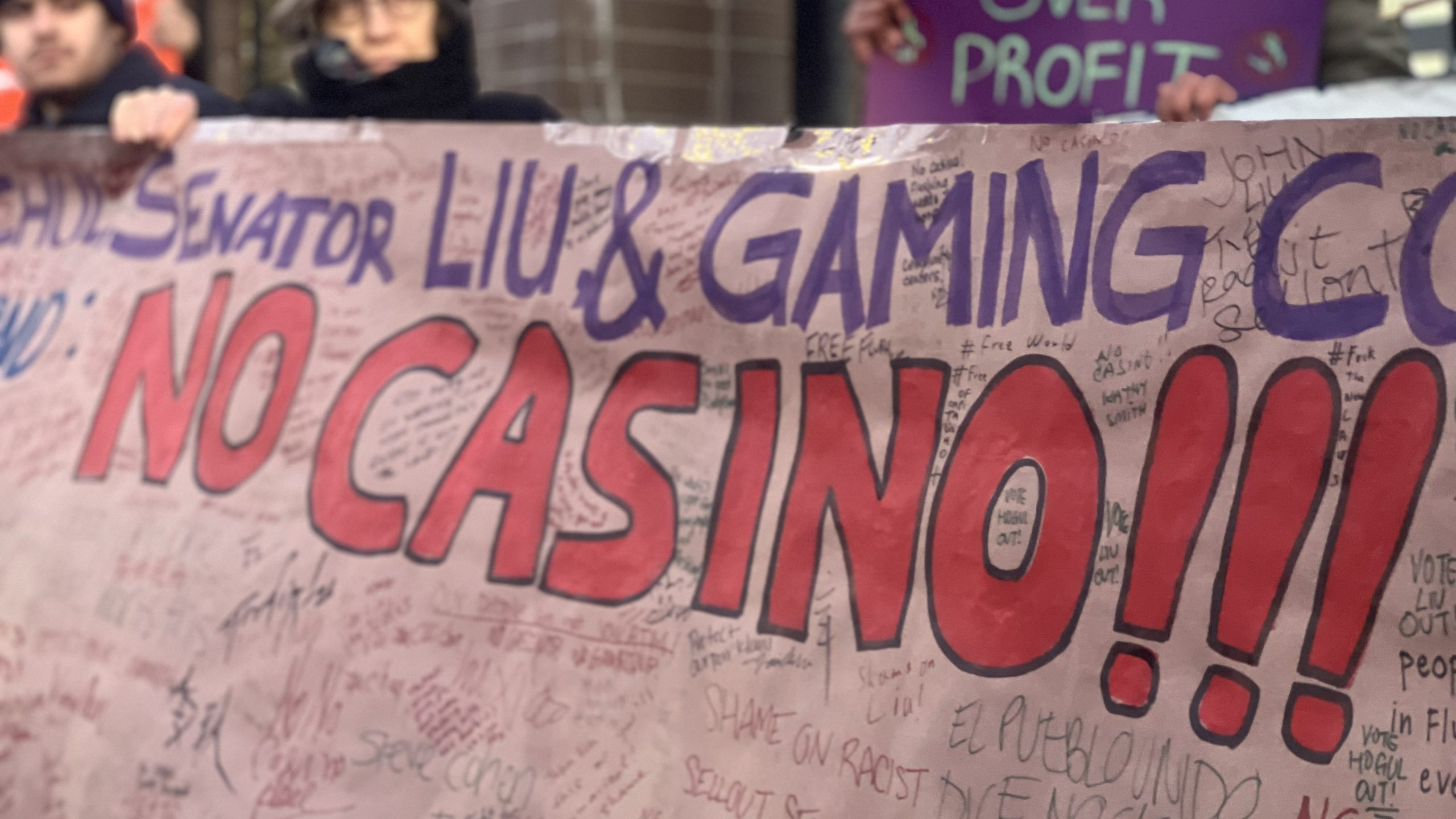


Queens residents say they plan to refile a lawsuit as soon as Friday seeking to overturn the state license granted for the proposed Metropolitan Park casino near Citi Field, after a judge dismissed their initial case in late March and then recused himself.
The original lawsuit, filed against the New York State Gaming Commission in the county court in Manhattan, challenged the license awarded to Queens Future LLC, the development team behind the $8 billion casino project led by Mets owner Steve Cohen and Hard Rock International.
On March 27, Judge Nicholas W. Moyne dismissed the case, saying that it was filed in the wrong county. He later recused himself, citing “a tangential social relationship with a member of the respondent” that could “create the appearance of partiality”.
Petitioners said they plan to file a motion to reargue the lawsuit, contending the initial dismissal was incorrect. They argue that under state law, the case was properly filed in New York County, where the Gaming Commission made its decision. They said they are also filing the lawsuit in Queens County.
At the center of the lawsuit are allegations that the public hearing process for the casino was flawed and unfairly favored supporters of the project.
According to the court filings, petitioners claimed that public hearings held last September limited opportunities for opponents to speak, shortened scheduled hearing times, and failed to provide adequate access for non-English-speaking and working residents who are impacted by the project.
The lawsuit also raised concerns about potential conflicts of interest involving members of the Community Advisory Committee and alleged that the Gaming Commission failed to ensure the integrity of casino sponsors, as required by law.
Karl Richett, a Metropolitan Park spokesperson, said in a statement that the project has gone through an “unprecedented and transparent approval process with overwhelming support”, that it gained 89 percent support from multiple levels of government, including six Queens community boards, the Queens borough president, as well as the city and the state legislature.
Richett added the project met the legal requirements for public input. Its Community Advisory Committee hearings drew 127 speakers — more than other approved casino projects. At both hearings last September, Richett said that the majority of speakers supported the project, with about 85% of participants speaking in favor at one session.
Opponents dispute the characterization. Bernadette McCrann, a Flushing resident and lead petitioner, said she observed multiple issues at the second Community Advisory Committee hearing on September 16, including early lineups that allowed supporters of the proposed casino to secure speaking slots ahead of others. She also said updated hearing information was not consistently communicated in languages other than English.
“This is a working-class, immigrant community, and we are wary of the effects a casino will have on the neighborhood,” McCrann said.
Another petitioner, Jack Hu, said he closely followed the project for years but was unaware of key Community Advisory Committee hearings until after they had taken place.
“I didn’t even hear about the hearings,” Hu said. “There was no real effort to gauge the actual opinions of the community.”
Hu said the lawsuit is not only aimed at stopping the project but also at highlighting what residents see as a biased approval process.
“We just want a fair public hearing process,” he said. “The process was manipulated through power, money and influence. We obviously have our opinion, and the vast majority of the people in our communities, if you look at the polling numbers, are against the casino.”
A survey conducted last year by the MinKwon Center for Community Action, a local advocacy group, found that 83.5% of Asian American respondents in Flushing said they were unaware of or unable to participate in the casino’s Community Advisory Committee process.
The Metropolitan Park proposal would transform roughly 50 acres of land near Citi Field into a mixed-use complex featuring a casino, hotel towers and entertainment facilities. Since it was unveiled in 2023, the project has drawn strong opposition from some local residents, who cite concerns about the loss of public land, potential social harms and impacts on the surrounding community.
Despite the pushback, the Gaming Commission voted unanimously in December to approve the license and declined to comment on the lawsuit.