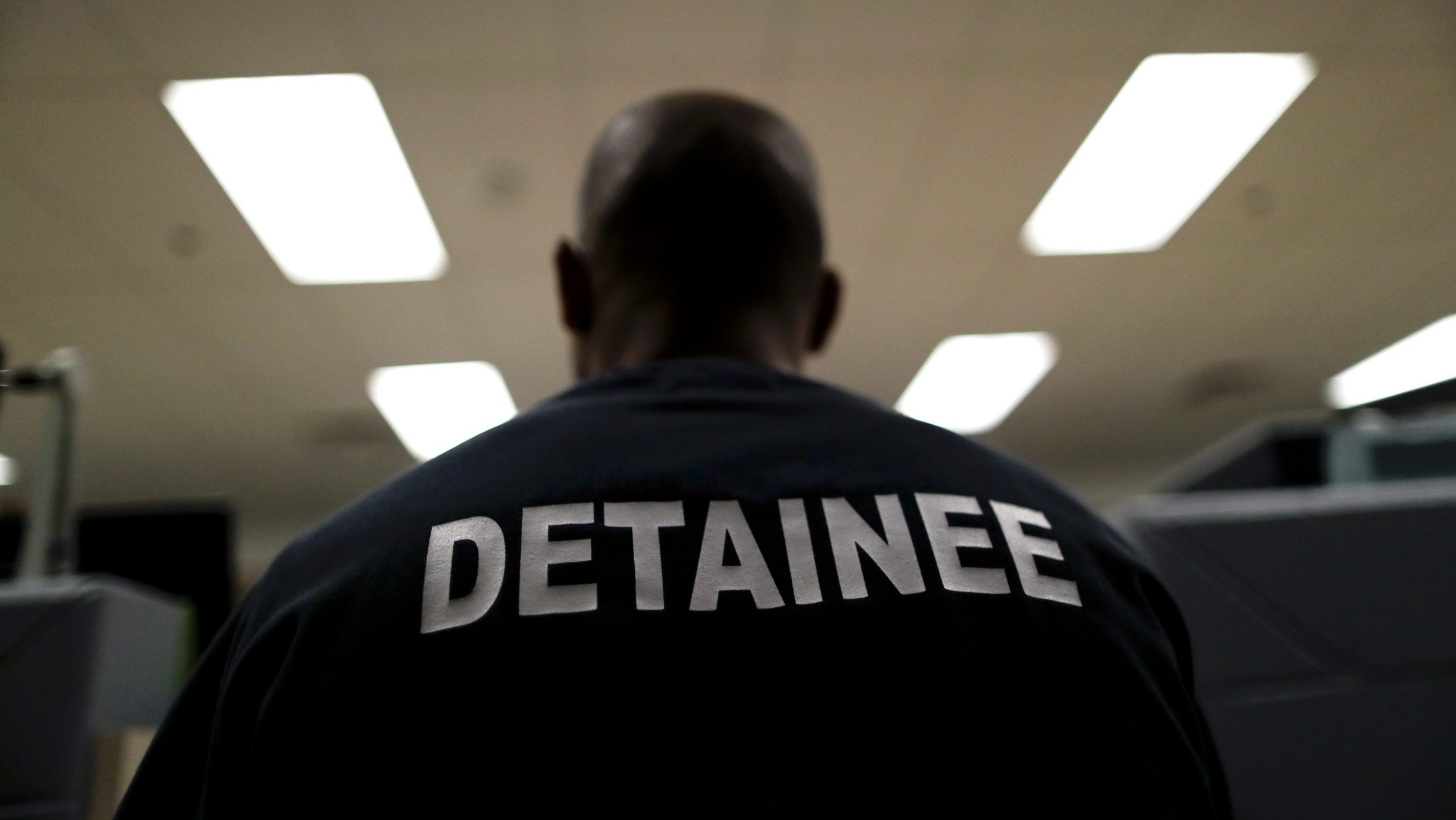


Fifteen years ago, the Obama administration created a new webpage called the Detainee Locator. It let members of the public – specifically, loved ones and lawyers of people who’d been arrested by immigration enforcement – find out where someone was being detained. The site became a routine part of the work of finding, contacting, and representing people in detention. Then, last year, it started to break down.
Technically – for a matter of days, or sometimes weeks – those people have disappeared.
Personally, I prefer to think of what’s happening as “dislocation.” People are, literally, being lost in system databases. It’s a matter of administrative carelessness, lawyers and paralegals told me this week. That’s not intended as an excuse. Instead, it’s an insight into just how profoundly the administration’s move-fast-and-break-things approach to detention has turned the whole process into a high-stakes scramble where overworked attorneys and traumatized families are always one step behind.

***
It isn’t at all uncommon for it to take several days for someone to show up in the Detainee Locator after being arrested – especially if they’re being kept in an informal “hold room” that isn’t officially part of the detention system. Even once they’re found, intake paralegal Taylor Alicea Jorgenson of the Amica Center for Immigrant Rights told me, it’s still a good idea to check the locator page once or twice a week – because they could be transferred at any time, to a facility elsewhere, or to a staging facility for deportation. Attorney Simon Sandoval-Moshenberg described the churn of transfers as “pinball.”
But when someone is transferred, it will again take several days for the detainee locator to catch up.
In the meantime, the webpage might show that someone is still at a detention center they’ve been transferred out of – leading an attorney to call, or a loved one to visit, only to be told that the person isn’t there anymore. The webpage might provide the phone number of an ICE field office to call for more information about the detainee’s whereabouts. What happens when you call that phone number varies from place to place, but it rarely seems to result in a breakthrough.
Laurie Ball Cooper of the International Refugee Assistance Project says that everyone she’s spoken to who’s called the ICE number in Minnesota has heard the phone ring for precisely 18 minutes and then been forcibly disconnected; in Maryland, ICE might pick up, and then search the Detainee Locator to try and find who you asked for.
Or the webpage might simply report that there are no records of anyone with that name or case number. That might mean they’ve been deported, released or transferred.
The lag time is measured in days, though Sandoval-Moshenberg says that in his experience it’s gotten better recently, reflecting someone’s location within hours of their arrival there. But sometimes, a detainee will be dislocated for weeks. “We try to give them three weeks to a month to kind of show up,” says Carla Ravelo, another Amica intake paralegal. One of Sandoval-Moshenberg’s clients has never shown up on the Detainee Locator webpage.
Locating someone in the detention system is essential for lawyers bringing on a new client. “Even if I’ve been retained on behalf of a detained refugee,” Ball Cooper explains, “I have no way to tell the U.S. government agency that has physical custody of them that I represent them.” Until her client appears in the detainee locator, she can’t file an electronic Notice of Appearance form.
It’s all the more important in the last year, as Trump administration policies have made it all but impossible to get someone out of detention via immigration court. The only remaining path for many detainees is to file a federal habeas motion – but lawyers have to know where the detainee is being held in order to know where the motion should even be filed. A federal judge in New York, for example, has no jurisdiction over a detainee who’s been sent to Louisiana.
Multiple lawyers told me that they will now routinely file motions that say they believe the immigrant is being held under the judge’s jurisdiction – sometimes based on where they were arrested, or based on a phone call that a family member received. Jodi Ziesemer of the New York Legal Assistance Group pointed out that these motions reflect the literal translation of the legal term habeas corpus: “show me the body.”
I started writing about immigration before the Detainee Locator came online, and I remember hearing law students recount the race to track down victims of Bush-era immigration raids by fanning out to detention centers. But the lawyers practicing during that period told me that, actually, the stakes were never as high then as they are now.
For one thing, people were generally detained near where they were arrested in those days. The geographic consolidation of detention in states like Louisiana and Texas (partly incentivized by laws in some blue states blocking ICE detention facilities, and partly by the government’s desire to hold immigrants in places where federal courts don’t look on them as favorably) hadn’t happened yet, and transfer “pinball” was uncommon.
For another, immigrants weren’t in as much danger of getting arrested and immediately deported back then, as immigration judges were under much less pressure to finish cases quickly. While ICE has not tried to deport people immediately without hearings as often as advocates initially feared when Trump retook office, the possibility is still there – especially for immigrants from Mexico and Central America, where deportation flights run most often.
Lastly, back in the late 2000s, a lawyer could easily go into a detention facility to find their clients. But between the first Trump administration and the COVID pandemic, access to detainees has been radically restricted even if they aren’t transferred out of state, and the detainee locator is now sometimes the only way to know for certain where someone is.
Lawyers and paralegals are left with nothing to reassure terrified relatives but the fact – true, but uncomforting – that the detainee locator usually reflects a delay, not a disappearance. It’s woefully insufficient. “This person’s living and being are so dependent on this one janky website,” Jorgenson says, to tell them their loved one’s whereabouts.
Here’s the thing about the detainee locator: after the Obama administration debuted it, Congress never bothered to pass a bill mandating its use, so there’s no legal requirement governing how often it’s updated. For years, lawyers assumed it would remain functional because it was useful for ICE, too – for one thing, they’d have to field fewer panicked phone calls from attorneys. More importantly, the Detainee Locator is pulling from internal ICE databases – so if someone’s information isn’t up-to-date in the locator, it means that ICE’s internal systems also lack current information.
Federal immigration enforcement agencies have always been a little bit careless when it comes to administrative work. And this sort of box-checking is exactly the thing you would expect to fall by the wayside of an institution pursuing explosive growth on a move-fast-and-break-things timeline. Immigration detention has exploded under Trump, at a pace that is consistent with the amount of money that ICE has, but maybe not with the capacity of the government to actually execute things competently. This single failure of internal record-keeping is noticeable because of its cascading consequences: the outcome of a detainee’s case, and the well-being of his loved ones, both entirely depend on how much effort an ICE agent or detention contractor is willing to put into paperwork.