

When Hugo was released from immigration detention last May, he knew he had to start work immediately: rent was due, he had a baby. But he also knew that he couldn’t concentrate the way he did before his incarceration.
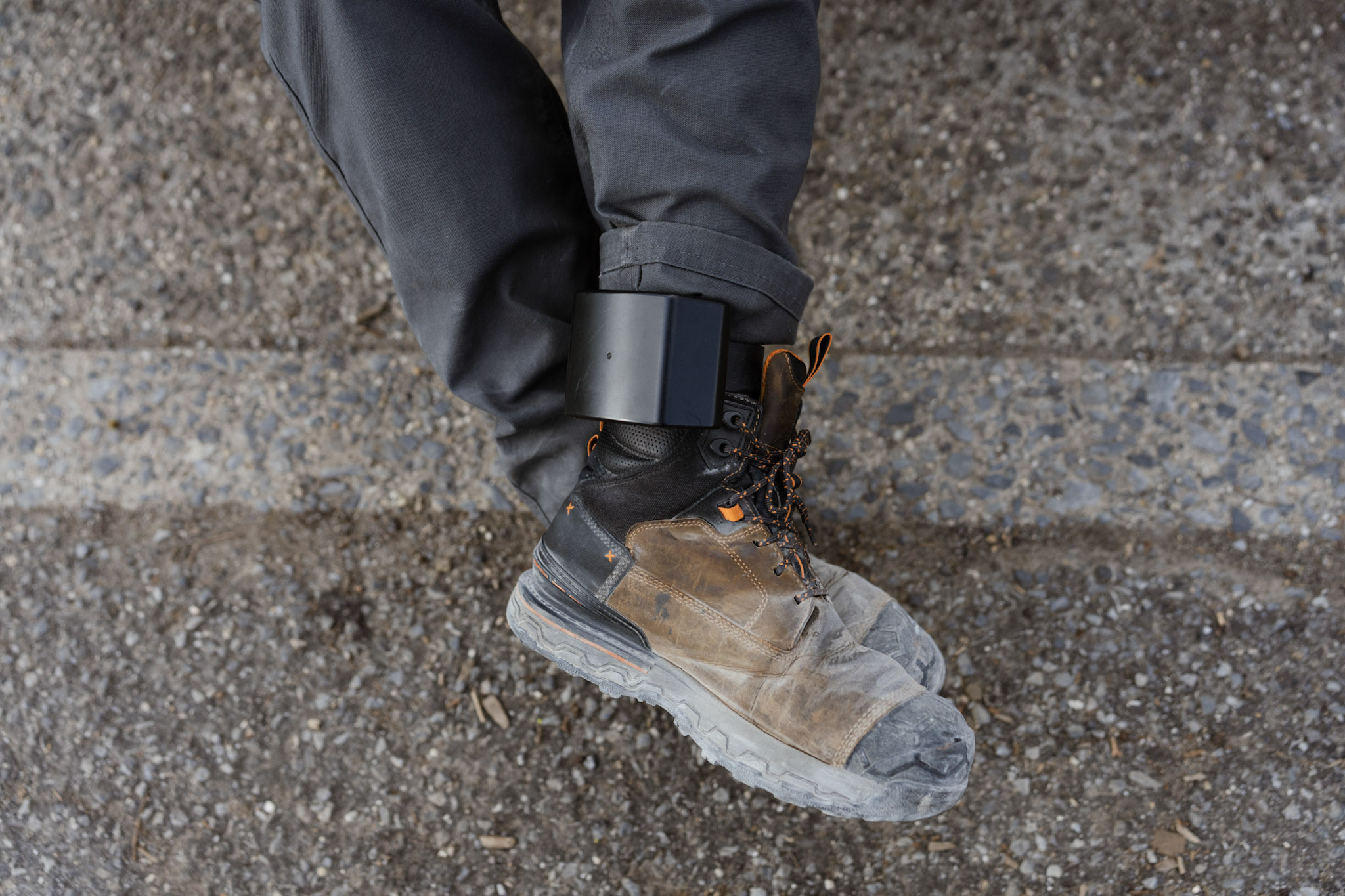
The 32-year-old found work in the fields of upstate New York, but he couldn’t stop feeling anxious. He had an ankle monitor. Immigration and Customs Enforcement knew his address. What if one day they came to find him — and instead they found his wife and his son?
These were fears he didn’t want to burden his family with, but they quietly roiled inside him, he told Documented. And as he drove a cart of tomato plants down the road a week after his release, his mind began to race and his fears boiled over.

“I saw a police car and I was so focused on the police car that I had drifted into the left lane,” said Hugo, who came from Mexico on a work visa three years ago, in Spanish. He asked to use a pseudonym because of his pending immigration case.
“A car was coming straight at me and I wanted to stop, but I couldn’t. I accelerated more, and what I did was turn the steering wheel all the way to the right and the cart flipped,” he said.
Hugo was hospitalized, luckily suffering only a broken bone in his left hand. The bone would heal, but the mental scars he was still contending with were paralyzing, leaving him terrified to leave his house if ever there was a car parked outside.
Last June, Hugo got a rare offer: a spot in an emotional support group for detention survivors, run by a Brooklyn nonprofit. After he started attending the monthly Zoom meetings, things began to change. He found a community to lean on: one that had survived some of the same conditions he had and together they developed tools he could use to heal from the trauma and dread he faced.
“I no longer feel that fear I used to feel when I went out — when I was careful to look around the corner to see if there was someone in a car parked there. And if it was there, I told myself, ‘I can’t go out, I can’t go out,’” he said.
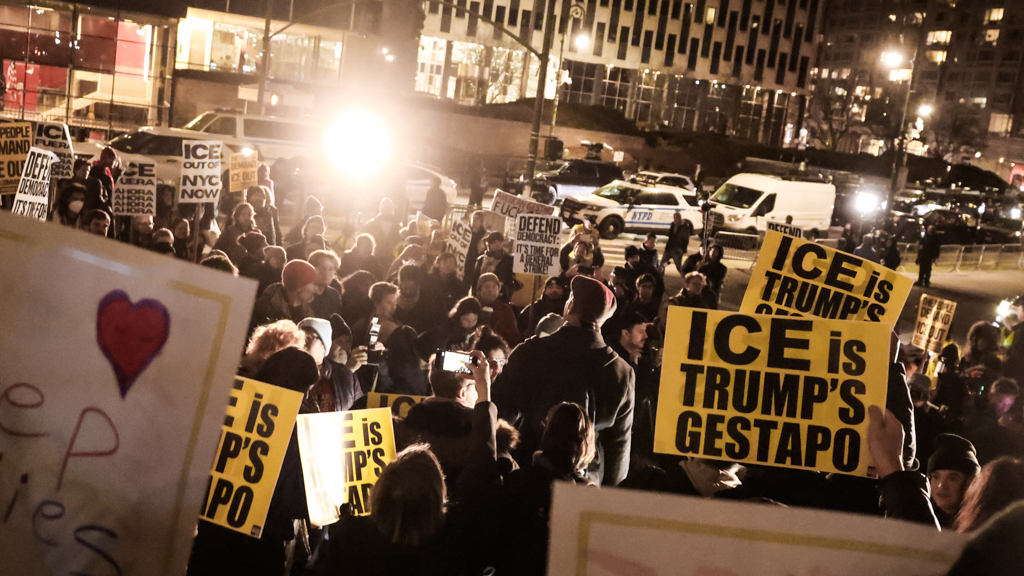
Experts say Donald Trump’s campaign of mandatory, long-term detention of immigrants nationwide has created an unprecedented mental health crisis in immigrant communities. In New York City, over 2,491 immigrant New Yorkers have been arrested by ICE since August and sent into an opaque system of facilities that have drawn criticism for allegations of abuse, poor living conditions and deaths. While many detainees are deported or agree to leave the country, others return to their communities, mentally and emotionally scarred by the experience.
This has produced a new and vexing constellation of needs among former detainees that are only now starting to be identified and addressed. Recognizing the dearth of resources for this emerging population, Envision Freedom Fund, a nonprofit and bond fund that both frees detainees and supports them after incarceration, has stepped into this void — attempting to create a space that nurtures healing and resilience even among ongoing attacks on its members.

The support group was formed in 2025 by Kate Johnson-Powers, a social worker and trauma therapist at Envision Freedom Fund who works with recently released detainees, including immigrants who spent time at notorious detention centers like Orange County Jail, Louisiana’s Winn Correctional Facility and others. She said advocates and families spend so much energy trying to get their relatives released, dealing with trauma can be put on the back burner.
“It’s a win and a huge high,” she said of getting released from detention, “and then it’s just like jumping off a cliff.”
Johnson-Powers heard again and again from clients about the physical and psychological toll they wrestled with when they went home: unpaid debts from when they were behind bars, strained relationships, post-traumatic stress disorder symptoms, and a pervasive guilt and stigma attached to ankle monitors.
Few scientific studies have been done on the impacts of Trump’s year-old mass, mandatory detention policies. But the most recent studies of immigration detention show incarceration causes deteriorating mental and physical health, which only worsens the longer someone is imprisoned.
Despite this, very few mechanisms exist to support New Yorkers when they return home, meaning that communities are likely facing extraordinary new challenges. For Johnson-Powers, connecting the former detainees in a group is a rich, empowering experience.
“I can tell people stuff, and I can say, ‘Oh, this is what I’ve seen,’” she said. “But you know, that doesn’t hold as much weight as being with other people who’ve experienced it.”
Being “believed and witnessed”
Envision Freedom Fund has paid the bonds of 325 people detained by ICE in New York since the beginning of the second Trump administration. And since last July, each of those immigrant New Yorkers — from Equatorial Guinea to Bangladesh to Central America — has been offered a place in the group therapy program. Roughly 20 percent of those freed have attended at least one group session, according to the organization.
Before she opens her laptop ahead of the monthly, hourlong sessions, Johnson-Powers spends three hours sending over 100 personal text messages to remind members to join.

She said being “believed and witnessed” can reduce trauma, but former detainees may want to spare the details of their life behind bars from their loved ones.
“So you’re holding a lot of this just alone, right?” she said. “And to have it be witnessed and held by a group of people who have gone through the same thing is extremely powerful and important to long-term trauma symptoms.”
Around 20 people attend a typical session, trickling in with their cameras off and usernames like “iPhone 1” or “iPhone 2.” Simultaneous interpreters in Spanish and French sign on, and members are asked to join their channels. Those that come sometimes listen and sometimes share — many are holding children or working or cooking for their families as they are on the call.
After introductions, the meetings generally take a life of their own as the group members share experiences and build off of one another — on topics ranging from the realities of detention to family financial struggles to how to fix the broken immigration system. The sessions often run long.
“There’s just not enough time,” said Johnson-Powers.
On multiple occasions, New Yorkers in the group have recognized friends from the inside they thought they would never see again. They’ve also made new friends, ones they keep tightly in touch with over text and Google translate when not on Zoom.
Leaving detention can create mental whiplash for immigrants and their families. On the one hand, former detainees are celebrating their release. But many are also immediately faced with destabilizing trauma symptoms, the threat of deportation and very real concerns about finding work after falling behind on bills.
Their families, meanwhile, have been reeling from their loved one’s absence — and must brace to potentially lose family members again as raids continue, said William Lopez, a public health researcher at the University of Michigan and expert on the community impact of ICE arrests.
Some call this feeling the “pulpo migra,” or ICE octopus in Spanish, likening immigration enforcement to a beast that winds its tentacles into families and communities, he said.
“It’s a constant up and down … of the most intense possible emotions of loss and grief and belief and celebration and separation and togetherness,” Lopez said. ”In practical terms, this means that people lose their ability to function in any kind of practical, efficient way.”

Deaths in detention are a major concern but they are also just the tip of the iceberg, belying the thousands of people who are surviving detention with lasting physical and mental health issues, said Dr. Altaf Saadi, a researcher and expert on the health impacts of immigration detention at Harvard Medical School.
“They could be dealing with post-traumatic stress disorder or anxiety because of these exposures for years after they’re released,” she said. “And so contextualizing these deaths in ICE detention as sort of the canary in the coal mine, of a much larger issue in terms of harms that people are suffering from now, are going to continue to suffer for many years.”
Breaking free
Manuel, a devoted father from Brooklyn, told Documented that when he was freed from detention, he didn’t initially realize all the pain that would stay with him after he left the facility.
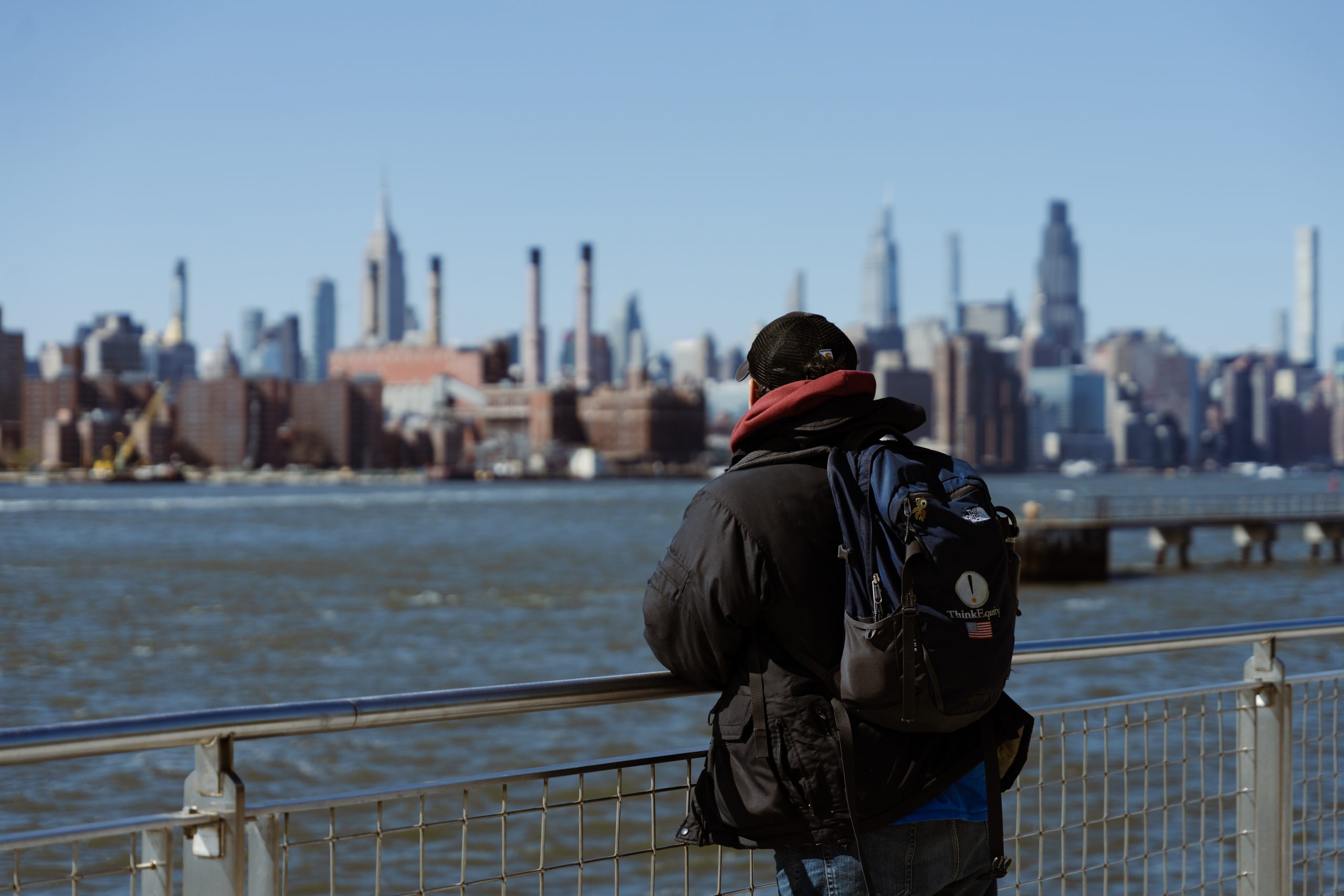
While in detention, the 50-year-old who immigrated to the U.S. alone three years ago had been focused on his inability to communicate with his loved ones back in Los Llanos, Venezuela and was concerned about being able to support them.
“I was more worried about what they were feeling than what I was feeling myself,” he said. “I don’t like my family having any issues, I want my family to be well.”
But as the days wore on back in his Brooklyn neighborhood, the community stigma of having an ankle monitor and the anxiety he felt every time he heard about ICE activity, wore on him — even if he didn’t initially think he needed help.
Manuel, who asked to use a pseudonym because of his pending immigration case, started going to the group in October of last year after a call with Johnson-Powers. There, he quickly realized the power of a place he could speak openly about his experience to others who understood.
“That’s what it’s about, being able to express yourself and heal all the things we are experiencing in this moment. And well, I really liked it,” said Manuel, an asylum-seeker. “Since then, I’ve been a loyal follower of the group.”
He likened the weight of the post-detention experience to the fable of the strong elephant being tethered to a small stake in the ground, forgetting its strength to escape. But, he said, he’s learned to navigate hypervigilance and repressed memories — and found inspiration among the difficult experiences of his fellow group members.
“I put myself in their shoes. I said to myself, ‘If they’re fighting, if they have high hopes, I can have that too,’” he said. Manuel told Documented that being Venezuelan can feel heavy, adding later, “When I go to these meetings … I don’t feel any different [from anyone else]. On the contrary, I felt like one of them. And that also heals you.”
Even his 13-year-old daughter in Los Llanos has taken note of the support her father’s received.
“She always asks me … ‘How’s it going? When is your meeting? Are they treating you well?’ It makes her feel better too that I have this group,” Manuel told Documented.
Healing under threat
During her monthly meetings, Johnson-Powers tries to fit some psychology into each session — teaching topics like emotions, guilt, anger, and moral injury so people can recognize and then cope with their symptoms.
At the end, in an effort to ease up on the intense conversation, Johnson-Powers leads the group in breathing exercises, and they discuss lighter topics, like the weather, or something they’re proud of.
“When it’s over, I’m just like, buzzing with energy because of just kind of the brilliance of everyone who shows up,” she told Documented.
During a January session, Johnson-Powers asked the group of detention survivors to consider how trauma affects the body by asking them to imagine how their body would react to seeing a lion: raised heartrate, sweat, the impulse to freeze, fight or run.
“Now imagine that same reaction is happening when you are trying to read a book, focus on a task at work, or play with your child. It isn’t as helpful anymore. Our body adjusted to protect us, but now struggles to readjust back,” she said.

However, she acknowledged, the danger is still present for many in the group as they face ongoing interactions with ICE — whether it be through court dates, ankle monitors, or the barrage of videos online of people being brutalized and re-detained by ICE.
Taking the fight to Albany
One solution to the ongoing threat of a billion-dollar immigration enforcement effort and a targeted community looking to heal is to match group therapy with group advocacy, said Lopez.
“To gain some amount of empowerment back, I do think addressing the energy toward the administration, in some ways, is powerful,” said Lopez.
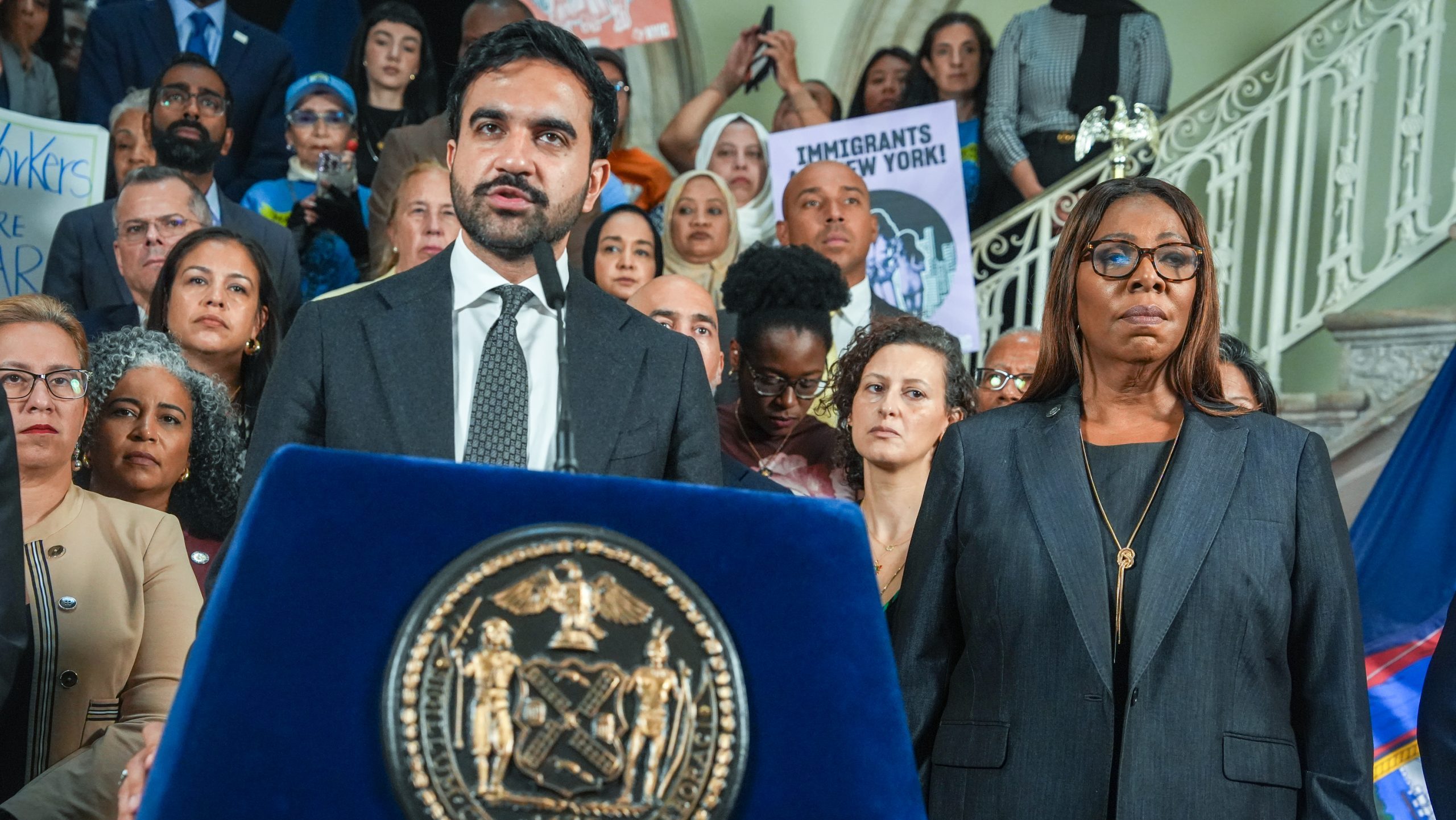
Since its inception, Envision Freedom Fund has supported members who are interested in direct advocacy by organizing trips to Albany to speak with legislators.
While many members of the group told Documented they relished the tips they gave each other about how to survive the day-to-day, others pointed to how much directly engaging with those in power meant to them.
Jason, who asked to use a pseudonym so as not to impact his immigration case, was born in Colombia but is also a proud New Yorker, having helped the city clean up after the fall of the twin towers and Hurricane Sandy. He found trying to influence politicians — “the people who have the power” — on issues around detention to be an important part of his experience. “Because there are people that need liberation that haven’t been freed.”
C, a migrant from Equatorial Guinea, has visited the state Capitol several times already to fight for the Dignity Not Detention bill, which would prohibit municipalities from participating in immigration enforcement.
“We tell each other that we have to get as many people as we can and go to Albany to find the congressman and congresswomen and tell them about this problem: we don’t want more detention in New York State,” said C.
A growing need
Johnson-Powers said that her biggest challenge is finding resources to meet the growing need.
“I think someone in this last group was like, ‘I wish this was every week.’ And I was like, ‘Me too.’ The work involved is so much, and I’m just one person,” she said. “I never want to cap it, but the need is just so high, and at some point we’re going to have to shift.”
As interest in the group has swelled, some members have started to train as facilitators so that the groups can be self-sustaining rather than led by an outsider. Last month, a community member led a session for the first time and drew parallels between recovering from trauma and the start of spring, of flowers blossoming after a hard winter.
“Fighting through hard things and blooming,” Johnson-Powers recalled. “And how we all water and feed each other. Everyone kept bouncing off of it and being like, ‘Yeah, and some days are really hard, and it’s kind of like when winter comes back,’ and it was just a really beautiful moment.”
After he was hospitalized, Hugo’s anxiety reached a crisis point. But he told Documented that after months of attending the group, the asylum-seeker has seen important transformations within himself.
In July, his first session was about facing fears: of leaving his home when a car is parked outside, of being detained and not being able to support his young son who is facing health issues. Now, he said, he’s been able to give up some of his worries about the future to a higher power.
“It has been a true miracle,” he said.