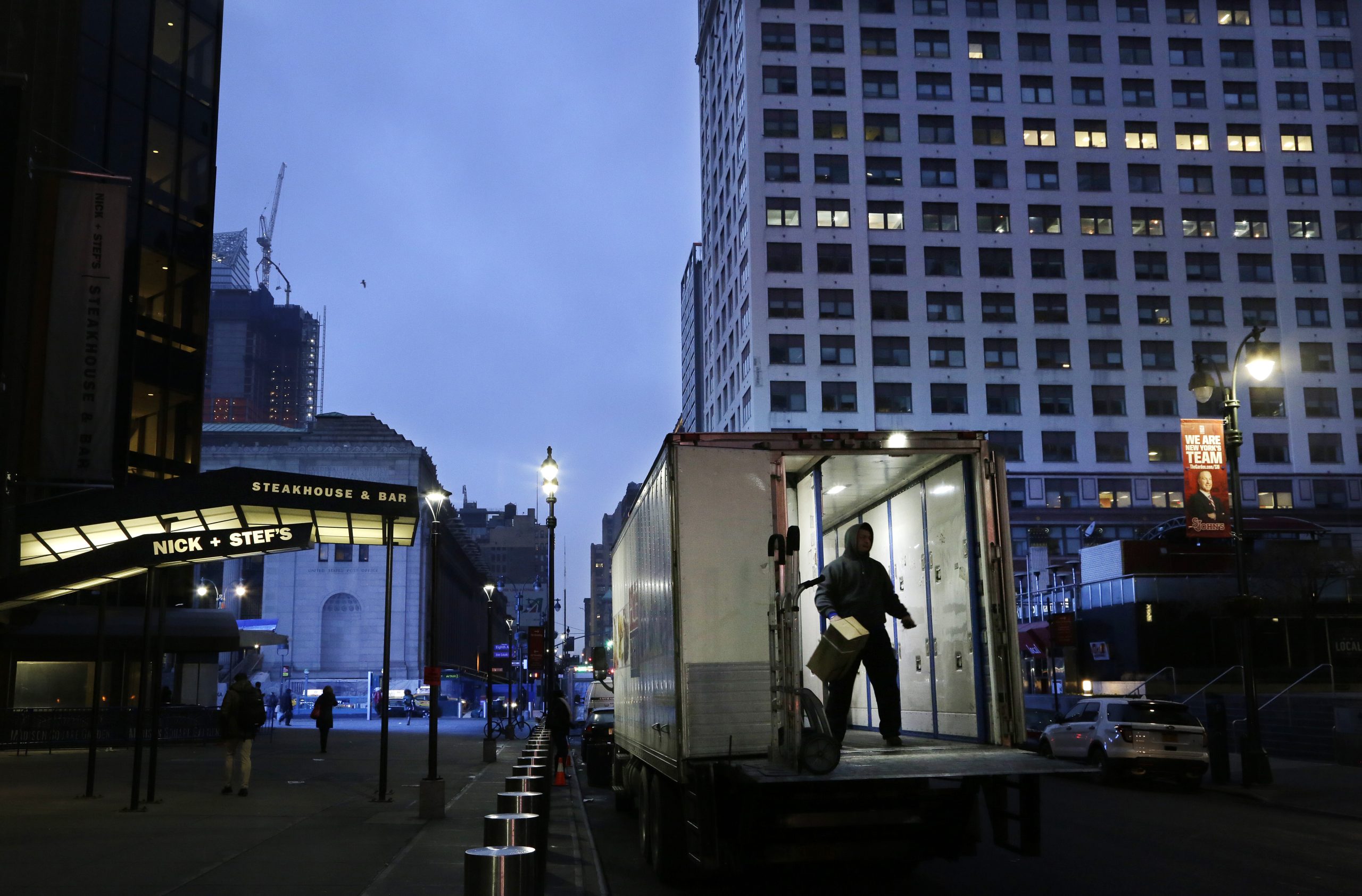


For four years, Guerrero rode in a van delivering food for 12 to 14 hours a day, earning less than minimum wage. When he finally worked up the courage to ask for a raise, his boss told him that “he could get two immigrants for the same salary,” said Guerrero, who preferred to go by his last name only for fear of reprisal.
The comment motivated him to hire a lawyer and send his employer a notice of intent to sue. When word got back to his boss, Guerrero said that he sent someone to threaten him if he did not drop his case.
“He’s telling me that he’s gonna call ICE on me,” Guerrero said.

Documented spoke with several immigrant workers who were threatened with deportation while attempting to collect compensation from their New York City-based employers after debilitating injuries or alleged wage theft, some of whom were deported after lodging complaints.
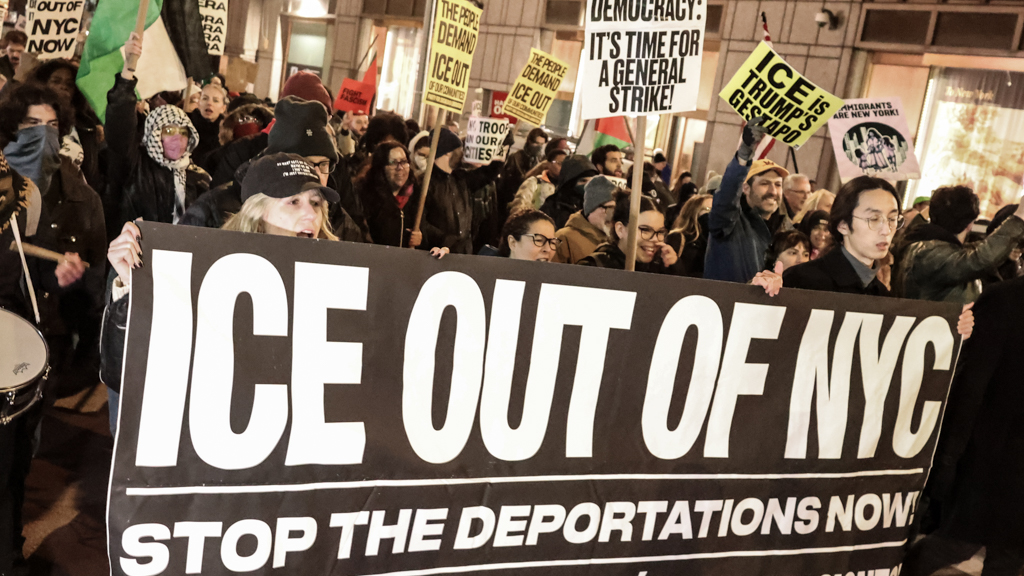
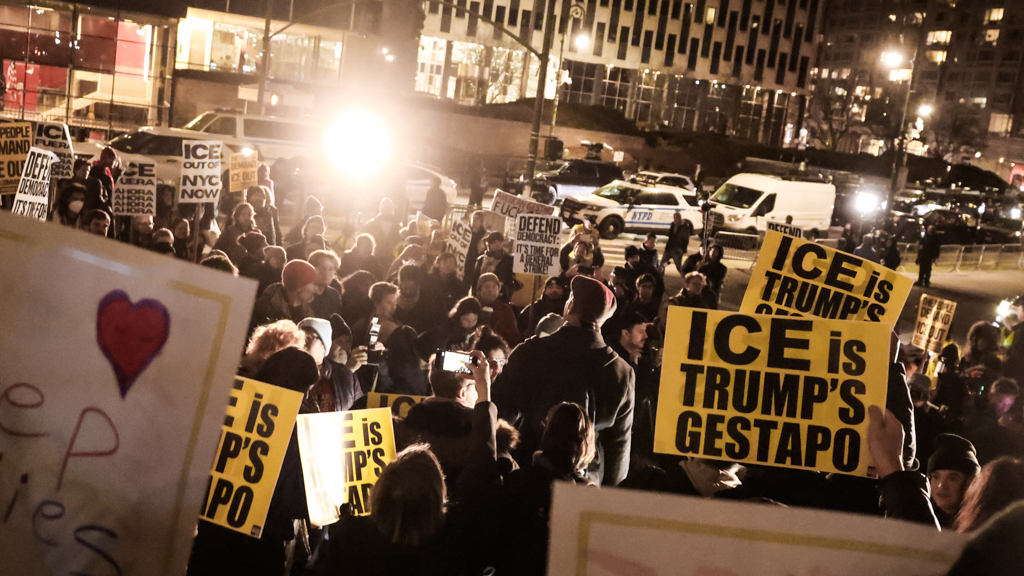
Their cases are part of a growing number of complaints filed by workers against their employers around immigration-based discrimination, which appears to have accelerated soon after President Donald Trump took office for his second term in 2025. They show how Trump’s crackdown on immigrant communities has been weaponized by employers threatening their workers with deportation, enabling the bosses to get away with financial and physical abuse.
The New York State Division of Human Rights (DHR) confirmed that reports of employment discrimination based on citizenship or immigration status more than doubled from 163 to 371 between 2023 and 2025, when Trump took office. The New York Attorney General’s office also confirmed that it has received an increase in complaints from employees who say employers are threatening them over their immigration status.
Undocumented workers facing this intimidation are not only losing compensation they are owed, but also carry the psychological burden of the constant threat of being jailed and deported at their jobs, workers and advocates explained.
Under a New York State law passed in 2021, those who threaten to call immigration on someone as a form of intimidation or retaliation could be charged with a Class A misdemeanor, which has a maximum penalty of 364 days in jail and a $1,000 fine. Within the five boroughs, threatening to report someone to ICE can result in fines of up to $250,000 from the NYC Commission on Human Rights.
Also Read: He Went After Trump. Now He’s Going After Bad Bosses.
Yet the fear of deportation could be a significant deterrent for workers to come forward to report wage theft, as Manhattan District Attorney Alvin Bragg explained. Since 2023, Bragg’s Worker Protection Unit has issued 12 indictments and recovered $2.4 million in stolen wages from convictions and settlements. But over the past year, his office has seen a drop in complaints issued from their wage theft hotline.
“We’ve seen recently that our hotline numbers have gone down,” said Bragg. “I think people may be concerned to come forward. There’s always a concern about retribution from an employer. We don’t ask about documented status, but there may be heightened concern about immigration issues.”
Barrier to Justice
For decades, the fear of deportation has been a barrier for immigrants to assert their legal rights.
A 2008 study by the National Employment Law Project of 607 low-income injured workers in New York City, Chicago, and Los Angeles found widespread underreporting of workplace injuries. Only 9% of the surveyed workers who were hurt on the job claimed any workers’ compensation. Half of the workers surveyed who reported their injury to their employer claimed to have experienced some form of retaliation, including reporting workers to immigration authorities.
The groundwork for that fear was laid decades earlier, when the 1986 Immigration Reform and Control Act, signed into law by former President Ronald Reagan, criminalized the hiring of workers without legal status.
Jessie Hahn, Senior Counsel of Labor and Employment Policy at the National Immigration Law Center, says that the act made employers de facto immigration agents by making them check work authorization or else face sanctions if their workers’ paperwork wasn’t in order.
“Low-road or unscrupulous employers can use a lack of work authorization as a way to coerce workers,” she said.
The climate has become even thornier since Trump’s second inauguration. Under President Joe Biden’s administration, the U.S. Occupational Safety and Health Administration (OSHA) was given the authority to issue U Visa or T Visa certifications to workers who had their safety rights violated, as well as other workplace abuses, if they helped in a criminal investigation.
Now, according to U.S. Citizenship and Immigration Services (USCIS) data, applications for U Visas have plummeted. Organizations like the Laundry Workers Center say that they have advised members not to file applications due to fears that federal authorities could trigger deportation proceedings.
In New York, discrimination based on immigration status is illegal, but state law does not explicitly prevent employers from using the threat of deportation to retaliate against employees who file workers’ compensation claims. Last year, New York State Senator Leroy Comrie introduced a bill that would make it a crime to report a worker’s immigration status in retaliation for filing workers’ compensation.
“S.2558 was introduced to address a real and ongoing problem of workers being threatened with deportation for simply trying to access the protections they’re legally entitled to after being injured on the job,” Senator Comrie said in a statement to Documented. “No one should choose between their safety and their livelihood.”
“This is especially urgent right now,” he said. “Across New York, worker advocates and legal service providers regularly document cases where immigrant workers are intimidated or discouraged from coming forward.” He was prompted to push this legislation after hearing those stories.
“They are too afraid to do anything.”
Three personal injury attorneys who spoke with Documented say they have seen an increase in clients threatened with deportation after filing personal injury lawsuits since Trump took office in January of 2025.
“Immigration enforcement is being weaponized against Hispanic construction workers the moment they get hurt,” New York City-based personal injury attorney Nicholas Liakas said. “Non-union contractors recruit and exploit these workers, then discard and dehumanize them when their unsafe job sites cause injuries.”
Also Read: Labor of Love? Mamdani’s Record with Workers in His First 100 Days
Adding Trump’s immigration crackdown to this legal atmosphere has created an even more challenging environment for immigrant workers, advocates say. Despite workers’ rights to file their injury claims in civil court, the risk of deportation is very real.
Personal injury attorney Christopher Gorayeb said that one of his clients was detained by ICE shortly after winning summary judgment in his case, after sustaining multiple spine injuries. He suspects the employer called ICE.
“Now he’s in detention with the very real likelihood that he’s going to be deported,” he said. “It’s a good way to save yourself millions of dollars. Even on the job site, we get people who are threatened that if they hire an attorney, they are going to be arrested and deported.”
The fear of being deported has had a chilling effect on some workers considering lawsuits, according to Gorayeb.
“People are so afraid to draw attention to themselves that they won’t even hire an attorney,” he said. “They are too afraid to do anything.”
Another injury attorney, Charles Wisell, told Documented that during one of his cases last June, opposing counsel informed him that they expected ICE to be present at the court hearing.
“It was an implied threat to me that ICE was going to detain and/or remove our client during these proceedings,” he said. “They did it to scare our client from coming to trial.”
Even with laws on the books that would theoretically protect immigrant workers from retaliation based on immigration status, Hahn of the National Immigration Law Center says that many workers fear coming forward to report retaliation.
“It was already difficult to measure,” she said. “For example, you won’t necessarily see an increase in the number of retaliation complaints that are filed, because precisely the fear of retaliation is what keeps people from filing the complaint.”
For Guerrero, his experience with his boss has shaken his faith in people. Once very close, as soon as Guerrero asked to be paid more, his boss turned on him. He has since left the job.
“The connection that we once had was like close friends or an older brother,” he said. “Now, there was no respect.”
After being threatened to be reported to ICE, Guerrero, who was born in Mexico but raised in the U.S. since he was a child, says he now lives in a perpetual state of fear.
“At any random moment, they could just come knocking at the door,” he said.