

In a high-profile court case challenging conditions for immigrant New Yorkers being detained at 26 Federal Plaza, plaintiffs called the overcrowding at 26 Federal Plaza’s detention rooms a “self-made crisis.”
Plaintiffs alleged that Immigration and Customs Enforcement (ICE) officials continued to pack too many people into small, desolate holding cells after a court order required them to clamp down on detentions. They also alleged that ICE obfuscated evidence and even lied in an affidavit during the course of the court case — all while sharing harrowing witness accounts of conditions at the courthouse.
The two-hour-long oral arguments held on Wednesday unveiled never-before-seen data, photos, and internal ICE communications, obtained through discovery, that painted a grim portrait of ICE detention at the immigration courthouse at its peak. It also revealed how immigration officials reacted to a state of overcrowding and general chaos.

The case was filed by Sergio Alberto Barco Mercado, who was detained last August in the midst of mass, violent arrests of immigrant New Yorkers attending what were often routine court hearings and check-ins.
Also Read: Make the Road Attorney Explains What the TRO Means for Federal Plaza Detainees
After the lawsuit was filed, Judge Lewis A. Kaplan imposed a series of temporary limitations on how ICE could confine immigrants in the building. ICE was required to provide at least 50 square feet of space per person detained, they must offer detainees three meals a day, sleeping mats, and ensure confidential legal calls, amongst other conditions.
During the defense’s presentation to Judge Kaplan, lawyers for the Trump administration argued that the detainees’ claims of continued overcrowding were overblown.
Government lawyer Rachel Kroll said that the cells on the floors that the plaintiffs used to calculate overcrowding were not the only cells used to house detainees. Some detainees, she said, were confined instead in additional holding cells located on other floors of the building not originally discussed in the injunction, which would have reduced the alleged overcrowding figures.
However, Kroll admitted to “some snafus,” and separately acknowledged that a sworn declaration signed by Nancy Zanello in August of 2025, an assistant field office director for ICE, reflected an incorrect — and much lower — number of inmates was present in the cells.
“I understand the lawyers don’t … get to choose the cases they’d like to have,” quipped Kaplan to Kroll, after calling the declaration “egregiously misleading.”
Lawyers representing detainees hoped that Judge Kaplan would make his temporary protections permanent — though Kaplan alluded to taking that a step further.
“One of the questions is whether you should be permitted to use those facilities at all,” he said.
Through depositions and ICE’s own documentation, plaintiff attorneys detailed the ways in which the government had allegedly defied court orders. Witness statements, provided by previously detained New Yorkers also recounted bleak experiences: sleeping upright for 3 days; eating “slop”; and suffering on cold cement floors as guards kept the air conditioning on through the night.
“My time at 26 Federal Plaza still haunts me…I cannot believe that human beings can be treated like that in a place like the United States,” said Roberto Chilavert Olmedo, in written testimony.
Meanwhile, emails and text messages detailed the dehumanizing language ICE officials lobbed at those incarcerated in the rooms. Courthouse records also show detainees were suffering from a litany of ills, including seizures, heart attacks, ovarian cysts, mpox (formerly known as monkeypox) and panic attacks.
Also Read: Bearing Witness to ICE Arrests at Lower Manhattan Courthouses
One woman with active tuberculosis was detained for six days at the peak of overcrowding, alleged attorney Heather Gregorio, who represented the plaintiffs.
“This week has been one gross contagion after another,” Gregorio said, reading from an email written by Zanello in 2025.
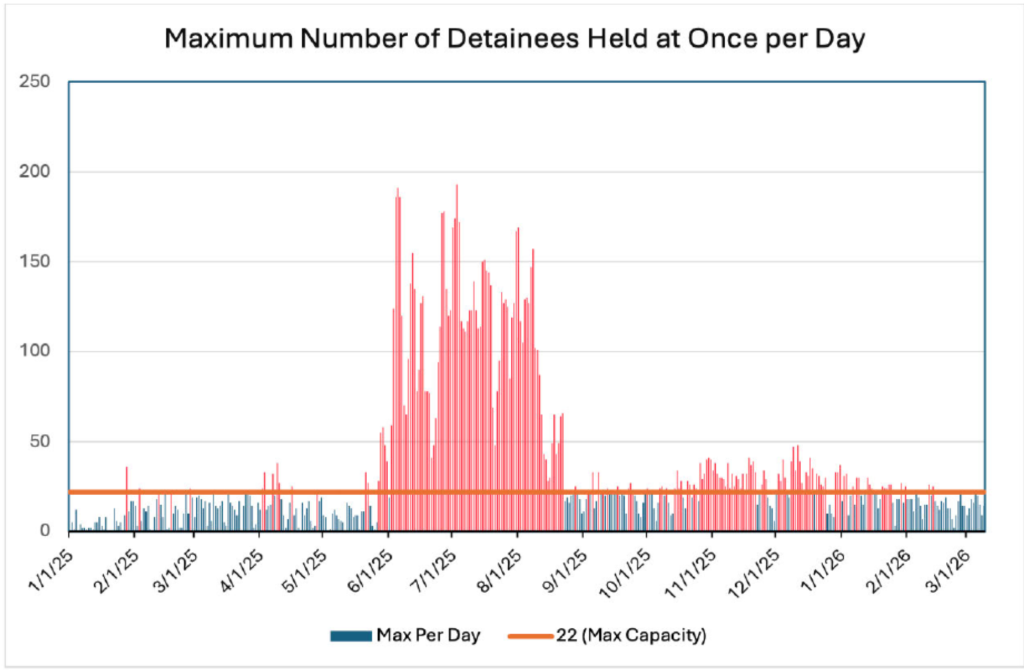
January 1, 2025 to March 9, 2026, with bars in red indicating days the population exceeded 22. Chart courtesy court filings.
The chaos was preventable, Gregorio argued, pointing to an email by Supervisory Detention and Deportation Officer Lige Hampton, which suggested suspending court operations to slow detentions.
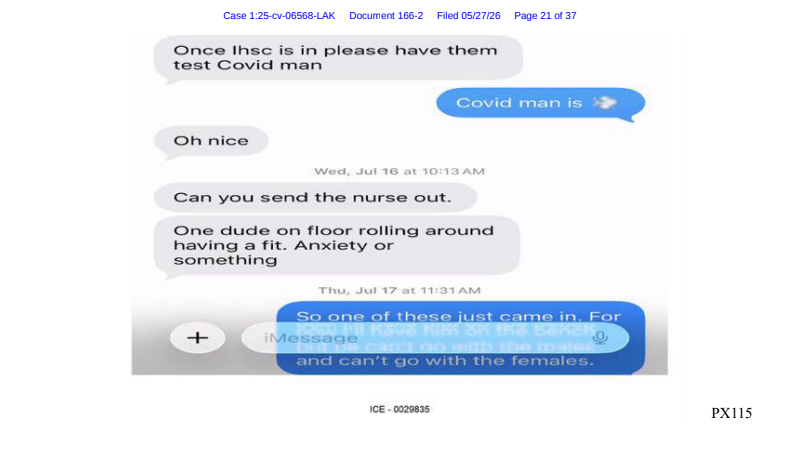
“Hopefully we don’t wait until something negative happens,” read the email. Other text messages sent between ICE officials called detainees at the court nicknames such as “covid man,” and “cardiac lady.”
ICE data, presented in court by Gregorio, showed numbers soaring to nearly eight times the holding cells’ capacity at its peak — with a quarter of people held over 72 hours, and one person held more than 30 days.
In another email, field office director LaDeon Francis bragged that ICE was “a victim of our own success. ERO NYC arrests more EOIR court cases than bedspace can be found.”
After Kaplan’s court orders to limit detention, detainee numbers dropped — but they still sometimes exceeded court-ordered limits, Gregorio said.
“We are in violation of the TRO [Temporary Restraining Order],” Zanello wrote in an August 2025 email shown to the court by plaintiffs.
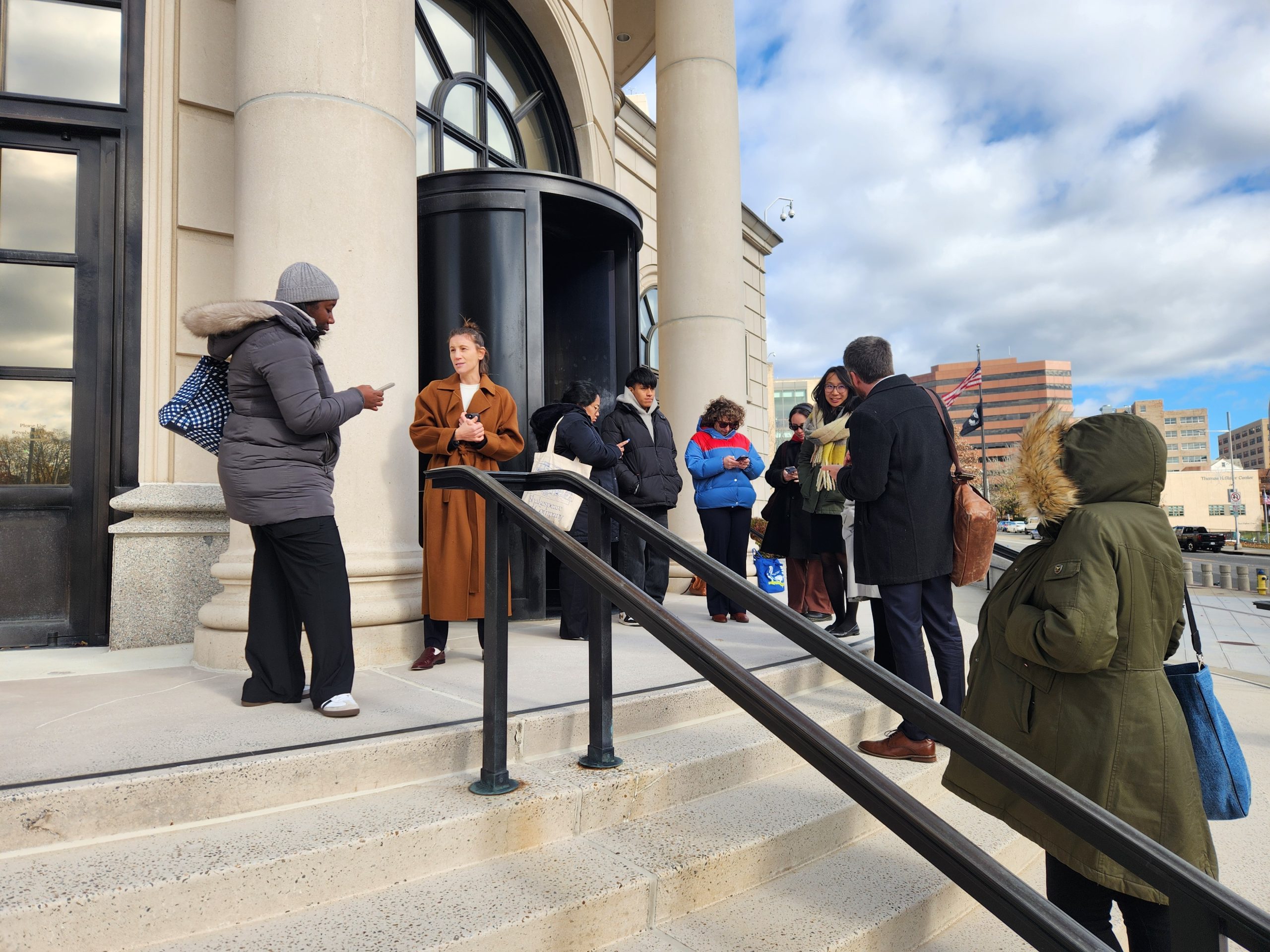
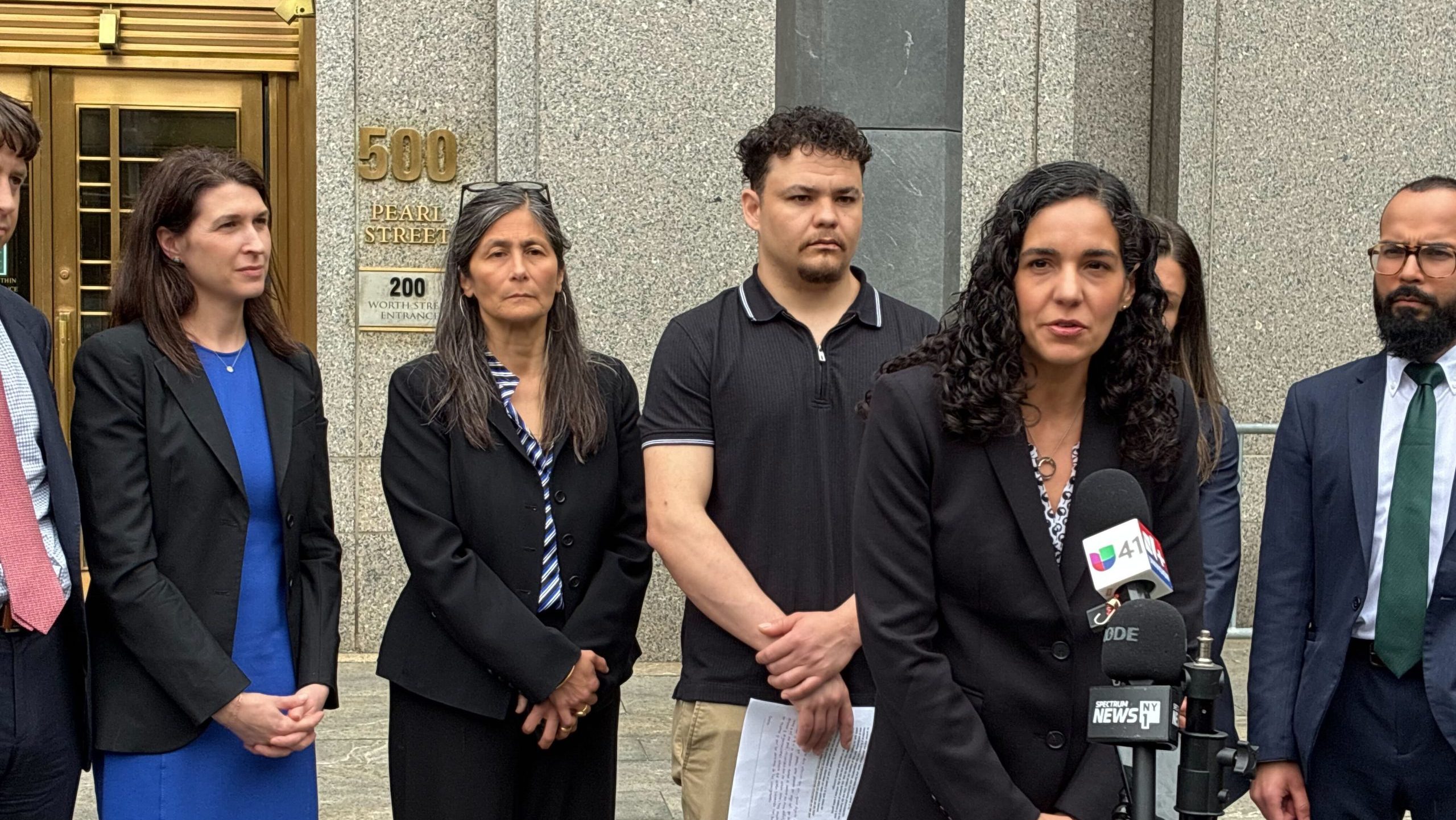
As they await a decision by Judge Kaplan, Gregorio told reporters after the hearing that their goal in the case is to permanently “ensure that the protections put in place by the court continue.”
One man held at 26 Federal Plaza — identified only as Carlos by the legal team — detailed the four days he stayed in the facility last July without the ability to bathe, brush his teeth, or use the single restroom with any privacy, all while sleeping on the hard concrete floor.
Outside, after the hearing — hoping it would reach the ears of other immigrant New Yorkers like him, Carlos said: “Amongst this difficult situation you’re living, I want to give a message to those who are going through something like this: Please don’t lose faith or hope,” he told reporters in Spanish. “Even though the road is hard, just like I experienced, remember that you’re not alone.”