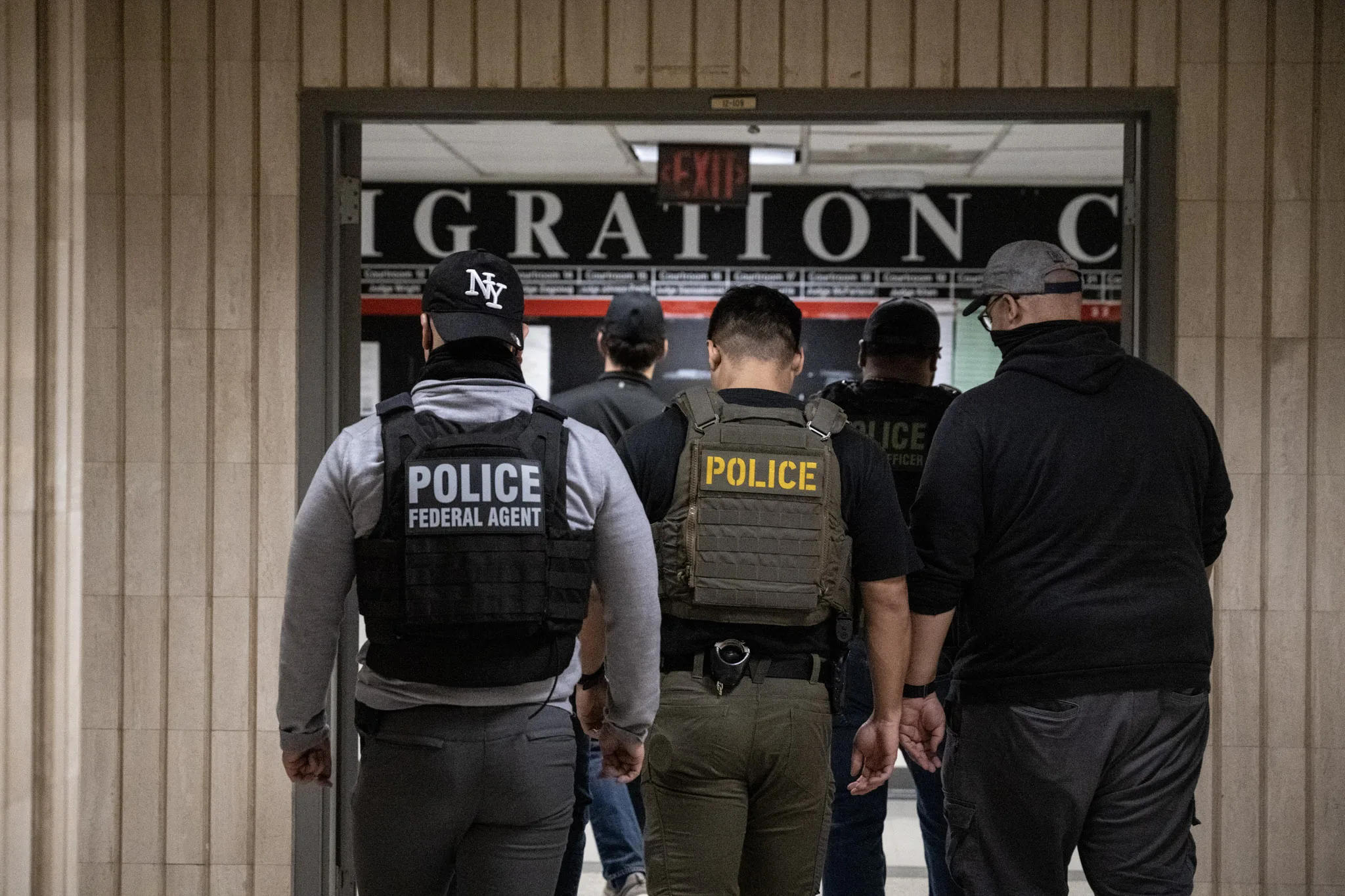


A federal judge issued a temporary restraining order (TRO) against the Trump administration Tuesday to immediately improve the conditions in ICE holding rooms at 26 Federal Plaza in lower Manhattan. The judge found sufficient evidence that the plaintiffs — and others in similar circumstances — would suffer irreparable harm without immediate relief. The TRO will stay in effect for 14 days, until the court rules on the preliminary injunction and the overall case.
Sergio Alberto Barco Mercado, a named plaintiff, is being represented by attorneys at Make The Road. Make the Road Supervising Immigration Attorney Alexandra Rizio said that Sergio decided to put his name in the lawsuit on behalf of other immigrants.
“He was subsequently moved from 26 Federal Plaza and when I spoke to him he reiterated that the conditions were very poor there,” she said. “The reason that he decided to become a named plaintiff is not just for him but for people who he saw in detention. People who are disabled, elderly people. He wants help to speak for them as well. So even though I haven’t personally spoken to him today, I’m sure that he would be just really happy that he was able to use his voice in this way.”

She added: “And all he wants now is to get back to his wife and his two kids. He has a newborn baby and a toddler at home. He lives for his kids. He just wants to see them again.”
We spoke with Rizio to learn more about about the implications of the TRO for detainees at Federal Plaza, as well as the challenges immigrants face in detention and what the ruling will mean for the immigrant community in New York City.
Rommel Ojeda: What does the TRO mean for immigrants in New York City — where data shows it has been the hot spot for ICE detentions at Federal Plaza?
Alexandra Rizio: It means that ICE is not above the law. It means that ICE and the federal government have to meet basic minimum requirements relating to how they treat immigrant detainees. It means that ICE knows that we’re watching what they do and how they treat our immigrant neighbors and we won’t stand for them to keep people in terrible conditions and not give them enough food or access to medical care or even basic hygienic supplies.
So it really means that ICE knows that we’ll continue to fight, and that they’re not going to be allowed to treat detainees however they want. There are basic minimum conditions that have to be met and we’re going to continue to ensure that they meet them.
Right. And one of the things that came up during this decision is the fact that a lot of the people detained there didn’t have access to their legal counsel. How has the experience been for clients sent there and also the people that were not able to access their lawyers and even moved to other locations before they had been able to speak with a representative?
The way ICE was approaching legal calls previously, was just not in conformity with the law or basic principles of due process. People who were detained in 26 Federal Plaza were not told that they could have confidential calls with their legal representatives. [Note: The Temporary Restraining Order now requires detainees to be informed of their rights within one hour of their arrival to the Hold Room.]
If they did demand a call, what we heard over and over was that a guard would stand right next to them while they made the phone call.
Also Read: ICE Has Done ‘Irreparable Harm’ to Federal Plaza Detainees, Judge Says
And they would even hear someone breathing on the line, so they were getting observed. These allegedly confidential calls were actually being observed, which really just runs up against basic principles of due process and a right to legal counsel.
So that really was a focus of this temporary restraining order that the judge entered, is that clients do have the right to make confidential free calls to their attorneys. And frankly, it’s crazy that we had to go through a lawsuit to make that clear and enforce that right. But we did, and so now we’re hopeful that detainees will actually be able to communicate with their lawyers.
Right, and one of the other things that the TRO mentioned is also that detained people should appear in the ICE detainee locator system?
Yep. Yeah.
Were they not showing up there?
No. It’s been a real problem. I represent detained people and just trying to figure out where they are, at any given moment, has been maddening. It’s sometimes really difficult to just figure out where someone is. I had someone that I was working with back when these detentions at the courthouse started and I kept track for about two weeks. I sent between 12 and 15 emails just trying to track this person because the ICE detainee locator would say, ‘Oh, he’s in this location. Email the deportation officer if you wanna schedule a call.’ I would do that, and they would say: ‘He is not here anymore. He got moved already.’
So then I’d say, ‘Okay. Well, I’m gonna email this other place,’ and I would email that place. ‘Oh, no. We don’t have him. Third place has him.’ And of course it wasn’t what was listed in the online detainee locator. So, it took me about two weeks just to track this person down and that’s time that we need to spend working with our clients, right? They’re getting picked up at court, so they’re in the middle of a court case. We’re supposed to be working with them, gathering evidence, talking to them about their options, and I can’t even get the guy on the phone.
It’s not how it’s supposed to go.
And is this happening more so now than in previous administrations or has it always been iffy and now it just intensified?
It has always been difficult to work with detained clients. I wouldn’t say that ICE detention facilities really facilitate attorney client interaction. but it’s definitely a much worse scenario now.
You mentioned that this TRO is sending a message to ICE, but it is also sending a message to the immigrant communities in New York City. Could you talk a little bit about what this victory means for immigrants here in the next 14 days until a permanent decision is made?
I hope that this victory says that there are people who care about what happens to them, and that care about how they’re treated, no matter what their documentation says. At Make The Road New York, we have a legal team of immigration experts, and we want to be able to witness what’s happening to people in our communities, but not just witness it, to try to make improvements and make things better. Yes, this is a really difficult time, and this is, you know, some of the hardest fights that we have had. But we’re not gonna stop. We’re in this for the long haul.
This is why I personally became a lawyer. So we’re ready, and we’re gonna keep going.