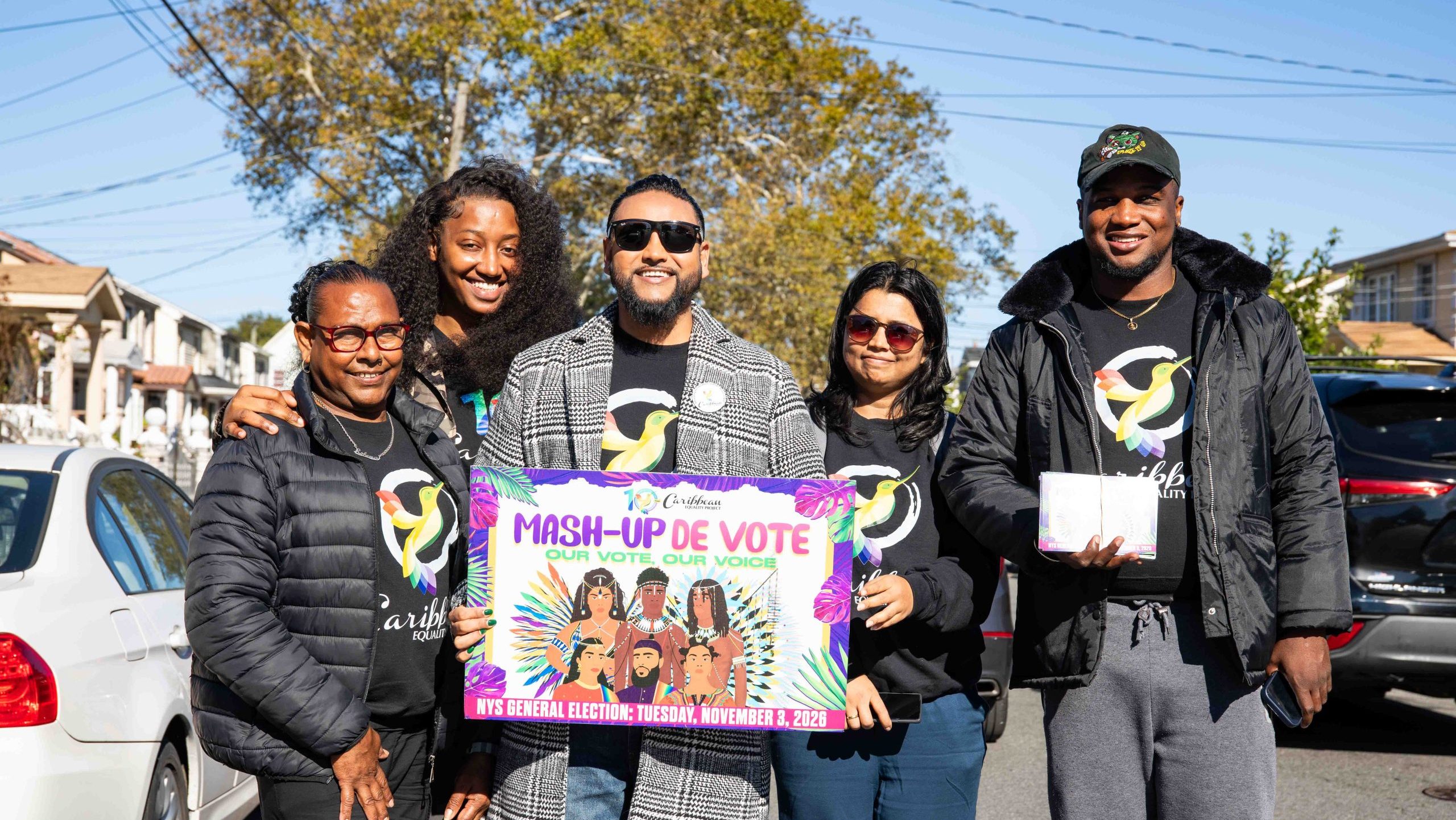


On the morning of Oct. 22, five members of the Caribbean Equality Project gathered in the basement of a house in Jamaica, Queens. They were preparing for another day of canvassing ahead of the Nov. 3 midterm elections. All wore T-shirts bearing the organization’s colorful hummingbird logo in the center.
The small basement kitchen, with its white refrigerator, sink and cabinets, doubled as a makeshift office. A printer, a stack of paper, boxes and printed materials filled the space, which adjoined a storage room. Over the packed breakfasts they had brought, the team organized materials, reviewed assignments, and discussed what to take, like snacks, water, and power banks to keep their phones charged throughout the day.
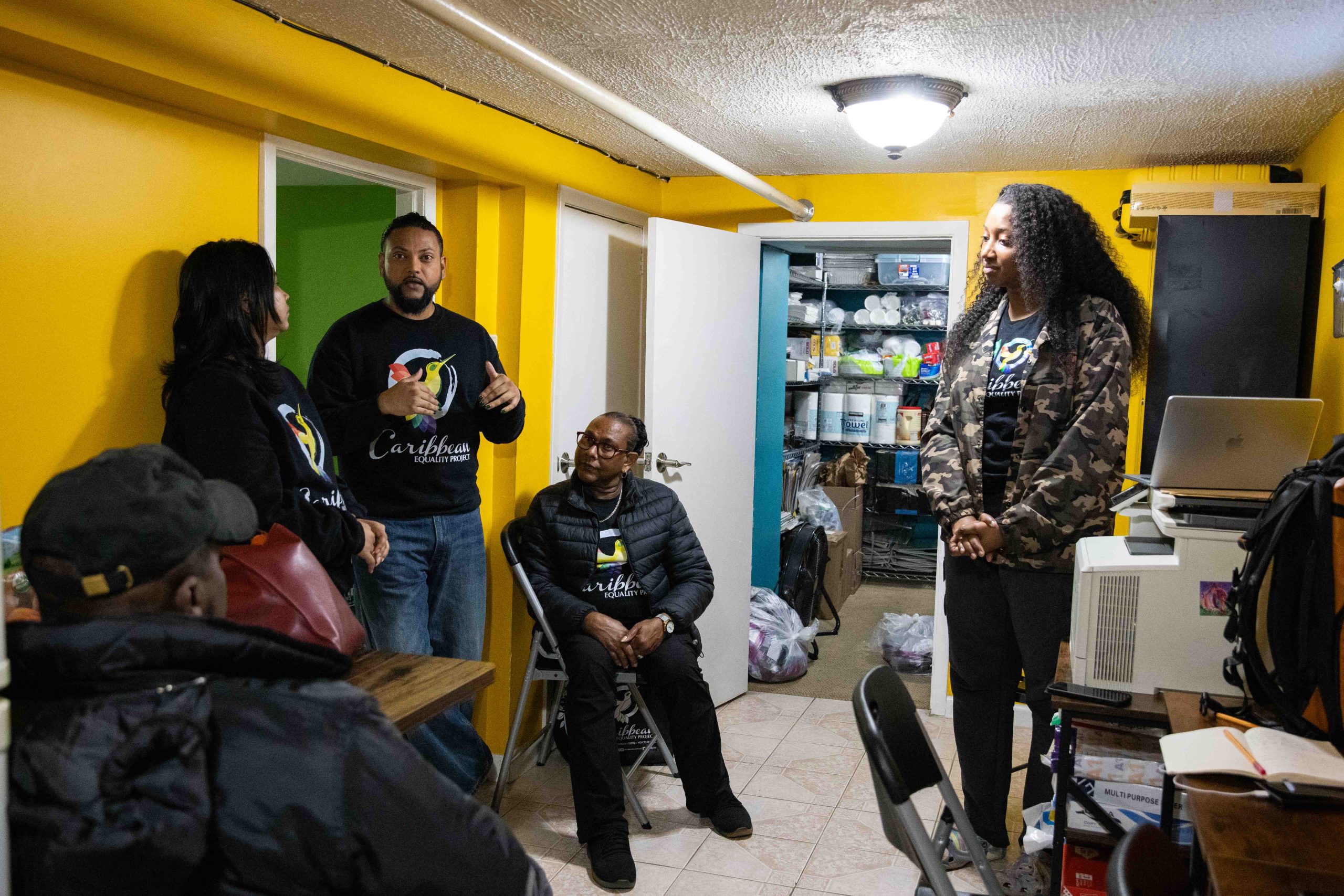
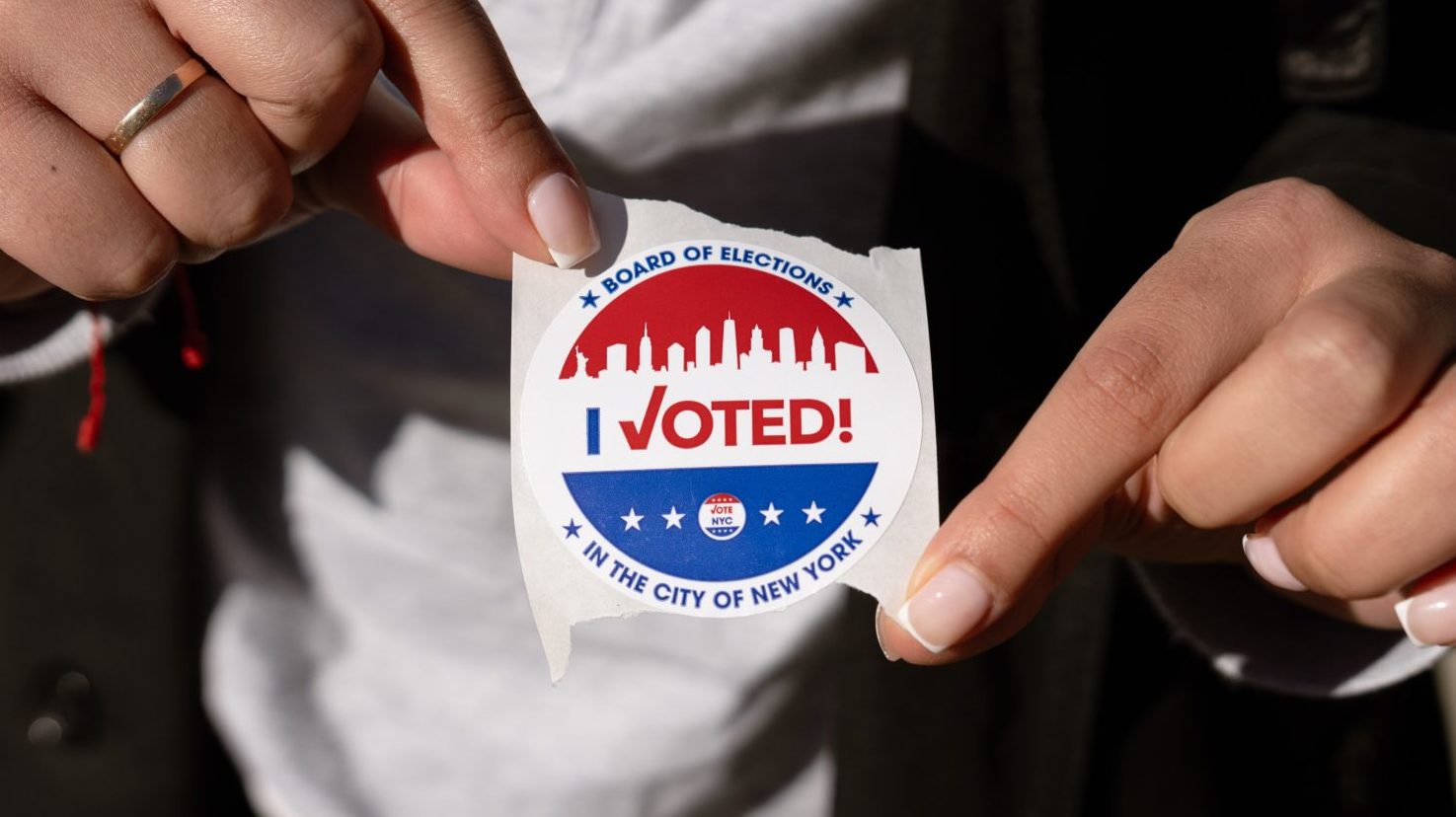
With a little more than eleven days before the midterm election, the goal was still the same: Get more voters to the polls from the Caribbean neighborhoods across Queens and the Bronx. To do this they would knock on more than 500 doors that day and urge residents to vote.

Sitting near the entrance door was the group’s leader, and president of the Caribbean Equality Project, Mohammed Q. Amin. Since the previous week, Amin had been overseeing and assigning each team their “turfs” which is the set of streets and households they would canvas.
“We know that certain Caribbean neighborhoods have low voter turnout, so our strategy is actually about getting those communities to start participating more regularly in their local elections because we see higher turnout for presidential and federal elections,” Amin said. “We often don’t see that same turnout for state and city councils.”
Caribbean Equality Project’s “Mash-Up De Vote” campaign has been around since 2019, and they have been door-knocking for the past four years. During 2025’s mayoral election, the Caribbean Equality Project knocked on 3,000 doors, and on 5,000 for the presidential election the year before, Amin said.
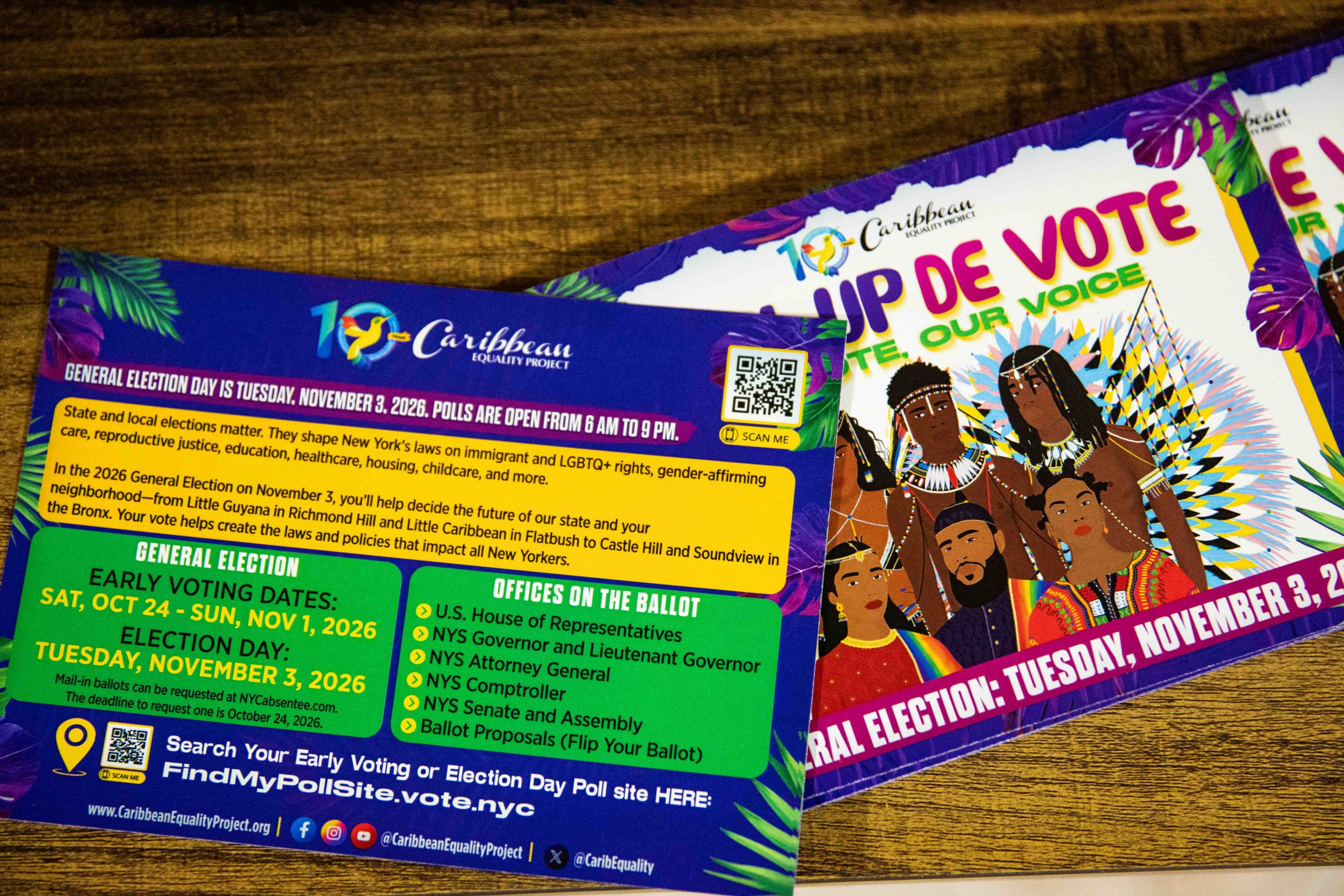
For this year’s election, the organization had set a goal of knocking on 3,500 doors as part of a grant-supported voter education effort. They planned to reach about 2,000 doors in Richmond Hill and South Ozone Park in Queens, and another 1,500 in the Bronx neighborhoods of Parkchester, Wakefield and Castle Hill. Amin said, they have knocked on over 1,200 doors already.
By 10:53 a.m. Amin was out the door, with canvassers Rohanie Seepersaud and Tiffany Jade Munroe. Their first stop was a home near 127th Street and 109th Avenue. It was decided beforehand that canvassers would focus on communities where they believed voter participation, particularly in local elections, needed to improve.
The first resident they approached said she would not vote this year. At the next house, the team received a more encouraging response. A woman told them that three people in her household planned to vote.
“That’s exciting, they are voting,” Amin and Munroe said.
For the next several hours, the team continued knocking on doors. When nobody answered, they left voter-education materials in visible places, taking care not to put them in mailboxes. The leaflet, which the Caribbean Equality Project created, contains election dates, early voting information and information about candidates.
“We’re not supposed to leave marketing materials in the mailbox. We could get charged for this,” Munroe said.
The team gets its list of addresses and voters from MiniVAN, a popular app used by Democratic and progressive political campaigns to canvass and track voter outreach.
Throughout their door-knocking, canvassers sometimes encounter views they oppose. In those cases, Munroe says, they try not to argue with residents, and respect their choices.
Munroe and Seepersaud are both transgender from Guyana, seeking asylum in the United States. Munroe said she faced persecution as a trans woman in Guyana, which shaped her decision to leave the country. In her experience, she’s learned that confrontations can quickly become hostile, particularly amid anti-LGBTQ rhetoric.
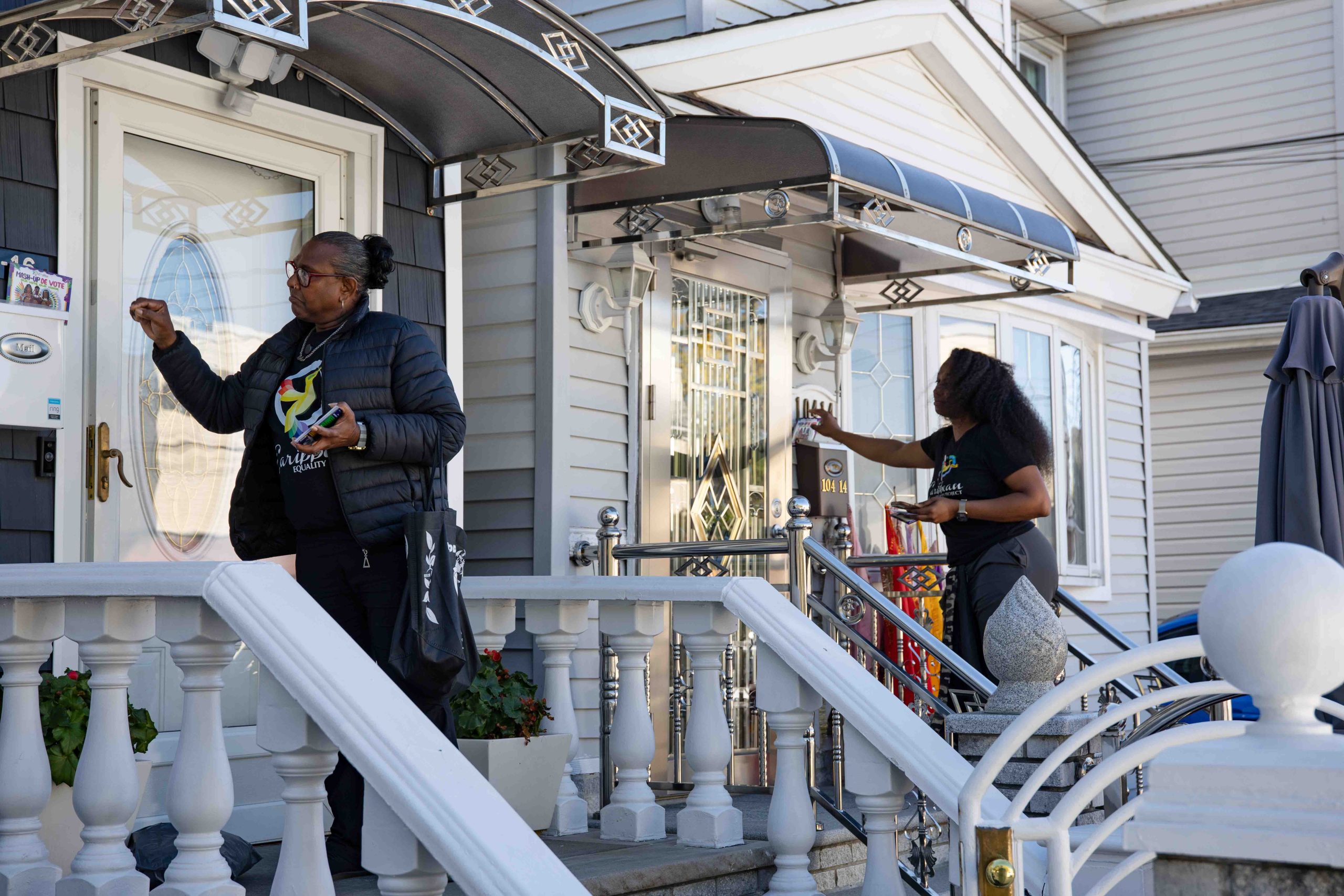
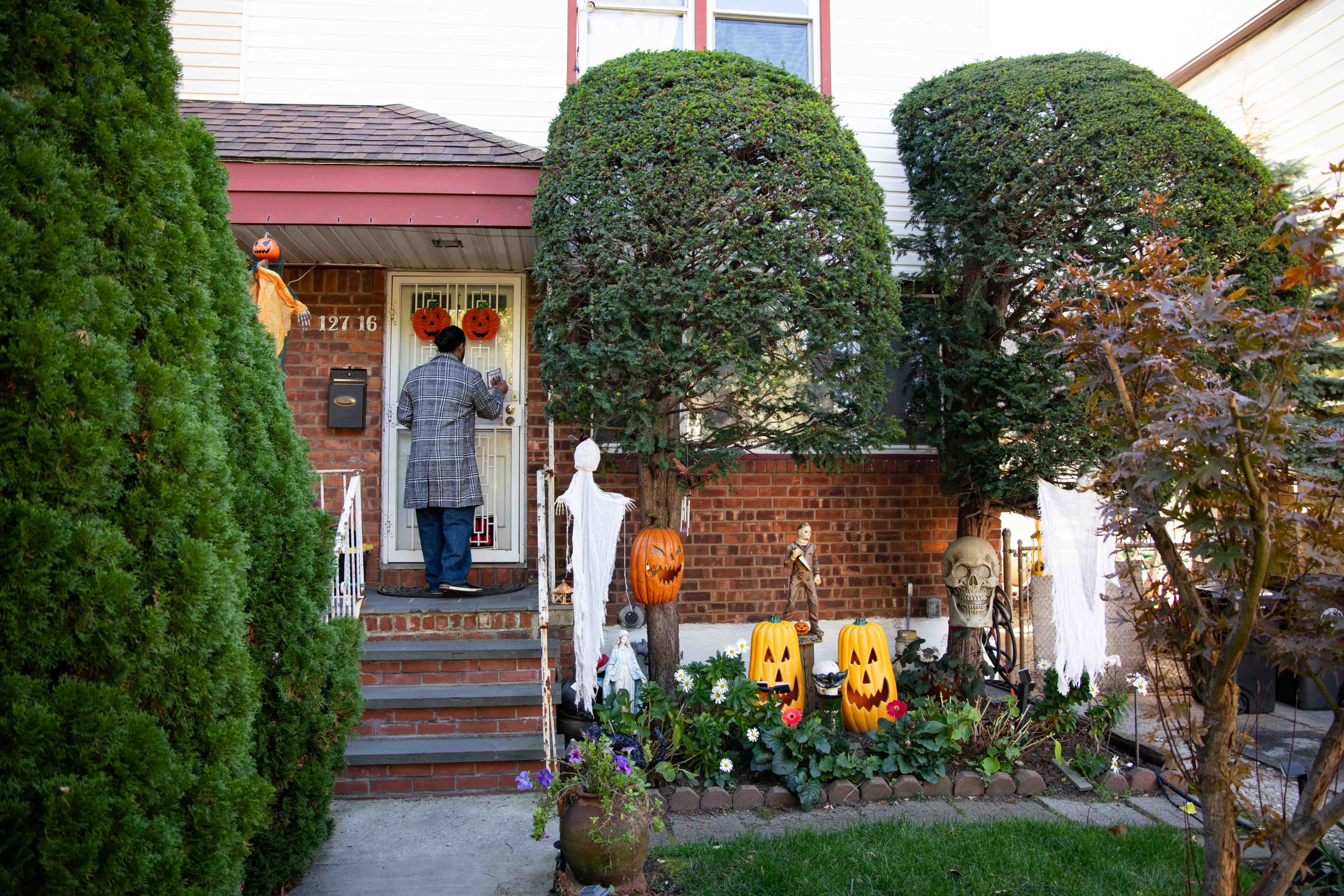
“As an organizer and a leader within this community space, we’ve dealt with so much LGBTQ hate, so much trans hate and rhetoric,” Munroe said. “It becomes a point now where I don’t really feed into it as much because confrontation happens.” She added that canvassers are taught to not argue and not to escalate any confrontations.
While Munroe and Seepersaud have spent years canvassing in New York with the Caribbean Equality Project, they are not voters themselves — a characteristic that Amin said many of the canvassers share, with about 65% percent of people filling canvassing shifts being ineligible to vote.
They have come from countries including Guyana, Mexico, the Philippines and Bangladesh. For some, canvassing is their first experience mobilizing eligible residents in New York to participate in an election that could shape the future of immigration policy and other issues affecting their communities.
For many Caribbean residents, their home countries’ political corruption has weakened their public confidence in elections, Amin said. Some have carried that disillusion with them to the U.S.
“We’re not telling them who to vote for, but the goal is to mobilize them to vote,” he said. “And a large part of that is that many of our community members have never actually been engaged about the importance of voting.”
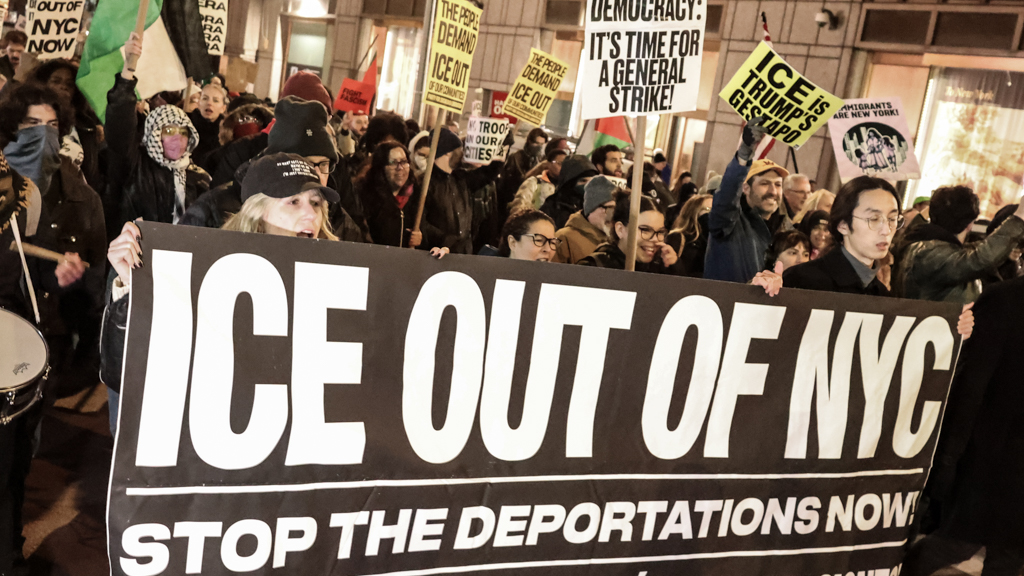
Their work also comes as immigration enforcement has raised concerns among immigrant communities in Queens. In recent months, ICE agents have arrested thousands of immigrants in the area, creating a difficult backdrop for canvassers who are themselves seeking protection in the U.S.
Shane Towler, one of the team members, said the fear surrounding immigration enforcement had not stopped him from doing his job.
“I just do not look and think about ICE. ICE is doing what they gotta do, and I still gotta do what I do,” he said. “Once we get the right people in power, they’re gonna be shut down soon.”
The group is part of a movement from community leaders urging Caribbean residents to vote, amid concerns over the Trump administration’s immigration policies, including its efforts to end Temporary Protected Status (TPS) for Haitians and other protections for immigrants.
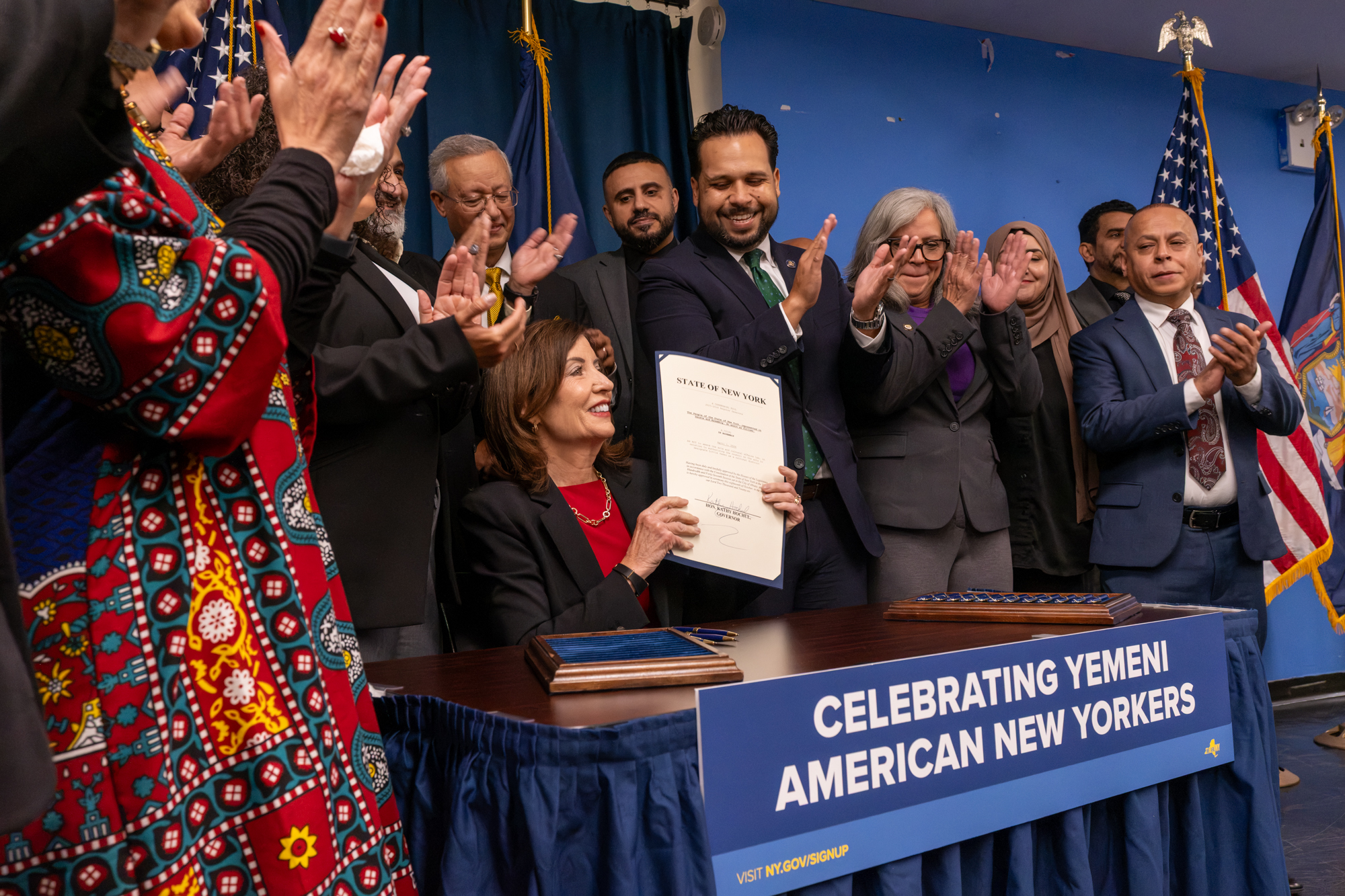
On Sunday, Councilmember Rita Joseph, who represents New York City’s 40th district, joined dozens of Democratic Party members and the governor at a “Get Out the Vote Canvass” event in Brooklyn’s Little Caribbean in Flatbush to encourage voter participation. She said the outcome could affect immigrant communities, including Haitians who have relied on Temporary Protected Status. About 350,000 Haitians, including some 40,000 in the State of New York, have lost their legal status after the Supreme Court ruled to end TPS this summer.
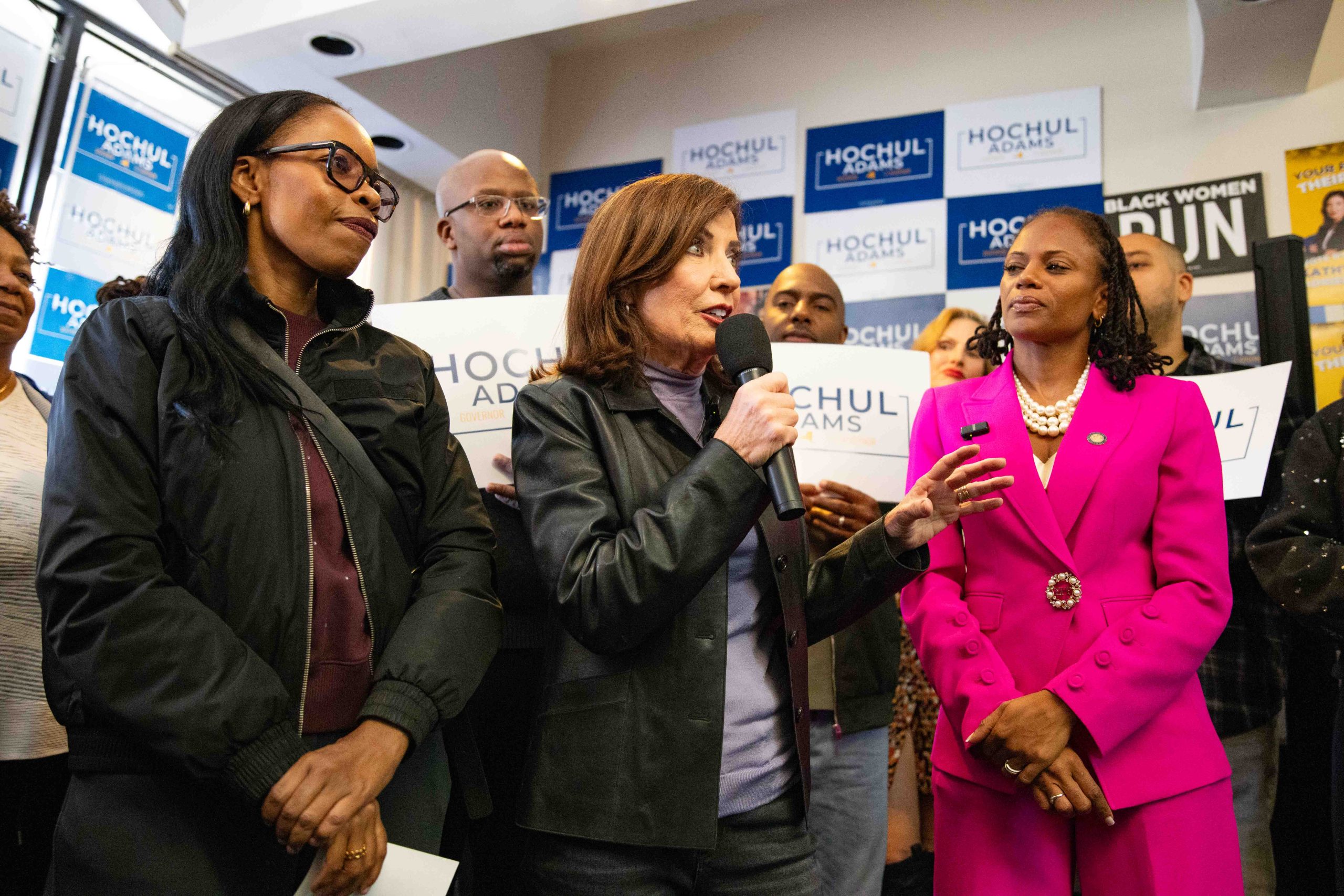
Joseph said she wanted voters to support efforts to change the balance of power in the Senate and push for policies that protect immigrant communities.
“We used our voice to make sure that we helped flip the Senate,” she told Documented. “Now we’re looking for the same, for support for these communities who are living in fear, who know who stopped going to work, stop going to the doctors, stop going to school because there was no legal pathway that was stripped away from them.”
Joseph said residents she has spoken with have raised concerns about soaring gas prices and the high cost of living across New York State, including New York City. Others have said they want to feel safe because they fear ICE activity in their communities.
It was 1:53 pm when Munroe and Seepersaud finished their first shift and returned to headquarters after knocking on 150 doors.
They sat in the basement with the other members, eating halal chicken curry and roti while reviewing the morning canvassing and the other steps. The two teams knocked 269 doors. They planned to head to other areas in one hour aiming to knock 579 doors between them for the day. They’ll continue to knock one door at a time until Election Day.