

This summary was featured in Documented’s Early Arrival newsletter. You can subscribe to receive it in your inbox three times per week here.
Judge Fernando Rodriguez, a Trump appointee, issued a permanent injunction on Tuesday against applying the Alien Enemies Act to migrants detained in the Southern District of Texas.
His ruling states that the Trump administration overstepped by invoking the Alien Enemies Act to justify fast-tracking deportations of alleged Tren de Aragua gang members. The Alien Enemies Act of 1798 was historically used during wartime, most notoriously in WWII to intern Japanese Americans.

On Thursday, Rodriguez deemed its use in 2025 as unlawful, writing: “The historical record renders clear that the President’s invocation of the AEA through the Proclamation exceeds the scope of the statute and is contrary to the plain, ordinary meaning of the statute’s terms,” in his 36-page order and opinion.
The key issue was whether terms like “invasion” and “predatory incursion” under the law could legally include non-military actions, as the Trump administration has claimed. Judge Rodriguez’s ruling makes clear that it would be incorrect to do so, echoing what other judges have ruled on the matter too.
The judge concluded that “invasion” typically means a military or organized armed force entering a country to seize or control territory—something he said didn’t describe Tren de Aragua’s activities in this case.
“As a result, the Court concludes that as a matter of law, the Executive Branch cannot rely on the AEA, based on the Proclamation, to detain the Named Petitioners and the certified class, or to remove them from the country,” wrote Judge Rodriguez.
ACLU lead counsel Lee Gelernt, who is representing the Venezuelan migrants, reacted to Thursday’s ruling saying the law was misapplied, and that migrants were denied due process.
“The court ruled the president can’t unilaterally declare an invasion of the United States and invoke a wartime authority during peacetime,” Gelernt said. “Congress never meant for this 18th-century wartime law to be used this way. This is a critically important decision that prevents more people from being sent to the notorious CECOT prison.”
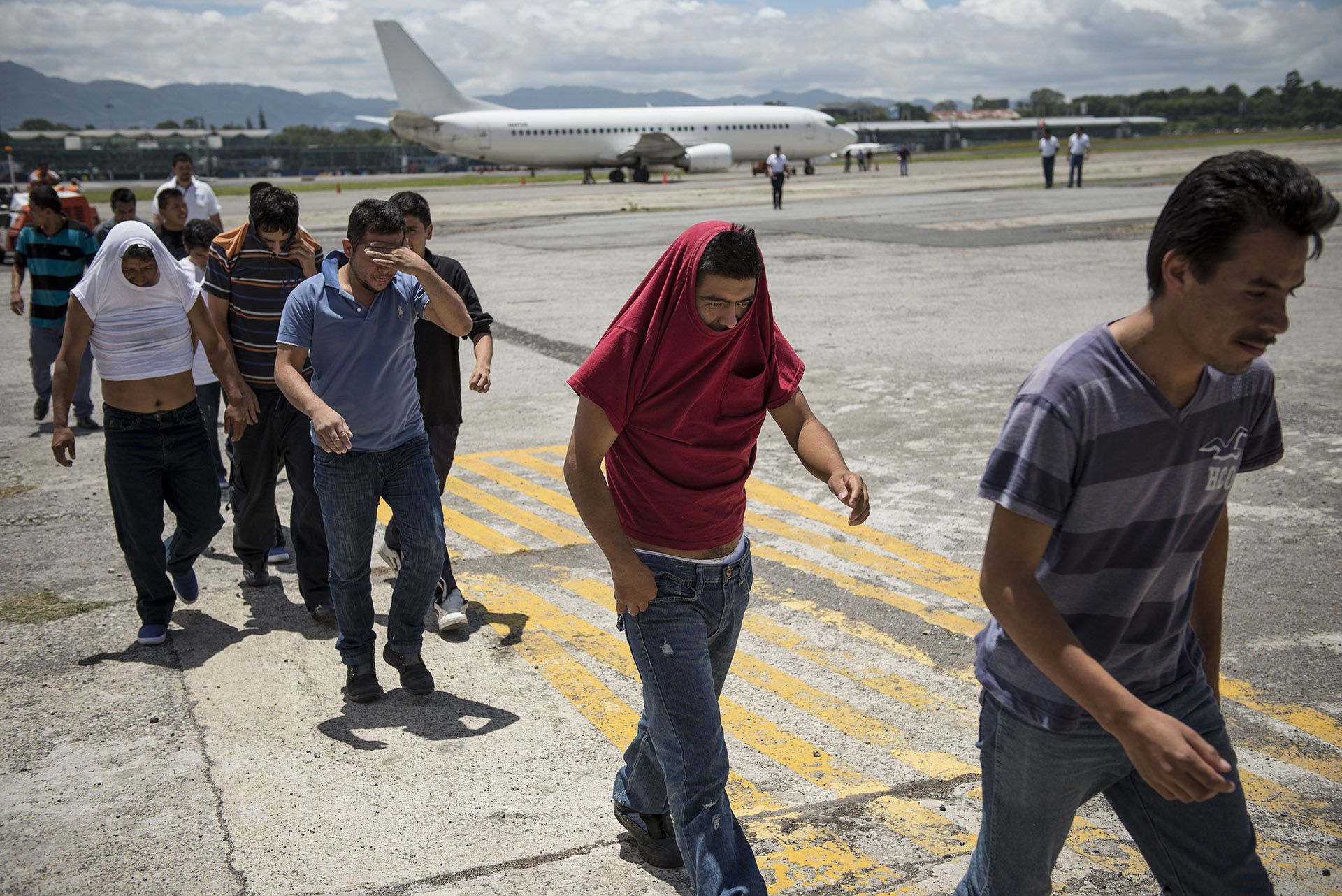
On March 15, the Trump administration deported 261 immigrants — 238 Venezuelans and 23 Salvadorans—to El Salvador via Honduras, using the Alien Enemies Act to bypass immigration hearings for the majority. The law permits the U.S. to detain and deport non-citizens over age 14 from a “hostile nation or government” without due process.
Many families of those deported have denied that their relatives have ties to Tren de Aragua gang members. One of those deported included Merwil Gutiérrez, a 19-year-old who had no criminal record when ICE agents detained him outside his home in the Bronx, Documented reported. His cousin who witnessed the arrest detailed the incident as well. Merwil Gutiérrez’s father, Wilmer, is still searching for answers.
The U.S. Supreme Court ruled on April 7 that migrants who the Trump administration wants to deport using the Alien Enemies Act must first be notified and given a chance to appeal.

Prior to Tuesday’s ruling, judges across the country had ruled that the act’s use was unlawful — or at least halted Trump’s deportation of migrants that weren’t given notice and a chance to object. Judge Rodriguez’s ruling, however, is the first permanent injunction and could be appealed by the Trump administration.
Rodriguez’s order cited several examples of historical evidence — including those highlighted by ACLU in its arguments — that makes clear that when Congress wrote the Alien Enemies Act in 1798, “invasion” and “predatory incursion” referred specifically to “military” action.
“The activities of the Venezuelan-directed TdA in the United States, and as described in the Proclamation, the Court concludes that they do not fall within the plain, ordinary meaning of “invasion” or “predatory incursion” for purposes of the AEA [Alien Enemies Act]. As an initial matter, no question exists that the Proclamation references the entry of TdA members into the United States,” Rodriguez wrote.