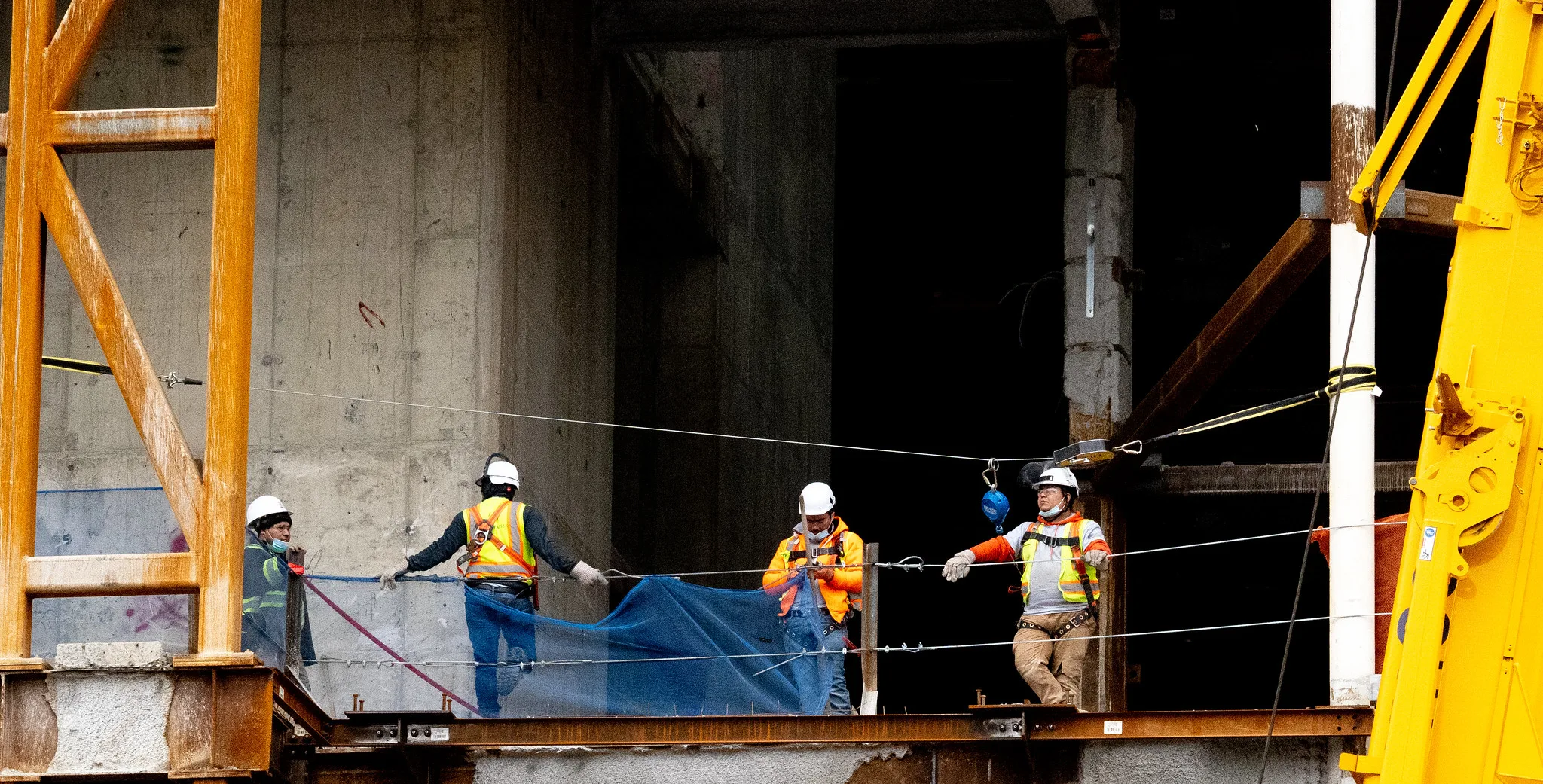


Immigrant workers on farms and construction sites are at greater risk of injury under President Donald Trump’s new push to deregulate workplaces, advocates say.
On July 1, the U.S. Department of Labor (DOL) announced its plan to deregulate 63 “costly and burdensome” workplace rules that were put in place during previous presidential administrations. The agency stated that the action was in line with Trump’s Executive Order “Unleashing Prosperity through Deregulation.”
Moving forward, for every new rule introduced by the DOL, the agency plans to eliminate 10 existing regulations.

Deputy Secretary of Labor Keith Sonderling applauded the move, calling the DOL’s actions of cutting 60 “obsolete and burdensome” regulations “unprecedented.”
Also Read: RFK Jr. Slammed for Layoffs That Could Bring ‘More Injuries, More Deaths’ to Immigrant Workers
“While the previous administration prioritized expanding the size of government over job and wage growth, President Trump is focused on unleashing the greatest economic comeback in American history,” Soderling said in a July 1 statement. “We are proud to stand with this Administration to deliver economic security for working families by eliminating job-killing and inflation-driving red tape.”
However, workplace safety advocates such as Charlene Obernauer, executive director of the New York Committee for Occupational Safety and Health (NYCOSH), believe that DOL’s deregulation agenda will put workers’ lives in jeopardy.
“New York’s workers, from construction sites in Manhattan to film sets in Brooklyn, have dangerous jobs already and cannot risk losing these fundamental protections,” she told Documented in statement.
Some of the rules potentially on the chopping block include the Occupational Safety and Health Administration’s (OSHA) proposal to amend the OSHA 300 Log, which is a log of work-related injuries and illnesses. If this rule is cut, employers would no longer need to record work-related musculoskeletal injuries.
The agency also has plans to change the interpretation of the General Duty Clause, which excludes enforcement of some known hazards present on job sites. Under OSHA’s new interpretation of the law, the agency will no longer cite an employer for hazards that are common in high risk jobs. OSHA would also withdraw its proposal to require employers to provide adequate lighting at construction sites.
About 15% of all workplace injuries on construction sites are related to poor lighting. As Documented previously reported, immigrant demolition workers in New York were forced to work in dark rooms with little visibility.
With deaths on construction sites on the rise in New York City, Obernauer says that fewer regulations could make worksites even more dangerous.
“OSHA’s dangerous exemption creates a massive loophole that abandons worker safety,” she said. “By giving employers immunity from the general duty clause for ‘risky’ activities, OSHA is telling workers that preventable injuries are just part of their job. That’s unacceptable — every worker deserves protection from recognized hazards, regardless of their profession.”
Workers who have been victimized by wage theft would also find it harder to receive compensation. Since 2010, the DOL’s Wage and Hour Division has sought liquidated damages, which is additional compensation awarded to workers whose wages were stolen before their case was tried in court. Now the DOL will no longer seek pre-trial liquidated damages.
With wage theft rampant in New York, accounting for over $1 billion annually, Ligia Guallpa, executive director of the Workers’ Justice Project, a worker center that organizes immigrant delivery, warehouse and construction workers, says the DOL’s lack of enforcement would only make the problem worse by removing one of the few meaningful deterrents against wage theft that for immigrant workers.
Also Read: Airport Union Alleges Newark Cargo Contractor AGI Violating Federal Labor Law
“For the millions of immigrant workers who face rampant underpayment in industries like construction, cleaning, delivery, and food service, this change sends a dangerous message: employers can steal wages with little consequence,” she said in a statement to Documented.
Advocates also warn that New York farm workers are at risk. The DOL plans to reverse a 2024 rule that protected migrant farmworkers from retaliation if they filed a complaint against their employer.
Known as the “Farmworker Protection Rule,” agricultural workers under the H-2A visa program would be allowed to advocate on their own behalf for improved working conditions without fear of being fired. The rule also mandated improved safety conditions, such as requiring seat belts in the vans that transport workers to the fields.
Seat belts are a particularly vital farm worker safety issue. Between 2021 and 2022, transportation accidents were the leading cause of death for farm workers. Now, those gains could be taken away under Trump’s DOL.
“Gutting the rules protecting H2A workers makes life worse for all workers, including for American workers,” said Gabriella Szpunt, United Farm Workers New York (UFW) organizing coordinator, in a statement to Documented. “It’s a huge step backward for farm worker rights that will benefit only the worst employers. It’s sick to oppose seat belts on company vehicles when vehicular accidents are a leading cause of death among farm workers.”
Szpunt says protecting workers from retaliation is essential to UFW’s organizing drive across the state. In May, ICE arrested 14 immigrant farm workers in Buffalo. According to the UFW, ICE had a list of names of labor leaders who were organizing workers at Lynne-Ette & Sons, an orchard in upstate New York. Without federal labor protections, Szpunt argues that workers would become less inclined to speak up and would be further vulnerable to employer abuses.
“Ending this rule also lets employers get away with retaliating against workers who speak out against abuse, making forced labor and human trafficking even more likely,” he said. “The H2A visa system is already a leading source of victims of labor trafficking in our country.”