

During a hot evening in June, at a dance salon in Corona, Queens, 30 immigrants from Ecuador sway in unison, stomping rhythmically on the ground and spinning in place. They are members of the Allpayana dance group, and are rehearsing the sanjuanito genre of dancing — a traditional style from Ecuadorian indigenous cultures that honors the earth and celebrates their national identity.
As the two-hour mark hits, the celebration winds down and the dancers gather in the middle of the salon in a circle. Usually, members would share constructive criticism on techniques, or would talk about new developments in their lives. But that night, the conversation shifts from the typical celebratory tone to a somber one: earlier that week a member of the group, a 27-year-old father, had been detained by Immigration and Customs Enforcement (ICE).
“He wasn’t a bad person. From the little that we know about him, he was very hardworking and he took dancing seriously, like a lifestyle, not just as a hobby or pastime like other people take,” Christian Pérez, the director of the dance group, told Documented in Spanish, adding that the young man was separated from his wife and daughter.

In the circle that night, the members discussed ICE sightings in the area and how careful they have to be. “We have a WhatsApp group where we keep ourselves up to date,” Pérez, 31, said. “We are always sending each other photos saying: ‘Look, [ICE] was just seen in that place.’ People are telling each other to be careful, trying to help.”
Before President Donald Trump took office in January, ICE was detaining fewer people than U.S. Customs and Border Protection (CBP), the agency responsible for apprehending migrants at the border and ports of entry. But since taking over, data shows that ICE has detained five times more people than CBP between the months of February and July — a trend that is likely to continue with funding recently more than tripled to the agency through the end of 2029, adding an additional $11.25 billion a year. That shift has ripple effects on local immigrant communities, where local elected officials say the fear of enforcement has dampened civic participation, caused immigrants to consider missing court dates, and, in some cases, leave the country altogether.
Also Read: ICE Has Done ‘Irreparable Harm’ to Federal Plaza Detainees, Judge Says
“What we are seeing now is this sweeping indiscriminate effort to round up anyone they can. And they’re trying to justify their actions with some misleading, but outright false rhetoric about immigrants,” explained Shayna Kessler, director of Vera Institute’s Advancing Universal Representation Initiative which seeks to ensure that everyone facing deportation has access to free and high-quality legal defense.
As of August 10, the latest available data shows that ICE has detained five times more people on average than CBP. In comparison, in the ten months pre-inauguration, from April 2024 to January 2025, CBP detained on average twice as many people as ICE.
Meanwhile, border apprehensions have drastically dropped during the second Trump administration. In October 2024, CBP registered 56,457 nationwide total apprehensions at entry. In July 2025, that number had dropped to 3,965, a more than 90% decrease.
Austin Kocher, research assistant professor at Syracuse University, explained that the buildup of military-style enforcement at the U.S.-Mexico border, including the presence of the National Guard, has become a powerful deterrent to those planning on crossing.
He told Documented that this broader enforcement has reduced arrests and detentions at the border. But the deterrence strategy, he added, extends beyond the border itself: “Deterrent starts all the way down in migrant-sending countries. That is part of the public media campaign from the Trump administration. They are sending the message to migrants in El Salvador, Guatemala, Ecuador, Venezuela and other places: ‘Don’t even try to come.’ But even if they are coming, they are [up] against all these policies and enforcement in the Southern U.S. Mexican border.”
To meet the promises of mass deportation, Kocher explained, the administration is instead turning to maximizing the number of people deported from inside the United States. “If there are more ICE officers arresting people, there will be more people in detention. There are also fewer people being released from detention, which is another factor that is increasing the detention numbers in terms of population.”
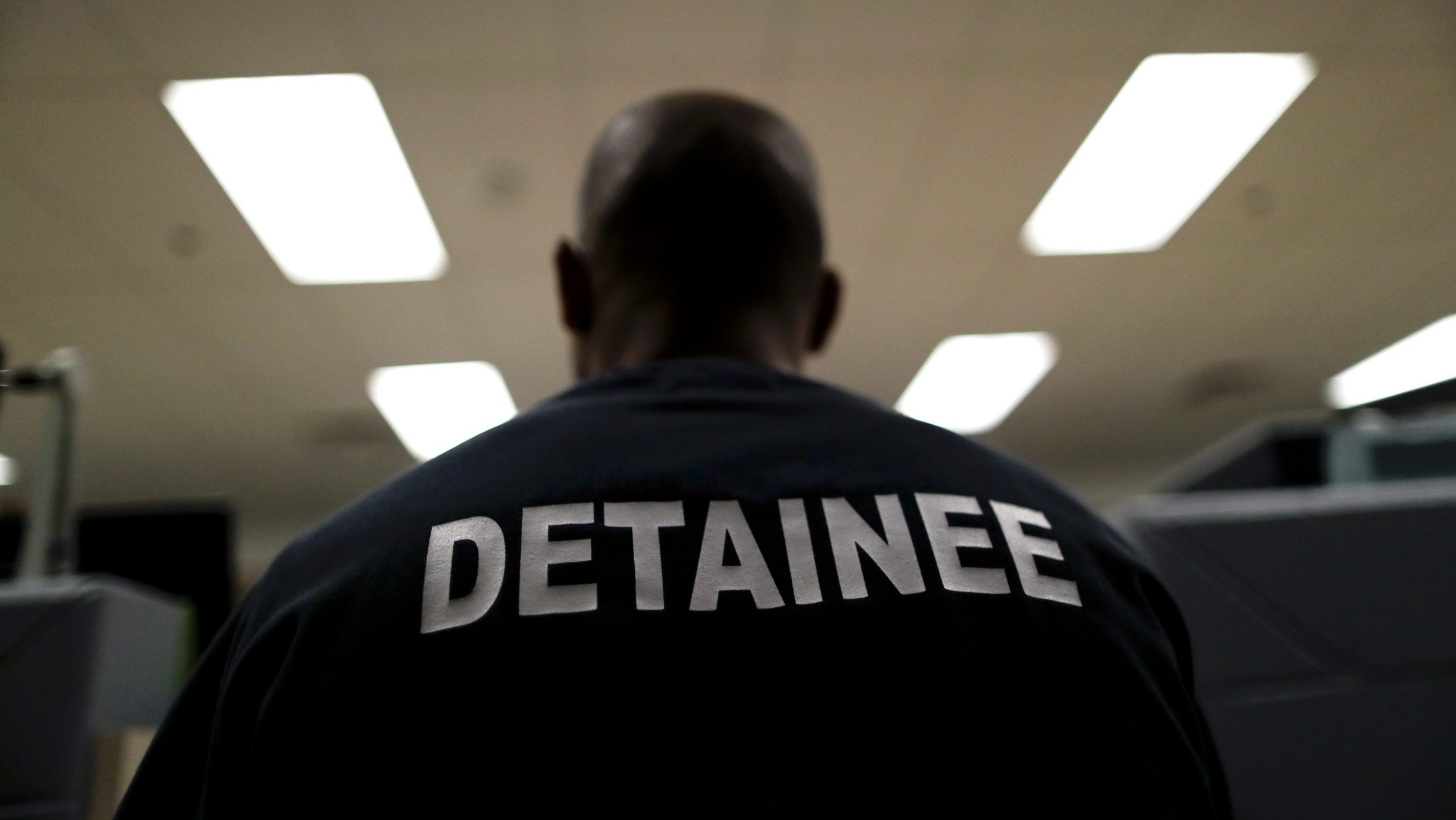
Of those currently detained, 70% have no criminal convictions, according to analysis by the Transactional Records Access Clearinghouse (TRAC). Of those with criminal convictions, many committed only minor offenses, including traffic violations, in contrast to the message that the Trump administration has been sending about detaining and deporting convicted criminals.
Graph Rommel H. Ojeda for Documented.
“There’s a lot of research that shows that there’s no connection at all between migration and crime, and that increasing migration does not impact crime at all,” Kessler explained, noting that, despite the contradictory data, the Trump administration has advanced an agenda that continues to paint immigrants as criminals.
She said that immigrants trying to follow the law by attending court proceedings and presenting their case to an immigration judge have also been detained by masked ICE agents, and placed in expedited removal. As Documented reported in the past, students with no criminal records have also been detained and some even deported.
“To go after community members, neighbors, business owners, parents, kids, is really upending stability,” Kessler said. “It’s upending our economies.”
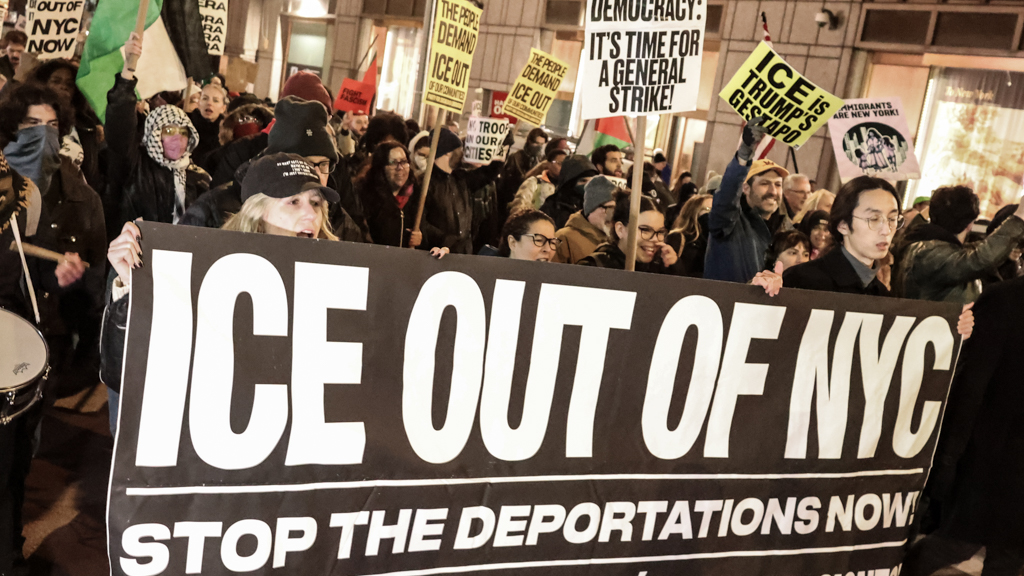
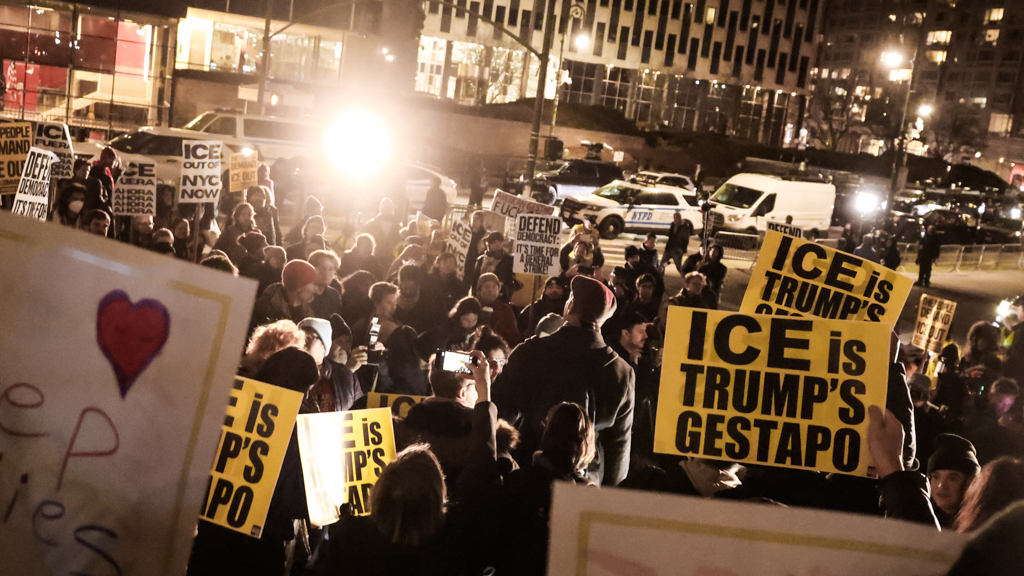
Queens Borough President Donovan Richards said he has seen the effects of ICE on local civic participation firsthand. “Every time Trump announces [a new immigration enforcement action] or people see others getting kidnapped in the courtrooms, in their hearings, it leaves a chilling effect in Queens,” he told Documented. “We just had the Colombian Day Parade in Jackson Heights and there were thousands of fewer people this year.” Richards added that his office has also seen a significant drop in individuals who are seeking access to healthcare and other health clinic services at tabling events.
Via Documented’s Spanish newsletter, Documented Semanal, migrants have also shared messages of fear and their intentions to self deport in efforts to avoid being forcibly deported and separated from their families.
For L. Ardila, an asylum seeker from Colombia who was living in the U.S. for two years with her husband, remaining in the country was unbearable, she said. “The problem is that the ICE raids continue, and at any moment something can happen to you,” she explained, adding that her husband had received a final order of deportation.
When she arrived in the U.S in 2023, Ardila had been detained in Louisiana for 45 days before being paroled into the country. She said that while she endured the detention two years ago, she could not imagine being in detention now because she has a 1-year-old daughter at home, who is a U.S. citizen.
“Who will she stay with [if I’m detained]? People would tell me to consult with lawyers and give them a permit to take care of her. But none of my family have a visa. Who will come for her?”
Ardila’s husband has lost three jobs because employers fear immigration raids, which has worsened their financial situation with every additional month that she remains in the country, she said.
Fearing being separated from her U.S. citizen daughter, she and her family self-deported in early August.
‘God willing nothing happens to us’
Although Pérez thought that at first Trump would only deport so-called criminals — as the president campaigned — he says he now believes his administration is trying to deport as many immigrants as possible, regardless if they’ve committed any crimes. “It has been and, I think it will be, full of uncertainty and difficulty to stay in the [U.S.].”
For Pérez, creating the group in January of 2024 meant nurturing a space and community for people to come together and celebrate the traditional dances of Ecuador. Since Trump won the election, he said, the impact of the deportations was felt even before the numbers skyrocketed. “We were planning our anniversary celebration in a big salon with a lot of people that were invited, but then Trump entered and the ticket sales dropped. Everyone wanted us to cancel it,” Pérez said about their annual celebration in February.
With everything already paid, Pérez said they decided to continue. “We risked it,” he said, noting that ultimately, few people decided to attend.
Also Read: Before ICE: A Guide for Parents at Risk of Deportation or Detention
In a recent event north of Spring Valley the tensions were also very high until the day of the event, he said. Many of the members were afraid of traveling together — with some deciding to not attend — in a bus like they used to in the past. He said that for that performance, many of the members decided to take their own car, afraid of being encountered by ICE and detained together as a group.
With the most recent passage of the One Big Beautiful Bill, which allocated funds for ICE to plan and double the immigration detention space this year, Pérez said he has been feeling even more pressure than before. He added in the past few months, the group has also been afraid of traveling to other states — like Pennsylvania or Washington D.C.
Although he built the dance group as a space where he and other members of the community can come together to celebrate their heritage, he said that deciding where to host their presentations now comes with a level of anxiety and uncertainty: “God willing nothing happens to us. In reality I think I am the most afraid because I am the one who decides where to have the presentation, where to take them.”