

New York City is preparing to launch a new pilot program aimed at reshaping how emergency food assistance reaches low-income households, city officials said this week.
The initiative, still in development, will test a voucher or credit-based system designed to give families more flexibility in how they access food, while also improving efficiency across the city’s vast emergency food network. It was announced by the New York City Department of Social Services (DSS) and its Human Resources Administration (HRA) during a City Council oversight hearing.
“DSS seeks to expand food access, increase participant choice, and reduce some operational inefficiencies within the emergency food network,” said HRA administrator Scott French at the hearing.

Rather than relying solely on traditional food pantries, the pilot will provide a few hundred households with direct assistance they can use to purchase food — and, in some cases, essential items that are not eligible for the Supplemental Nutrition Assistance Program (SNAP) like hygiene products, including diapers.
DSS chief operating officer Matt Brune said voucher amounts will vary by household size, with larger families expected to receive higher benefits than individuals. He also said DSS is likely to look to the New York City Department of Health and Mental Hygiene’s program as a model, which uses a tiered benefits system through its online vendor, Mercado. Final benefit levels have not yet been determined.
French said the program is intended to complement, not replace, the city’s existing network of more than 700 food pantries and community kitchens funded through the Community Food Connection (CFC) program, focusing on families with children and seniors to understand their purchasing practices. The pilot will also target areas with less access to nourishing food in consultation with community partners.
French said the pilot will initially enroll between 400 and 600 households. In a preliminary racial equity plan released earlier this month, DSS said its medium-term goals include reducing food insecurity among participating families in identified neighborhoods. The strategy includes testing a new voucher-based model for households that are food insecure but not eligible for receiving SNAP — a group often overlooked in traditional assistance programs.
The first year of the pilot program will include $1 million in direct food assistance, with an additional roughly 25 percent allocated for administrative and evaluation costs, Brune said at the hearing. If the pilot proves successful, the city plans to expand it in subsequent years, potentially doubling the number of participating households.
DSS officials said the program could begin as early as Fiscal Year 2027, though a late 2026 launch is possible if the contracting process moves quickly.
The pilot program comes as New York City faces growing pressure on its food assistance systems, driven by rising costs and increased demand.
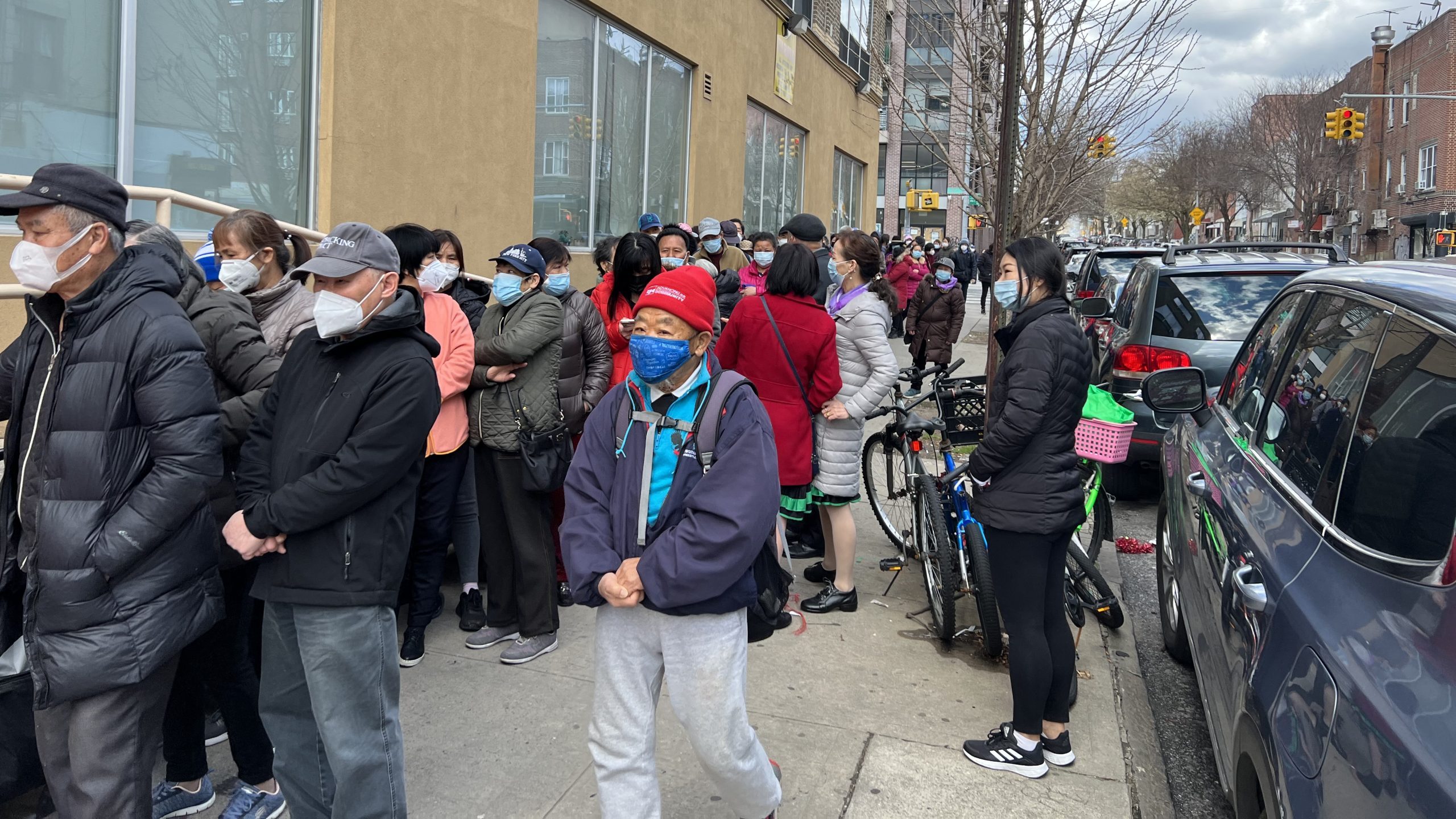
According to Brune, the CFC program — the backbone of its emergency food network — includes over 700 providers, with 90 being community kitchens. The program distributed over 47 million pounds of food in Fiscal Year 2025 and supported 37.1 million visits to pantries and kitchens across 170 neighborhoods.
Brune said the CFC network funding is allocated every half a year, with a base budget of $49 million for FY26, potentially increasing by 40% to $69.4 million. Still, officials acknowledged that traditional models do not always meet the needs of all residents, particularly those who fall outside SNAP eligibility or face barriers accessing pantry services.
The initiative also comes amid looming budget challenges. Crystal Hudson, chair of the General Welfare Committee, which oversees the city’s homeless shelter system and other social services, pointed out that H.R.1, the major federal spending bill passed by Congress last year, is expected to shift more administrative costs for SNAP onto local governments. A change could cost New York City $111 million by Fiscal Year 2027, a gap that is not currently reflected in the mayor’s preliminary budget, according to the city council.
DSS is currently reviewing proposals submitted through the “PantryLink Challenge,” a competitive procurement process inviting vendors to design a scalable, participant-centered solution.
A key component of the pilot will be the collection of aggregated purchasing data, allowing the city to better understand what participants actually need — from food preferences to demand for non-SNAP-eligible essentials like diapers, said Brune.
“We’ll get aggregate data on what people are buying and then what quantities, which ideally will help inform what we’re also doing in our brick and mortar pantry system,” said Brune.