

Oshantay Waite had always spoken to her father every day on the phone. The 27-year-old Brooklyn woman made a point of staying in close touch with her dad, who lived several hours away on Martha’s Vineyard.
Then, on Sept. 26, 2025, the calls stopped. Hours passed. She called hospitals and police stations. No one knew where her father, Newton Waite, had gone.
He was found the next morning, on the other end of a borrowed phone. While out shopping for Vineyard Caribbean Cuisine, the restaurant where he worked as a chef, Waite — a Jamaican immigrant who has been in the U.S. for 19 years — had been detained by ICE.

Like any daughter, Oshantay was scared, angry, confused — but her concerns were amplified because of her father’s numerous health problems. So she immediately set to work fighting for his release.
About eight months into his detention, Oshantay’s fears about her father’s deteriorating health still haven’t been allayed. On a recent jail call, he sent a message that left her terrified.
“He’s telling me, ‘I can’t do this anymore,’” she said. “I’m scared that he’s gonna hurt himself.”
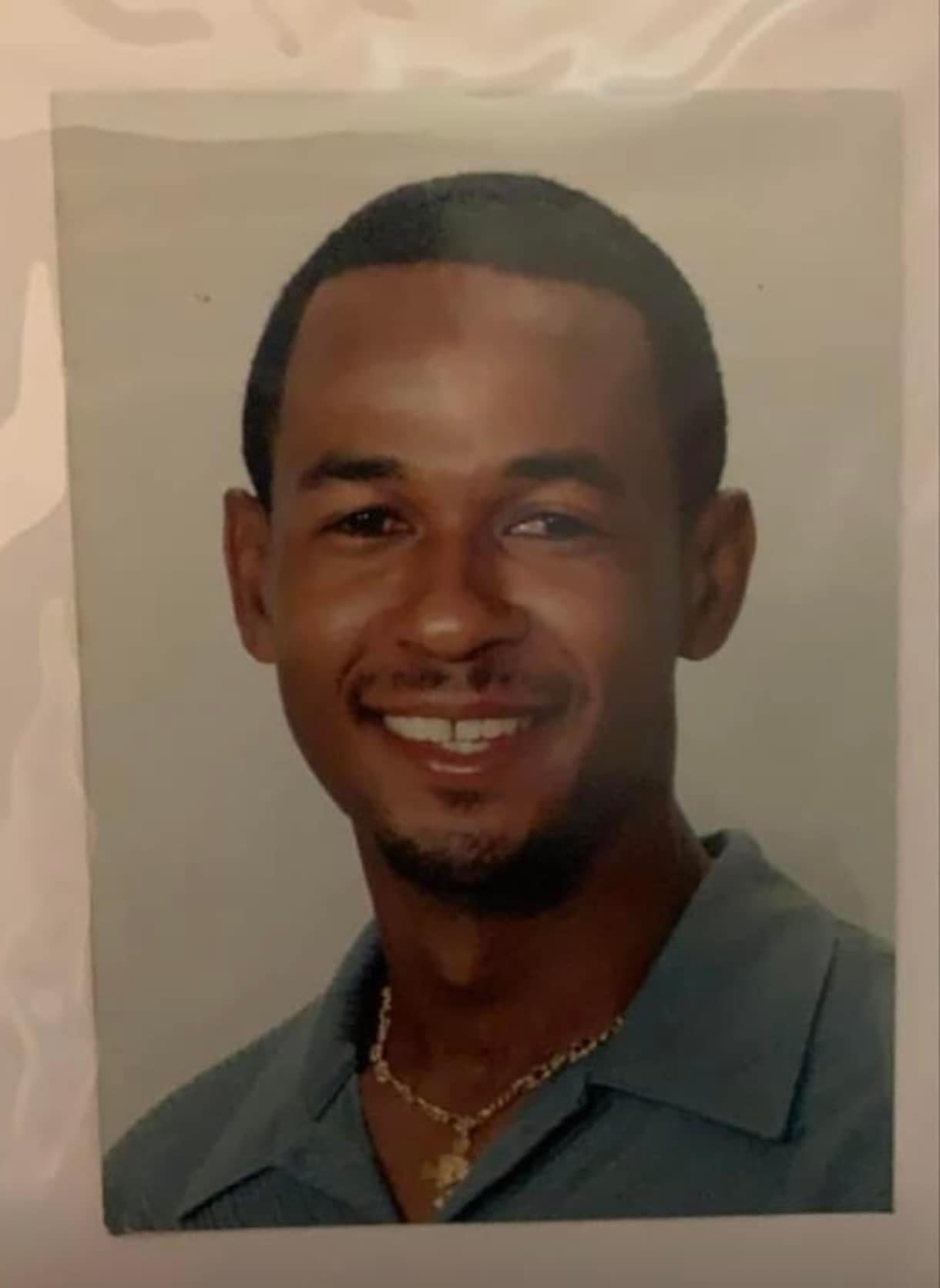
Oshantay is not alone in her fears. The Trump administration’s crackdown on immigration has led to 60,000 people currently being held in detention in U.S. A rise of deaths in ICE custody — 33 in 2025, the most since the Department of Homeland Security was created in 2003 — has put a spotlight on the treatment of detainees, particularly those with medical conditions like Newton Waite.
The detention center where Waite is currently being kept, the Buffalo Service Processing Center in Batavia, N.Y. — the state’s largest ICE holding facility — reportedly provides substandard medical care to detainees, according to reporting by the Investigative Post and The Intercept.
A paperwork problem
Waite’s detention stems from an unresolved immigration case shaped by a withdrawn marriage‑based petition, hearings he never knew about and what his current attorney describes as poor past legal representation.
Waite, 52, came to the United States in 2007 on a work visa. In 2010, he married a U.S. citizen, which allowed him to obtain a conditional two‑year green card.
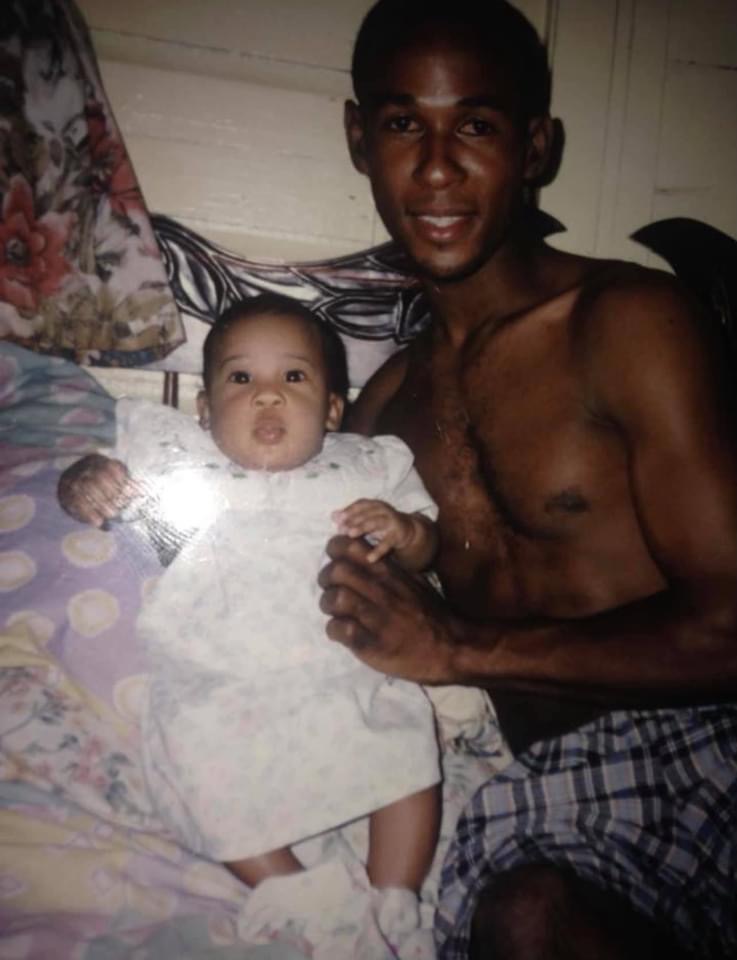
In 2012, his wife began the process to lift the conditions on his green card, which would help Waite on his legal journey to gain permanent resident status, but later withdrew the petition as their marriage deteriorated. That murky decision, his attorney says, is the lynchpin behind Waite’s legal woes, and something which has left him living in limbo ever since.
Years later, despite the fact that Waite’s status was never properly resolved, immigration authorities deemed him as being out of status and scheduled him for an immigration court hearing in 2018. According to his legal counsel, Halinka Zolcik of Prisoners’ Legal Services of New York, the notice he received did not include a date or time.
Another hearing was then set for September 21, 2022. The notice for that hearing was mailed to a mailbox tied to Waite’s aunt, who was blind and later passed away. He did not appear because, his lawyer said, he had never actually received the notice.
As a result of that missed hearing, the court issued a deportation order without his knowledge. ICE agents arrested him based on that old removal order, even though he has long‑standing ties to the U.S., a business and U.S. citizen children.
“I’m not a criminal, I’m not a terrorist. I’ve tried to do everything to uphold the law,” Waite said.
‘I feel like I can’t breathe’
Back in 2023, Waite suffered a mini heart attack — something that was at once shocking and somehow unsurprising. His family has a history of heart problems. He lost his grandfather and uncle to them.
Inside the detention facility, his health has declined.
“My chest just tightens up,” Waite told Documented during a call from his detention center. “I feel like I can’t breathe.”
He has been to the prison’s medical department repeatedly. Staff conducted EKGs and eventually took him to see a cardiologist about two weeks before his interview with Documented. But he said he had yet to be prescribed any medication for his heart condition.
“They just give me advice, some tips,” he said.
With less regard for stoicism, his daughter described worse conditions. During a transfer to Louisiana, she said, her father went three days without sleep and without water. Back in Batavia, she said detainees sometimes drink from bathroom pipes — the same water used for washing feet and taking showers.
The facility also refused to give him his medically prescribed glasses, she said. The family sent him a replacement pair he’s using now.
In a statement, an ICE spokesperson told Documented that the agency provides detainees with “proper meals, water, medical treatment” and opportunities to communicate with family members and lawyers. The spokesperson added that ICE provides “comprehensive medical care from the moment an alien enters ICE custody,” including medical, dental and mental health services, as well as emergency care.
“My father’s hair is white,” Oshantay said. “He never had white hair before.”
She said he has been to the emergency room three or four times. Each time, she said, staff say his blood pressure is high but nothing is wrong.
Zolcik, Waite’s legal counsel, said she has watched her client’s condition worsen from inside the system. She has repeatedly asked the detention center to have him seen by a cardiologist and a psychiatrist.
“I have just seen him slowly get worse and worse,” Zolcik said. “It seems like he’s pretty depressed. And at one point he was a little bit manic, not remembering anything that I had said to him.”
“I am very concerned about his mental health,” she added.
Waite himself described the toll of seven months in a cell.
“I definitely have really crazy dreams that I never dreamed I would ever have,” he said. “It’s not easy looking at the same wall every day.”
‘We are desperate’
From her home in Brooklyn, Oshantay Waite has spent months calling lawyers, elected officials and advocacy groups, trying to secure her father’s release.
“I’ve done every single thing that I know that I can do,” she said. “I don’t know if it may harm the situation, but we are desperate.”
Zolcik has appealed the denial of Waite’s previous lawyer’s motion to reopen his case at the Board of Immigration Appeals (BIA), arguing ineffective assistance of prior counsel. When he was detained and being prepared for removal in Louisiana, she successfully requested a stay of removal, a rare outcome, she said, which stopped his deportation and got him brought back to Buffalo.
“It gave me hope, because it happened during the Trump administration,” Zolcik said. “I was like, ‘Alright, maybe they’re not 100% denying everything.’”
She is also working with another lawyer to file a habeas corpus petition in federal court, arguing that Waite’s detention has become prolonged and unreasonable. If the BIA denies the appeal, she knows they can take the case to the Second Circuit. But she has a deeper fear.
“I doubt Mr. Waite will be able to endure much longer in detention,” she said.
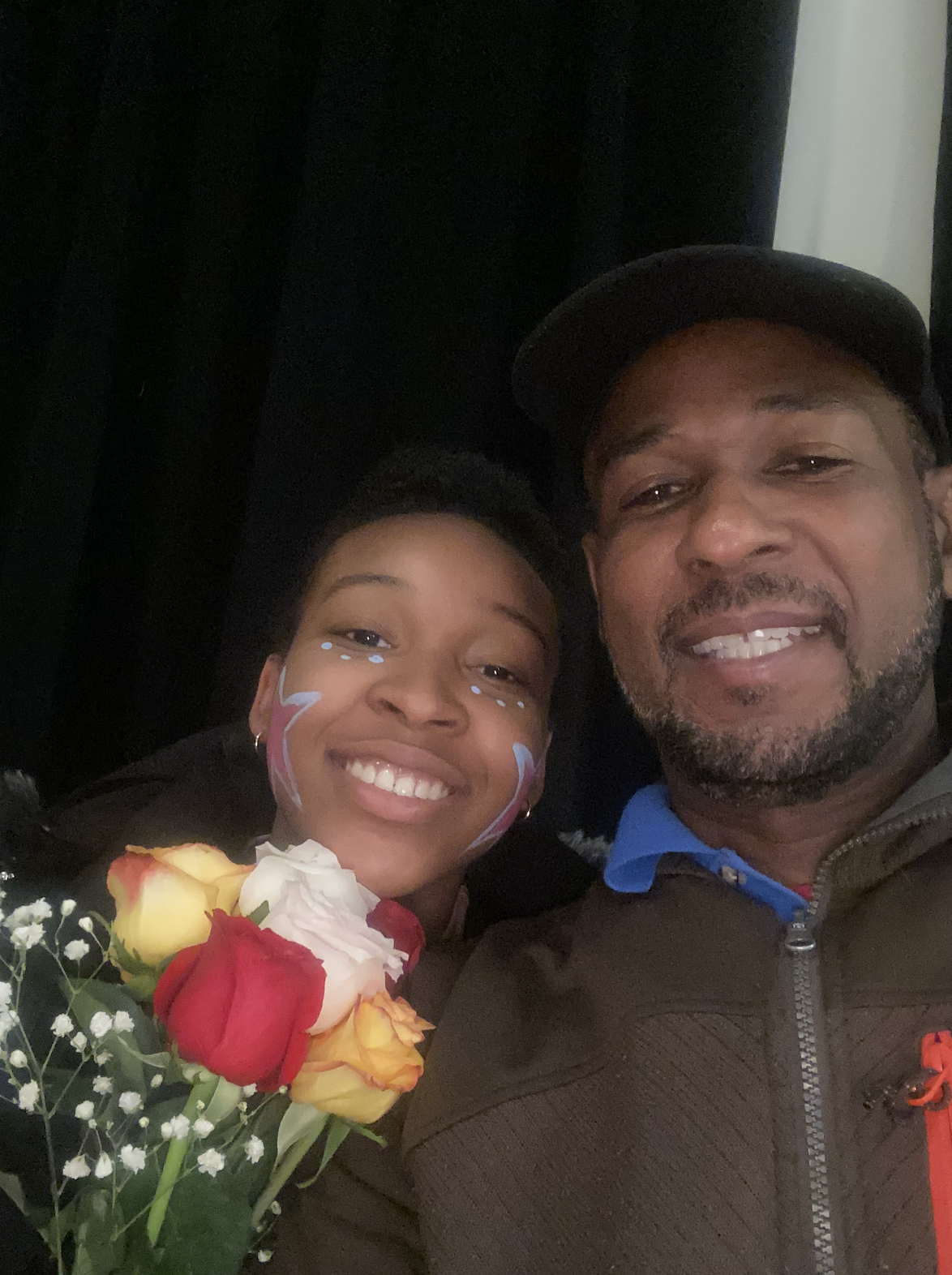
The consequences of a possible deportation, she said, would ripple far beyond one man. His 17-year-old daughter is about to graduate from high school.
“I think she’s just going to completely spiral,” Zolcik said, adding that his community would lose a pillar as well. “The community is gonna lose a lot of his volunteer services, the dinners for the homeless. He’s gonna lose everything that he’s put his life’s work into.”
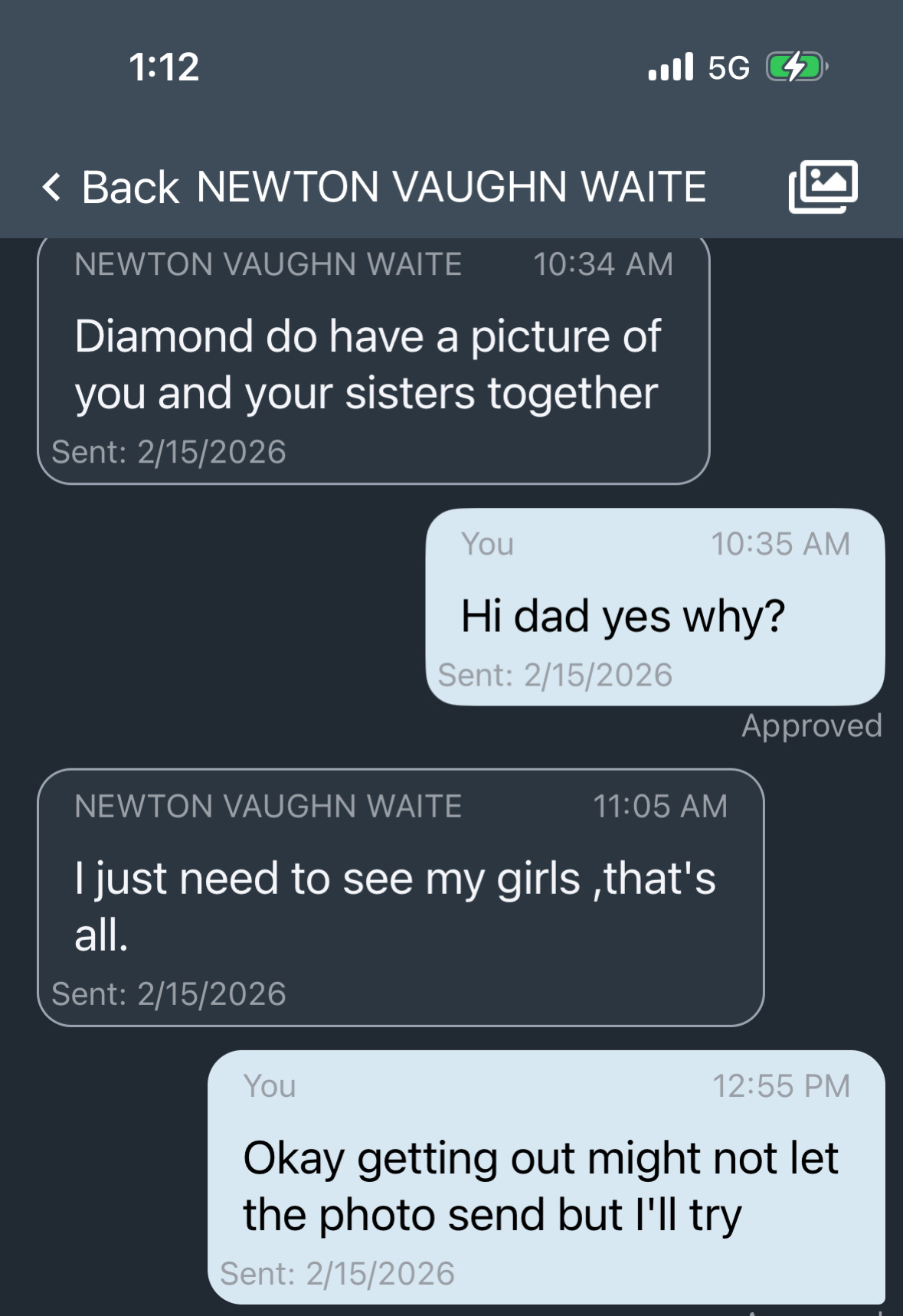
Oshantay communicates with her father through a paid messaging and calling app called “Getting Out,” on shared tablets at the detention center. Each message costs Waites’s family about 35 cents, while short phone or video calls can cost several dollars.
“They give the detainees tablets to share. Sometimes they fight over them because they want to talk to their family,” Oshantay said.
To help Waite stay in touch with his family and buy necessities from the commissary, his family sends him about $200 to $250 nearly every week to cover expenses.
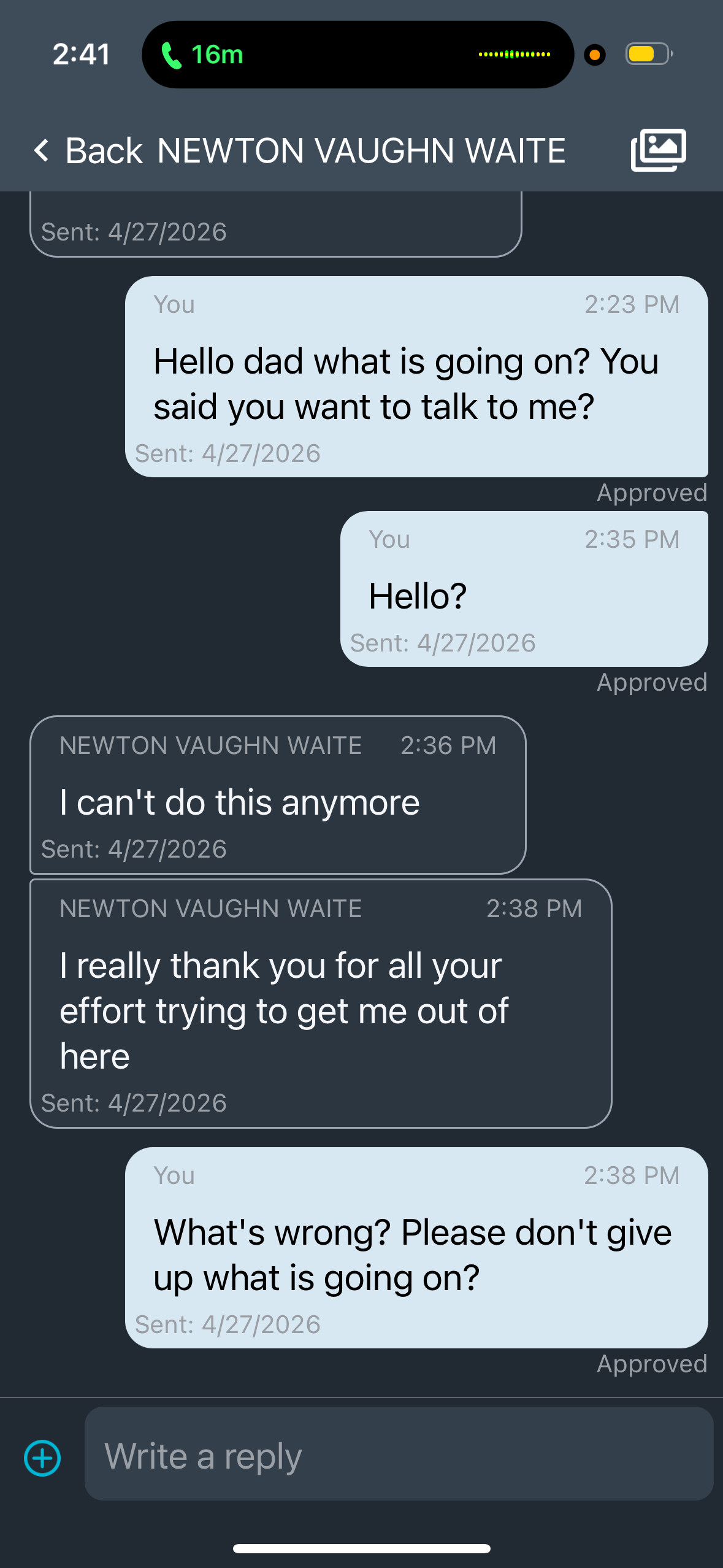
During Oshantay’s interview with Documented, her father texted her: “I can’t do this anymore.”
“I don’t know what’s going on,” she said in a distressed tone. “He’s saying thank you for everything. People are committing suicide in there, they’re not getting help.”
ICE data shows 51 people have died since the start of the second Trump administration, including 18 deaths reported this year as of May 1, 2026. According to KFF, a nonpartisan health policy research organization formerly known as the Kaiser Family Foundation, 32 of the deaths between January 2025 and March 2026 involved people with preexisting medical conditions whose health worsened in custody. The remaining deaths were attributed to suicide or other causes.
Zolcik sees Waite’s case as a window into a broken system.
“You can have all these equities, all these explanations, but it doesn’t matter,” she said. “The government just has to say one thing: ‘We’re arresting you. You have an unexecuted removal order. You don’t get the opportunity to fight it.’”
From detention, Waite continues to call his daughter when he can, unsure when or if he will be released.
“We are desperate,” Oshantay said. “I have done every single thing that I know that I can do, and nothing is changing.”
Correction: An earlier version of this story misstated that Newton Waite came to the United States on a tourist visa, when he in fact came on a work visa. This has been corrected.