

New Yorkers continue to struggle with an affordability crisis, and the city’s municipal workers are no exception. Now, one union is calling on Mayor Zohran Mamdani to finally release a report that could give better insight into pay disparity among city workers.
Since 2019, the mayor’s office has been legally required to publish an annual pay disparity report that breaks down compensation across city agencies by race and gender. The last time the report was released was in 2024, which compiled city data from 2020, 2021, and 2022. Since taking office in January, Mamdani has yet to release a pay disparity report.
Robin Blair-Batte, the secretary-treasurer of CWA Local 1180, told Documented that she was disappointed the mayor hadn’t yet released the annual pay disparity report, after former Mayor Eric Adams skipped the previous year. “It’s important because it affects a lot of our members, and most of our members are minorities and women,” she said.

The report’s release would highlight the fiscal struggles of the union’s more than 9,000 city employee members, Blair-Batte said. CWA Local 1180’s members serve as the backbone of the city’s bureaucratic infrastructure. Several members, many of whom are Caribbean and Hispanic women of color, deal directly with the public, working across various municipal agencies in administrative roles such as Health and Hospitals, Board of Education, Housing, Transit, and the School Construction Authority.
Also Read: Mamdani’s Executive Budget Increases Funding for Worker Protection Agency
Unions rely on the disparity report to understand how the city distributes pay across its agencies and to better fight for wage equity for their members. CWA Local 1180, one of the two unions representing city workers, is set to begin new contract negotiations in the coming months; its current deal with the city expires next June.
Blair-Batte said many of CWA Local 1180’s members struggle to afford to live in the five boroughs despite working for the city.
“How can you work in New York City if you can’t afford to live in New York City?” she said. “That all ties in with their salaries. They should pay them equally to what men receive.”
The other union representing city workers, District Council 37, did not respond to requests for comment.
Ray Legendre, a spokesperson for the city’s Office of Technology and Innovation, which compiles the data for the pay disparity report, told Documented via email that they are working on the report, but did not say when it will be released.
“The NYC Office of Data Analytics is committed to using data to build a more fair and equitable New York City,” he said. “As part of this broader mission, our annual public report on Pay and Demographics incorporates information from dozens of City government agencies. We understand this report’s significance and are working to release the 2025 update.”
New York employs 364,340 full- and part-time municipal workers who earn a median salary of $87,550 a year, according to fiscal year 2024 data released by the city. But that salary is not distributed equally. In 2024, the city council released its own pay disparity report, which found that Asian, Black, and Latino municipal workers earned $0.84 for every $1 paid to white city employees.
Women municipal workers of color accounted for more than two-thirds of the overall racial pay gap, the report found, with women of color seeing the smallest pay gains of all municipal workers between 2018 and 2021. A separate 2018 New York City Comptroller report found that Hispanic women experience the largest wage gap among women of color, earning $38,000 less on average than white men.
Nationally, women earn just 81 cents for every dollar men earn, according to U.S. Census data released earlier this year. Black workers earned 24.4% less per hour than their white colleagues.
Blair-Batte, a city employee herself for the Human Resources Administration (HRA), which provides public assistance for low-income New Yorkers, said the work that she and other union members do is emotionally taxing.
“Our members work hard, we all work hard, and it’s not an easy job, because you’re dealing with clients every day who are facing a lot of issues, and we take that on, and we try to help as much as possible,” she said.
According to Batte, some of her members, who are struggling financially, are not so different from the clients they serve.
“Unfortunately, some of our members are going through the same thing that our clients are going through, like homelessness,” she said. “There are a lot of city workers that are homeless, and people don’t want to talk about it; they’re embarrassed about it, because they are working for the city, but they shouldn’t be the ones that are embarrassed. It’s the city that should be embarrassed.”
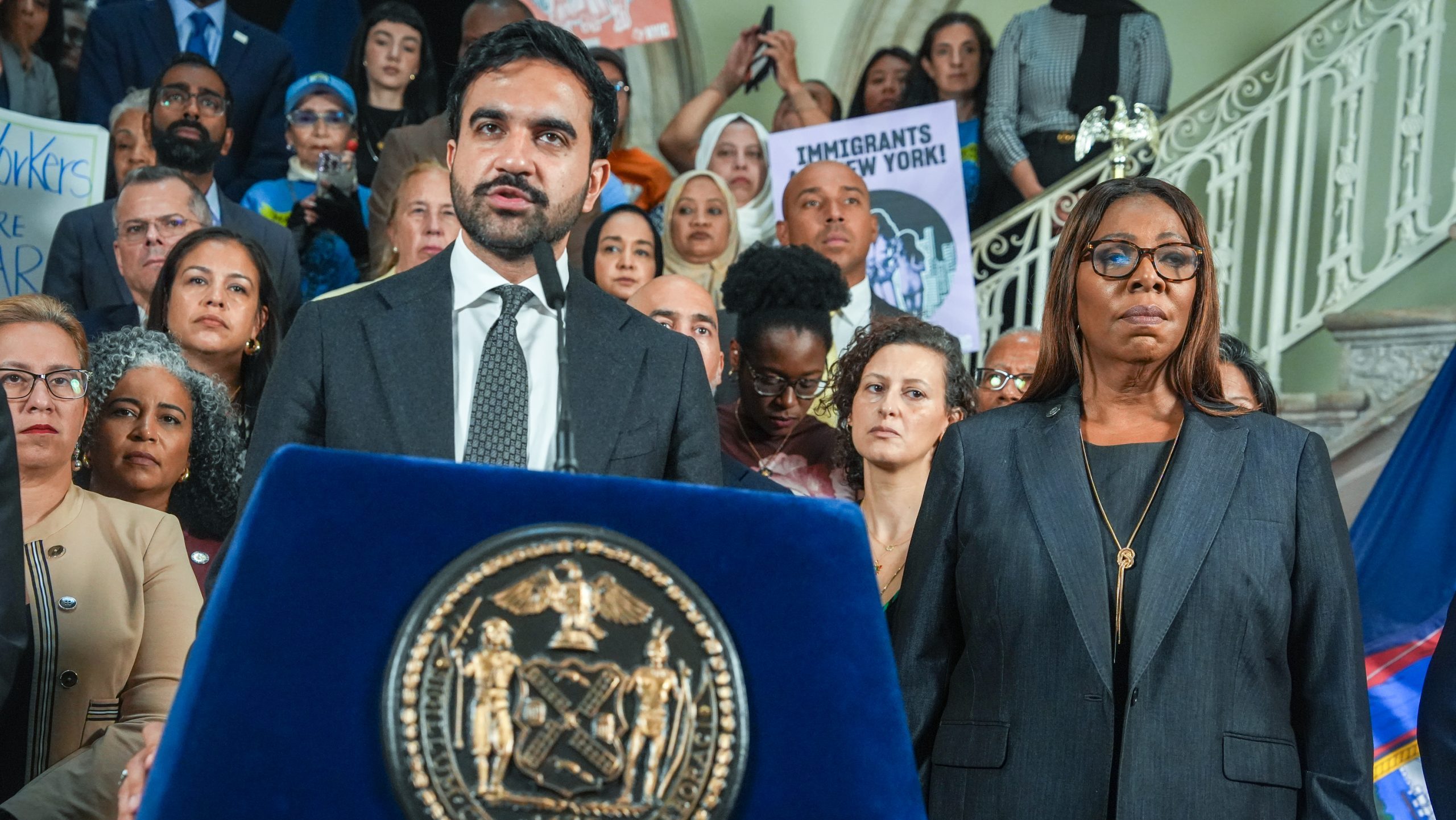
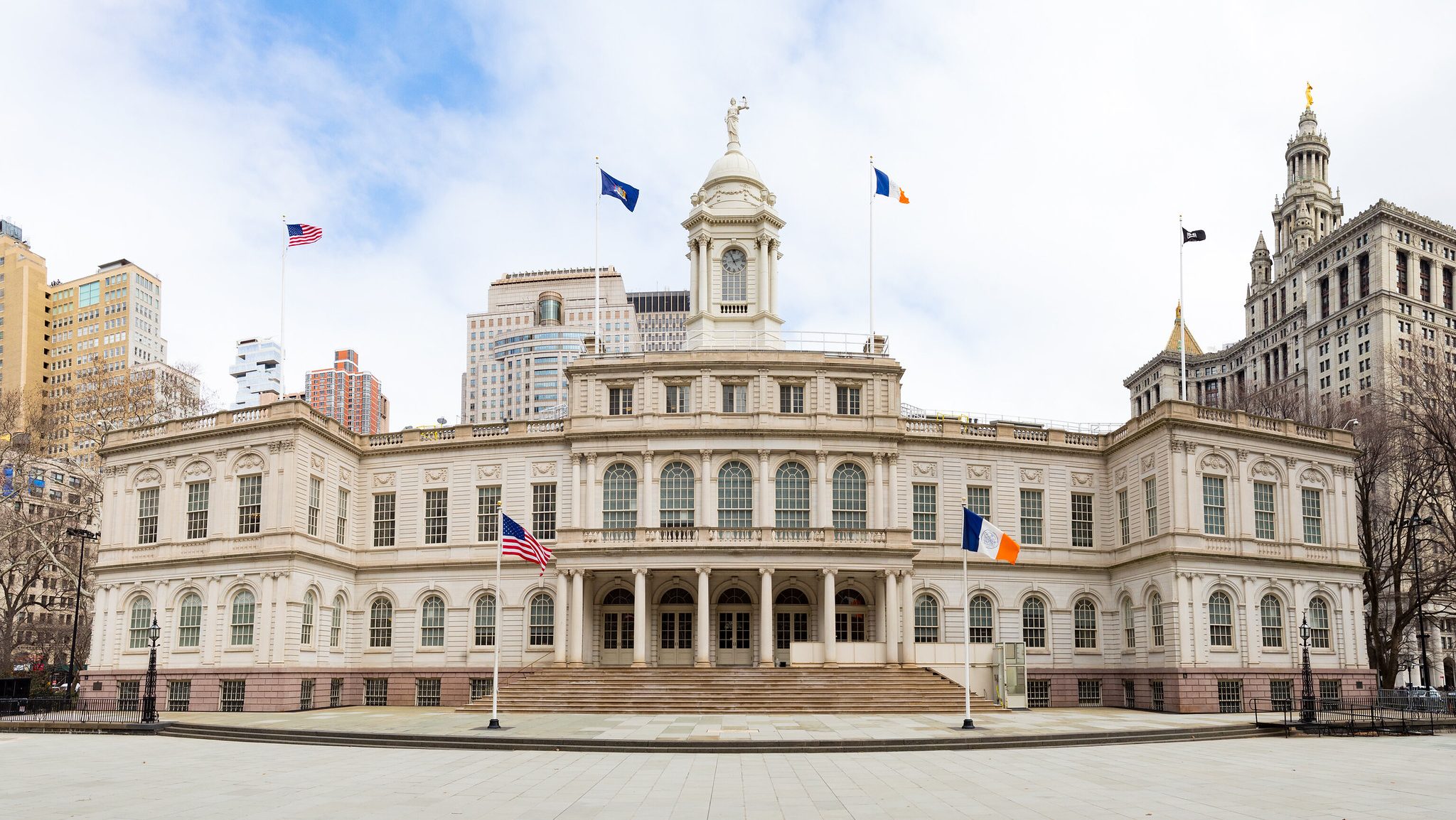
On March 26, during a rally at City Hall with Local 1180, City Council Speaker Julie Menin pledged that the council was going to work with the mayor to push to obtain the pay disparity data.
“I can assure you that our city council will not rest until we have that data and that we ensure that women and, particularly, women of color are being paid fairly,” she said during the rally.
“New York City’s Pay Equity Law helps our city understand wage disparities and occupational segregation in the municipal workforce so that the City can adequately address pay inequities across the municipal workforce,” said Benjamin Fang-Estrada, a spokesperson for Speaker Menin. “Giving the Council direct access to municipal employment data allows us to further study this issue, produce robust reports, and pass thoughtful legislation that builds on our work to advance pay equity. We look forward to collaborating with the Administration to ensure the Council can review the latest data and continue advancing solutions that promote fairness and transparency for municipal employees.”
In April, the Mamdani administration released the city’s first preliminary Racial Equity Plan aimed at addressing systemic racial inequities throughout the five boroughs, including the elimination of pay disparities across city agencies.
Like the pay disparity report, the release of the racial equity plan, which is mandated by city law, was delayed by the Adams administration. Despite releasing the long-delayed plan, the Mamdani administration was criticized by the New York City Commission on Racial Equity, an independent city agency, for failing to go far enough in addressing structural racism. The New York Times reported that before the Racial Equity Plan was released, the mayor’s office removed a reference to Diversity, Equity, and Inclusion from the report in an effort to appease the Trump Administration.
Blair-Batte said she hopes the eventual release of the report will give visibility to the city’s workforce that she feels has long been taken for granted.
“I do feel like they’re invisible sometimes,” she said. “I’m sure they feel the same way, because what they’re looking for is to be respected and then be paid fairly.”