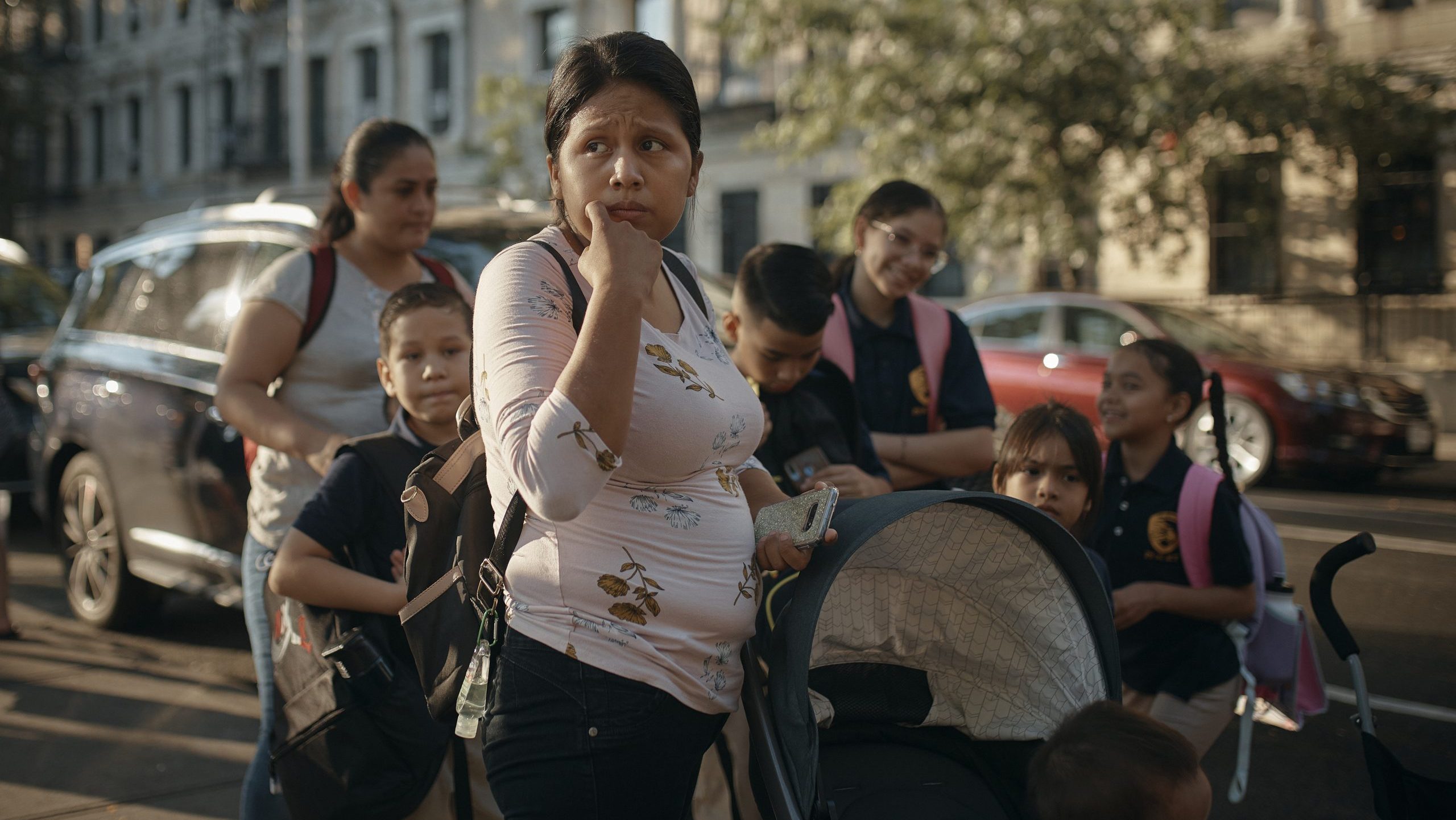


Most days, J. is ok being in school. It’s been months since immigration agents forcibly entered his family’s apartment in search of his mother’s cousin.
But every once in a while, often when he’s at school, far away from his mother Jennifer and his 2-year-old sister who are at home, the events of that November day still play back in the 10-year-old’s mind, he told Documented. (Jennifer only wants to be identified by her first name and her children by their initials due to fear of retribution.)
He remembers the ICE agents knocking on the door at 5:30 a.m.

He remembers the rattling sounds of the machine that broke down their door when his mother didn’t immediately open it for the agents. ‘Da-da-da-da-da.’
He recalls his mother shouting to him and his sisters, Jay, 13, and L., 6, to hide in another room, while she was clutching on to his youngest sister, 2-year-old G.
He remembers the agents calling his mother a ‘bad word’ (Jennifer told Documented that agents called her a “stupid bitch.”). And he remembers how scared he felt through it all, as his mother yelled at the agents: “Why are you hitting me?”
There was the moment, too, when he and his older sister jumped into action to protect their mother by filming the event with an iPad. In response, the agents pointed a gun at him and told him to raise his hands. He remembers not knowing what to do with his hands at that moment.
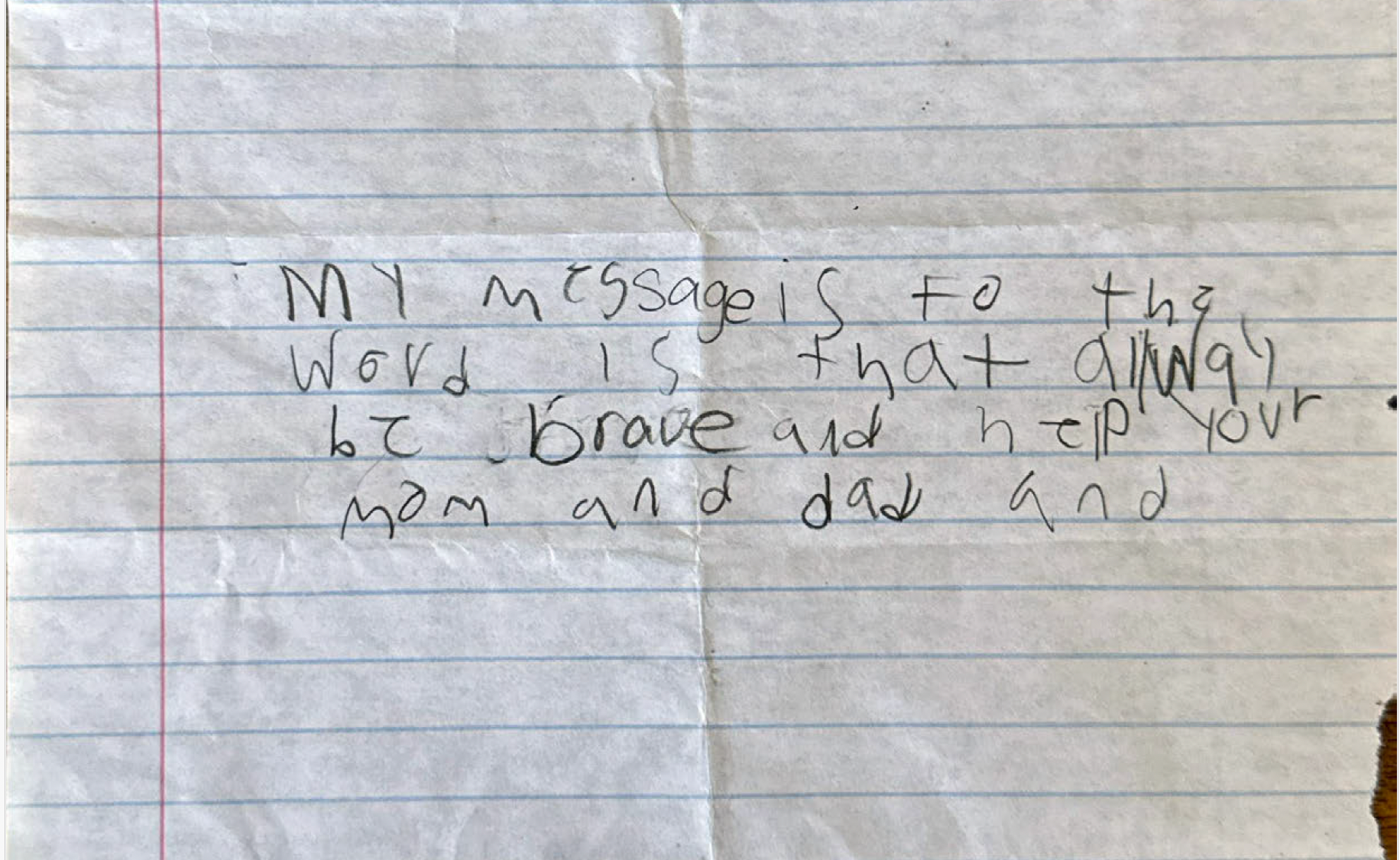
All told, the entire encounter lasted less than two hours. The agents came, questioned his mother and left. They told the family they’d be back the next week but they never returned. Local media covered the encounter.
But these moments continue to live on in J’s head — manifesting as nightmares as he tries to sleep and haunting him during the day when he’s in class trying to focus.When another child brought up ICE to taunt him, he had flashbacks.
“I remember the things and then I tell my friends, ‘Do not say that,’ ’cause then I remember, and I don’t wanna remember that anymore,” he said.
He worries a lot about the safety of his mother. He feels responsible, like he needs to protect his parents.
“I have been, like, scared a little bit,” said J. “Like my brain sometimes makes me [think] they’re taking away my parents.”
Across the country, psychologists, teachers and researchers have been ringing alarm bells on the adverse impact of increased immigration enforcement on the mental health of parents like Jennifer and their children. In a national survey of 753 educators conducted by EdWeek this spring, 57% said that they have seen students express fear or anxiety related to the federal government’s immigration crackdown. A New England Journal of Medicine study found that pervasive immigration enforcement impacts children’s physical and emotional development.
The consequences could be far reaching. Researchers believe that the mental health effects of immigration policies will not just impact people today but will have ramifications on generations to come.
A Brookings Institute analysis estimates that roughly 145,000 U.S. citizen children “have likely experienced a parent booked into detention” since the second Trump administration began in early 2025. A little more than half of U.S. citizen children who have experienced at least one of their parents being detained had a parent who was originally from Mexico.
“Children can pick up on the stressors of their parents,” Susana Beltrán-Grimm, an assistant professor of applied developmental psychology and education at Portland State University, told Documented. She has been doing research on how parental stress due to immigration enforcement is impacting children. “Children are living with this socio-emotional labor on them, taking on an almost adult role.
“There’s going to be drastic consequences,” she added.
A family interrupted
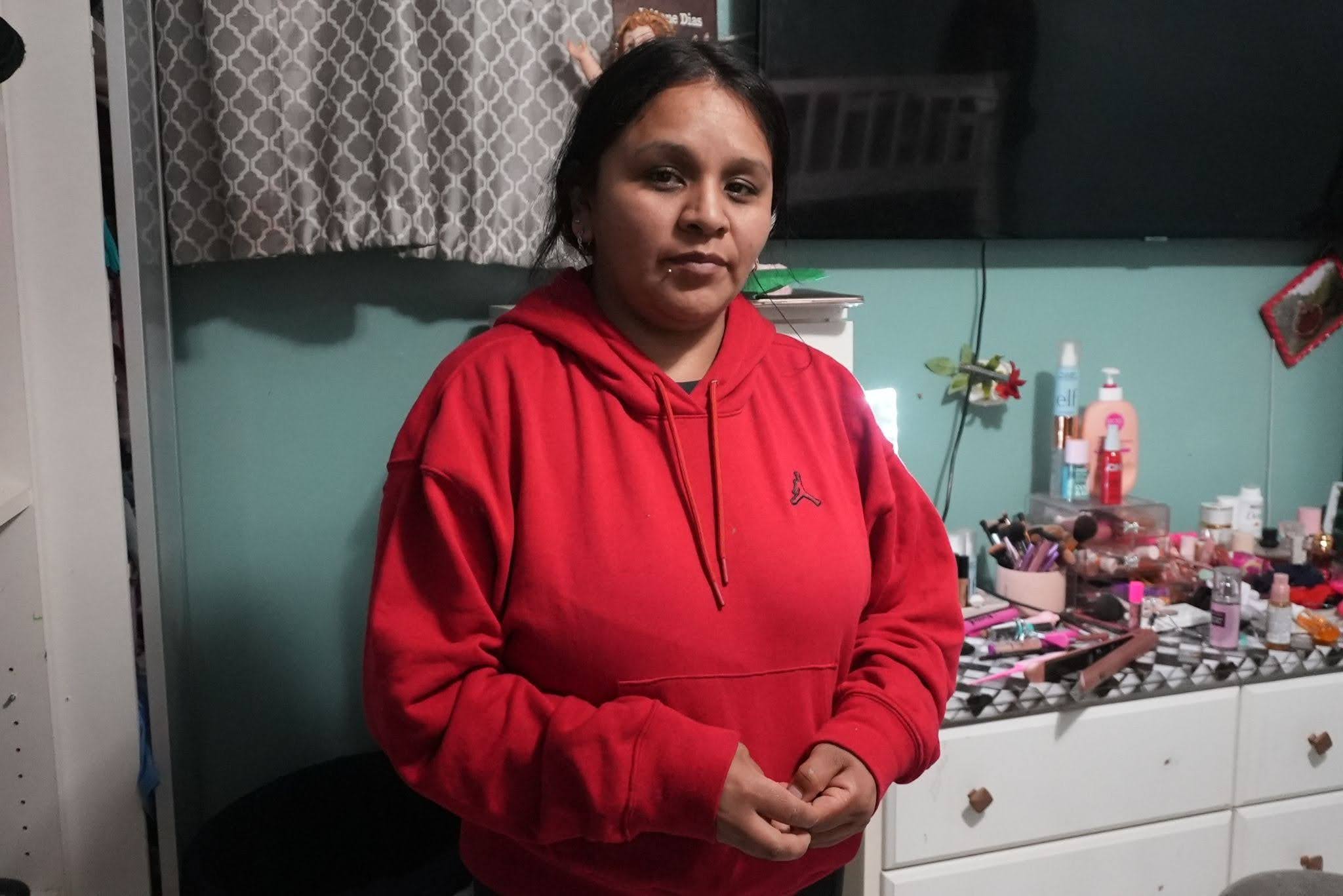
Jennifer and her husband Rigoberto met in 2012 at a party in Queens. They bonded over being from the same city, Puebla, in Mexico and quickly fell for each other. Soon after, Jennifer became pregnant with their first daughter, Jay.
Since then, they’ve been building a full life in East Elmhurst. The family belongs to a church. They have a little dog named Romeo, whom they lovingly named in memory of their previous dog, Julieta, who passed away two years ago .
Rigoberto has a steady job at a restaurant, and Jennifer stays busy taking care of their toddler while their other kids go to school. A soccer trophy stands tall on the shelf of Jay and J.’s bedroom. A mariachi hat rests on the top of the bunk bed that the siblings share.
Just two weeks before ICE forcefully entered their apartment, the family had celebrated at a Dia de Los Muertos event at the Queens Museum, where organizers were giving out immigration rights resources. Rigoberto said that he ignored those flyers. He never thought they would apply to his family.
“[I] don’t even pay attention to them because that never happens to me because we know we don’t do nothing wrong,” Rigoberto told Documented.
But everything changed with the ICE encounter. Their lives were disrupted and their day-to-day activities ground to a halt. The family spent a month in a hotel, fearful that ICE would come back looking for Jennifer’s cousin. Even after they returned home when their lawyer told them it was unlikely that ICE would return, the entire family remained fearful.
In a statement to NY1 at the time of the incident, the Department of Homeland Security denied that they had broken into the family’s home.
“Officers approached the residence and knocked on the door for approximately 20 minutes, attempting to gain voluntary cooperation to enter the residence. When no response was received, officers used their training and lawfully entered the home…Officers safely guided her and the children to the kitchen for their safety while they searched for the criminal target,” the statement read.
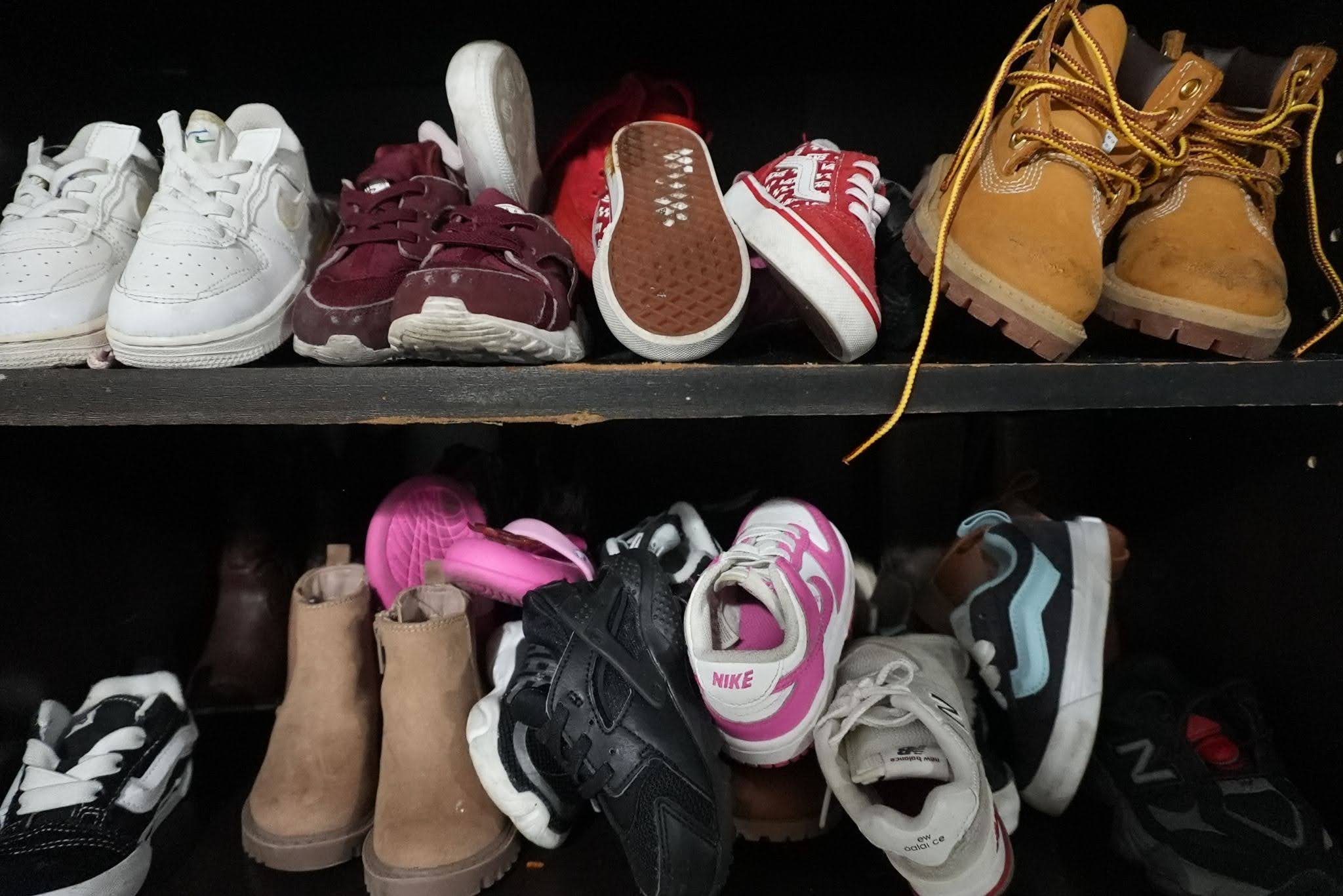
In the weeks after the event, Jennifer’s older children would wake up in the middle of the night, shaken by nightmares of ICE taking away their parents. At times, this fear has also followed them to school.
Every once in a while, J. has difficulties focusing, overcome with worry for his mother. He told Documented that he’s turned to his teacher for help, who has helped calm him by taking him for a walk or offering him a snack before he returns to class. Sometimes he also asks his teacher to call his mother, to ensure that she is all right.
Jennifer says she feels better now, but continues to worry about her children’s well being. Her husband is still riddled with guilt for having been at his restaurant job and not home that morning.
To keep their children in good spirits, the two try their best to fill the family’s schedules with activities. Soccer practice, mariachi band rehearsal, family excursions — anything to bring normalcy to their lives.
“The consequences, well, they’re really painful, you know?” said Rigoberto in Spanish. “More than anything, not for us, but for the children.” He added that it would be much more bearable if it had been just Jennifer and him having to deal with the fallout.
Also Read: Mental Health Care for Immigrant Families in NYC
The worry that Rigoberto feels is also something that Beltrán-Grimm observed in her research of immigrant parents, namely that they tend to be more concerned about their children than about their own well being. Additionally she found that these immigrant parents are in need of resources for their children that address the specific needs of being a Latino family during a time of heightened ICE activity.
The chronic stress that ICE has added to the day-to-day lives of families compounds already existing issues that immigrants struggle with. Psychologists at the American Psychological Association have called for more culturally responsive care to deal with trauma and chronic stress for a population they say is already at heightened risk of mental health conditions like anxiety, depression, post-traumatic stress disorder, and alcohol abuse, among other issues.
“The heaviest anxiety is the emotional burden of parenting well in this moment,” said Beltrán-Grimm.
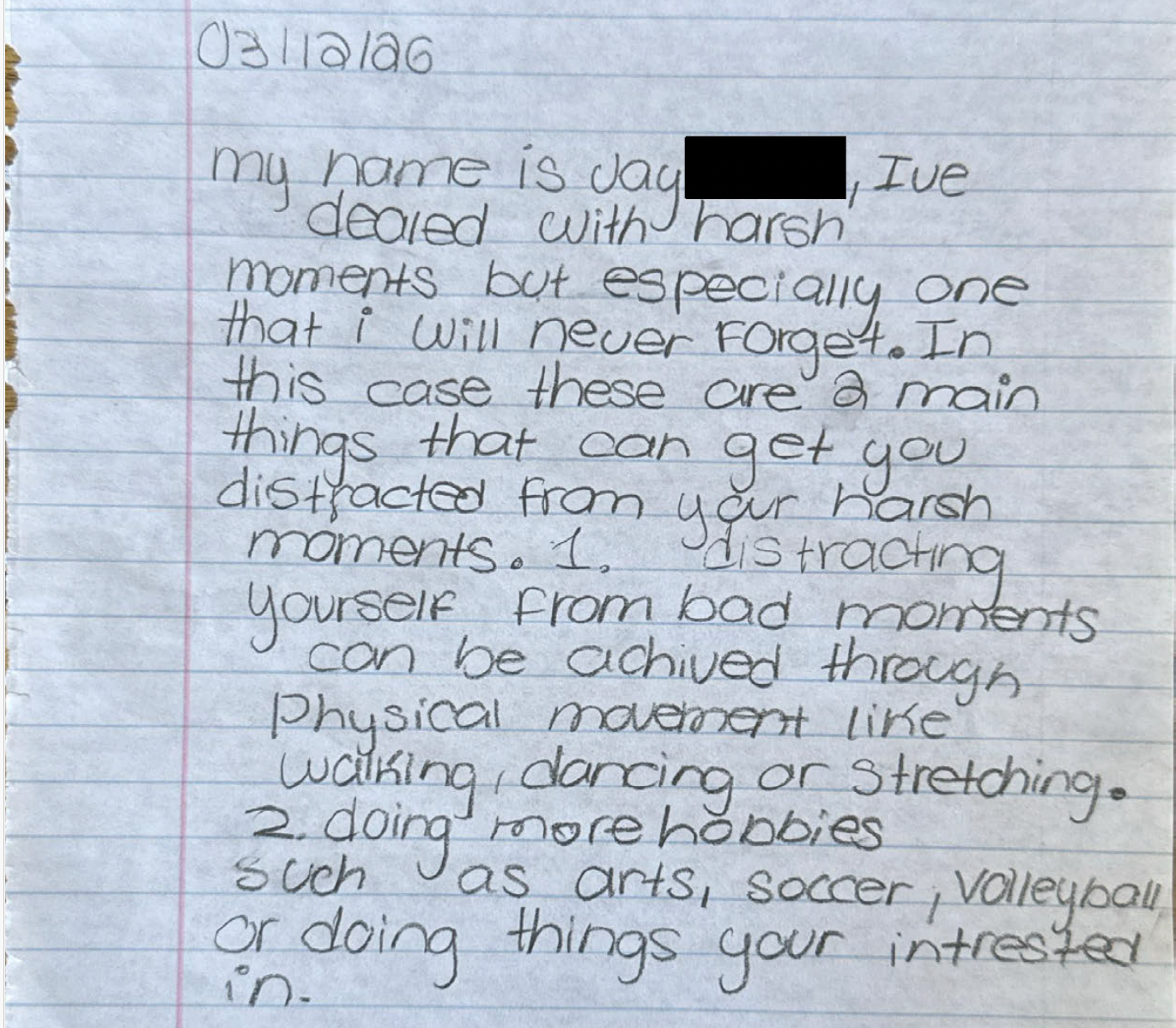
To Jennifer and Rigoberto’s relief, a teacher stepped in to help connect the couple’s older children to psychologists. They say that their children are slowly resuming their activities.
J., who plays trumpet and sings for his mariachi band, hopes to be performing his favorite song “El Rey” again soon. He still feels a little scared when someone knocks at their door in the evening, he said, but he’s feeling better as time passes.

“I feel good now because my memory [of the event] is like going away,” said J.
Gabriela Flores contributed reporting to this article.