

Delivery workers have endured it all this past year: extreme heat, flooded streets, and toxic air. But now, the city can finally deliver some good news to them.
Mayor Zohran Mamdani, alongside New York City Department of Consumer and Worker Protection (DCWP) Commissioner Samuel Levine, are set to release a new report Wednesday showing that the estimated 70,000 delivery workers earned a collective $104 million in additional tips.
The windfall of tips comes after a city law cracking down on deceptive tipping practices by app-based delivery companies took effect in January. Delivery workers are now on pace to earn an additional $184 million annually in tips. That’s approximately $2,287 more per worker.
Local laws 107 and 108, which took effect on Jan. 26, mandate that restaurant and grocery apps offer customers transparent tipping options at checkout. Since taking office, Mayor Mamdani has directed DCWP to vigorously enforce the laws.

Before the newest city regulations, Uber Eats and DoorDash attempted to bypass the city’s historic minimum wage law of $22.13 an hour for app-based delivery workers by making the tipping process harder for customers using their apps, resulting in delivery workers collectively losing $554 million in additional income since 2023.
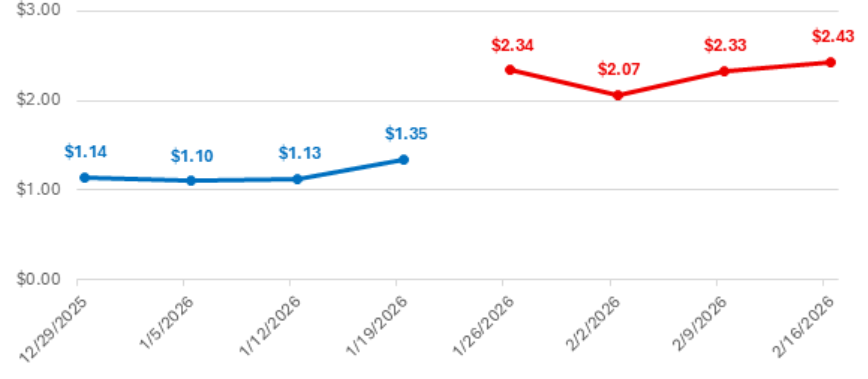
According to DCWP data shared with Documented, during the last four weeks before the law took effect, delivery workers earned an average of $1.18 in tips per delivery. In the four weeks after the law’s implementation, tips increased an average of $2.29 per delivery.
“Instead of respecting New York’s historic minimum pay law, app companies chose to manipulate their platforms to discourage tipping and protect their own profits, stripping millions of dollars from the pockets of delivery workers who earned that money,” said Ligia Guallpa, executive director of Workers’ Justice Project (WJP) and co-founder of Los Deliveristas Unidos, in a statement to Documented.
Companies like DoorDash opposed the city tipping law, arguing that the law would hurt consumers by making deliveries more expensive.
John Horton, DoorDash’s head of North America public policy, told Documented in January that its placement of the tipping screen after checkout was not intended to make it harder for customers to tip.
“What’s really happening is the DCWP wants to pressure consumers to tip even more,” he said in a statement to Documented. “As we’ve said, forcing people to tip may as well be a tax. It should be up to consumers, not politicians, whether they want to tip more in New York.”
A joint lawsuit by DoorDash, Uber and Instacart to block the law was struck down in federal court just days before the new laws took effect.
“For years, delivery apps buried the tip button to pad their own bottom line, and delivery workers paid the price,” said Mayor Mamdani in a statement to Documented. “We changed the law, enforced it, and it’s working: $104 million has gone back into the pockets of the workers who keep this city fed, rain or shine. New York will not allow billion-dollar tech companies to boost their profits by taking money from working people.”
In response to the delivery app companies making it harder for customers to tip, Ligia said that workers “refused to let those practices go unchallenged” and documented each instance of lost tips.
“Restoring this income means restoring economic dignity to thousands of delivery workers and their families,” said Guallpa. “But this victory is about more than restoring millions of dollars in tips. It demonstrates what is possible when worker organizing, thoughtful public policy, and strong enforcement work together.”
Despite claims that the new laws would impact customers, DCWP data show that the tipping law had no measurable impact on demand for food delivery. It has actually grown. Consumers placed a record-high of 3.3 million orders each week, 700,000 more orders each week than in December 2023.
“The data is clear: allowing consumers the clear ability to tip hardworking deliveristas benefits our workers and strengthens our economy,” said DCWP Commissioner Levine. “I said it when DCWP blew the whistle on delivery apps’ design tricks in January, and I’ll say it again: under Mayor Mamdani, the biggest corporations in the world will no longer be able to rake in record profits on the backs of New Yorkers.”
Delivery workers can learn more about their rights under Delivery Worker Laws at nyc.gov/deliveryapps. If you believe a restaurant or grocery delivery app has failed to pay the required minimum rate of $22.13 per hour, you are encouraged to file a complaint at nyc.gov/workers.