

After he got his driver’s permit in 2025, Ian Massaro remembers talking to his friend, expecting the conversation to be about the excitement of learning to drive.
Instead, his friend, an immigrant from El Salvador, said he couldn’t get a driver’s permit because of his immigration status.
Massaro went home and discovered the truth: His friend was eligible to get a driver’s license. Massaro shared the news with his friend, who was thrilled to learn of his eligibility and later obtained his driver’s license.
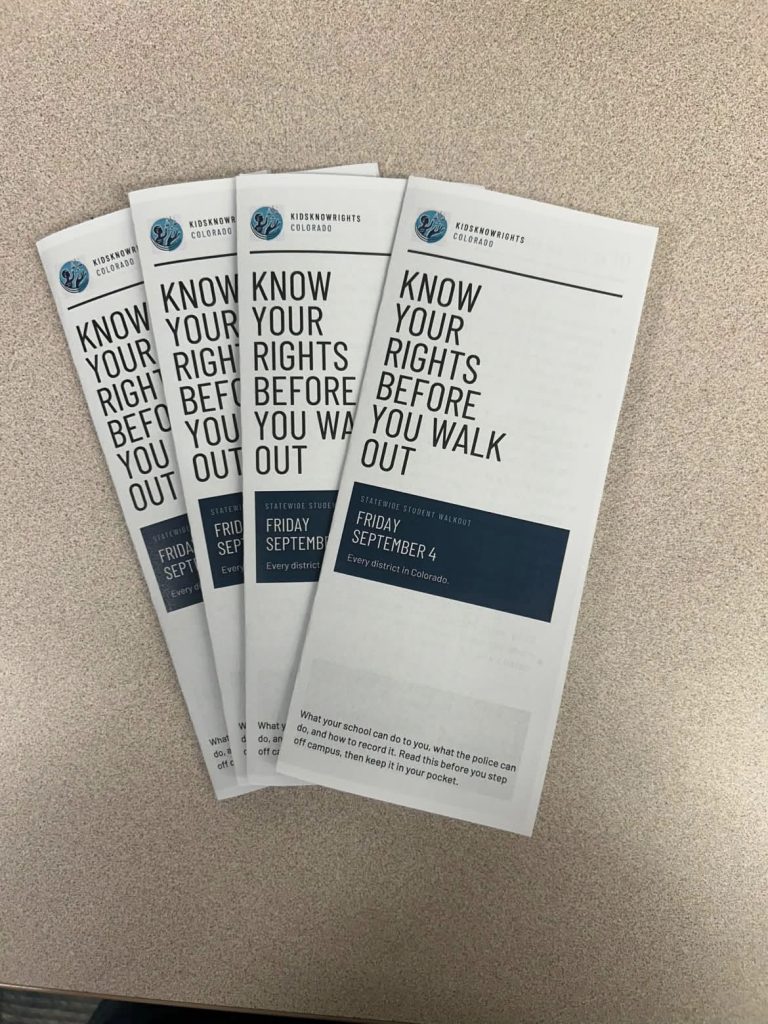
That experience underscored for Massaro the need for accessible legal information for immigrants, especially youth who are not familiar with the legal system in the U.S. It’s also what pushed him and his friends to create KidsKnowRights, a 501(c)(3) nonprofit whose digital resource and mobile application provides young people and immigrant families with legal information, educational guides and emergency-preparedness resources.
Massaro, now 17, is a senior at Avenues New York in Manhattan. He and his schoolmate John Stavropoulos developed the idea for KidsKnowRights in late 2024 when they were sophomores. Massaro said that his school has helped the organization connect with other groups and individuals. The platform launched in early 2025, initially focusing on young people, immigrants and families whose first language is not English.
Massaro said they saw a disconnect between legal information available online and what young people and immigrant families could understand and use. “We see it a lot with Latino and Chinese communities, where a lot of the best legal information is actually very poorly translated,” Massaro told Documented. “A lot of times, translations are literal. That’s not how we talk in conversation.”
The organization creates simplified, multilingual legal articles and guides, primarily in English, Spanish and Chinese. About 90% of questions it receives are related to immigration and Immigration and Customs Enforcement (ICE), Massaro said, with users asking about their rights and how to respond to immigration enforcement.
Most recently, KidsKnowRights published plain-language guides to help readers better understand their rights, covering Title VI, the federal law prohibiting discrimination based on race and national origin in schools; zero-tolerance policies and what federal law requires versus what is left to local discretion; and what to do during a traffic stop.
People ask what ICE can do, what its limitations are, and what people should do if immigration officers interact with them or their families, according to Massaro. He said the platform has seen fluctuations in demand depending on events in the news, with spikes in questions about ICE following high-profile incidents.
“People just want to be prepared,” Massaro said. “Information is power. And if we can provide information, we can give the people power.”
KidsKnowRights currently has over a dozen members who work for them, all high school students from different schools and communities nationwide, according to Massaro. “People are motivated to join because it’s something that’s deeply connected to them,” Massaro said. Some students contribute to research and writing, while others help with logistics, operations and organizational meetings.
The organization deliberately keeps its content production in the hands of its team of teenage editors. Translations from English and Spanish are done by themselves, as are most Chinese translations, while it uses AI to translate guides into other languages.
“We pride ourselves on having all high schoolers creating materials because we believe that people who are best suited to create materials for young people are young people,” Massaro said.
The students volunteer their time rather than being paid. Massaro said he spends roughly 20 to 30 hours a week on the organization in addition to schoolwork, college applications and other commitments.
A typical day can begin around 6 a.m. with emails and continue through classes, phone calls, meetings and homework into the evening. “If you’re willing to make sacrifices for something you’re passionate about, it kind of flows actually,” he said.
Members also said their own experiences with immigration have shaped their interest in the project. Massaro’s parents immigrated from Argentina in 1999. They initially lived in California before moving to New York City and eventually becoming U.S. citizens.
His parents worked as waiters when they first arrived in the United States, and Massaro said he saw firsthand the difficulty of navigating life in a new country. Before his parents became more comfortable with English and American systems, he often helped translate documents for them.
“I’m the one who had to read the documents and translate it to my parents,” Massaro said. “So I’ve seen hands-on what having a translation does and how official it can be, and how dangerous it can be when it doesn’t exist.”
Manuel Raventos, operations manager at KidsKnowRights and a senior at Avenues, moved to New York from Barcelona, Spain, in September 2025. He said his own experience immigrating to the U.S. made him more aware of the challenges immigrants face.
Raventos, 17, said people who help clean at his home have told him they sometimes do not feel safe commuting to work because of concerns related to immigration enforcement. He said his own family has also faced immigration-related challenges, including his sister’s struggle with her expiring visa.
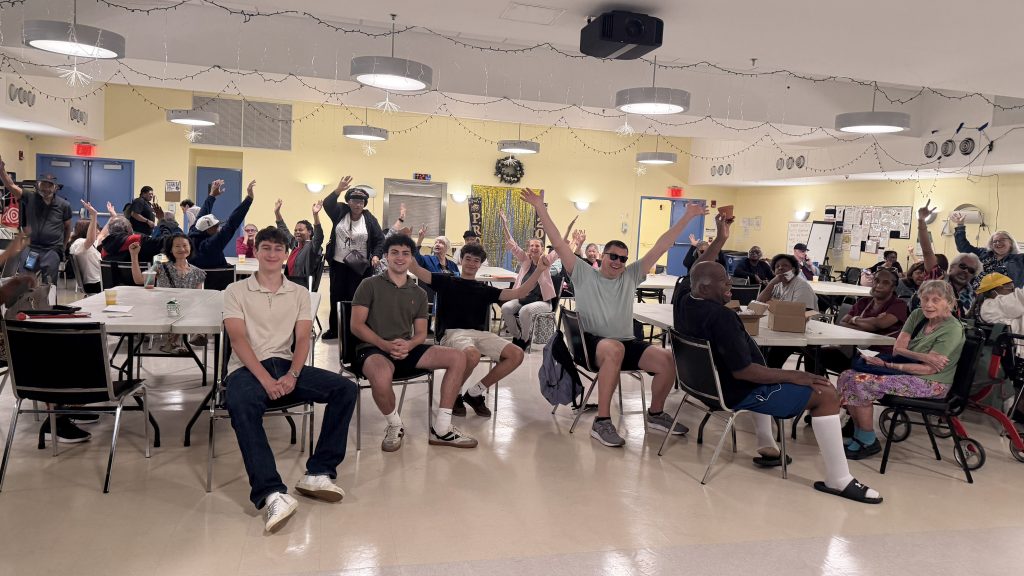
“I joined because really it’s a passion that comes from the immigration process that I pursued coming from Barcelona,” he said. “It’s a very recurring thing that I’ve always been thinking about in terms of immigration status and how to help people.”
For a young organization providing legal information, establishing trust has been one of its biggest challenges.
Raventos said some immigrants are reluctant to use the platform because they worry that information they provide could somehow be shared with the government or used against them. “Getting that trust barrier is probably the hardest thing that we’ve been trying to focus on,” he said.
Massaro said the responsibility is particularly significant because a mistake in legal information can have serious consequences for users.
“A lot of times we just think of it as like another viewer on our website,” he said. “But each person who views the website is family — father, mother, sister, brother, child — and if something goes wrong, if they get misinformation, or if they do something that they probably shouldn’t do, it’s their entire life that’s ruined.”
To build credibility, KidsKnowRights works with lawyers on a pro bono basis and other established nonprofit organizations. The organization said one of its largest partnerships is with Georgia Appleseed, a nonprofit that works on legal and policy issues involving children.
The students first research and draft articles, then have other members review the material and check the sources, including federal and state statutes, case law and Supreme Court decisions. When possible, they send the articles to attorneys for an additional review.
According to Massaro, lawyers review a small number of the organization’s articles, primarily those covering the most important legal issues as an additional safeguard rather than the only quality-control mechanism. “We put a lot of time and due diligence into making sure everything is correct,” Massaro said.
KidsKnowRights has distributed about 5,000 physical guides through schools, churches, community organizations and government offices in New York and partnered with about 20 nonprofits nationwide, according to Massaro.
The organization now reaches tens of thousands of people each month through its website, app and social media. Massaro estimates the website gets about 20,000 monthly visitors, the app about 10,000, Instagram about 100,000, and TikTok 20,000 to 30,000.
Although it was founded in New York City, KidsKnowRights has reached people in roughly 30 states and plans to distribute about 16,000 guides through an upcoming project in Texas. The organization works with nonprofits across the country to provide materials for events, protests and other community activities.
Their goal is to reach all 50 states and eventually go international, while adding more languages and making its legal information accessible to anyone who has difficulty navigating the legal system, Massaro said. He added he plans to continue expanding the project while in college and to gradually pass on leadership responsibilities to younger students.
Despite the organization’s growing reach, Massaro said its origins remain rooted in individual experiences like his friend’s confusion about whether he could legally obtain a driver’s license.
Massaro said the experience showed him how a lack of accessible information can prevent people from exercising rights they already have.
“And I can go to bed at night feeling good, knowing that I’ve at least helped one person in our mission,” he said.