

For Osan Abbott, Sunday dinner is one way to keep her homeland of Jamaica close.
“Rice and peas has to be on the menu,” said Abbott. “Even with our children, they’re learning the language. They’re enjoying the food in our home as well.”
Both Abbott and her fiancé, Okeno Guthrie, were children when they came to the United States. But building a life here didn’t mean leaving the island’s traditions behind. The couple eventually drew on their cultural upbringings to start Oseno Jerk, their Caribbean catering business based in Queens.

“Our menu usually includes things such as rasta pasta, mac and cheese…cornbread, sweet chili, salmon, jerk chicken, just to name a few items,” said Abbott.
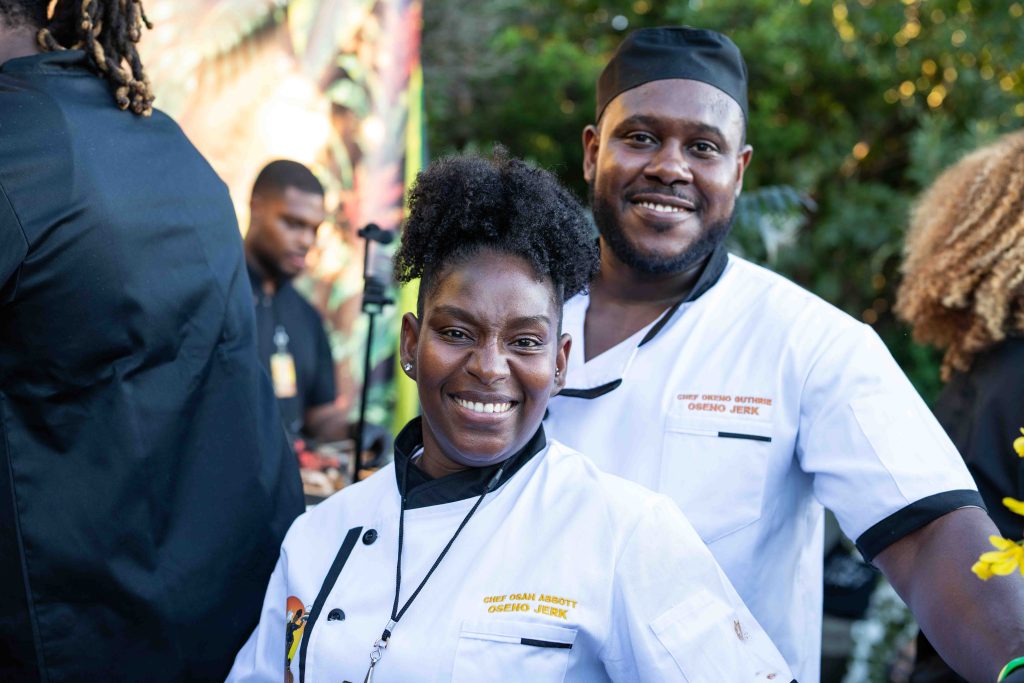
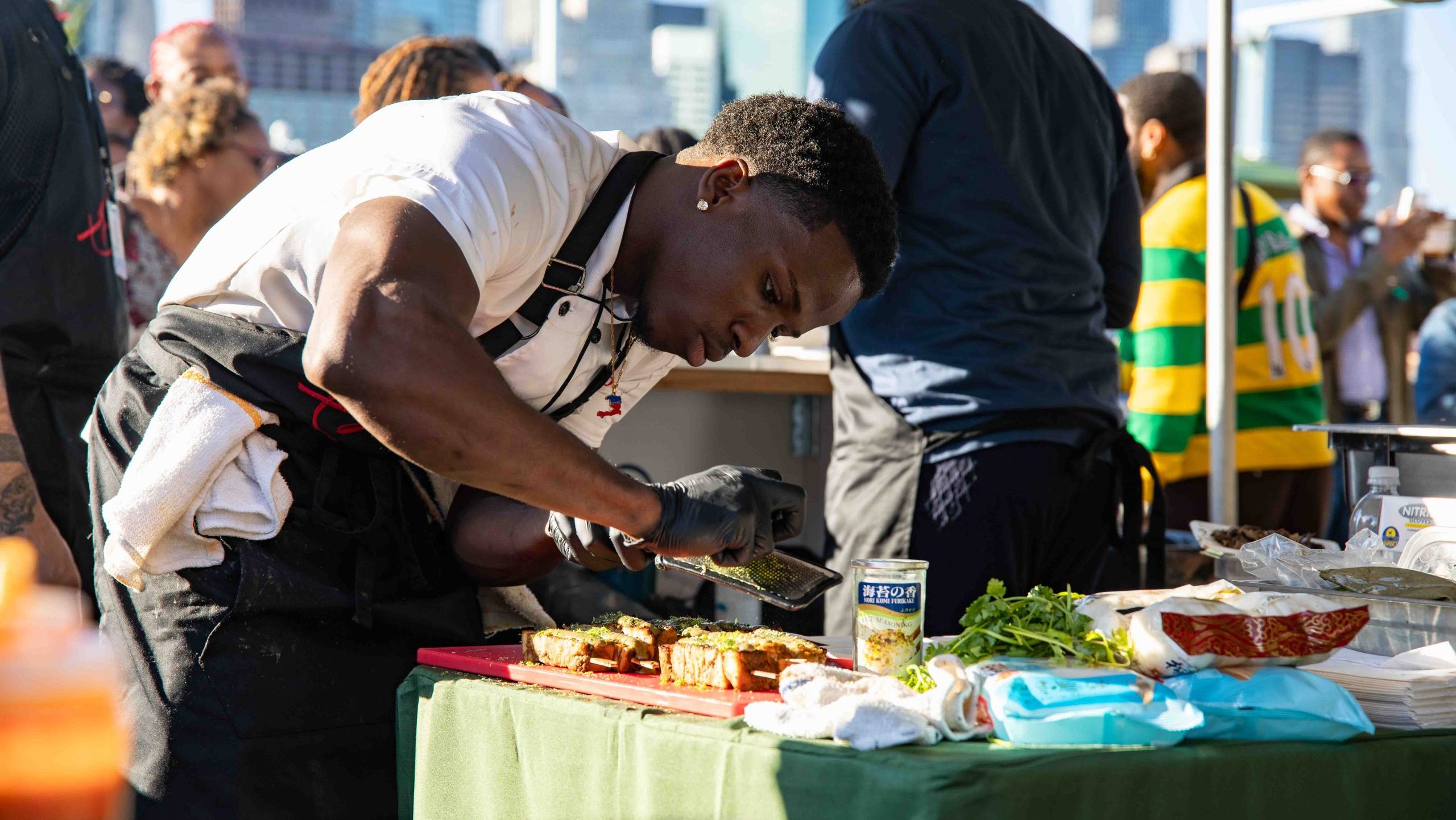
On Saturday, Oseno Jerk made its debut at the Creole Food Festival at Brooklyn Bridge Park, where they introduced their Jamaican fusion dishes to hundreds of people. Now in its eighth year, the event featured more than a dozen chefs and food entrepreneurs specializing in Creole cuisine, which deliciously blends European, African and Indigenous influences.
“Creole food is not only Haiti or New Orleans,” said festival co-founder Fabrice Armand. “It is in Africa, it is in the Caribbean. It is in Latin America, it is in South America and the south of the U.S.”
Armand created the festival to spotlight chefs, many of them immigrants, who are often overlooked on major food platforms, publications and at popular food events. Growing up with a mother from Haiti who worked two jobs to support him, he sees immigrants’ contributions as part of a larger American story.
“You have these individuals that are sons and daughters of immigrants, but they are actually American in terms of fabric and showcasing the talent and really raising the fabric of American culinary in itself.”
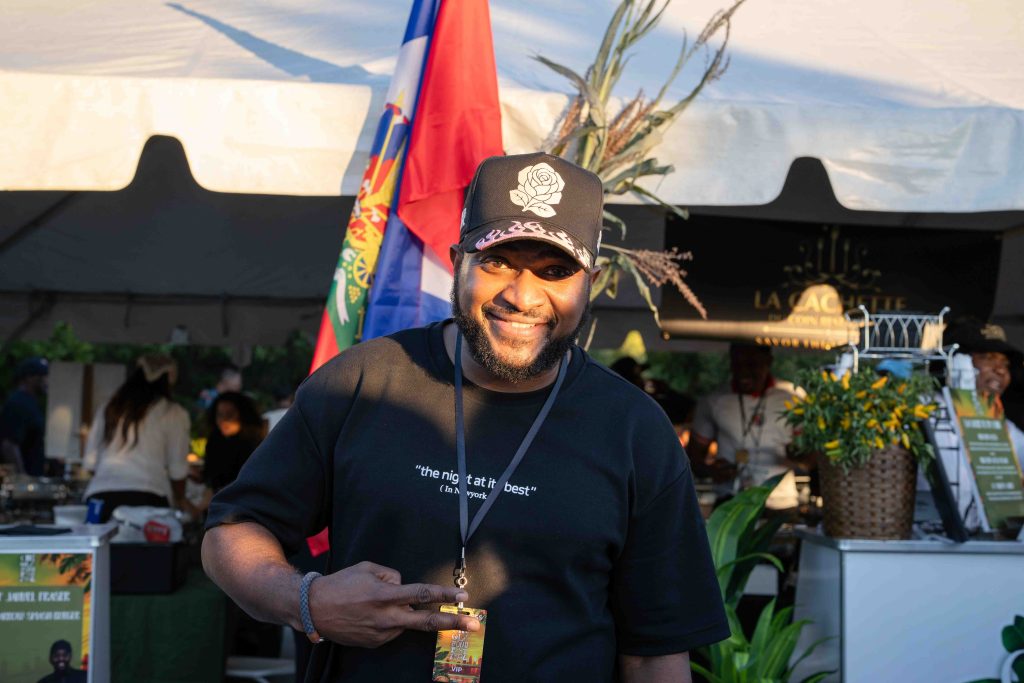
New York is home to roughly 3.1 million immigrants, making it the largest foreign-born population of any U.S. city. For the participating chefs, the Creole Food Festival provides a place to share family recipes, explain the origins of their food and introduce those traditions to people outside their own communities.
This year, Deborah Jean, a Brooklyn-born private chef whose family is from Haiti, prepared a savory appetizer of plantain puree and chips, alongside cake pops inspired by Haitian pineapple upside-down cake. These nods to her culture can be found sprinkled throughout the dishes she makes at her catering company, Li Bon.
“Even though the menus are customizable to each client, there’s a clause in my contract that I have to be able to present some sort of Haitian seasoning, Haitian cuisine, Haitian conversation in the events I’m doing,” explained Jean, who’s classically trained in French cuisine. “Whether it’s me incorporating epis in a dish, whether it’s me incorporating pikliz or incorporating just the things that I grew up eating or grew up making, I have to be able to incorporate that in some way within the food that I’m presenting for them.”
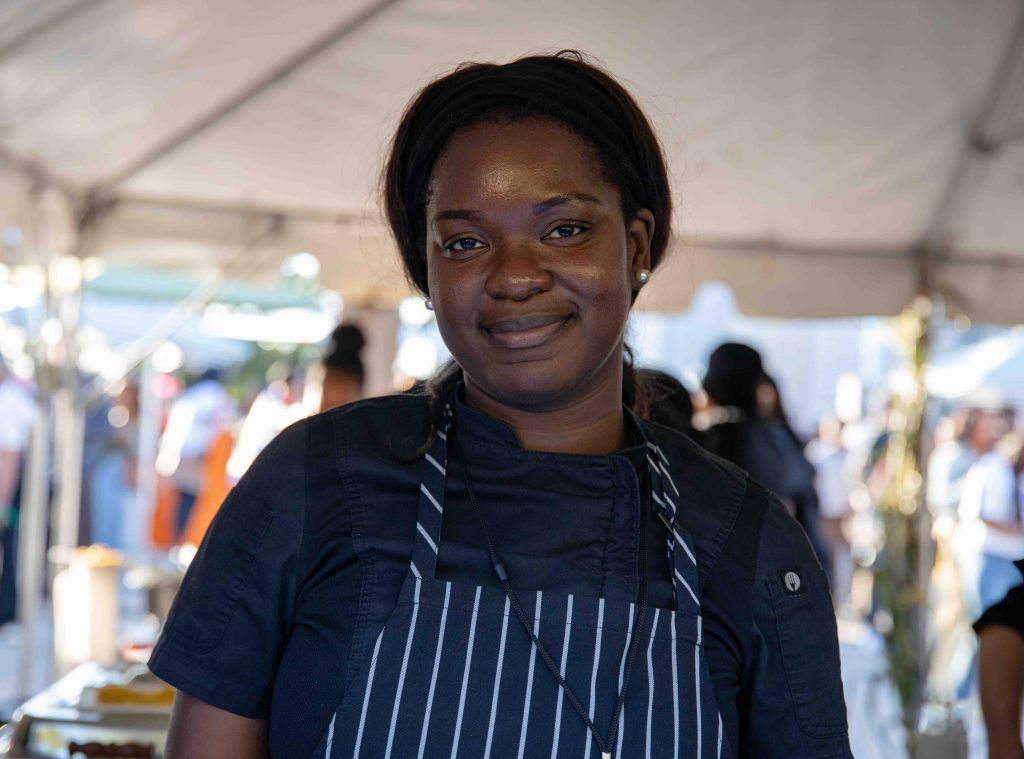
The Creole Food Festival comes at a time when immigrant communities here in New York and across the country are facing intensified immigration enforcement — it also comes in the wake of thousands of Haitians losing their Temporary Protected Status, and with it, their ability to work in the U.S.. Armand noted that the restaurant industry, one which heavily depends on immigrant workers, is already feeling the strain.
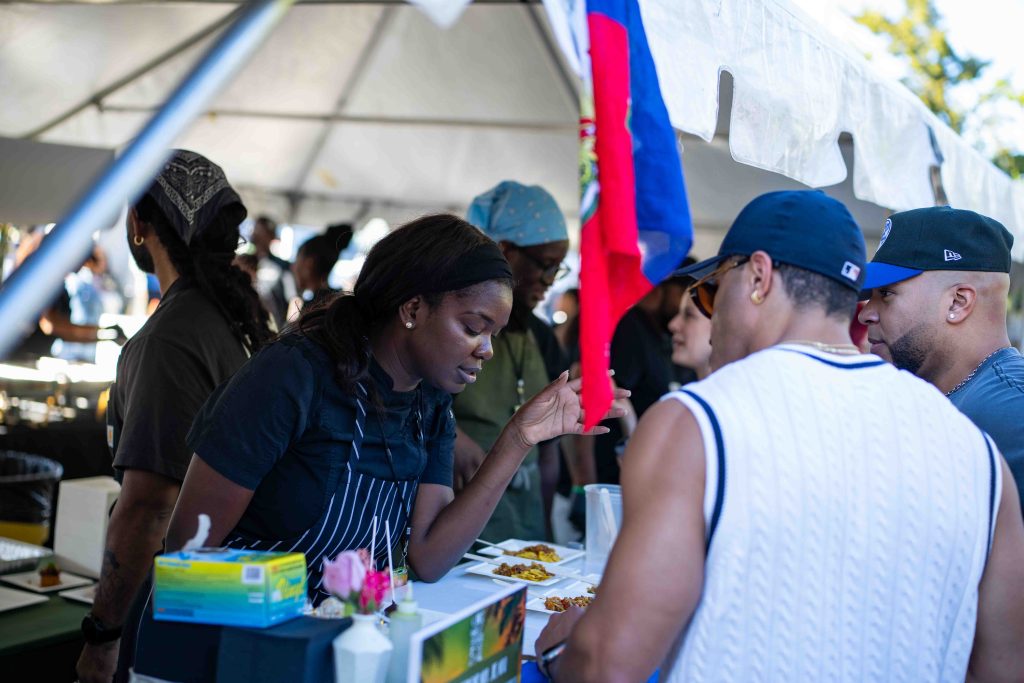
“There are some of the people that were working in those kitchens that were doing the work that a lot of people would not want to do, working those long hours,” said Armand.
In spite of this, Armand feels that it’s that much more important to highlight New York’s many diaspora communities, as they are the heart of the festival’s mission.
“You could actually have Senegalese food, you could actually have Dominican food. You could have actually Puerto Rican, you can have Colombian. You can actually have all of the foods that are Creole. That are Garifuna. That are Gullah Geechee.”
For caterers who often cook at private gatherings, the festival also puts their work in front of a whole slew of potential new customers. Jahvel Fraser, chef and owner of JVF Pantry, brought his bone marrow burger to the festival this year. His Queens-based catering company has been operating since 2018, with a menu spanning West Indian, Middle Eastern, Asian and Italian food. His own family comes from Barbados and St. Vincent.
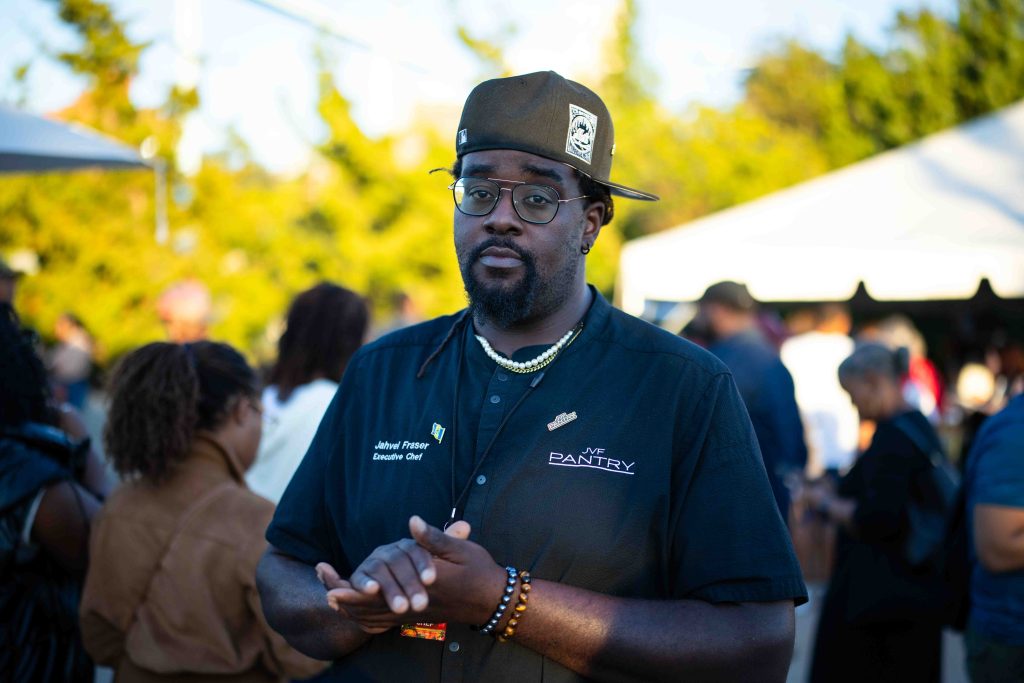
“[The festival] gives people the opportunity to try what we have to offer,” Fraser said.
Preserving a food tradition can also involve giving familiar dishes a new form. Osei “Chef Picky” Blackett, who runs the traveling pop-up concept Everything Oxtail, whipped up oxtail doubles for the festival this year, adding braised meat to the iconic Trinidadian street food of fried bread and chickpeas.
“I like to show the diversity of oxtail and I just like to use stuff that people already know and add stuff to it,” Blackett said.
“The food itself is probably not traditional Creole, but I am Creole,” added Blackett. “So I’m thinking if I am cooking something, I’m always going to have my twist on it. So I think that kind of makes it Creole.”
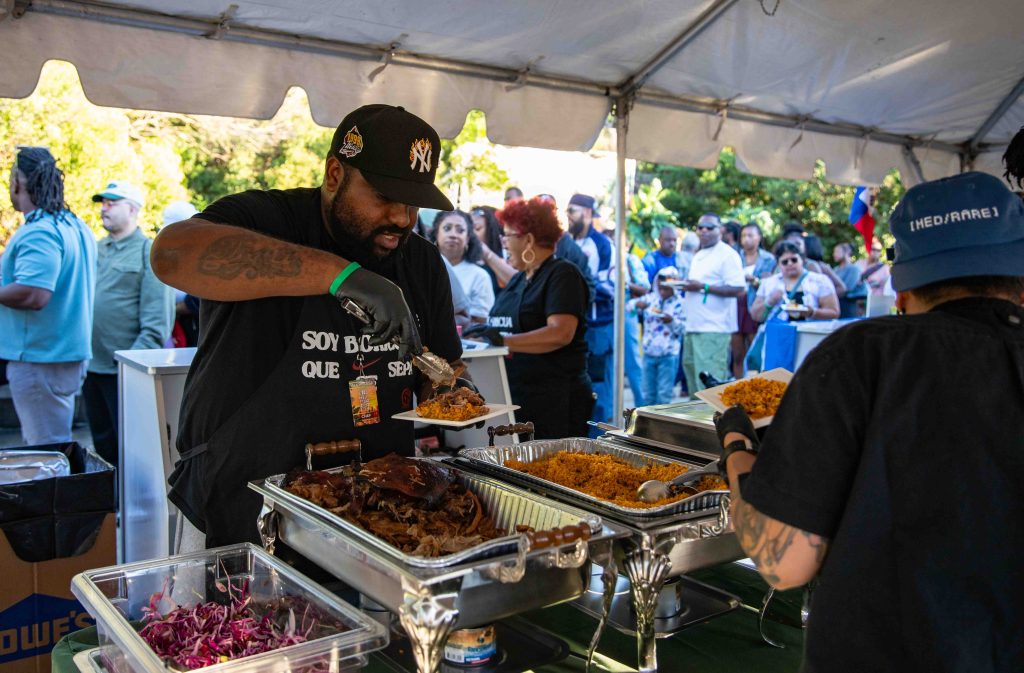
But creating a platform for these businesses wasn’t without its own challenges. Armand said the Haitian rum producer Barbancourt was the festival’s only sponsor this year. And after a major brand also withdrew its financial support, he admitted the strain could have led to the event being cancelled. But cancelling would have meant abandoning the same people the festival was created to support. So he and his business partner took out a loan instead.
“We didn’t start this for money,” Armand said. “We started it because we wanted to actually support our communities and highlight their creativity, that talent and the beautiful aspect of their culture.”
That decision has given food entrepreneurs a chance to share their history and their culture through their menu. For many Jamaicans, Abbott describes jerk chicken as much more than just a popular meal.
“It’s actually showing homage to the Maroons, who escaped slavery, in Jamaica and hid in the mountains,” she said.
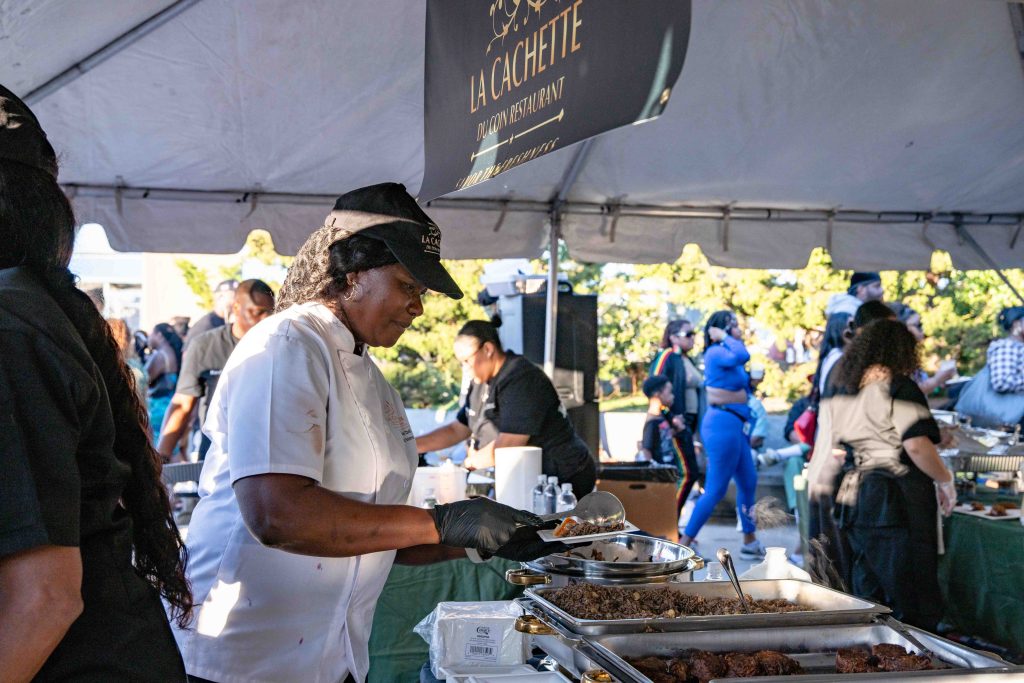
Jerk cooking reflects both African and Indigenous Taíno influences. Jamaica’s Maroons developed methods of preparing food underground to conceal their location, a history that Abbott, the Oseno Jerk co-owner, contrasts with the visibility of Jamaican cooking today.
“That shows evolution to a different level,” she said. “You couldn’t be seen or heard to now jerk being so proud to be displayed.”
Next month, the Creole Food Festival heads to Miami. Plans are already in the works for it to make its return to New York next year. Armand hopes the festival will continue to teach visitors about Creole culture while also recognizing its connections across communities.
“We live in a world right now where people would actually talk about what makes them apart and really highlight that, but we wanted to bring people together on commonalities.”