

In celebration of the voices and experiences of Chinese immigrant youth, Documented invited Chinese high school students to submit original essays in response to the prompt: “a tradition I hope never goes away.” More than 20 students from across NYC and Long Island shared with our newsroom stories of familiar food, festivals and the immigrant family experience they carry with them as they blend their heritage with young life in New York City.
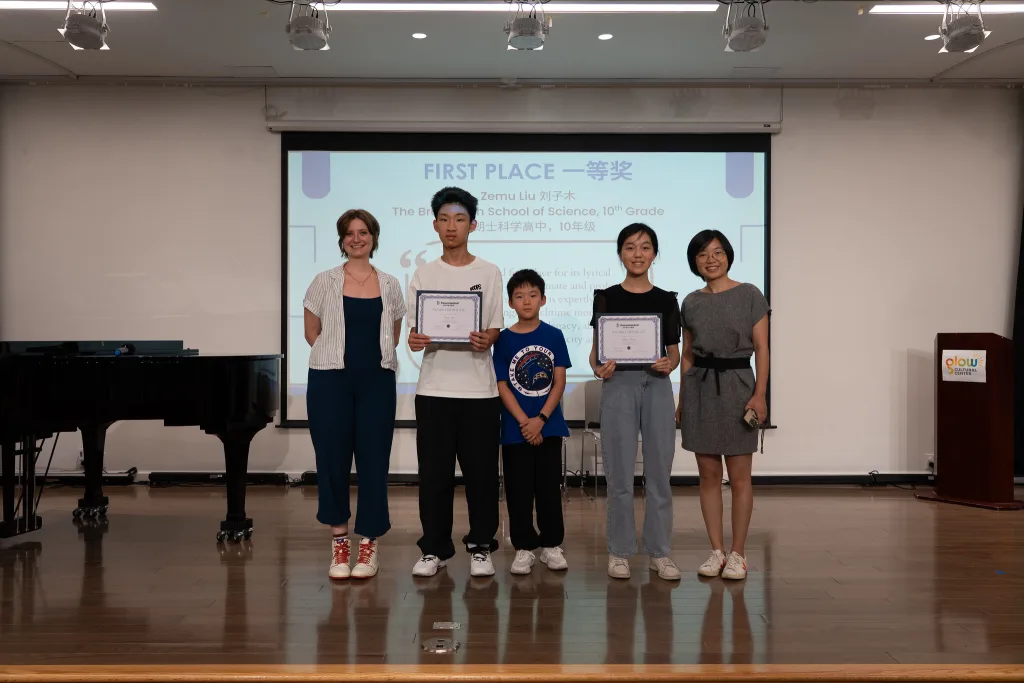
For the essay contest, students submitted two pieces: one written in English and one in Chinese. These components were judged separately by our newsroom to honor that some bilingual students may have stronger skills in one language or the other. The winning essayists were commemorated on August 23 at the “Say ‘No’ to Violence: Creating Safe Schools & Prosperous Communities” event in Flushing, hosted by Documented and Glow Cultural Center. The three winners also receive a scholarship provided by Documented.
We received many thoughtful submissions, and we hope that you enjoy reading the winning essays as much as the judges did.

First place: “A Tradition I Hope Will Never Disappear — Dragon Boat Festival” by Zemu Liu, 10th grade
This essay claimed first place for its lyrical storytelling that is both intimate and profoundly universal. The narrative arc is expertly crafted, building from a single lunchtime moment to a meditation on generational legacy, all while maintaining emotional authenticity and literary grace.
Second place: “Memories in the Margins” by Alina Dong, 11th grade
The writer masterfully weaves personal memory with broader reflections on language and belonging, resulting in a deeply moving and introspective narrative.
Third place: 24K Gold: Changed but Not Lost by Grace Chen, 10th grade
This essay stood out for its poetic exploration of cultural identity, using the metaphor of gold to elegantly convey the complexities of growing up between two worlds.
Read in English
阅读本文的中文版本
Honorable mention: “Celebration in Every Bite” by Cynthia Su, 9th grade
The striking imagery in this essay commands a knowledge of writing craft well beyond Cynthia Su’s years.