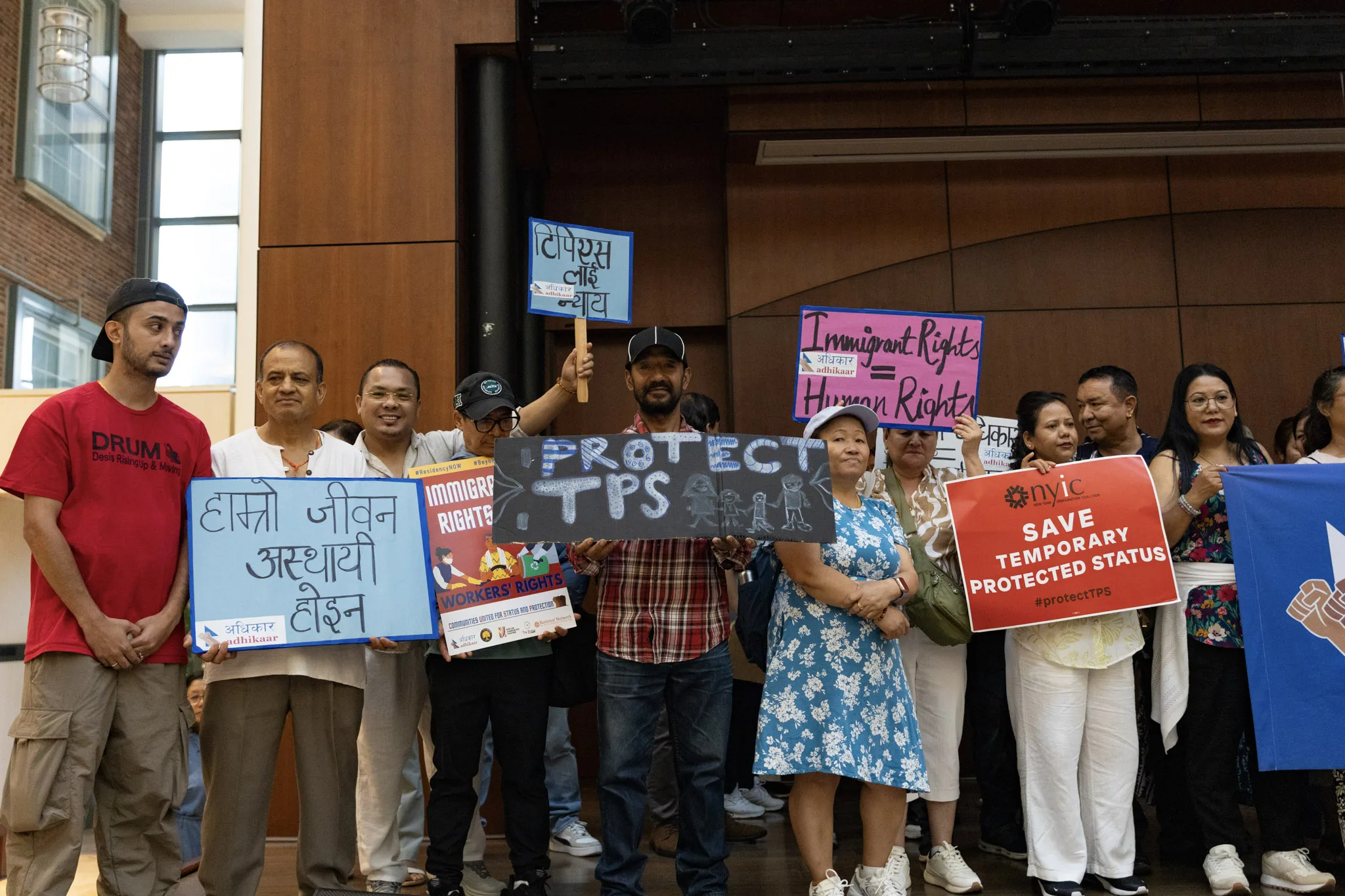


New York Attorney General Letitia James has joined a coalition of 16 state attorneys general urging a federal appeals court to block the federal government’s attempt to terminate Temporary Protected Status (TPS) for Haitian and Venezuelan nationals.
In an amicus brief filed on Nov. 12 with the 9th Circuit United States Court of Appeals, the state attorneys general argue that the federal government acted unlawfully when it attempted to end TPS for the two countries, calling their decision “arbitrary and capricious.” The brief also warns that terminating TPS would harm families, strain state resources and destabilize communities that rely on longtime legal residents.
According to James’ office, Haitian and Venezuelan TPS holders are integral to New York’s workforce and community life. Removing TPS protections would strip thousands of New Yorkers of their work permits and create fear in mixed-status households.

The states filling the brief also highlight the substantial investments they have made to support TPS holders, including funding legal services, helping with work authorization and connecting immigrants with employers. They argue that ending TPS would harm local economies, public systems and state policies already designed to integrate these workers “peacefully and productively” into American life.
For the first time in the 35 years of the TPS program, a new administration has canceled extensions that were already approved.
“This administration’s cruel attempt to suddenly and unlawfully end their legal status will threaten hundreds of thousands of immigrants who fled violence and oppression to build a better life in this country,” James said in a statement released Nov. 12. “I will keep fighting to protect the rights of our immigrant communities.”
This is not the first time James has joined multi-state coalitions in defense of TPS holders.
In September, James and the State of New York joined 18 attorneys general in filing a brief supporting Haitian TPS holders. In July, she co-led a coalition of 14 attorneys general to defend TPS for immigrants from Honduras, Nicaragua and Nepal. In June, she joined 17 attorneys general in urging the courts to preserve protections for Venezuelan nationals. In April, she also helped lead an amicus brief backing Haitian TPS holders, part of a continued push to prevent abrupt cuts to the program.
A life built under TPS
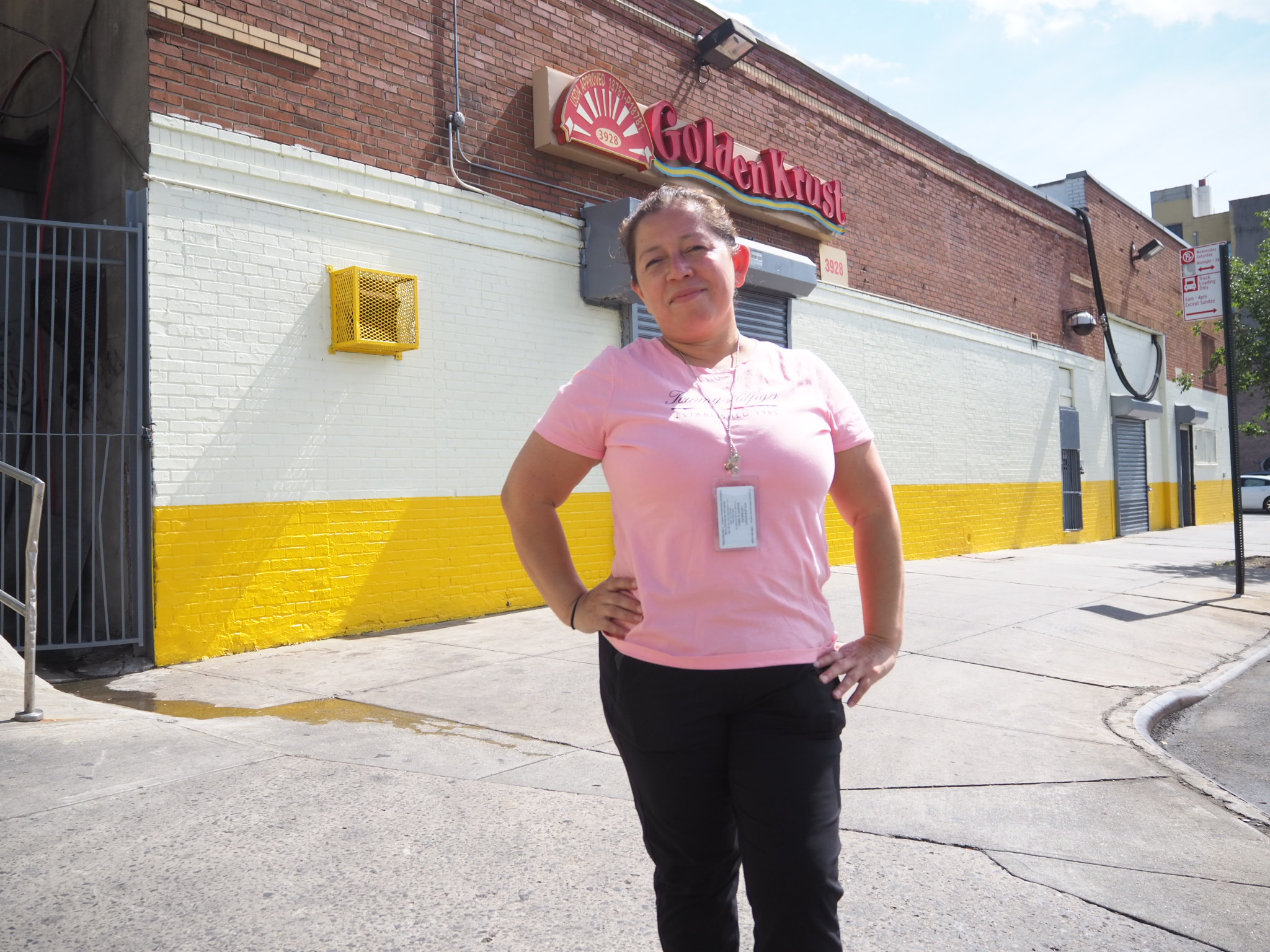
For TPS holder Christie Joseph, the stakes are both high and personal. She moved to Brooklyn in 2010 at age 13, after a catastrophic 7.0 magnitude earthquake in Haiti forced her family to send her to the United States for safety and a chance to study. She lived with a host family and learned English from scratch.
“My parents thought it would be a better choice for my future,” she said. “The earthquake made everything move faster.”
Through TPS, she built a path for herself. She attended art school, earned a bachelor’s degree in French, and graduated from York College with a business administration degree. Joseph is also a filmmaker studying cinematography at the School of Visual Arts. Her documentary about life under TPS features interviews of Haitians with different experiences, including a mother of two who cannot relocate if the TPS program ends.
“There is a gap in what people can do next,” she said. “Some support families back home. They cannot go back.”
According to the brief, the states filling the brief are collectively home to nearly 100,000 Venezuelan and more than 262,000 Haitian immigrants, many of whom are TPS holders or have family members who are. Additionally, tens of thousands of U.S.-citizen children and adults live with TPS holders. Ending the program may place them at risk of family separation, emotional distress and educational disruption if protections end, the brief notes
The brief notes that TPS holders also make significant economic contributions to the U.S. economy. Venezuelan TPS-eligible immigrants generate $11.5 billion annually, while Haitian TPS holders contribute $4.4 billion each year. Most are employed and thousands work in sectors with reported labor shortages. About 14% are self-employed, producing substantial business income, including $224.8 million in California alone. TPS households also pay billions of dollars in federal, state and local taxes.
Many TPS holders have college degrees, own homes and support public health and safety. Loss of status can reduce access to healthcare and discourage cooperation with law enforcement.
According to the U.S. Congress, New York state is home to more than 98,000 TPS holders, including more than 5,400 Haitian TPS holders in New York City alone.
The New York Attorney General’s office revealed that in 2023, TPS households in New York earned $2.3 billion, paid $348.9 million in federal taxes and $305.5 million in state and local taxes, and contributed $1.6 billion in spending power to the state’s economy.
State arguments, national implications
Erik Crew, a staff attorney at the Haitian Bridge Alliance, which is serving as co-counsel representing Haitian and Venezuelan immigrants in the brief, said courts nationwide have already recognized problems with the Trump administration’s decision to revoke TPS for Haitians.
“If the higher court accepts the argument that the Secretary has unfettered discretion, every TPS group becomes vulnerable,” he said. The multistate brief, he added, “pushes back against a narrative portraying TPS holders as criminals. The states are saying the opposite, that these individuals strengthen their communities and deserve protection.”
Also Read: Thousands of Syrian Immigrants at Risk of Deportation After TPS Termination
For Joseph, the 15 years she has spent in the U.S. are impossible to separate from who she has become. “If TPS ends, a part of my identity dies,” she said. “But I’ll keep moving. I’ll keep creating. That’s what we do.”
But the status that allowed her to build a life has also limited her. TPS holders cannot vote and face restrictions on travel and work.
“You are here, you have opportunities, but there is always a glass fence around you,” she said.
Joseph said that when she heard TPS may be ending, she felt a mix of clarity and fear. “There is sadness, but also a kind of freedom in finally knowing where things stand. Living in 18-month cycles is its own limbo. I do not know what the future holds and that is scary. But I have had to reinvent myself before.”
If TPS ends, she plans to finish her film and apply to film schools abroad. She hopes to return to the U.S. someday.
“I do not think this is the end of my story here.”