

For Puerto Rican urban farmer and community herbalist Brandon Ruiz, cultivating crops can help people connect to their Caribbean heritage.
But these are not your typical garden herbs.
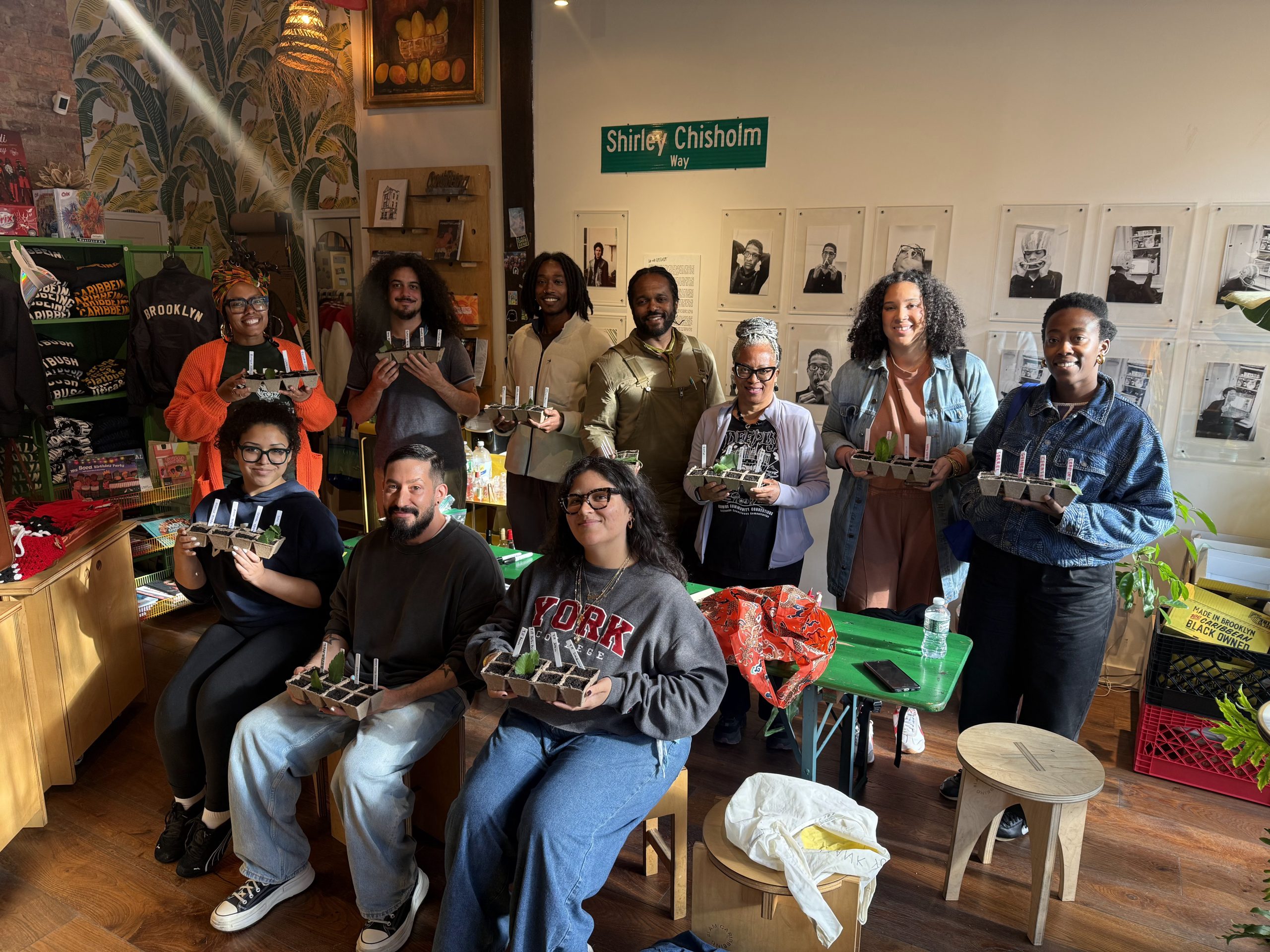
During a recent herb-growing course at the I AM CARIBBEING store and community center in Flatbush, Brooklyn, Ruiz showed the possibilities of growing Caribbean herbs in New York, and also deepened recreational gardeners’ understanding of the plants themselves.

Participants from various Caribbean backgrounds planted bitter melon, guinea hen weed, sorrel, and leaf of life, all popular plants grown in the region, and all with the potential to thrive in New York’s climate. Ruiz, who is 28 and based in Charlotte, North Carolina, told Documented that as he continues his instruction, he finds commonalities between himself and his students, who are invested in learning more about Caribbean planting traditions.
“A lot of people that were in the workshop were connected to their cultural background, but maybe had not been in a long time or may not be familiar with certain things,” Ruiz said. “I definitely think working with and learning with the Caribbean diaspora in New York is very fulfilling for me because we get to go through that process of reconnection together.”
Some participants who took the workshop, which was held on April 19, certainly shared that sentiment.
“My great-grandfather actually taught me a lot of what Brandon is reminding me of, in a more simplistic way that immediately just sticks in your head,” said Sabrina Rose Dallas, a Jamaican-British immigrant who comes from a family of herbalists. “Now when I have these herbs around I can immediately think, if I take a leaf of life and I have a bit of a cough, this will help me.”
Ada Rojas, a Dominican herbalist who took the course, said the in-person instruction helped foster the shared connection between members of the Caribbean diaspora.
“Especially when it comes to plants, there’s something really magical that happens when we gather in-person, around plants to share this ancestral knowledge,” Rojas, a Bronx native, said, adding that the workshop’s location inside a local business added to her experience as a way of getting familiar with Brooklyn.
Ruiz’s reconnection to his roots was kindled by visits to Puerto Rico in his early 20s, deepening connections with his family there. While Ruiz said he always had a knack for cultivating herbs and vegetables and cooking, the trips to Puerto Rico spurred him to grow more produce from the island. He found himself diversifying his stock, growing traditional Latin and Caribbean foods such as aji dulce pepper and swapping out traditional potatoes for yuca.
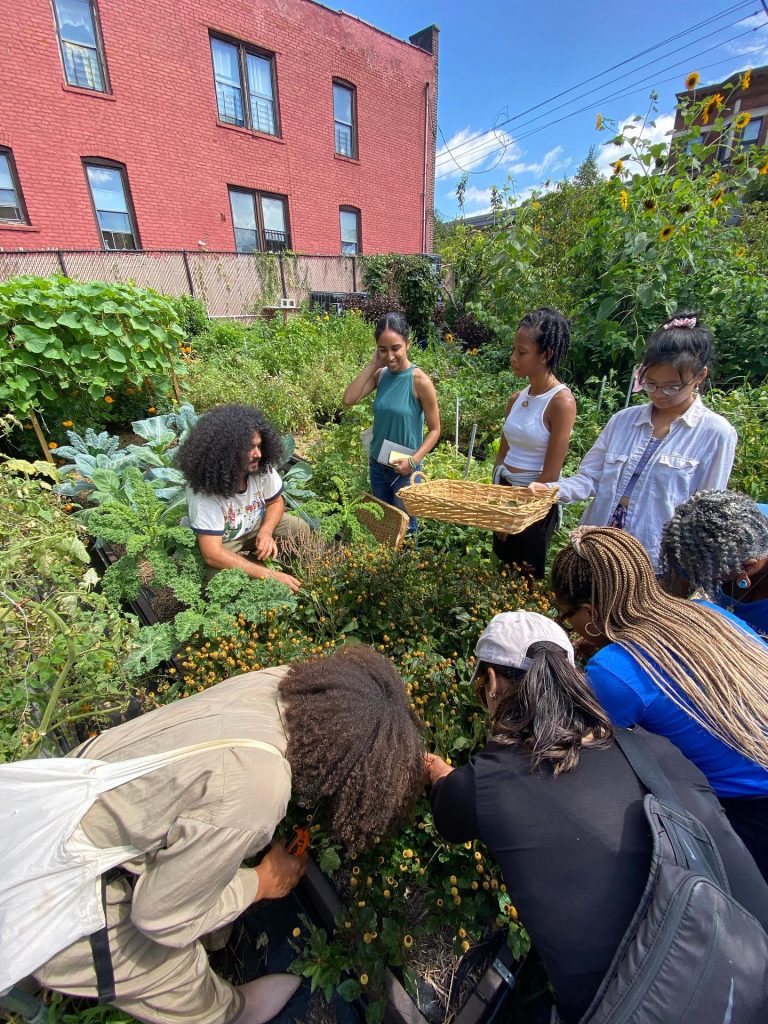
“I was getting into herbal medicine and health and just more conscious of what I was putting in my body and it felt like the culturally relevant things were where I wanted to go with that,” said Ruiz, who also informs his students about the spiritual and medicinal uses for plants handled in his courses.
Vines from the bitter melon plant (also known as karela in some countries) are used as cold and flu remedies, for skin conditions, and for spiritual cleansing, Ruiz explained. Then there’s the guinea hen weed plant, a perennial herb known for its anti-inflammatory properties that’s also believed to ward off spirits or “duppies” in some parts of the Caribbean.
“It’s something that connects a lot of Caribbean populations just in general and I think we forget that,” Ruiz said of the medicinal and spiritual history of the herbsTK. “I’ve started to incorporate that more into a lot of my teachings and better understand it myself and my own practice because it’s so key to understanding plants.”
Part of that understanding includes knowing that a little can go a long way – especially when planting in New York City. Ruiz emphasizes that it doesn’t take acres of land to plant your favorite herbs, but sometimes just natural sunlight, water, and a window sill. He uses the leaf of life plant, commonly used for its medicinal benefits, as an example: Ruiz explained that in the Caribbean, it’s a common practice to place the leaf inside a closed book where it will naturally develop roots and become ready for planting.
“Even the material needed, it really can be sometimes planting something in a glass of water that just needs the roots to grow really and it’ll continue to grow,” Ruiz said.
New Yorkers interested in Ruiz’s classes can look forward to seeing more of him soon: He’s planning a workshop this summer with the Midtown-based Urban Indigenous Collective focused on Indigenous Caribbean herbal practices, along with additional programming with I AM CARIBBEING and the New York Horticultural Society. Dates haven’t yet been set. Herb enthusiasts can also sign up for his digital five-week and one-time courses.
“There are, you know, people in the Caribbean and all over the world who are elders who still practice this and still learn everyday,” Ruiz spoke of herbalism instruction. “It’s not really something that you can just learn and be complete with.”