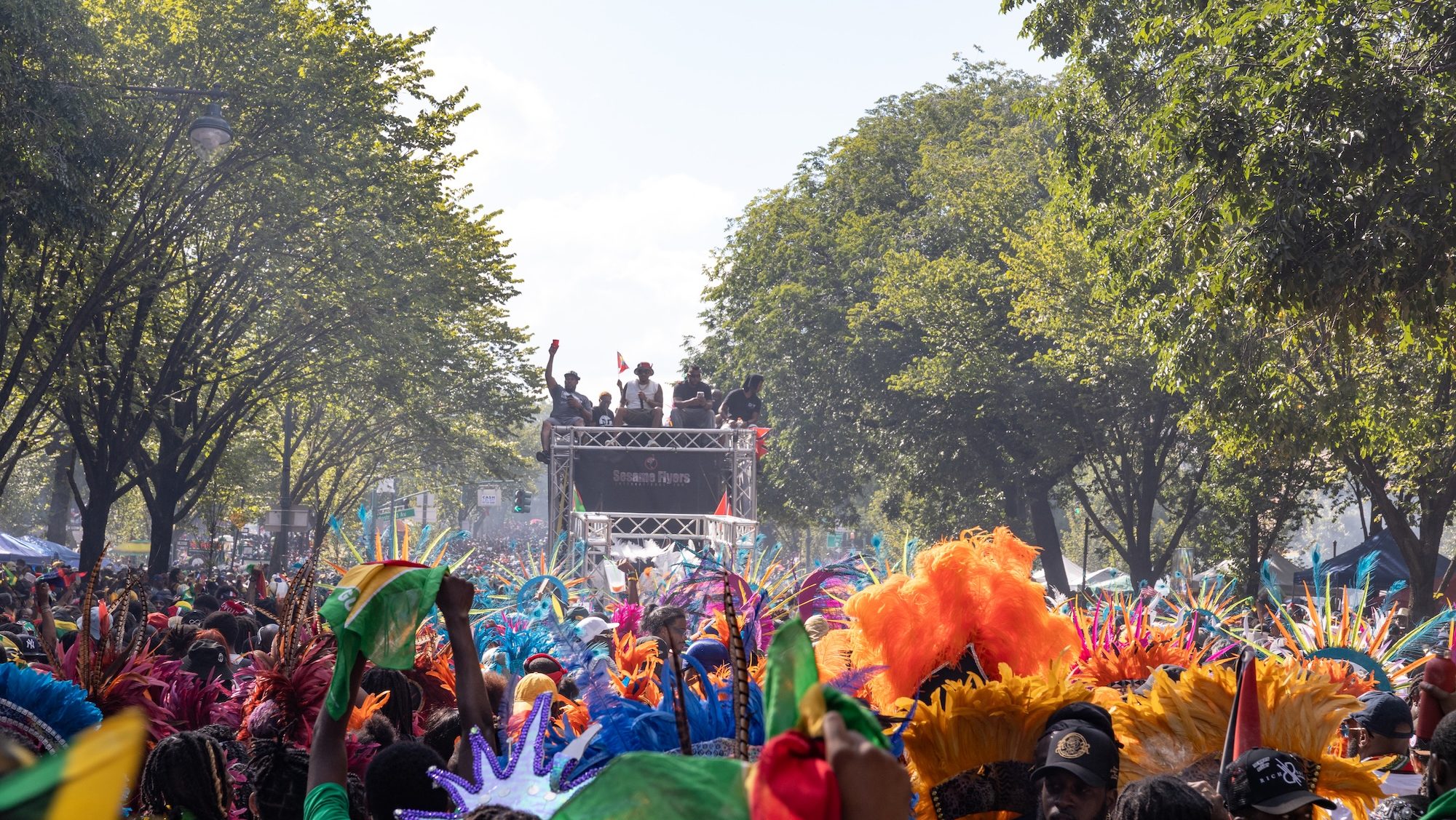


Just days after the 59th West Indian American Day Parade, Sesame Flyers, one of the largest Mas bands in New York, made an announcement that sent shockwaves through the city’s Caribbean community.
After participating in the parade for 39 years, Sesame Flyers announced it would not return for the 60th annual celebration next year.
“This is not a boycott, but a strategic pause,” said Curtis Nelson, Sesame Flyers’ international executive director.
The band attributed its departure to a series of issues that they viewed as undermining the very purpose of carnival as a celebration of Mas and Caribbean cultural expression. Until conditions change, they said, they would be stepping back.
Nelson said that for the past few years traditional Mas bands have increasingly been pushed toward the back of the parade route, while corporate sponsor floats, elected officials’ trucks and DJ vehicles have taken the more prominent positions up front. As a result, the core cultural elements of the carnival have been sidelined from the public, with many bands ending up in the margins of the parade.

“Our position is to force change, so that ultimately costume bands can be on Eastern Parkway with the pageantry, as opposed to being in the back of corporate sponsored floats,” Nelson told Documented.
He recounted recent years when more than 30 sponsor and official floats attended. Meanwhile, there were fewer than 20 Mas bands — a dynamic that Nelson said flipped the parade’s priorities. He called the situation “a controlled chaos.”
Andrew Maloney, chairman of the West Indian American Day Carnival Association (WIADCA), also acknowledged the problem. Sometimes Mas bands get squeezed out by the sheer number of politicians, music trucks and unregistered revelers, sometimes called “stormers,” who flood the parkway, he said.
“By the time the Mas bands have the opportunity to come down the parkway, the movement is slow, and sometimes, like we had this year, some of the Mas bands did not have the chance to go before the judges’ station.”
Maloney said that WIADCA is working with the NYPD and support groups to move the parade along faster. The organization is open to placing Mas bands earlier in the procession, at the front or at least the middle, so the parade crowds can see them better.
About six decades in New York
The West Indian American Day Carnival is one of the world’s largest celebrations of Caribbean culture, drawing millions of participants and spectators to Brooklyn each year.
New York’s Carnival celebrations date back to the 1920s, when Trinidadian immigrant Jessie Waddell and other Caribbean immigrants began organizing Carnival events in Harlem. After the city revoked the Harlem parade’s permit in 1964, a committee led by Trinidadian immigrant Carlos Lezama secured permission to hold the parade on Brooklyn’s Eastern Parkway in 1969.
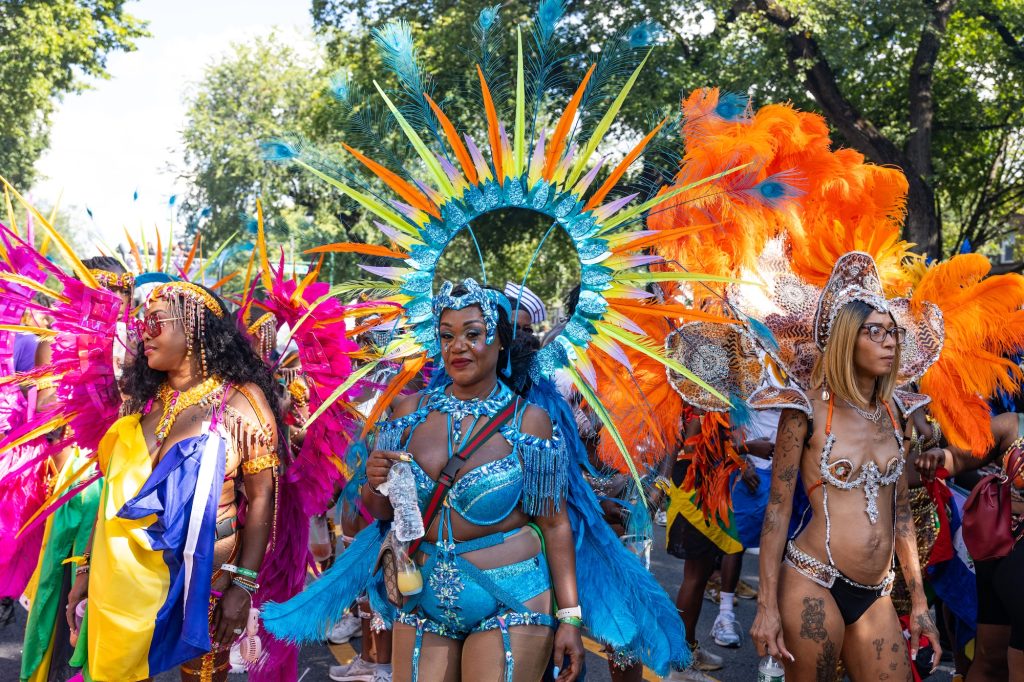
Today, waves of costumed Mas bands travel along Eastern Parkway from Utica Avenue to Grand Army Plaza, celebrating Caribbean culture through music, dance and elaborate costumes. The bands perform before judges, who evaluate their visual impact, presentation and carnival spirit.
Mas bands, short for “masquerade bands,” traditionally dress in elaborate costumes to dance and parade together while the soulful beat of Caribbean music thrums in the background. Still, in recent years, some observers say traditional Mas has lost some of its vibrance, as more people attend in T-shirts rather than in elaborate costumes.
In recent years, the parade — or the area surrounding the parade — has also been marred by violence. During the 2026 celebration, three people were shot, six were stabbed and one was slashed in several incidents near the parade route. In 2025, crowds dispersed and at least five people were wounded by gunfire. Those injured included a 14-year-old and a 53-year-old man who was left in critical condition.
Maloney defended the parade’s safety record, and said that he estimated this year’s event drew more than 2.5 million people to Eastern Parkway. “To get 2.5 million people or more in one place, and get everyone to get along, that’s quite an accomplishment,” Maloney said. “Most of those incidents did not involve the parade itself.”
He attributed many of the problems to the parade’s own popularity. “It’s really a problem with success, a challenge with being successful, a challenge with being well liked, well attended,” he said. “We have to just make some changes to incorporate the success that is upon us.”
Mas bands’ financial strain
Beyond the deprioritization of Mas bands, Nelson also raised concerns about the financial burden on Mas bands. He estimates that Sesame Flyers spends more than $100,000 annually to participate in this one-day event.
A single sound truck costs about $30,000, he said, and bands need additional vehicles for refreshments and steelpan musicians. This year, Sesame Flyers brought six vehicles and a contingent of about 400 people, including masqueraders, staff members and security personnel.
Each year, Sesame Flyers runs a Mas camp where designers fabricate elaborate costumes primarily sold to members of the public who register to join the band. On Sesame Flyers’ website, some costumes can cost up to $2,800.
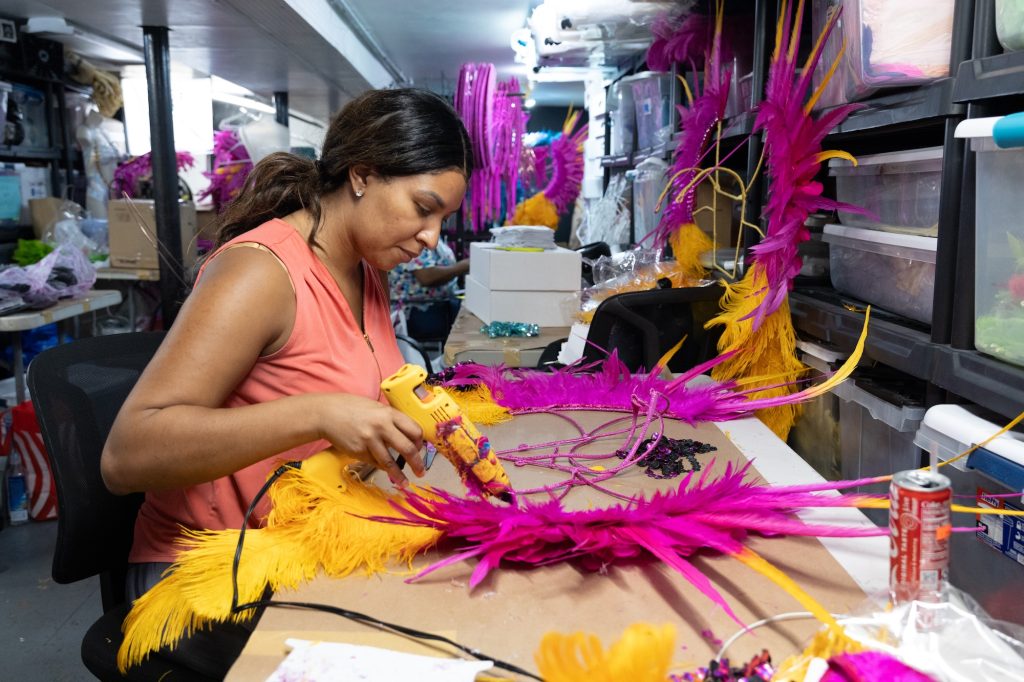
But Nelson said costume sales rarely cover the band’s expenses, including production, transportation and security. Bandleaders often contribute their own money or rely on small sponsors, and many do not recover their expenses. He said the financial strain affects an entire industry of artists, wire benders, feather workers, production workers and sound engineers who depend on carnival for income.
He also criticized WIADCA for charging bands registration fees while offering them little financial support. “They are using the bands, the pictures of the masquerade, the costumes, and selling it to their sponsors and saying we produce a carnival with costumes,” Nelson said. “That’s what these sponsors believe that they’re part of.”
Maloney said he now recognizes the financial pressure on bands and wants to work with sponsors, the city and the state to secure more funding.
“As anyone who’s seen any part of this parade, the masqueraders come with some of the most poignant, elegant displays of pageantry and artistry that you’ll see in the world, second to none, and it takes money to do that,” Maloney said. “My goal is to connect with some of these city officials who also come out and participate in record numbers, and see what we can do to help get several grants to help offset that cost.”
‘There has to be change’
Before Sesame Flyers considers returning to the parade, Nelson wants Mas bands placed earlier in the procession and the financial relationship restructured so costume producers can be given more resources.
He also believes the carnival has outgrown an organization run mainly by volunteers and a board. He said it needs permanent staff, stronger governance and year-round planning, along with experts in crowd management and security.
Maloney agreed. “An organization of this size, or when we’re putting on programs of this size, there has to be a change, and we’re working on that,” he said.
He noted that WIADCA has 11 volunteer board members and no executive director because it lacks the budget. He said the organization is seeking funding from the mayor’s office, City Council and state and local elected officials to hire permanent staff.
“We give up our time because of the love of the culture,” Maloney said. “But an organization of this size has to change.”
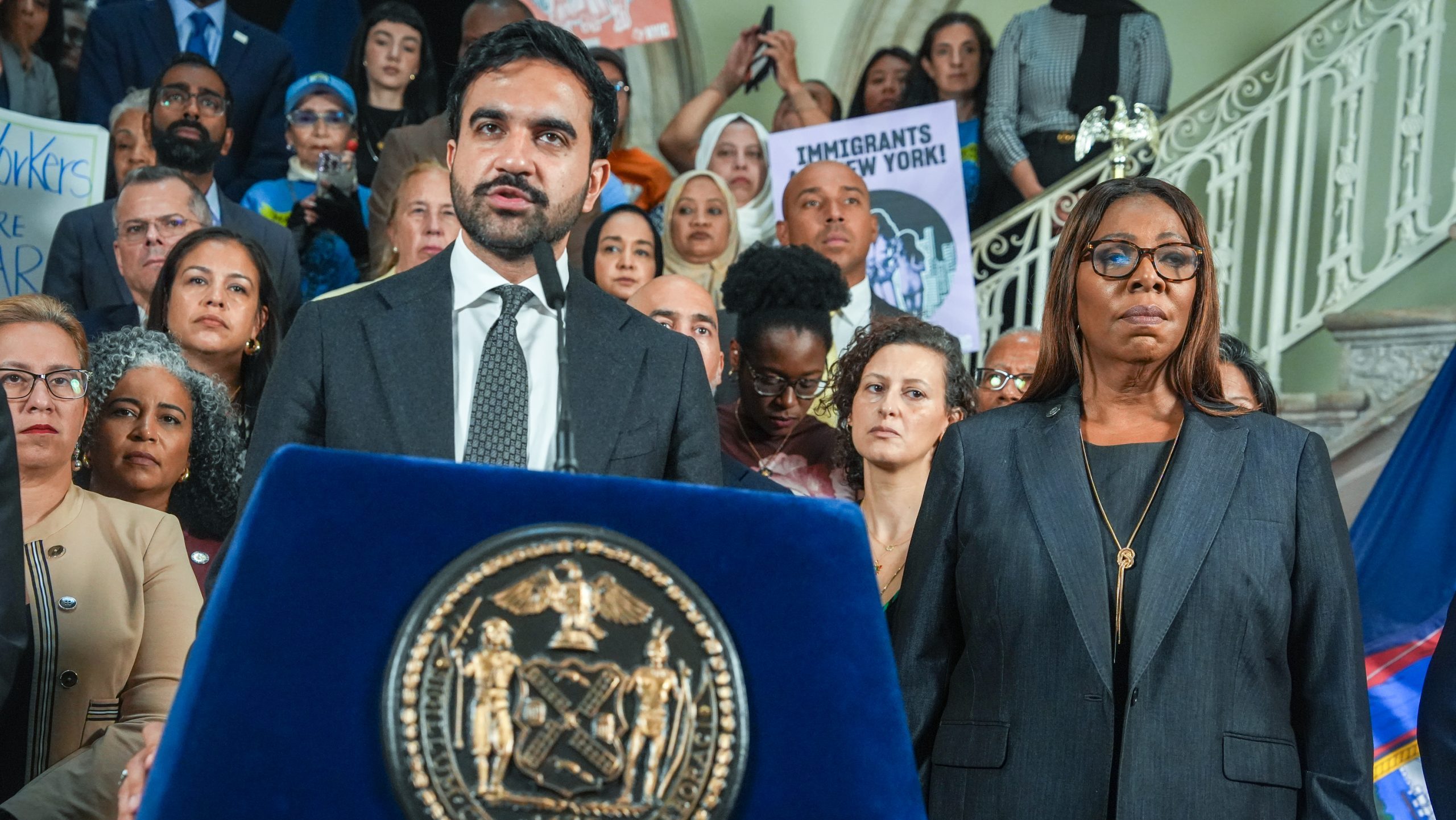
Nelson said, after the 59th parade, these concerns were discussed during a non-public meeting with carnival organizers, Public Advocate Jumaane Williams, Council member Chris Banks, Assembly Member Monique Chandler-Waterman and other stakeholders.
He added that participants broadly agreed that the carnival needs greater capacity to operate at its current scale. He also called for broader participation in decisions about the carnival’s future. Costume producers, sponsors, funders, city agencies and elected officials should all have a say.
Nelson warned that more bands might leave New York’s carnival if conditions do not improve. He pointed to large, award-winning bands that left the Brooklyn parade around 2019 and later found success at carnivals in cities such as Miami.
Maloney says WIADCA has already reached out to Sesame Flyers leadership and is entering discussions to keep them in the parade.
“We are bonded together as a family, and as such, we’re stronger together than if we were to do things separate and apart,” Maloney said. “Without the pageantry, what we have is a few music trucks. It would be a loss for everyone.”
Nelson said his goal is a safe, financially sustainable and costume-centered carnival. He envisions an event where young people can connect with Caribbean traditions and paying masqueraders can play Mas safely and with dignity.