

May Kwok, 63, was enjoying her Saturday morning sitting on a park bench on a sidewalk in Chinatown.
Kevin Cruickshank, 55, was pedaling through Chinatown on his morning bike ride from Morningside Heights to Coney Island, in preparation for the upcoming NYC Century Bike Tour.
Faqiu Lin, 59, and Kexun Chen, 80, had just begun their Friday morning in Sunset Park, pushing empty grocery carts across an intersection, seemingly on their way to a nearby food pantry.

These were the final moments of their lives before they became the latest victims of fatal traffic crashes in New York City. In the span of just over a week, four lives, including three Chinese seniors, were lost in two fatal hit-and-runs on the streets of Sunset Park and Chinatown. The incidents have reignited community outrage over delayed safety improvements in neighborhoods long overlooked by Vision Zero, the City’s traffic safety initiative.
On Wednesday, community members, elected officials, and advocacy groups gathered at rallies in both neighborhoods to mourn the victims and demand immediate action from the Department of Transportation (DOT) and Mayor Eric Adams’ administration.
Deadly Corridors
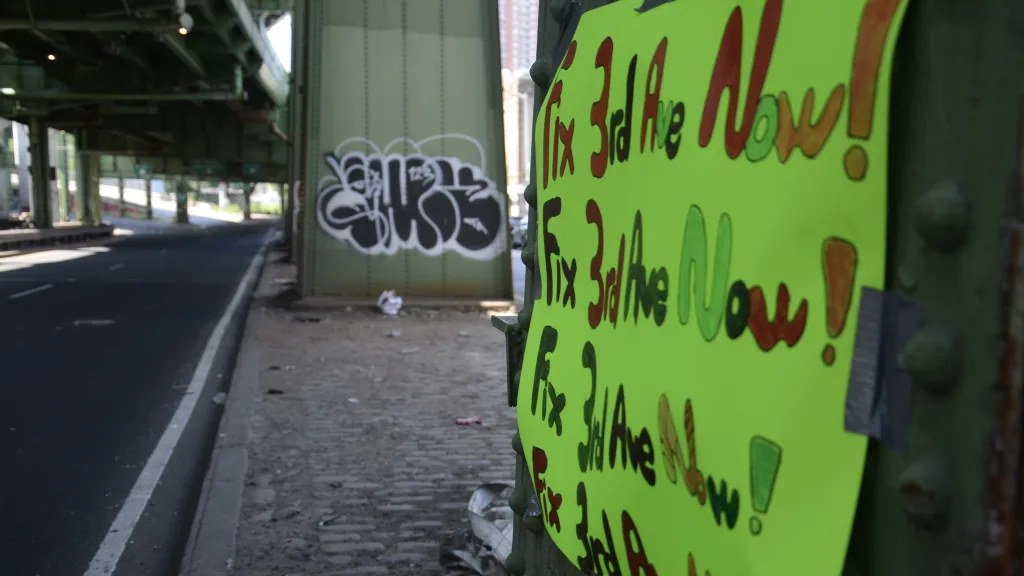
In Sunset Park, a large banner reading “Fix 3rd Ave Now” was draped beneath the Gowanus Expressway near 60th Street, just blocks from where 59-year-old Faqiu Lin and 80-year-old Kexun Chen were struck and killed by a speeding BMW on 52nd Street around 4:30 a.m. on July 11. The driver, 23-year-old Juventino Anastacio Florentino, has been charged with manslaughter, criminally negligent homicide, reckless driving, and leaving the scene of an accident.
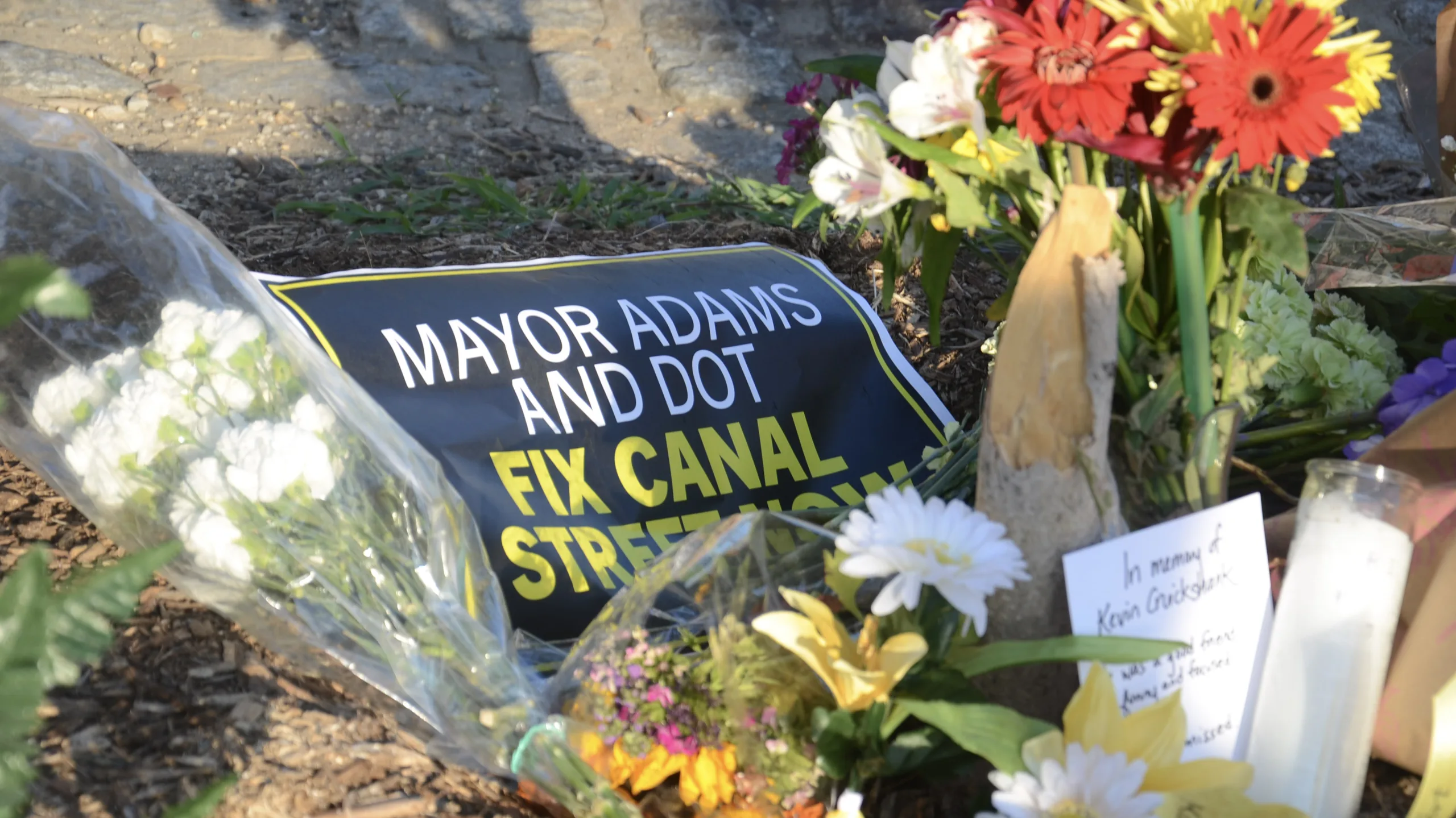
In Chinatown, candles and flowers filled the sidewalk at the corner of Canal and Bowery streets, where Kevin Cruickshank, 55, and May Kwok, 63, were fatally struck on July 19 by a stolen car speeding off the Manhattan Bridge. The driver, 23-year-old Autumn Donna Ascension Romero, was previously charged in another crash three months ago. She now faces two counts of murder, aggravated vehicular homicide, and other charges.
At both rallies, anger, frustration and grief were palpable. Advocates and residents argued that these crashes could have been prevented if long-promised safety improvements had been implemented. Community members accused the city of stalling critical infrastructure projects, most notably along 3rd Avenue in Sunset Park and at the intersection of Canal Street and Bowery Street.
“This isn’t an isolated incident,” said Assemblymember Marcela Mitaynes at the rally in Sunset Park. “It’s a crisis that has been allowed to grow for years, and the latest loss simply underscores what we have already known for years.”
In Chinatown, the prevailing sentiments were the same.
“I don’t have to tell you how many times I’ve been on this corner, and I have witnessed tragedy after tragedy,” said Wellington Chen, executive director of the Chinatown Partnership, holding a bouquet of white flowers at the rally in Chinatown.
Left Behind by Vision Zero
Even as DOT touts Vision Zero’s success, announcing that traffic deaths in NYC hit a record low in the first half of 2025 — with 87 fatalities, down 32% from the same period last year — advocates say dangerous corridors in neighborhoods like Chinatown and Sunset Park continue to be left behind.
“Third Avenue in Sunset Park has repeatedly proven to be deadly,” said Elizabeth Adams, deputy director of public affairs at nonprofit Transportation Alternatives. She pointed out that since 2018, 80 New Yorkers have been killed or seriously injured along the same two-mile stretch, averaging one life-altering crash every month for seven and a half years. In Chinatown, according to Adams, 18 people have been killed or seriously injured on Canal Street since 2022.
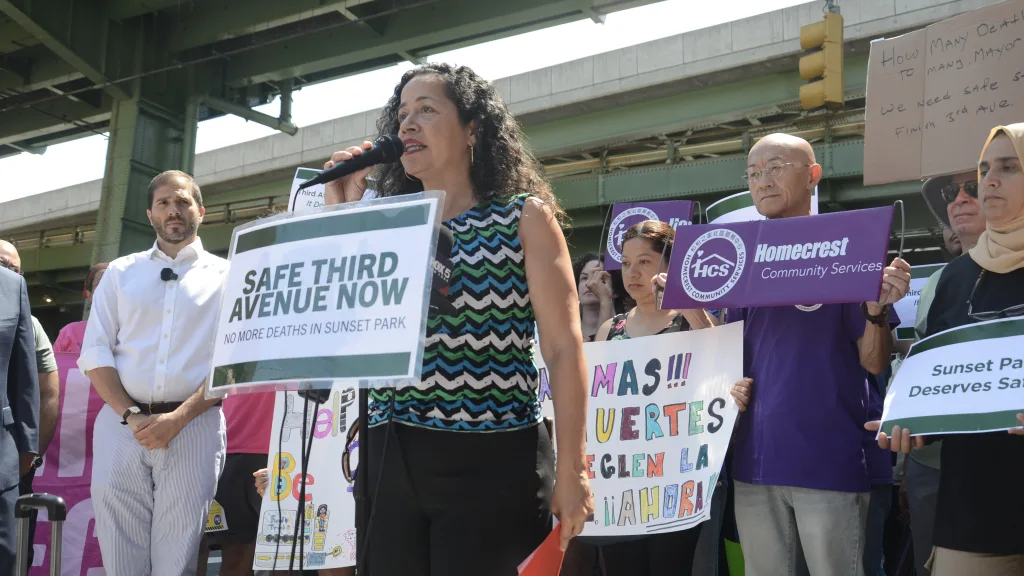
However, despite these compelling and tragic statistics, many long-promised safety improvements remain stalled. According to Transportation Alternatives, DOT initially proposed upgrades to Third Avenue in 2024, but later informed the local community board that the timeline had been pushed back to 2026. The agency cited the need for “additional outreach” following opposition from local business groups to a proposed road diet, which is a planning technique that reduces the number and/or the width of travel lanes to reduce crash rates. Meanwhile, on nearby Fourth Avenue, where in 2012 DOT implemented a “road diet,” pedestrian injuries have dropped by 29%.
“It’s unconscionable to drag your feet on proven street safety measures when we know that they work,” said Adams. “This intersection is a clear depiction of the problem.”
Councilmember Alexa Avilés called for more than just superficial fixes, urging New York City and New York State to commit to meaningful capital investments that ensure safe passage for all community members. “If we can send ships to the moon, we can 100% figure out how to do this,” she said.
Canal Street, which was designated as a priority corridor under Vision Zero in 2015, faces a similarly stalled trajectory, with long-promised safety improvements that have never come to fruition.
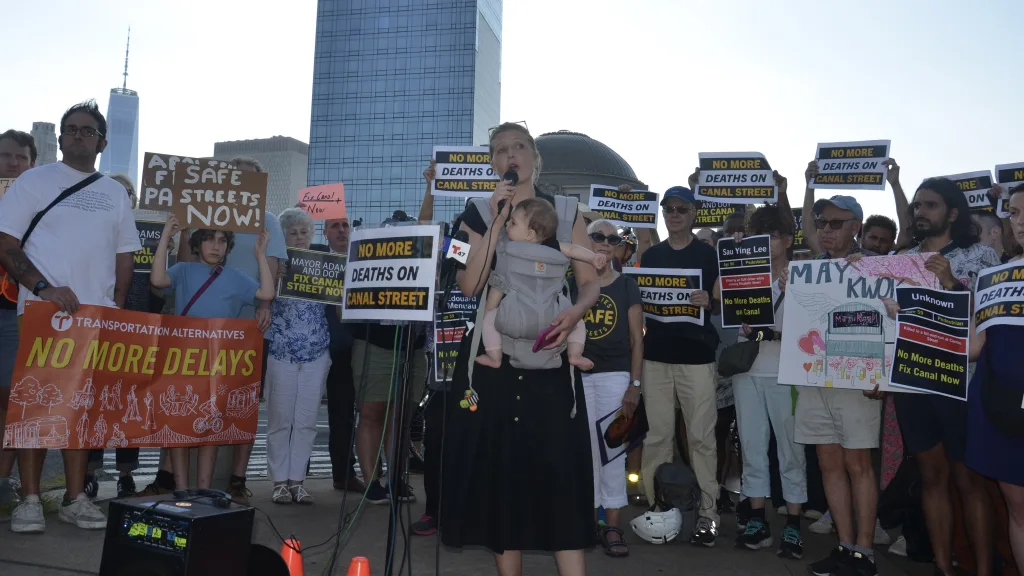
According to Manhattan Deputy Borough President Keisha Sutton-James, Canal Street still remains among the city’s most dangerous streets. She said the area has a high vulnerable population, including 5,000 children and 10,000 seniors living within a quarter of a mile of Canal Street. “And how ironic that this is the most dangerous corner, the most dangerous intersection, and 78% of the people who live in this area are car-free,” said Sutton-James.
She further said Borough President Mark Levine and other officials have sent a letter demanding DOT produce a redesign proposal for Canal Street within 30 days, along with short-term fixes such as speed reduction and hardened barriers.
Fannie Ip, Community Relations Director for Assemblymember Grace Lee, noted that Canal Street has seen 12 deaths and over 700 injuries since Vision Zero began in 2014. “Despite its designation as a priority corridor, no meaningful progress has been made,” she said. “Every day of delay puts more lives at risk. Kevin and May should still be with us. Their deaths were avoidable.”
Transportation Alternatives said it launched its “Fix Canal Street” campaign in 2018, calling for a comprehensive redesign. TA said the city conducted multiple studies of Canal Street between 2002 and 2010, but little has changed in the more than a decade since. In 2022, DOT promised a draft redesign in 2024 before launching yet another study in 2023. In a 2024 statement, the agency said it “looks forward to sharing safety recommendations with the community this year.”
Councilmember Chris Marte expressed frustration in a statement to Documented. “For years, we’ve been told that safety improvements are coming […] And still, nothing. No urgency. No accountability. Now, two more lives are gone.”
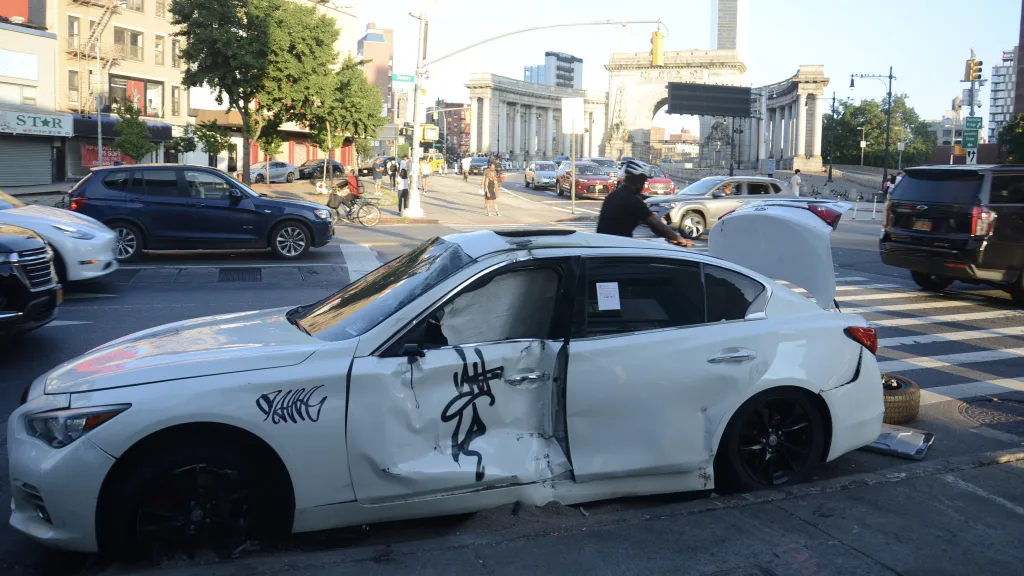
Ron Gentile, a longtime friend of Cruickshank, spoke through grief and anger at the crash site. “This is the fully predictable consequence of the design of this intersection,” he said, noting that another crash occurred at the same intersection less than 24 hours after the fatal incident in Chinatown. “All your studies are stupid. This is an easy fix. Install concrete barriers immediately, and then install bollards,” said Gentile, “Mayor Adams, this was not an unfortunate incident, as you say. Calling it that is repulsively disrespectful and mentally lazy.”
“No more delays”
Justin Yu, Democratic district leader in Chinatown, urged DOT to conduct a comprehensive safety review of the Bowery corridor from Canal Street to the Manhattan Bridge. He also demanded that DOT hold a public town hall and implement immediate safety interventions, including traffic enforcement agents, lane dividers, speed bumps, and a pedestrian refuge island between Canal and Grand Streets.
Kate Brockwehl, policy and advocacy committee co-chair at nonprofit organization Families for Safe Streets, posed questions during the rally: “Where is the care towards aging New Yorkers? Where is the care towards Chinatown? Where is the alleged super sidewalk?” She said the time for studies has long passed. “DOT has plans, and they sit on shelves,” said Brockwehl.
“No more delays, no more studies, no more deaths!” the crowd chanted.
Transportation Alternatives, along with every downtown elected official, has also called for lower speed limits on the Manhattan Bridge. They noted that drivers exit the bridge, where the speed limit is 35 mph, and immediately enter a busy pedestrian corridor with a 20 mph limit, creating a sudden and dangerous transition. Advocates argue that 35 mph is excessively high for the bridge and point out that the limit is effectively unenforced, as there are no speed cameras installed on the span.
When asked by Documented for comment on the delays to the Third Avenue and Canal Street safety projects, City Hall did not directly answer.
In a written statement, a City Hall spokesperson said: “The Adams administration hears these concerns and is committed to enhancing safety and accessibility throughout the city so that all New Yorkers — whether they’re walking, biking, or driving — can move through their neighborhoods safely. Prior to making any major changes to a corridor, we receive comprehensive input from community members and local businesses to ensure every voice is heard.”
The spokesperson added that in Sunset Park, DOT is currently incorporating public feedback into its planning, and in Chinatown, the City is returning to the community for further outreach on Canal Street. “We are reviewing both locations for safety upgrades as we do at every fatal collision,” they said.