

A. Diallo crossed the U.S.-Mexico border without authorization in December 2023, with hopes of escaping the violence and injustice he experienced back home in Guinea, Conakry. He traveled from Guinea through Turkey, then through South America and Central America, and finally to the United States.
After arriving in New York, he filed for asylum within the required one-year deadline.
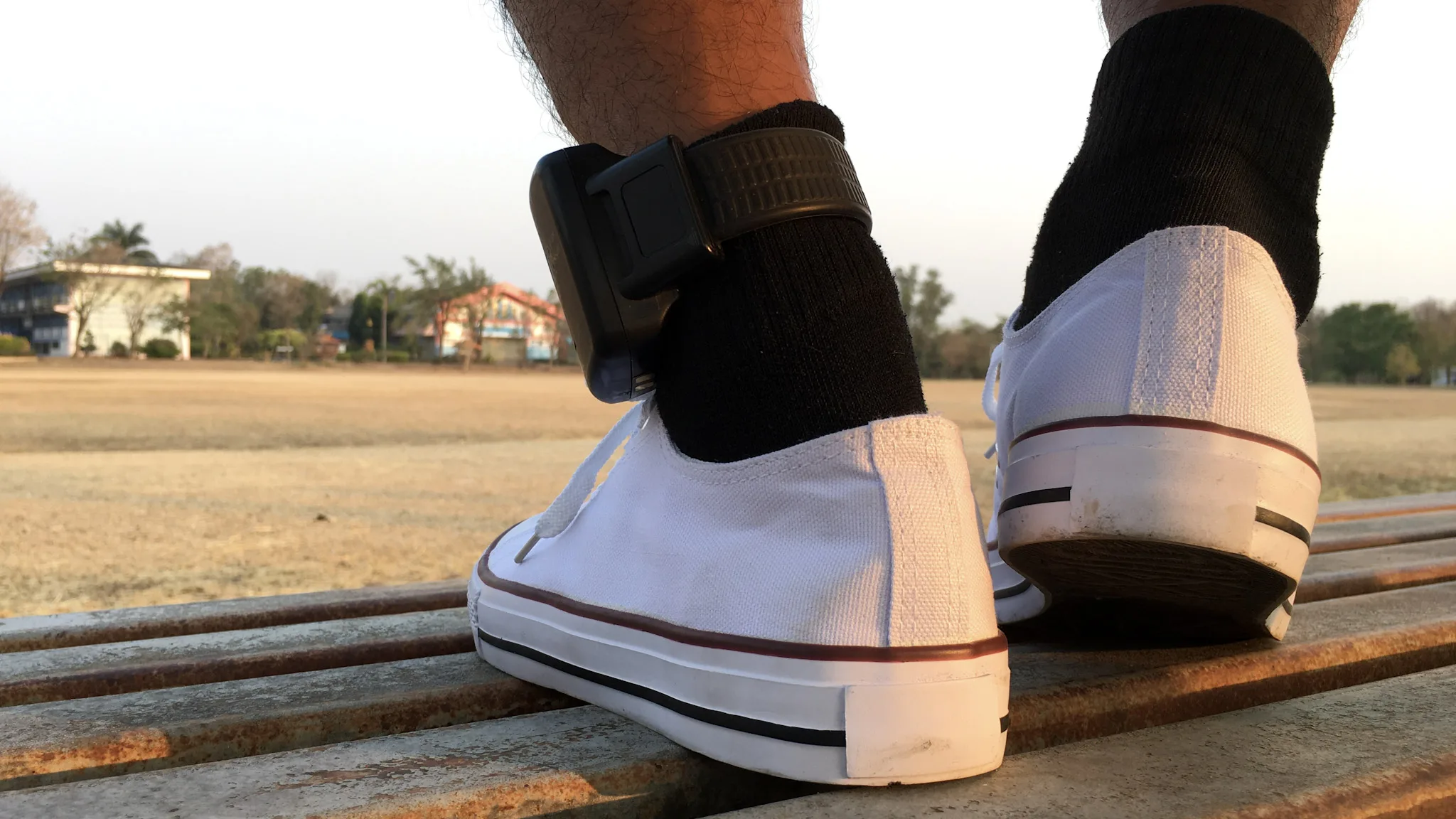
Months later, in March of this year during his first check-in, U.S. Immigration and Customs Enforcement (ICE) placed an ankle monitor on Diallo, his lawyer, Brian R. Duggan, told Documented.

When Documented spoke with Diallo, he was short with his answers and couldn’t explain why he was under surveillance. He said ICE officers placed the ankle monitor on him during his appointment without giving any explanation. He does not speak English.
“I want this bracelet to be removed because that’s what will make me feel at ease,” Diallo said in French. “I’m currently looking for work, and honestly, I don’t feel comfortable with this bracelet.”
Diallo’s case is one of thousands. Since June, the Trump administration has ordered ICE staff to increase the use of ankle monitors in its Alternatives to Detention program (ATD), a program the agency uses to oversee tens of thousands of immigrants and asylum seekers. In an internal memo, first reported by The Washington Post, ICE instructed personnel to place GPS-enabled devices on participants “whenever possible.”
Launched in 2004 and run by a private contractor, the program monitors people who have been released from detention but who are still awaiting their immigration court hearings.
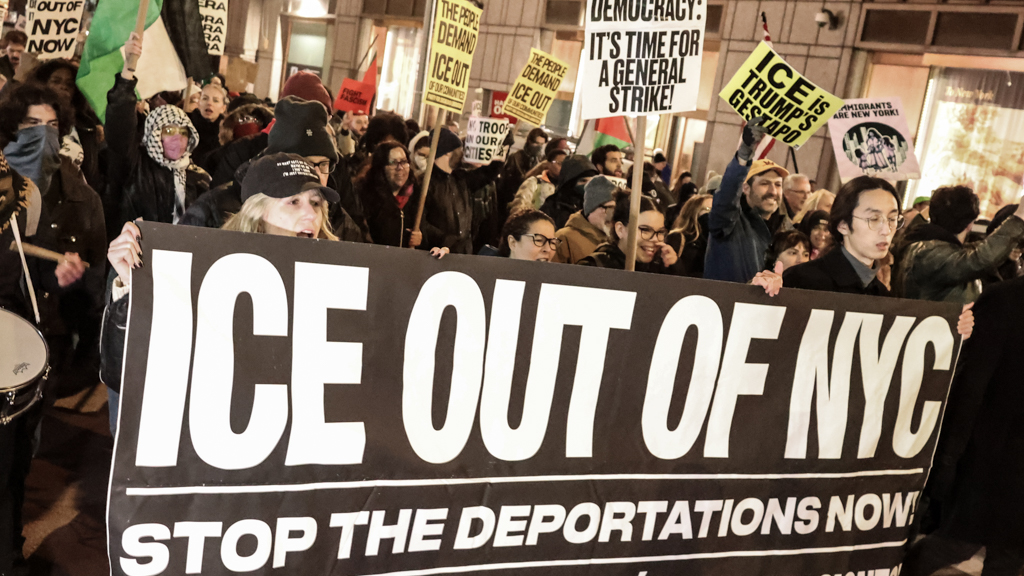
Also Read: ‘ICE Out of NY’: Dozens Arrested at Federal Plaza as Fight Over ICE Escalates
For advocates, the bigger issue with this kind of ubiquitous surveillance is the sheer lack of rules. Unlike traditional forms of supervision, there are no established standards for when and how these devices should be used, how long immigrants can be monitored or what data ICE can collect or share. As a result, lawyers say the system operates entirely on agency discretion, leaving people like Diallo under digital surveillance for months without clear ways to challenge it.
Eight months have passed, and Diallo still lives in New York under electronic surveillance. He remains in removal proceedings and could face years of uncertainty before his asylum case is resolved. In the meantime, he must wear the ankle monitor and must report to ICE every two to three weeks.
“Unfortunately, ICE ramping up surveillance and monitoring of immigrants is a nationwide trend and there are very little protections or limits to any of these practices,” said Jodi Ziesemer, co-director of the Immigrant Protection Unit at the New York Legal Assistance Group.
Immigration lawyer Malak Shalabi said the devices are being applied indiscriminately to mothers, pregnant women, and people without criminal records. “We’ve seen individuals with no criminal history who’ve had these devices,” she said. “There’s no set law or policy.”
As part of ICE’s Alternative to Detention (ATD) system, many immigrants are placed in the Intensive Supervision Appearance Program (ISAP), a subprogram within ATD. It’s mainly used for people ICE considers a higher flight risk or who have pending asylum or removal cases but are still allowed to live in the community.
The program relies on several forms of surveillance. They are required to wear GPS ankle or wrist monitors that track their movements in real time. Others are enrolled in the SmartLINK mobile app, which relies on facial recognition, voice ID and GPS to confirm a person’s location during check-ins. Telephonic reporting remains another option, which uses a person’s voiceprint to confirm identity during scheduled calls.
As of last October, ICE reported that roughly 7.6 million immigrants were on its non-detained docket, with more than 179,000 of them enrolled in the ATD-ISAP program. And as of Aug. 9, 2025, 182,617 people nationwide were enrolled in the Intensive Supervision Appearance Program, or ISAP, including 11,799 in New York. Of those, 1,866 wore ankle monitors and 9,413 used the SmartLINK app.
As of Sept. 21, ICE held about 60,000 people in detention. On September 8, 2024, the detention population was around 37,000.
Pain and Stigma
For immigrants, the devices are heavy, both physically and emotionally.
“The GPS monitor is one of the tools that ICE uses for the compliance factor of people entering without status and still seeking humanitarian relief,” said Shalabi.
She says her clients describe swelling, scratching and permanent scarring as a result of wearing the monitors. Requests to ICE for removal have often gone unanswered. “A lot of these emails or these requests or these letters kind of go into a black hole because ICE is so at capacity,” Shalabi said. “There’s no communication or recourse for these people at New York’s 26 Federal Plaza immigration court.”
The stigma of having to wear an ankle or wrist monitor is another yet another weight. Clients describe the bulky devices, often visible under clothing, as a constant reminder that their life is in limbo.
Also Read: With ICE Detentions Rising, Immigrant Orgs Are Learning to Adapt
“It’s very dehumanizing for a lot of our clients,” Shalabi said. “They don’t have criminal histories. They’re complying with the lawful process of applying for humanitarian relief or protection here.”
Ziesemer noted that race and gender disparities also shape the enforcement. “Men are much more likely to be taken into custody than women. Indigenous and Black immigrants are far more likely to have a higher level of surveillance than non-BIPOC immigrants,” she said.
Technology, Contracts and Costs
ICE says that monitoring someone through ISAP costs less than $4.20 a day, though the American Lawyers Association places the figure closer to $8. Federal spending on the program continues to rise. The American Immigration Council reported that funding reached $470 million in the 2024 fiscal year, up from $443 million the previous year.
A significant portion of that money is allocated to private companies. The Colorado-based BI Incorporated, a subsidiary of the GEO Group, holds the dominant contract for ISAP.
Advocacy groups argue that this creates financial incentives to maintain high enrollment, regardless of individual need.
“Private companies that provide the GPS ankle monitors and other surveillance technology just received lucrative government contracts,” Ziesemer said.
The surveillance also extends to data. Recently The Guardian reported that ICE stores data collected through the ISAP program for up to 75 years. ICE has also partnered with Palantir Technologies to build a new artificial intelligence system called ImmigrationOS, a $30 million dollar contract set for delivery by Sept. 25, 2025.
The platform will enable ICE to identify, track, and deport noncitizens by accessing data from multiple federal sources, including passport records, Social Security files, IRS data, and license plate readers, regardless of the accuracy of this data.
Officials say it will prioritize visa overstays and people labeled as violent criminals, though the standards for those categories remain unclear.
Years in Limbo
For immigrants like Diallo, the expansion of surveillance translates into years of waiting under watch. His asylum case could take years to resolve, as hearings continue to be delayed and appeals drag on. In the meantime, he must report regularly to ICE, wearing an ankle monitor.
Duggan, his lawyer, wrote to ICE in May, urging officials to ease Diallo’s conditions of supervision. In his letter, he noted that Diallo had fully complied with his check-in requirements and posed no flight risk. As a result, while ICE has not yet removed the device, Duggan says they replaced it with a different model, which agents described as a more “comfortable” version. For Duggan, the distinction is meaningless.
“The mere presence of the electronic bracelet is a barrier to employment,” he said.
Duggan described the process as painfully slow, saying that hearings are often scheduled years in advance and appeals processes could potentially drag that on even longer.
“I personally feel it’s unjust,” Duggan said, “but I’m committed to help him as much as I can.”