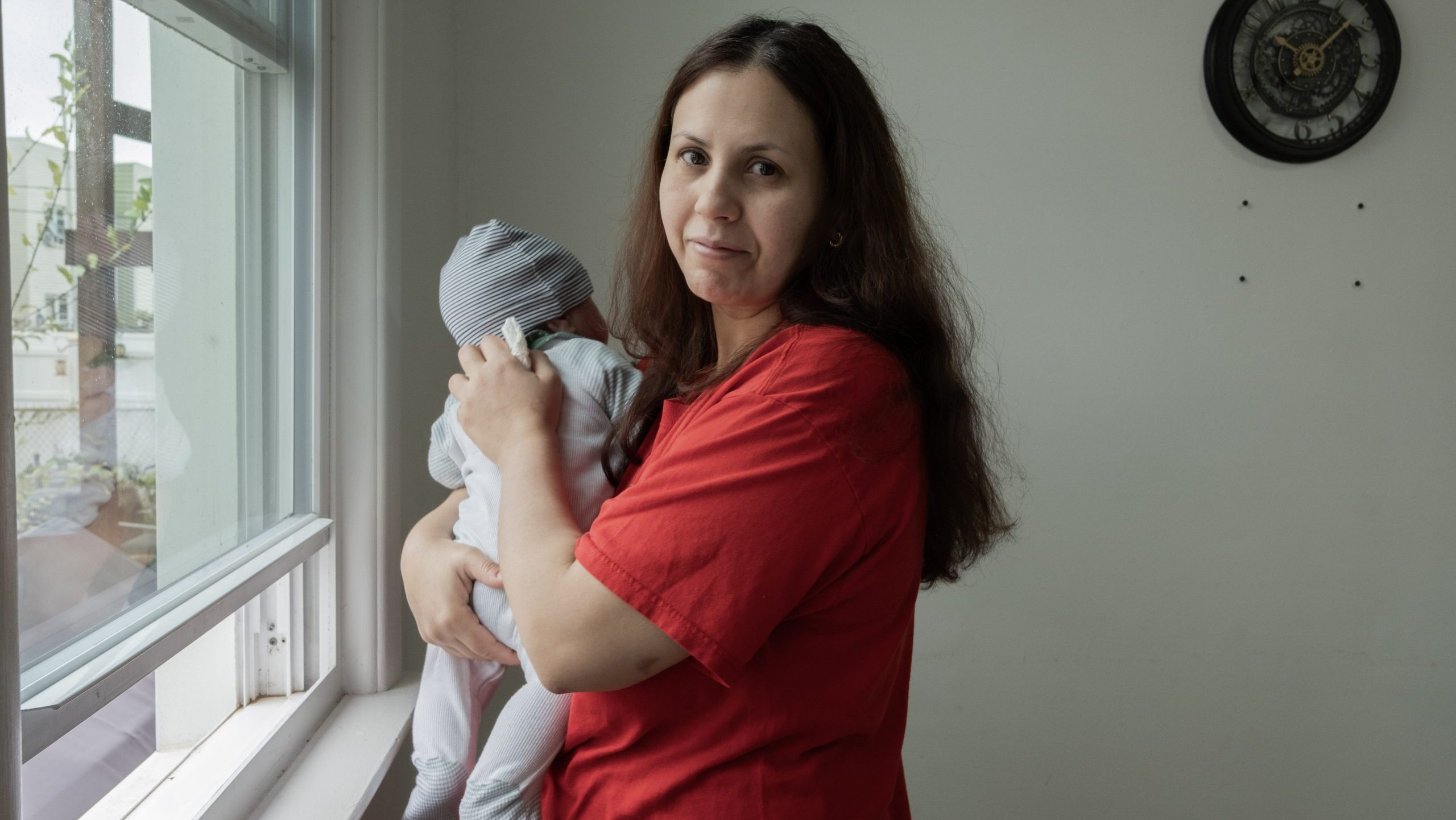


It was December 2024, and Libyan immigrant Hayat Bzezi, 42, was working vigorously at Amazon’s sprawling Staten Island warehouse to keep up with the seemingly endless stream of packages flowing down the conveyor belt that she had to stack and prepare to ship. The holiday season is the busiest time of year for Amazon workers, where workers are required to provide Mandatory Extra Time (MET), adding an additional full 10-hour shift to their weekly schedules.
Three months pregnant, Hayat struggled to keep up with the arduous pace as she lifted the heavy boxes. After several hours of vigorous work, she felt a familiar pain in her protruding belly.
“I ignored my pain because I was afraid to lose my job,” she told Documented. “But the pain got worse.” When she got home, Hayat began to bleed and her pain became excruciating; she urged her husband, Wajdy, 49, to drive her to the hospital.

“It really hurt bad,” she said. “I needed to see the doctor.”
At the hospital, she learned that she had miscarried and had to undergo a surgical procedure to remove the remaining fetal tissue in her uterus.
It was Hayat’s second miscarriage in five months while working at Amazon. Hayat’s first miscarriage occurred in June 2024, early on in her pregnancy, but she continued to work at Amazon.
Her husband, Wajdy, who also works at the same Amazon facility, told Documented that they informed management about both pregnancies and requested that she receive lighter duty. Although he claims that management initially agreed to allow his wife to perform her work sitting down, Wajdy alleges that once her shift began, she was denied a chair.
“My wife, she was pregnant, and she really does hard work,” he said. “We told them that she can’t walk, but when she went inside the building, they didn’t honor her accommodations.”Initially afraid to confront management after the second miscarriage, Wajdy decided to speak to the media about what he believes is Amazon’s disregard for its pregnant employees’ reproductive health.
“When we lost the first baby, we swallowed it, but not again,” he said. “We have to stand up and say something.”
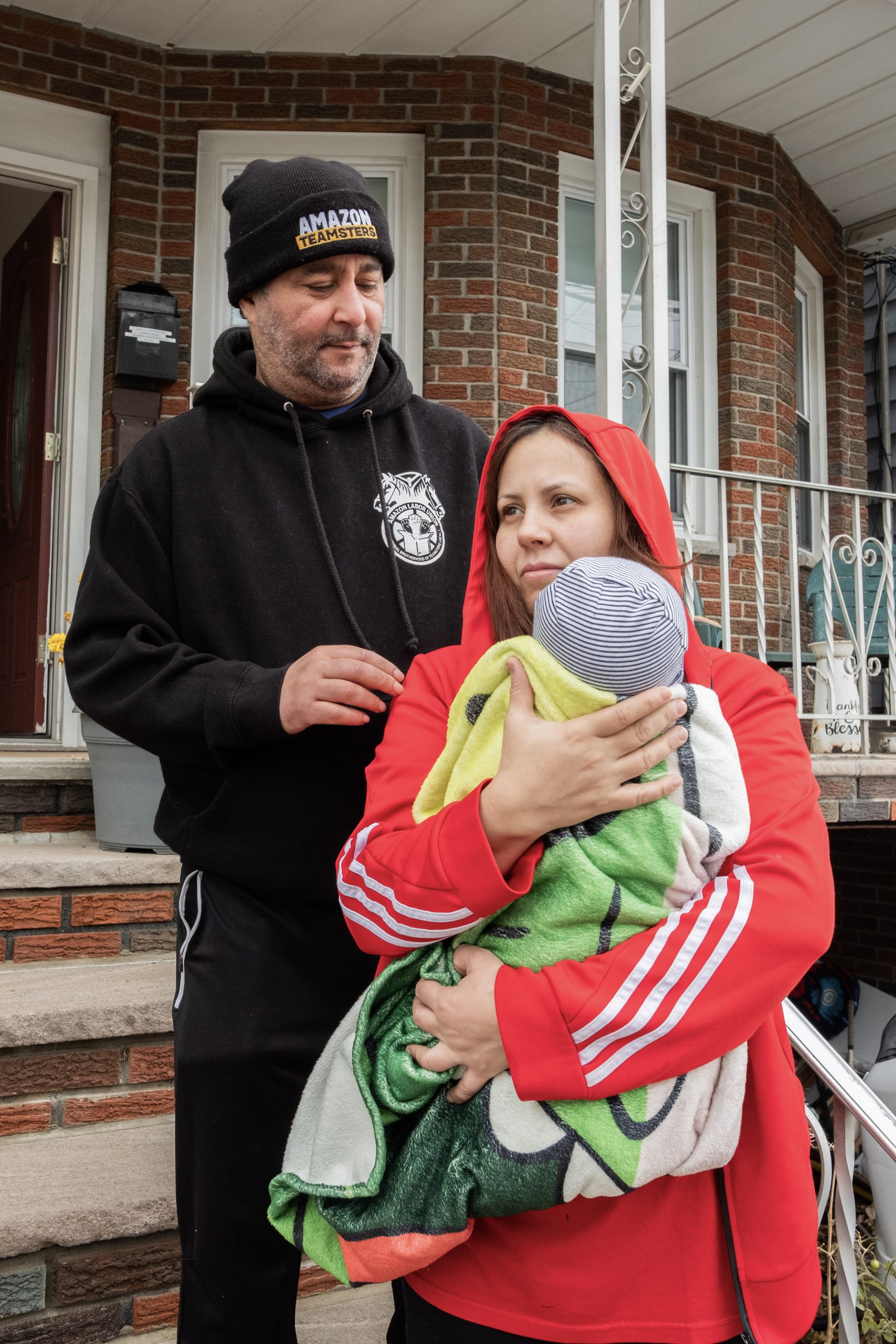
The Bzezi’s experience is one of a collection of stories collected by the Expose Amazon Campaign, which alleges that the world’s largest online retailer is systematically violating the federal Pregnant Workers Fairness Act. The campaign, which launched in July 2024, has spoken with 450 Amazon workers across 35 states. Many of those conversations were with women who claimed to have miscarried while on the job or were denied pregnancy accommodations, like Genesis, who was written up in 2024 for taking an unauthorized break that got her fired from a Southern California Amazon facility.
“From all the stories we are collecting, we are seeing systematic violations of that law,” said Chloe Sigal, the campaign’s senior organizer. “People’s rights are being violated and laws are being broken.”
First passed in 2022 and taking effect in 2023, the Pregnant Workers Fairness Act requires employers with 15 or more workers to provide reasonable accommodations for pregnant employees. Those accommodations include providing the workers with a chair to sit on, additional breaks, and allowing time off. Workers do not need a doctor’s note saying they are pregnant; they only need to inform their employer of their need for accommodations, and it must be provided for them.
“Employers are supposed to make accommodations for pregnant workers without unreasonable delays,” said Sigal. “As soon as someone says they’re pregnant, Amazon is supposed to say you’re allowed to go to the bathroom as needed, take breaks as needed, and have a chair at your station. All of that without needing a doctor’s note. That’s the law.”
However, Sigal alleges that the company has continued to violate federal law.
“What we call it is a de facto denial policy,” she said. “What we are seeing is that people are reporting that their accommodation requests are not being approved for weeks, months, or the course of their entire pregnancy in some cases. But during that time, workers are still subject to the extreme surveillance and disciplinary systems Amazon has.”
According to Kelly Nantel, an Amazon spokesperson, the company doesn’t tolerate discrimination or retaliation in its workplaces, and employees are free to take informal breaks throughout their shifts to use the restroom, drink water, or talk to a manager or HR.
Regarding bathroom breaks specifically, the company’s demanding workload, which tracks workers throughout the shift, has led to reports of workers skipping bathroom breaks altogether to keep up.
Nantel told Documented via email that Amazon had no record of Hayat filing for accommodations.
“We’re concerned to hear about this employee’s experience, and take these matters very seriously,” she said. “After a comprehensive review of her personnel file, our team didn’t find a record of accommodation requests for her in 2023 or 2024. We’re committed to providing a fair, consistent, and comprehensive accommodations process, and we work to ensure all reasonable requests are reviewed and addressed in accordance with all federal and local laws.”
The Pregnant Workers Fairness Act only requires that a qualified worker verbally express a need for accommodation. Amazon’s claim to have no record of Hayat making an accommodation request is not surprising, given that Hayat made a verbal request to her supervisor during her first pregnancy. However, during her subsequent pregnancy, Hayat did file an official accommodation request with Amazon that she shared with Documented, showing that she provided the company with a note from her physician stating that she had a “high-risk pregnancy.” Despite filing an accommodation request, Hayat claims her manager continued to assign manually laborious work duties that exerted her.
The company has a complex and rigid internal accommodation process with multiple steps workers must perform, which has been described by New Jersey Attorney General Matthew Platkin as “byzantine”. Workers who require accommodations must file one with the company’s “Disability and Leave Services” either online or over the phone.
Although federal laws don’t require a pregnant worker to submit paperwork such as a doctor’s note to prove they are pregnant, the New Jersey Attorney General found that Amazon’s internal accommodation process does ask for medical documentation.
In response to allegations that Amazon is violating the rights of its pregnant employees, on Oct. 22, the New Jersey Attorney General’s office and the New Jersey Division on Civil Rights issued a complaint in New Jersey Superior Court alleging that Amazon is systematically violating the state’s civil laws by violating the rights of its pregnant employees and disabled employees.
The complaint alleges that Amazon is failing to honor pregnant workers’ accommodation requests like the Bzezis, and also places pregnant workers, as well as workers with disabilities, on unpaid leave when they request accommodations. It is also alleged that the company retaliates against workers if they seek accommodations, such as firing them, and also refuses or delays accommodation requests by workers.
“Put simply, Amazon has exploited pregnant workers and workers with disabilities in its New Jersey warehouses. In building a trillion-dollar business, Amazon has flagrantly violated their rights and ignored their well-being. At the same time, it continues to profit off their labor,” said Attorney General Platkin in a statement on Oct.22. “There is no excuse for Amazon’s shameful treatment of pregnant workers and workers with disabilities.”
Also Read: Comptroller’s ‘Wall of Shame’ Dashboard Reveals NYC’s Top Labor Violators for 2024
It’s not the first time Amazon has been found to violate the rights of pregnant women.
The New York State Division of Human Rights filed its own complaint against Amazon in 2022. Like the New Jersey complaint, the New York complaint alleges that Amazon, which operates 23 facilities and employs over 39,000 workers across the state, engages in the “discriminatory” practice of denying pregnant workers and workers with disabilities reasonable accommodations. The outcome of the case is still pending.
Worker safety at Amazon has long been of concern to federal officials. In 2023, the Occupational Safety and Health Administration (OSHA) found that Amazon exposed workers at six locations across the country, including a warehouse in upstate New York, to a high risk of “low back injuries and other musculoskeletal disorders”.
A 2024 United States Senate Committee on Health, Education, Labor, and Pensions report found that Amazon manipulates its workplace injury data to portray its warehouses as safer than
they actually are. The report found that Amazon warehouses recorded over 30% more injuries in 2023 than the warehousing industry average. The company’s emphasis on speed and efficiency, the report found, is the cause of high injury rates among workers.
Amazon spokesman Nantel refutes the allegations made in both New Jersey and New York complaints, insisting that in 2022 alone, the company processed more than 72,500 pregnancy accommodation requests in the U.S, with the current approval rate for pregnancy accommodation requests higher than 99%. Nantel also states that the company offers up to 20 weeks of fully paid leave for eligible birthing parents.
“The claims that we don’t follow federal and state laws like the Pregnant Workers Fairness Act or the NJ Law Against Discrimination are simply not true,” she said. “Ensuring the health and well-being of our employees is our top priority, and we’re committed to providing a safe and supportive environment for everyone.”
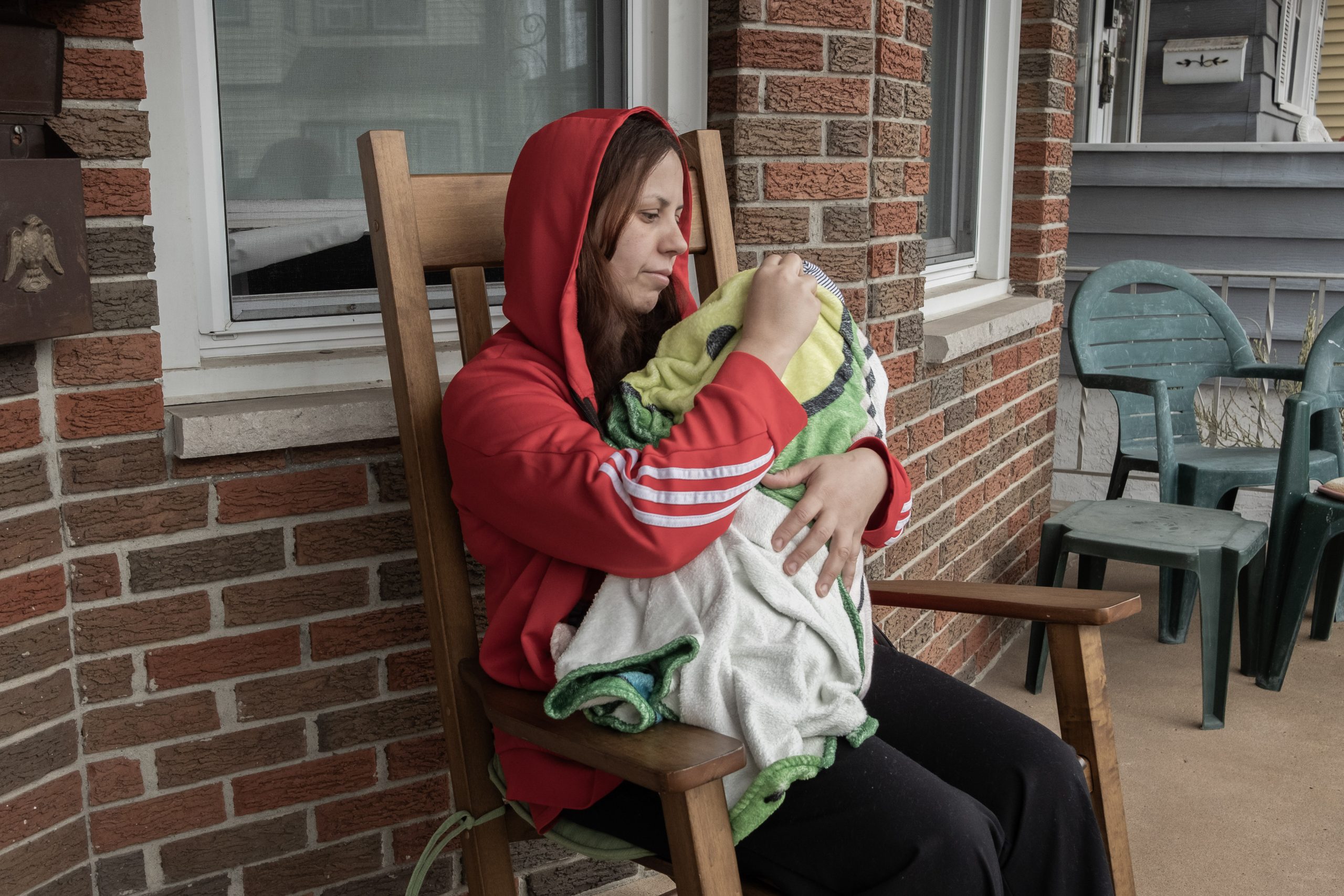
On Aug. 19, 2025, after two miscarriages, Hayat gave birth to a baby boy. They named him Hady, which means “guide” in Arabic. Despite being born premature by two months, Hady is healthy.
Since Hayat gave birth to Hady, she has been on extended leave from work and says that she does not want to return. Although she has endured a lot of hardship in her life — even fleeing Libya amid a civil war — her husband, Wajdy, says that her time at Amazon has left her fearful of returning to work.
“Hayat, she has trauma; she will never go back to Amazon.”
A relatively shy and soft-spoken person who is not inclined to draw attention to herself, Hayat was determined to tell her story so that others don’t go through what she has.
“I want change,” she said. “We don’t feel free.”
Correction: An earlier version of this piece stated that Hayat quit her position at Amazon the same month that she gave birth. This was incorrect. Since Hayat gave birth, she has been on extended leave and does not plan to return to work at Amazon. Additionally, this piece originally stated that Hayat only made a verbal request for accommodations to her supervisor. However, while Hayat did make a verbal request for accommodations for the first pregnancy, during her second pregnancy, she requested accommodations through Amazon’s official accommodation process. The story has been updated to reflect these changes.