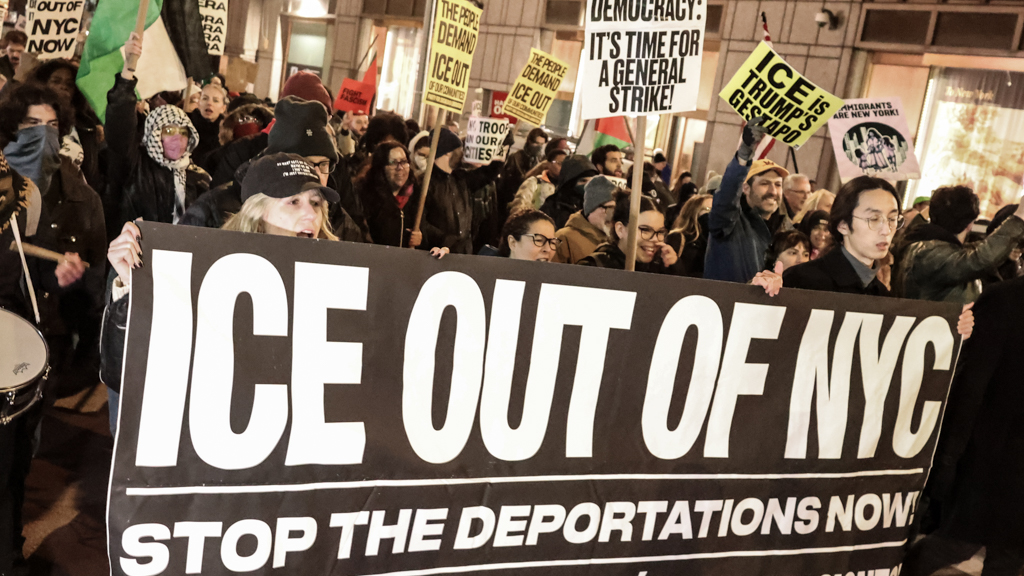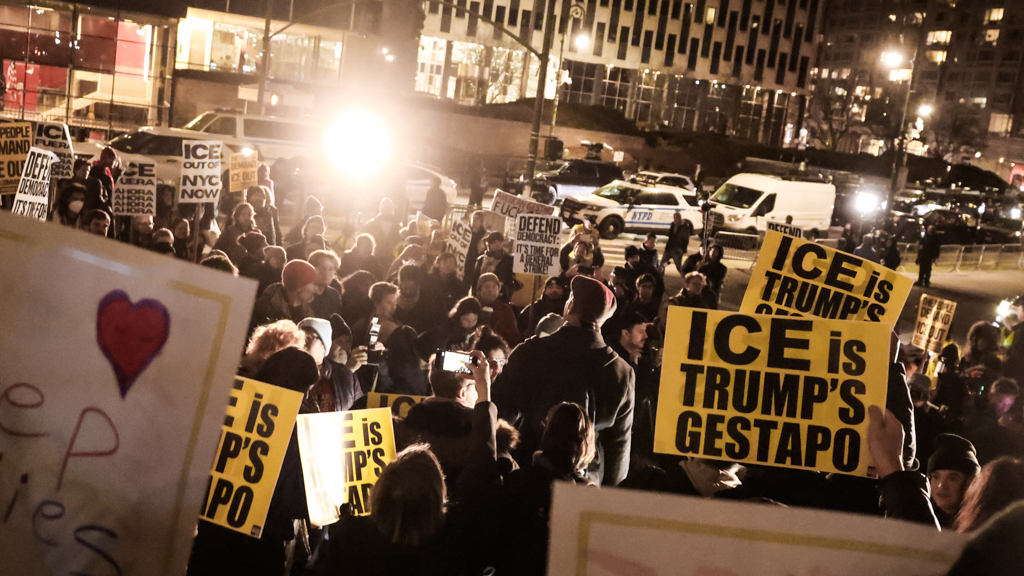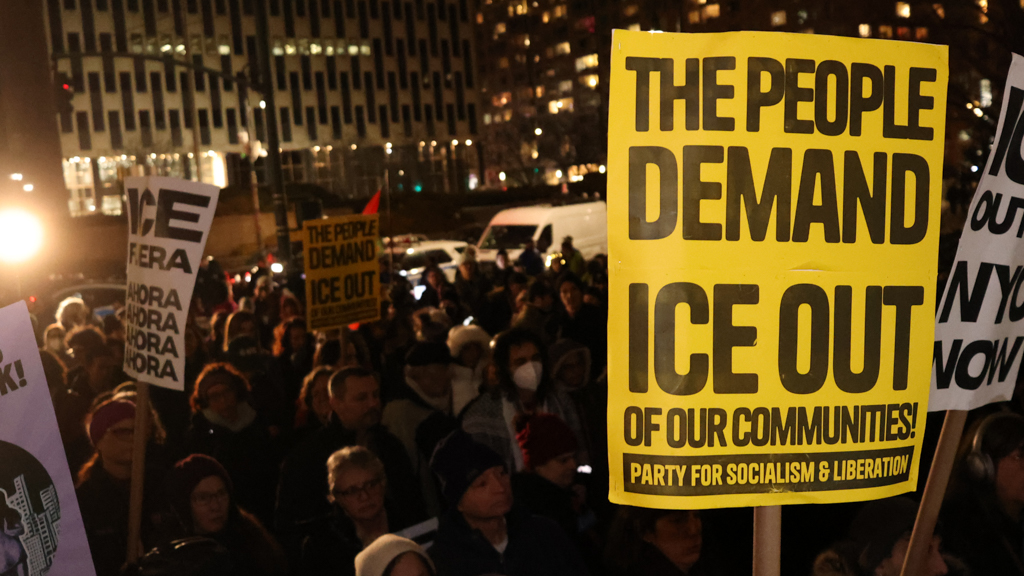


A Queens-based building management company posted a sign in its lobby encouraging tenants to report immigrants to ICE. Sunnyside tenants reported being threatened with deportation simply for asking for repairs. A scared tenant in the Bronx refused to go to housing court because his landlord said ICE would be there.
These are just a few examples of how landlords in New York City are allegedly using the threat of arrests by Immigration and Customs Enforcement (ICE) to harass immigrants living in housing developments across the boroughs, according to organizations and elected officials who testified at a joint oversight hearing of the City Council committees on Housing and Immigration on Monday.
It is illegal to retaliate against any New Yorker for reporting housing issues, but advocates say immigration enforcement is regularly used against immigrant tenants who report landlords for bad conditions — and often discourages any reporting of such issues in the first place.

Now, some City Council members are looking to make permanent a city pilot program that expands the list of buildings where landlords would be required to be investigated to see whether they had participated in tenant harassment by the department of Housing Preservation and Development (HPD) before obtaining permits for certain construction projects and building alterations. In addition, officials are exploring other proactive measures the city can take to protect immigrant tenants.
“For every documented case, there are many more that go unreported,”
—City Councilmember Pierina Ana Sanchez
“It is important to remember that for every documented case, there are many more that go unreported,” said Pierina Ana Sanchez, who represents neighborhoods in the Bronx and is chair of the committee on Housing. Sanchez led the meeting alongside immigration committee chair Elsie Encarnacion, who represents communities in the South Bronx and East Harlem. “In a city of three million immigrants, where 60 percent of households are home to at least one immigrant, and a significant percentage of undocumented persons, it is our sanctuary city’s responsibility to respond.”
Rights and protections
Landlords cannot evict someone because of their immigration status and cannot refuse to rent to someone because of their immigration status, according to Monday’s committee report. Rent stabilization laws also apply to all tenants who live in qualifying apartments regardless of their immigration status, and the report also makes clear that it is illegal for landlords to retaliate against tenants who report discriminatory behavior.
However, multiple organizations and individuals on Monday stressed that the threat of immigration enforcement often keeps tenants from reporting issues or looking for help.
One representative at the Legal Aid Society’s housing justice unit pointed to three different examples of threats they have seen wielded against immigrant clients.
In one example, tenants in a Manhattan building have lived without heat or hot water for a full decade because the landlord told them that any complaint would result in their removal by ICE.
In another case, a Bronx landlord attempted to dismantle a tenant association by threatening to call ICE on residents for meeting in the lobby. Also in the Bronx, a landlord filed a false criminal complaint with ICE against a family with minor children and “left copies on the family’s doorstep to terrorize them,” they testified.
“These are not isolated incidents,” said Sebastian Perez, a staff attorney at the Legal Aid Society. “They are everyday reality for immigrant tenants, because an ultimate legal finding of harassment is notoriously difficult to secure and often requires years of litigation.”
One answer, argued Sanchez and Councilmember Encarnacion, is to make permanent a new expansion of the city’s Certification of No Harassment Program (CONH).
From pilot program to permanent policy?
CONH was created in the 1980s and required landlords to apply for a CONH if they were to try to convert single-room occupancy housing into another kind of property — disincentivizing landlords from forcefully expelling tenants in order to renovate. That meant that landlords had to prove they had not harassed tenants before making alterations to the property.
The law was expanded in 2018 with the launch of a pilot program that both broadened the types of buildings which were included in the CONH policy — and what they would need such a certificate for.
Among other features, these new parameters included buildings with six or more units in “significant distress”, buildings where a court determined harassment had occurred, or ones which had a full vacate order between 2016 and 2021.
Also Read: Mamdani’s First ‘Rental Ripoff’ Hearing Brings Hope and Skepticism
As of February, over 1,500 buildings were on the CONH pilot list, and nearly 5 percent had been subject to a finding of harassment.
However, there is more work to be done, Encarnacion told Documented.
Making immigrants feel safe in reporting issues to the government is key, she stressed — whether through trusted community members, advocates, or directly with the government — so city leadership can prove the breadth of what immigrant communities already know as a “hidden truth.”
And while testimony by HPD, the Mayor’s Office of Immigrant Affairs (MOIA) and others expressed support of the CONH program and other ways the departments execute immigrant outreach, Encarnacion said the efforts thus far have not been enough.
“How are these buildings falling through the cracks?” she asked. “I want to know, because if it’s a matter of funding and more resources, this is the time for us to uncover that.”