

W. L. was scrolling through his Facebook feed last Thursday morning when he saw a post claiming to be from the aid group Catholic Charities, offering free legal immigration services. “I got excited thinking it was real,” the 56-year-old Ecuadorian asylum seeker told Documented in Spanish.
He thought the post could come in handy because he has a pending asylum case and needs legal assistance to obtain an Employment Authorization Document (EAD), which he has been unable to file for more than a year. He clicked on the banner and was connected to a WhatsApp profile that sent him an automated message in Spanish: “Your case has been expeditiously assigned to one of our specialists.”
“I had a brief moment of relief that at least they would get the work permit clock to run,” W. L. said.

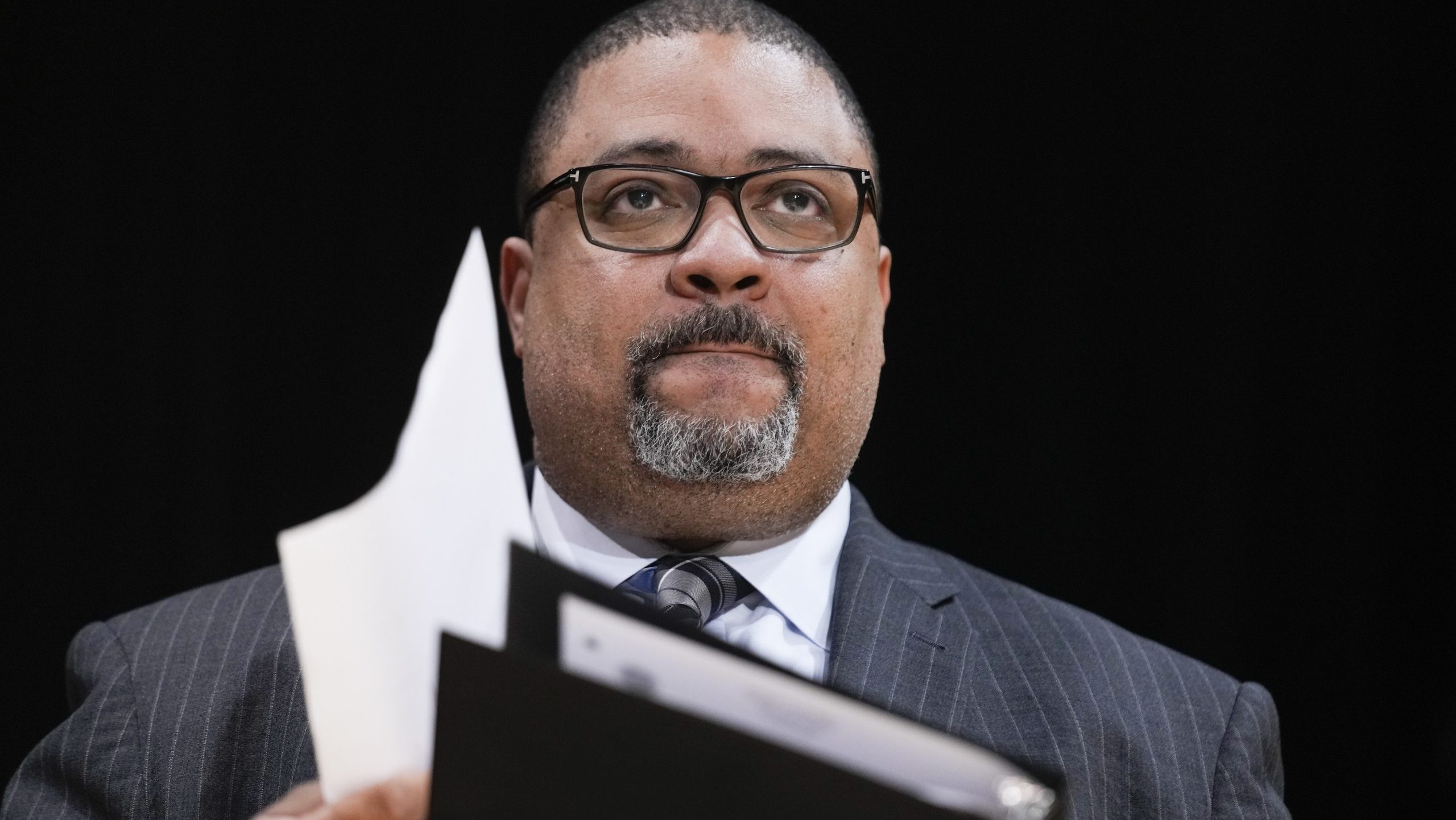
However, what he thought was a real account turned out to be part of a recent trend of profiles online pretending to be prominent pro bono organizations. These imposters have proliferated across Facebook and WhatsApp, which are owned by the company Meta, and specifically target immigrants seeking legal services, according to Manhattan District Attorney Alvin Bragg.
Earlier this month, Bragg’s office sent a letter to Meta chief executive officer Mark Zuckerberg urging better guardrails to protect users from predatory behaviors on the platform. Advocates have said this is a problem that Meta has failed to address — especially amid a high need for immigration services. In a statement to Documented, Bragg’s office said it receives reports from New Yorkers at least once a month of impersonators on Facebook promising legal services for immigrants, and received three reports in a single day recently.
“Last year we started to get reports of this, and obviously it’s deeply concerning to us,” Kevin Brennan, vice president of communications at Catholic Charities USA, told Documented. “Catholic Charities exist to serve people in need and it’s heartbreaking for us to see some of the same people in need being taken advantage of and scammed by bad actors obviously online.”
On its website, the agency warned of impersonators “asking victims to provide personal information and collecting fees to ‘enroll’ in non-existent immigration legal programs,” and emphasized contacting the local Catholic Charities agencies to inquire about legitimate services.
W. L., who asked to be identified by his initials due to privacy concerns, said the WhatsApp account he was directed to had the logo of Catholic Charities, a recognizable national network of agencies that provides services to millions of people each year, including legal services. “I shared with them when I had entered through the border, and then they asked me for my complete name,” he said.
“But I am always cautious because you can never fully trust what you see in social media,” he added. Moments later, he received a message from a new number that introduced himself as a lawyer working for an accredited law firm in Texas. However, Documented found that the name is not listed in the directory of the law firm, nor did his credentials show up online.
The person told W. L. that they would do the intake first and then see if he would qualify for pro bono help from Catholic Charities. W. L., who had already shared his name and A-number at the start of the conversation, mentioned that he lived in New Jersey and that he wanted to see a lawyer in the area, but the person persisted, asking W. L. for a photo of his passport, email address, zip code and home address. W. L. told them that he did not have access to the passport until later when he got home.
“It was a red alert,” W. L. said. Growing more cautious at the urgency of the person, he stopped replying. The supposed lawyer called and continued to ask W.L. for a phone call, he said.
In the letter sent to Meta, Bragg emphasized that the problem of impersonators taking advantage of immigrants is not confined just to New York City, but that it is happening nationwide. “Catholic Charities of Baltimore, Catholic Charities of Greater Houston, and Catholic Charities of Trenton have all posted fraud alerts on their Facebook pages warning about this criminal activity,” the letter said.
Bragg asked the tech giant to build tools that would allow agencies like the D.A. ‘s office to report imposter accounts engaged in criminal conduct directly to Meta, as well as to strengthen verification so that users claiming to represent organizations match their actual geographic location.
“We are seeing a growing number of New Yorkers being scammed by fake attorneys on Meta’s platforms. This specific scam preys on the perceived vulnerability of immigrants looking for legal assistance. We hope to collaborate to develop a comprehensive approach to protect Meta’s users from fraud,” Bragg said in a press release.
Murad Awawdeh, president and CEO of the New York Immigration Coalition, said in a press release that scammers are increasingly preying on immigrants who seek legal assistance online.
Also read: Fake Immigration Courts Take Advantage of Immigrants Desperate for Answers
“Meta is allowing deception and abuse to continue on its platforms, and in this way, it aids scammers who cheat vulnerable and often desperate immigrant New Yorkers,” Awawdeh said in a statement. “Meta and other social media platforms must do more to take responsibility and protect users from exploitation, shut down impersonation scammers, and strengthen safeguards on social media platforms.”
Bragg’s office told Documented that since the letter was sent, the district attorney’s office has met with Meta and that they have started to remove imposter accounts from their platforms.
In a statement to Documented, a Meta spokesperson declined to answer specifics about scams targeting immigrants, but said the company has been working with government and law enforcement to root out imposters. “Account impersonation violates our policies, and we take action against people and groups that attempt to misuse our platforms,” the spokesperson said, adding that the company is investing in artificial intelligence tools to identify impersonations.
Brennan, the Catholic Charities spokesperson, said the charity works with a law firm to report impersonating posts and ads to Meta. Beyond taking down posts, Catholic Charities has also increased awareness of the scams through announcements in Spanish and English in their site, as well as flyers distributed in local branches to increase awareness and protection of the scams.
He emphasized that people should be suspicious of individuals overpromising results in complicated processes, like legal immigration assistance. “Asking for money quickly and aggressively should be a red flag,” Brennan said, adding that the majority of services provided by Catholic Charities are free of charge.
“If you think you’ve been scammed or someone reached out to you and you suspect it’s a scam, reporting that is helpful,” Brennan said. “Try to have the relevant authorities look into these scams.”
Bragg’s office has also launched a public service announcement (PSA) in Spanish and English that encourages people, regardless of their immigration status, to report workplace violations and immigration fraud.
For W. L., who works at an auto shop in New Jersey, the search for a lawyer continues. “But I guess [my experience] served to alert people about it,” he said, adding that he will visit the nearest Catholic Charities office in person. “I am once again uncertain on how to do things [related to the case],” he said. “I am also a little bit angry because people are always trying to take advantage of the needs of others.”