



Since January 2025, thousands of New Yorkers have been arrested by U.S. Immigration and Customs Enforcement.
People often spend months or even years in detention centers rife with allegations of medical and physical abuse, whether or not they choose to fight their deportation.
As a result, families are often desperate to free their loved ones — and can fall victim to scams. Fraudsters have taken advantage of immigrants, and have sent fake notices of immigration bonds to families promising their loved ones’ freedom, often for a high price.

Here’s how to tell if the U.S. government is truly offering to free your loved one, or if you have been the victim of a scam.
What Is Immigration Bond?
When someone is detained, the federal government may set a bond, or an amount of money a person can pay as collateral to be released from detention. After paying a bond, the person must still return to court for hearings or other mandated check-ins.
How Do You Get It?
If a detained immigrant is eligible for bond, they must request a bond and prove to an immigration judge that they are not a danger to society or a flight risk at a court hearing. They may also request what’s called a writ of Habeas Corpus before a federal judge. ICE can also directly give a person a bond, though it is now less common.
Read our guide on who is eligible for immigration bond, and how to get one in immigration court, here.
Read our guide on how to get bond through a petition of habeas corpus here.
How to Identify a Scam
1. Is the lawyer that contacted you real?
Scammers will often reach out through WhatsApp or Facebook to prospective victims, pretending to be immigration lawyers. This is the first red flag: most lawyers will not reach out over such platforms.
Be aware: Some are using the logos, or assuming the names of well-known attorneys and their organizations, such as Catholic Charities.
Scammers may also ask for personal or financial information including photos of your passport, social security number, or banking data.
Verify a lawyer is real before providing any information. You can attempt to verify if the attorney is real by checking their license.
Read our guide about how to verify lawyers here.
2. Did the detained person attend an immigration bond hearing or federal hearing which determined bond?
Most bonds are issued only after a court hearing where a judge determines whether to grant bond, and the amount of the bond. Real immigration and federal courts only operate during business hours and on weekdays.
3. Did the lawyer who reached out ask you to pay them directly?
Bonds are paid directly to the government, not through a lawyer. If the lawyer asks you to pay them directly, this could be a sign of a scam.
Immigration bonds are also NEVER paid through Venmo, Zelle, Moneygram, or Western Union, according to the Envision Freedom Fund, a New York-based nonprofit and bond fund.
4. Ask for a copy of the judge’s order:
The lawyer should have a copy to share with you. Still, orders shared by fraudsters can be fake. Check the list below for signs an order may be fake.
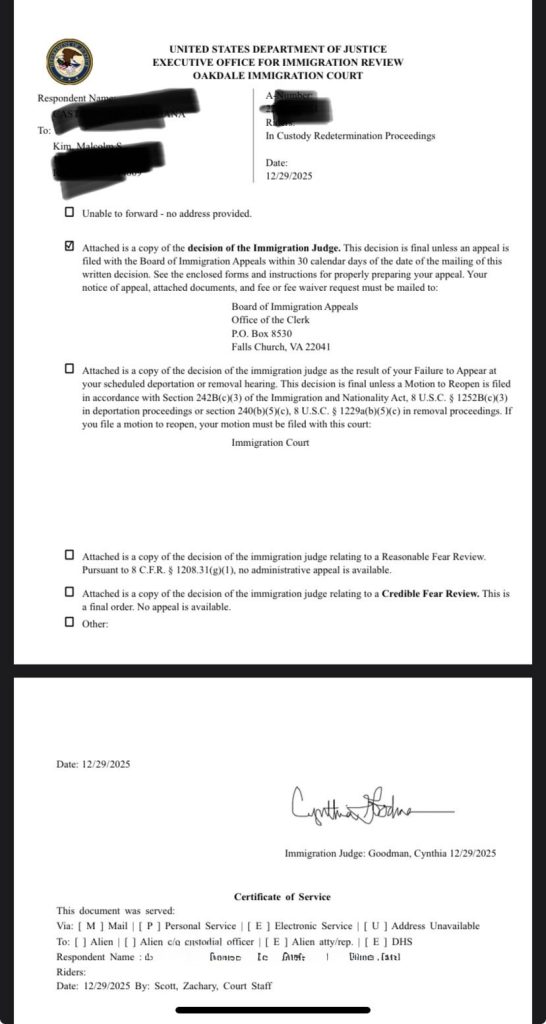
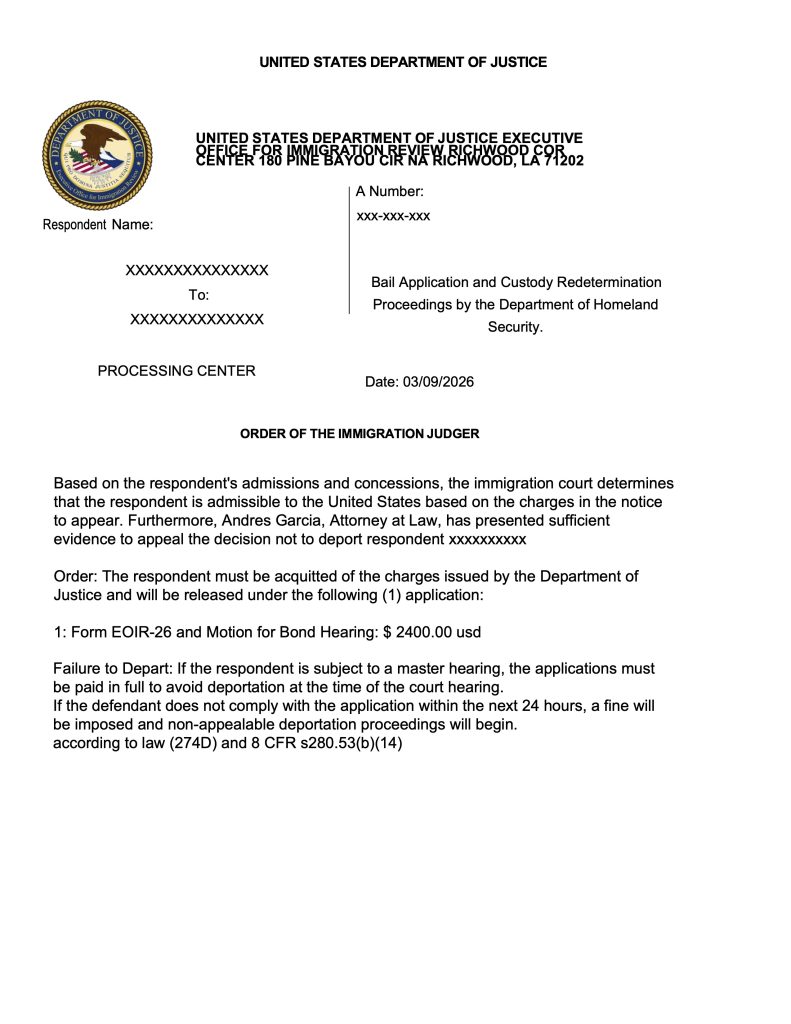
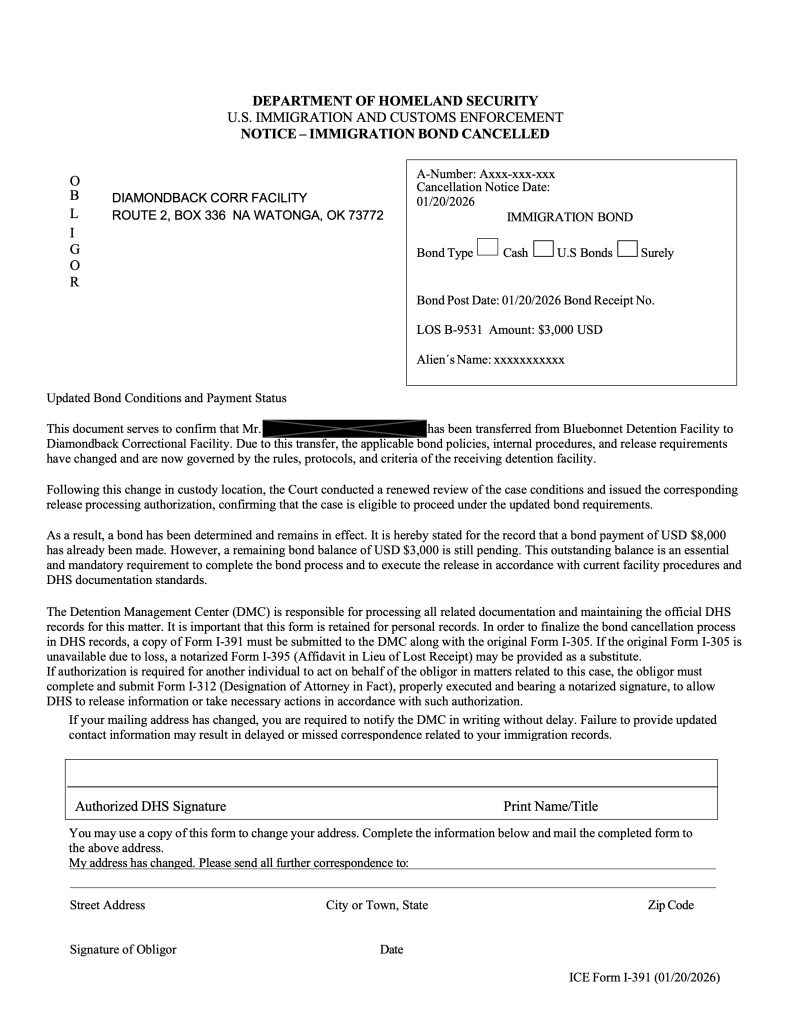
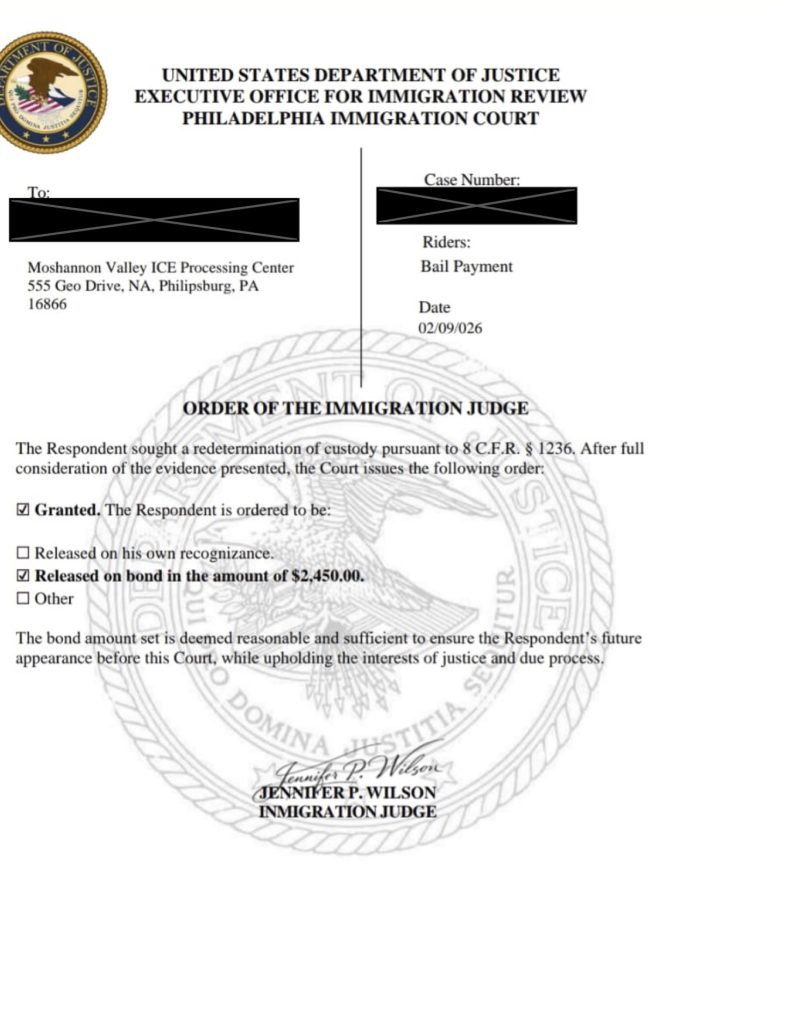
5. Double check the judge’s order. A true judge’s order:
- Is in English
- Has the detained person’s name and A-number, the ID number the U.S. government uses to identify people in immigration proceedings.
- Is signed by an immigration judge
- Will show if the government reserved the right to appeal
- Will show if the immigration attorney reserved the right to appeal
- Will have the name of the ICE field office (ex: New York Field Office)
- Shows a bond amount of at least $1,500, usually in multiples of $500
- Will be on official Executive Office of Immigration Review letterhead
- Will use the word “bond” NOT the word “bail”
Here is an example of true government paperwork:
Here are some examples of fake orders:
How to Confirm the Bond is Real:
One way to find out if a bond is real is to reach out to try to pay the bond directly to the government. If a bond order is legitimate, it can be paid online or in person.
Both online and in-person payments must be done by someone with legal status. If you don’t have legal status, you must ask a trusted person with legal status or a trusted organization to pay bond on your behalf.
1. Online
To pay a bond online, Create a login and send a bond payment request through CeBONDS portal online at: https://cebonds.ice.gov/. Envision Freedom Fund has a step-by-step guide to CeBONDS here.
You will need the detained person’s A-number, two forms of identification including proof of legal status, and an active email address that you can access. You will also need a physical address, including apartment number, and a phone number.
If the bond status changes from “under review,” to “ICE Review,” to “ready for payment,” the bond is real and you can pay it directly. The process can take a couple of hours to a couple of days, Envision Freedom Fund said.
If the bond is not real, or bond has not been issued, the CeBONDS website will say so, with the reasons why under “Comments,” according to Rosa Santana, co-executive director of Envision Freedom Fund. It is best to send the bond request during business hours, 9 a.m. to 3 p.m., she said.
2. In Person
Before attempting to pay a bond in person, you should first call the local ICE field office to confirm that you can post the bond, according to the ICE website on bond payments. 26 Federal Plaza in Manhattan and the Buffalo Field Office both allow in-person bond payment, Santana said.
Here is a list of ICE ERO Bond Acceptance Facilities, and a list of field offices.
You will need to bring the same documentation with you as needed to post the bond online: the detained person’s A-number and two forms of identification, including proof of legal status. In-person payments may only be made by someone with legal status. If you do not have legal status, there are trusted organizations that can pay bond on your behalf, such as Envision Freedom Fund.


