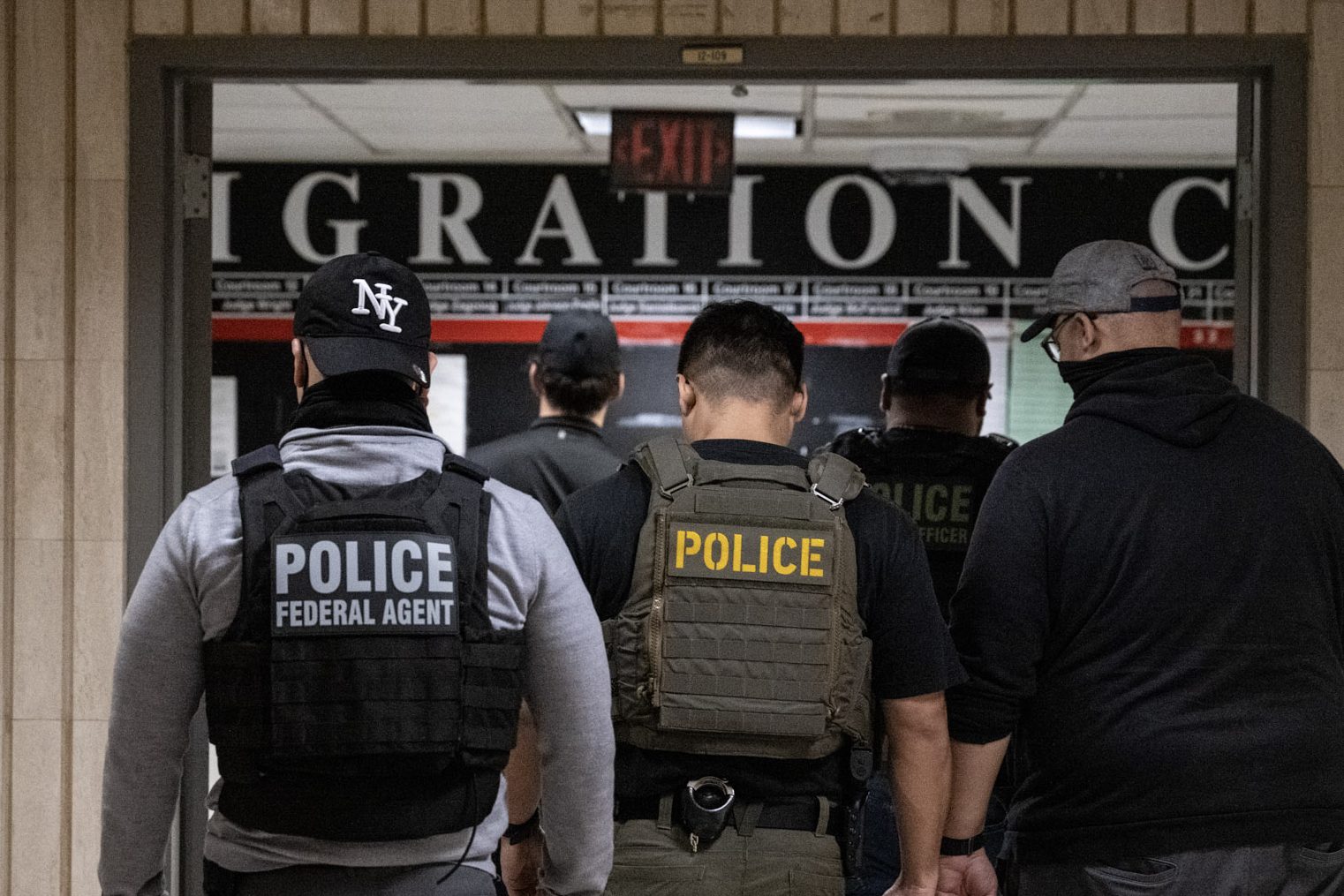


A federal judge on Monday ordered U.S. Immigration and Customs Enforcement to temporarily halt most arrests at 26 Federal Plaza and two other Manhattan immigration courts.
The order, from Judge P. Kevin Castel of the U.S. District Court for the Southern District of New York, is a win for immigration advocates as they continue their lawsuits against ICE. It also comes nearly two months after Trump administration lawyers admitted that they had incorrectly used a May 2025 guidance memo to justify the practice of detaining immigrants at their court hearings.
In his 15-page order, Castel reversed a previous decision of his that had allowed for the volume of arrests at immigration courts to continue.

Monday’s order put the brakes on the surge of arrests at New York’s immigration courts, which made New York City the epicenter of courthouse arrests nationwide and contributed to a 212% rise in non-jail-based arrests by ICE agents since the beginning of the second Trump administration.
Now, ICE will only be allowed to make arrests at immigration courts “under certain enumerated circumstances,” such as when there is an “imminent risk of death, violence or physical harm.” The Trump administration had expanded the interpretation of a previous policy enacted under the Biden administration.
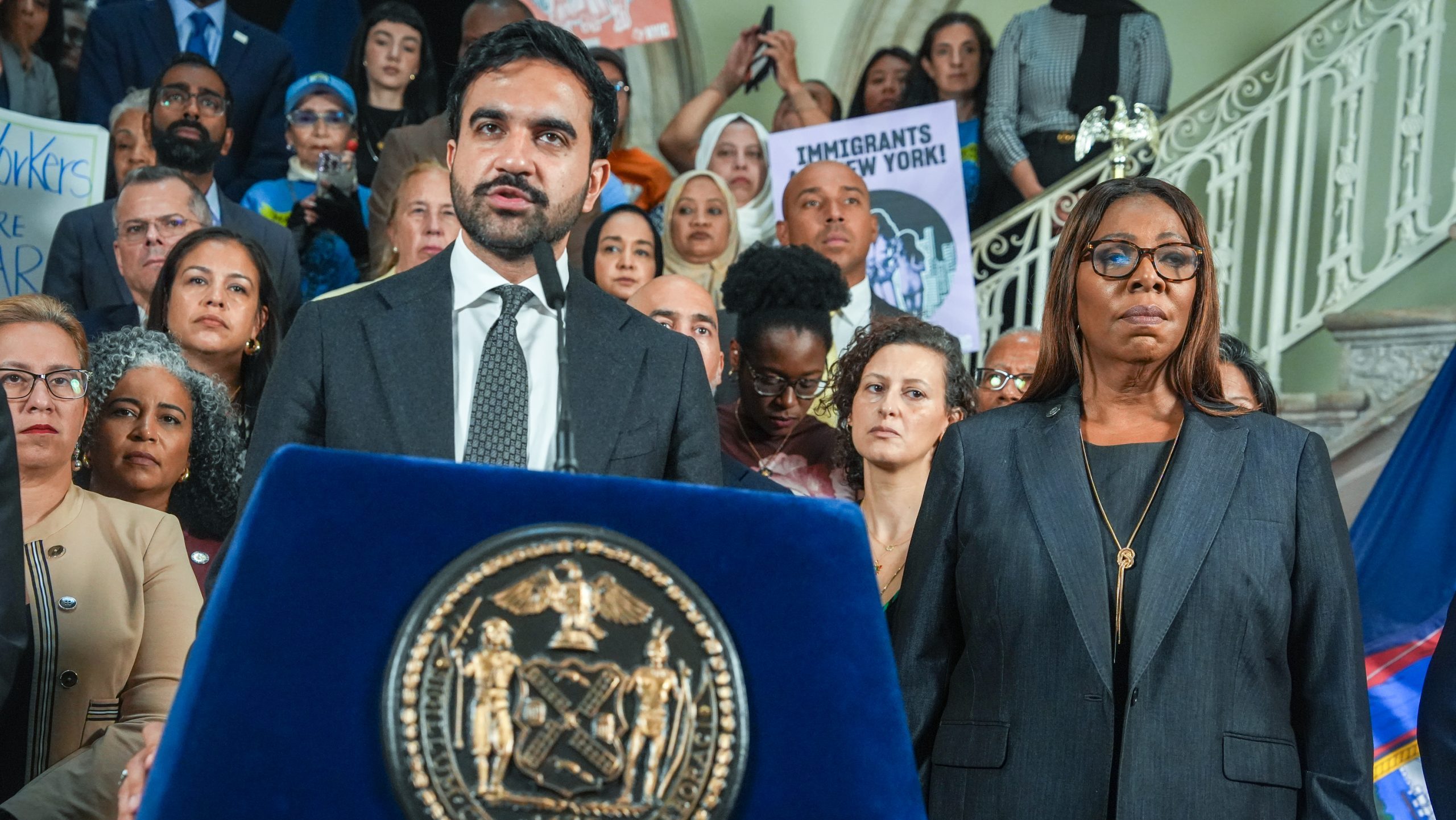
“For nearly a year, countless immigrant New Yorkers have been arrested simply for attending their court hearings at 26 Federal Plaza,” Harold Solis, an attorney for immigration advocacy nonprofit Make the Road, which represented the organizations suing the U.S. government over the arrests, said in a statement. “Our clients tried to put a stop to this last year but were denied preliminary relief — based on what the government recently acknowledged was false information.”
Immigration courthouses had become places of fear and disappearances, the statement continued. “We welcome today’s decision, which for many will feel long overdue. For them and the countless others who remain fearful, we hope today signals an end to this chaos.”
Representatives for the U.S. Department of Justice and ICE did not immediately respond to requests for comment.
An unnamed spokesperson for the Department of Homeland Security called the arrests “commonsense” in a statement to Documented.
“Nothing prohibits arresting a lawbreaker where you find them. We are confident we will ultimately be vindicated in this case,” it read.
The order comes after a year of violent, public arrests at immigration courts like 26 Federal Plaza, most of whom were attending routine and mandated court appointments, and allegations of brutal conditions in courthouse holding rooms for those arrested.
“Look how they have us, like dogs in here,” one man said in Spanish in a leaked video reported by THE CITY last summer.
The order is the latest win for pro-immigrant groups among an onslaught of lawsuits looking to hobble the Trump administration’s push for mass deportation.
The decision was the latest in a nearly year-long suit which began last summer when two nonprofit immigrant rights organizations, African Communities Together (ACT) and The Door, sued ICE and the DOJ over their practice of arrests at immigration courts, claiming, in part, that expanding arrests at immigration courts was unlawful.
They also claimed that these arrests worked in tandem with a new directive allowing immigration judges to dismiss pending removal cases in court without allowing immigrants to reply in writing — sending people directly to their arrest.
Beth Baltimore, deputy director of The Door’s Legal Services Center, submitted multiple declarations in the year-long case recounting the harrowing experiences of her young clients, and the lengths the organization had to go to serve them.
Baltimore told Documented The Door was grateful for the decision.
“I hope that this decision stands, that people can go to immigration court without a fear of being arrested simply because they are in immigration court,” she told Documented.
Their original case had been deemed unlikely to succeed by judge Castel, until DOJ attorneys suddenly submitted in March what Castel at the time called an “extraordinary letter,” which stated that government attorneys had misinterpreted the memo that underpinned its argument supporting arrests at immigration courts.
In his decision on Monday, Castel said that plaintiff The Door, which represents immigrant youth, successfully demonstrated that the organization and its clients would face harm at court when they risk “on-the-spot arrest or, alternatively, not appearing and having a default entered against them in the removal proceeding.”
Baltimore noted that her clients continue to be subject to a firehose of policies from the administration looking to speed deportations. However, she questioned what the case could eventually mean for those already impacted by the arrests over the past year and a half, particularly those without access to lawyers.
“What’s going to happen to all the people who are impacted by this policy, and who are harmed, but who’ve already been ordered removed because they were afraid to come to court? Or they were detained and are maybe still in detention, or suffered so much harm as a result of this detention?”