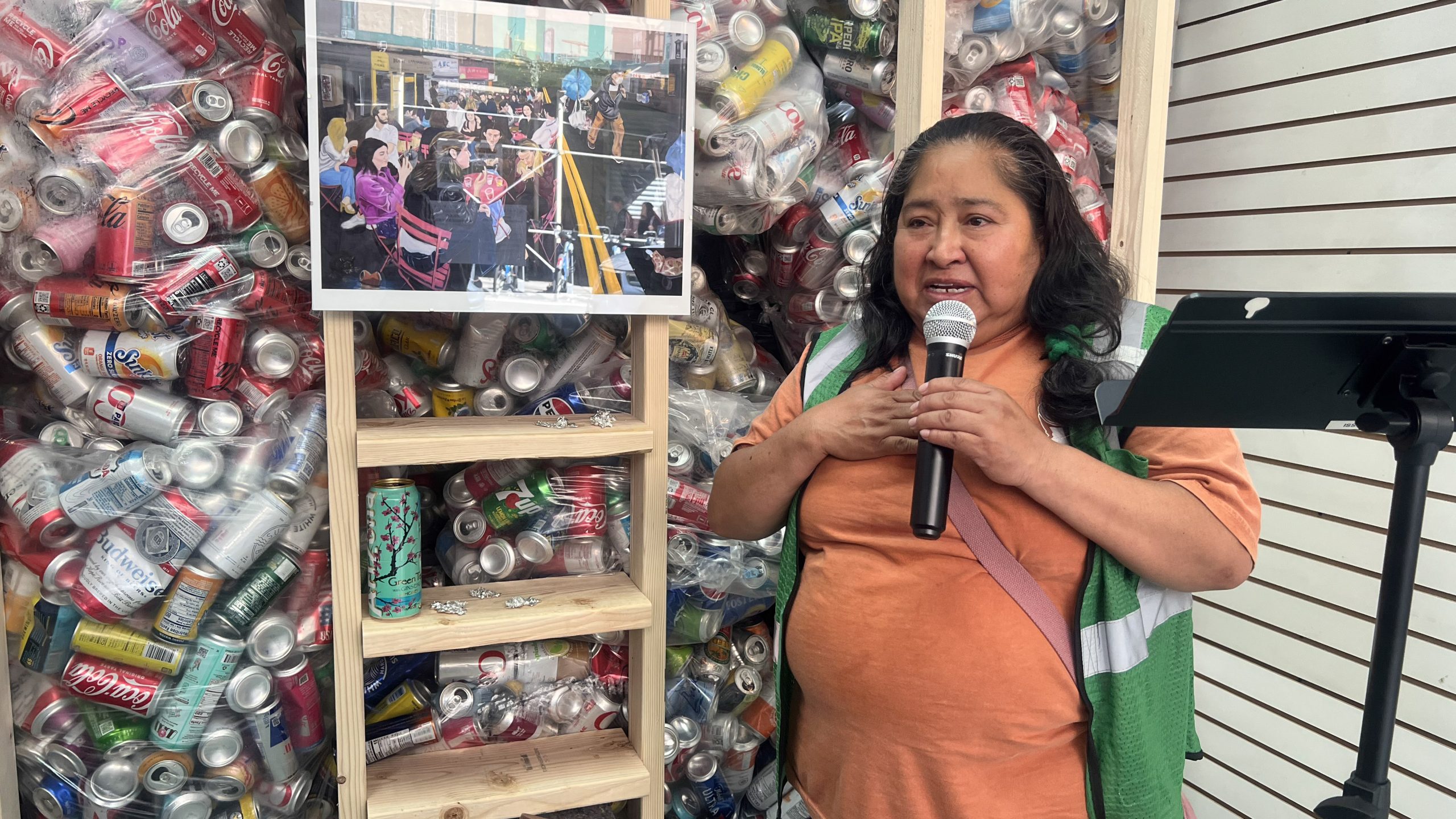


For the past decade, Huichan Chen, 69, has spent five to six hours a day walking the blocks of the Lower East Side and Chinatown, collecting bottles and cans. On most days, she earns between $10 and $20, on a good day, maybe $30.
But on Tuesday morning, Chen felt a rare sense of excitement.
She joined a small crowd at Columbus Park in Chinatown, carrying bags of bottles and cans to a temporary redemption station where each container was worth 10 cents — double the current price under New York law.

The pop-up, organized by Sure We Can, a Brooklyn-based nonprofit redemption center and community hub, along with Welcome to Chinatown, Canal Street Research Association and NYC Connect, was designed to simulate what advocates say could become reality under the proposed “Bigger Better Bottle Bill,” currently under consideration in Albany.
The measure would raise the deposit from 5 cents to 10 cents — an increase not seen since the system began in 1983. It would also expand the range of eligible containers to include beverage containers currently excluded from the system.
Within three hours of the pop-up, the station had collected 50,000 bottles and cans.
Later that afternoon, advocates, local officials and recyclers held a press conference and panel discussion at Protocinema hosted in The Storefront for Ideas in Chinatown, urging lawmakers to pass the legislation that would increase the deposit to 10 cents starting April 1, 2027.
Handling fees for redemption centers would also gradually rise, and a grant program would be created to support their operations. Advocates say the changes could significantly affect thousands of low-income collectors, many of whom are older adults and immigrants who currently earn about $5 per hour, far below minimum wage.
“I feel sad having to turn away seniors who arrived after we had already reached the pop-up redemption station’s capacity,” said Siyan Wong, an artist who has been painting portraits of can collectors for more than a decade and launched the “Make It 10 Cents” campaign in 2019. She added that she has seen the number of local recyclers grow over the years as more working poor turn to canning to supplement their income.
Chen, who immigrated from China in 2007 and became a canner after retiring as a home care worker, said collecting bottles is a crucial source of supplemental income. “It’s a lot of work. My back hurts and my legs hurt,” she said in Cantonese. “Many canners in the Chinatown area are seniors like me. I don’t get much from my retirement, and everything is so expensive now.”
New York’s Returnable Container Act, commonly known as the “Bottle Bill,” was enacted in 1982 and is widely considered one of the state’s most effective recycling programs. According to state data, it has reduced container litter by roughly 70% and led to the recycling of billions of containers.
But advocates say the system has not kept pace with the rising costs of living and changing consumer habits.
Currently, many common beverage containers, including those that contain sports drinks, bottled tea and some juices, are not covered. The proposed legislation would expand the definition of “beverage” to include noncarbonated soft drinks, coffee and tea, cider and certain juices, while still excluding products such as infant formula, dairy and 100% fruit juice.
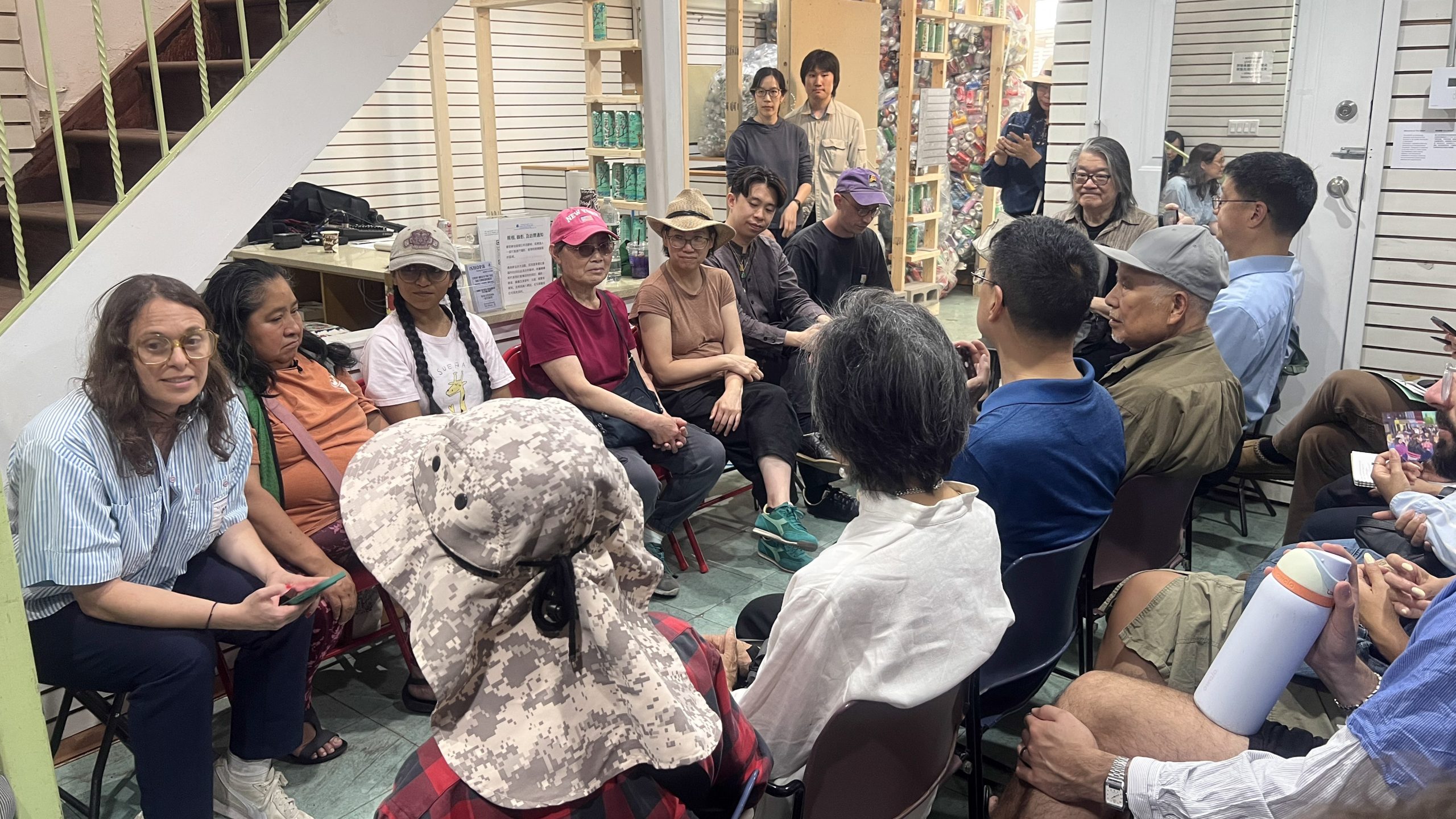
Josefa Marín, president of the Alliance of Independent Recyclers of New York City (AIR-NYC), said independent recyclers play an essential role in the city’s waste system, yet remain overlooked.
“We don’t want to be workers considered to be excluded from the government, because we are part of the economy, we don’t want to feel excluded anymore,” said Marín in Spanish, adding that passage of the bill would help families like hers cope with growing financial pressure.
Ryan Castalia, executive director of Sure We Can, said his organization has been pushing to modernize the Bottle Bill since 2022 but has faced opposition from beverage producers and industry lobbyists seeking to avoid financial and logistical responsibility for waste management.
He estimated that between 10,000 and 20,000 canners operate in New York City, noting that the community remains undercounted and under-researched. Castalia said many canners face barriers to traditional employment due to language, immigration status, or physical and mental health challenges.
Advocates said the expansion could also significantly boost recycling rates. Of the more than 11 billion beverage containers sold annually in New York, only about 7 billion are currently covered by the Bottle Bill. Advocates estimate that modernization could reduce pollution, while bringing additional billions of containers into the system each year, which would generate about $100 million in state revenues.
“Our communities depend on canners and the Bottle Bill whether we’re aware of it or not,” Castalia said. “It’s the most effective recycling system we have, yet is treated with tremendous neglect. Modernization is decades overdue. When will our leaders recognize what works instead of kicking the can down the road and hoping someone else picks it up?”
The bill is currently moving through its assigned committee before being officially placed on the state legislative agenda.
Council member Chris Marte, who represents the area where the event was held, echoed the call for reform.
“For the sake of our fragile environment and the economic well-being of our working poor who clean our streets of cans and bottles, we need to update our container law now,” Marte said. “Cans have been redeemed at 5 cents since 1982. It’s overdue to update it to 10 cents.”
Chen said she is looking forward to seeing changes in her own life, as well as the broader impact if the bill is passed. “I will be happier because there will be more income,” she said. “And there will be more canners, our street will be cleaner,” she added with a smile.