

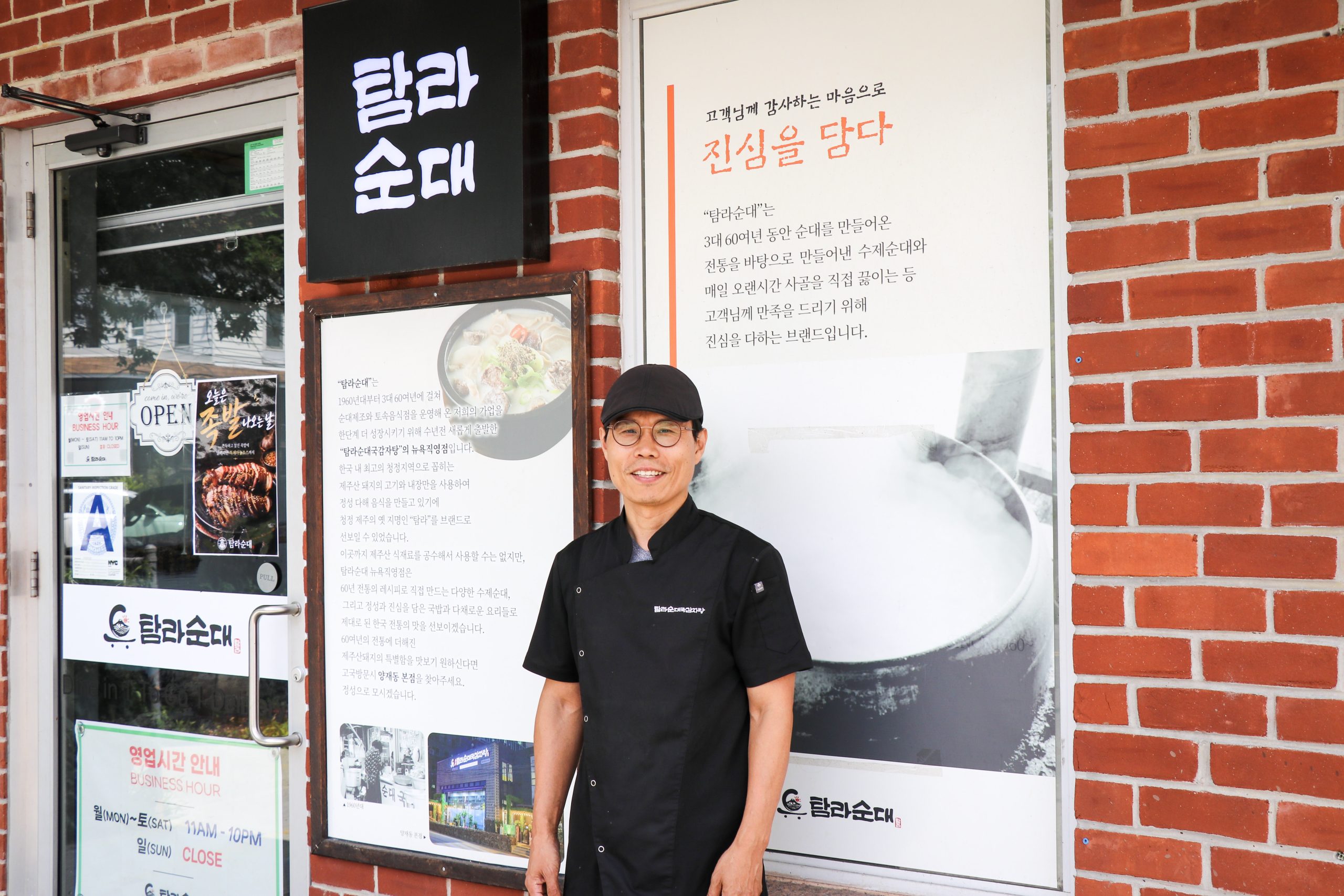
When Yanghan Choe opened Tamra Soondae in Queens’ Koreatown in late January, he had no idea what to expect.
Tamra Soondae is a tiny, seven-table corner spot with a tight menu, but from the moment the restaurant opened, lines wrapped around the building. Even though the restaurant opens its doors at 11 a.m., Choe usually sells out of everything by noon. He even received a hate letter from an angry senior citizen customer, accusing him of not knowing how to run a proper business.
Tamra Soondae’s overnight success has defied local business expectations, too. In Queens’ Murray Hill neighborhood, the Korean commercial enclave of Mokja Golmok (Food Alley) has been grappling for years with a business downturn due to rising rent and the “alarming loss of legacy businesses,” declining Korean immigration, and a poor and aging population.

But against these odds, customers eagerly line up at Tamra Soondae for a spectacular soondae — a type of blood sausage — that’s hard to find outside of Korea. The delicacy appears in three styles (one made with sweet potato starch noodles known as dangmyeon; another with dangmyeon and spicy pepper; and one composed of mostly meat and vegetables). Soondae is also the star in several stir-fry dishes and in some assorted savory soups, which are meticulously simmered for 12 hours.
Like Spanish morcilla, French boudin noir, and British blood pudding, Korean soondae has a long history. It first appeared in a Korean cookbook during the Joseon era around 1670, and evolved to become a prevalent street snack and comfort food — a staple in pojangmachas, the tented street eateries featured heavily in K-dramas. For Choe, a third-generation soondae maker, his story fits snugly into the larger evolution of blood sausage in Korea and its eventual emigration to a Korean American enclave in New York City.
“While living in the United States, I often felt disappointed that I could not find soondae that tasted like what I remembered from Korea.”
—Yanghan Choe, owner of Tamra Soondae
“While living in the United States, I often felt disappointed that I could not find soondae that tasted like what I remembered from Korea,” he said. “That inspired me to continue my family tradition here and create soondae that Korean immigrants — and eventually many non-Korean customers — could enjoy and appreciate.”
When Choe started testing recipes in 2025, he faced the challenge that many immigrant chefs face: adapting to ingredients available here. For instance, the intestine casing needed for soondae is already processed when it is sold, so he had to relearn how to stuff it.
“It was so delicate,” he said. “Stuff too much, and the whole thing would rupture.”
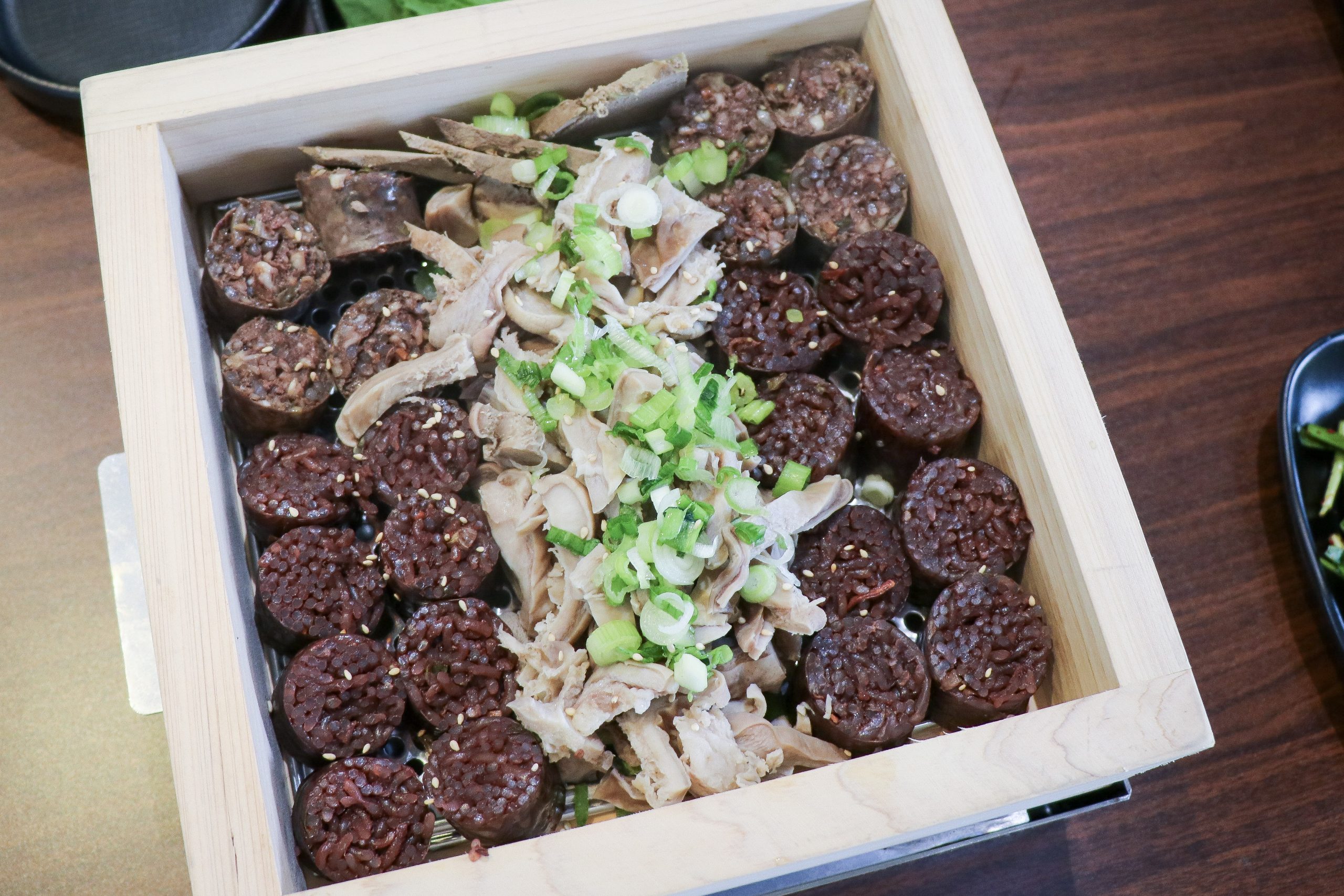
In Korea, there’s a specific kind of dangmyeon noodles that are made for soondae, but he couldn’t find them here. So he had to figure out how to work with the different texture.
Apparently he’s hit the mark.
Daniel Kim and his wife first dined at Tamra Soondae on May 15 — and have come back around 15 times in the months since, making sure to visit during off-peak hours.
“We long for the foods we used to eat in Korea,” he said. “And the taste of the food here is close to how it would taste in Korea.”
Recently, several owners and partners of three lauded city restaurants — Kisa, C as in Charlie, and the upcoming Good Time Country Buffet — visited Tamra Soondae. The owners — Korean immigrants who befriended each other growing up in Atlanta before making the move to NYC — were immediate fans of the spot. Co-owner Steve JaeWoo Choi, described soondae as “one of our favorite soul foods from Korea.” Another, David JoonWoo Yun, said of Tamra Soondae, “It’s one of the few places in New York that genuinely reminded me of the traditional soondae you would find back home.”
To meet customer demand, Choe makes 120 pounds of soondae every day.
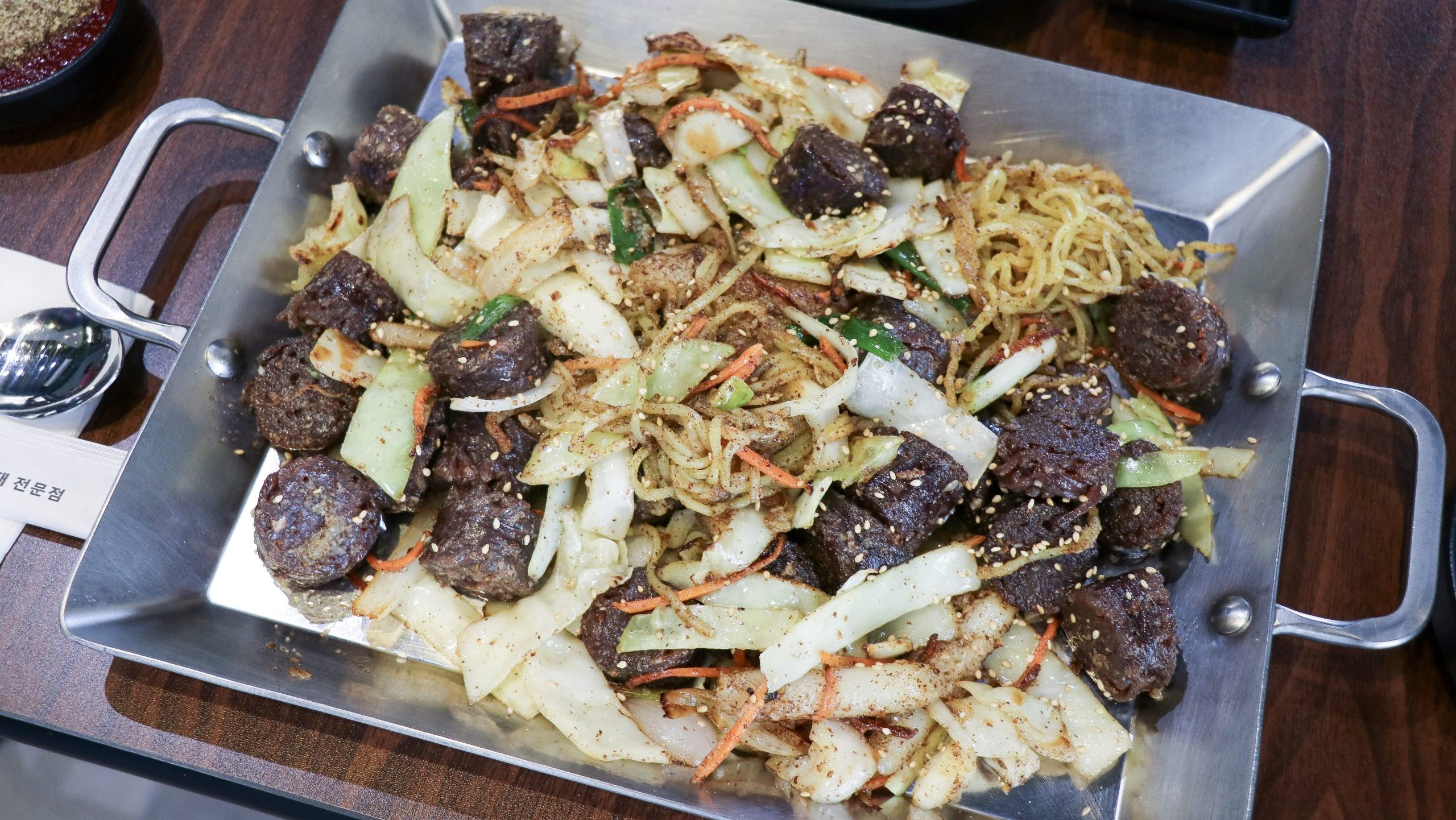
Choe’s baek soondae stir-fry hits all points of the Korean palate. A specialty of Seoul’s Sillimdong neighborhood, where Choe had once worked, the dish has a lovely chewiness from the tteok (rice cakes), noodles, and soondae. Rich and savory, with just a tinge of iron gaminess, the whole dish is slicked with pork fat and studded with gobs of pork meat. Wrap it all in a perilla leaf, and a fresh, bitter bite is introduced into the mix.
“It’s one of the few places in New York that genuinely reminded me of the traditional soondae you would find back home.”
— David JoonWoo Yun
Then, there’s the tojong soondae, a rarity in New York. More than half of the sausage’s stuffing is comprised of vegetables such as cabbage, onion, scallion, and carrot; close to half is ground pork; and segments of noodles happily pop in here and there. Compared to the chewy springiness of the dangmyeon-only soondae, this one breaks into crumbly morsels.
“What stood out most to me was that they make tojong soondae,” said Yun. It’s also used in the soondaeguk (soup). “Some of the filling naturally melts into the broth as you eat, giving the soup even more depth and richness.”
In each of his visits, Kim has ordered the soondaeguk in all of its simmering versions: plain; with kimchi, a spicy option with red pepper paste; a little less spicy with kimchi; and vegetal with siraegi (dried radish greens).
“The soondaeguk is very tasty — without that pork smell,” said Kim. It’s an important criterion for a Korean diner judging a pork dish. “It has a deep, rich flavor. And the siraegi soondaeguk — which you don’t find so easily here — has a nice aroma.”
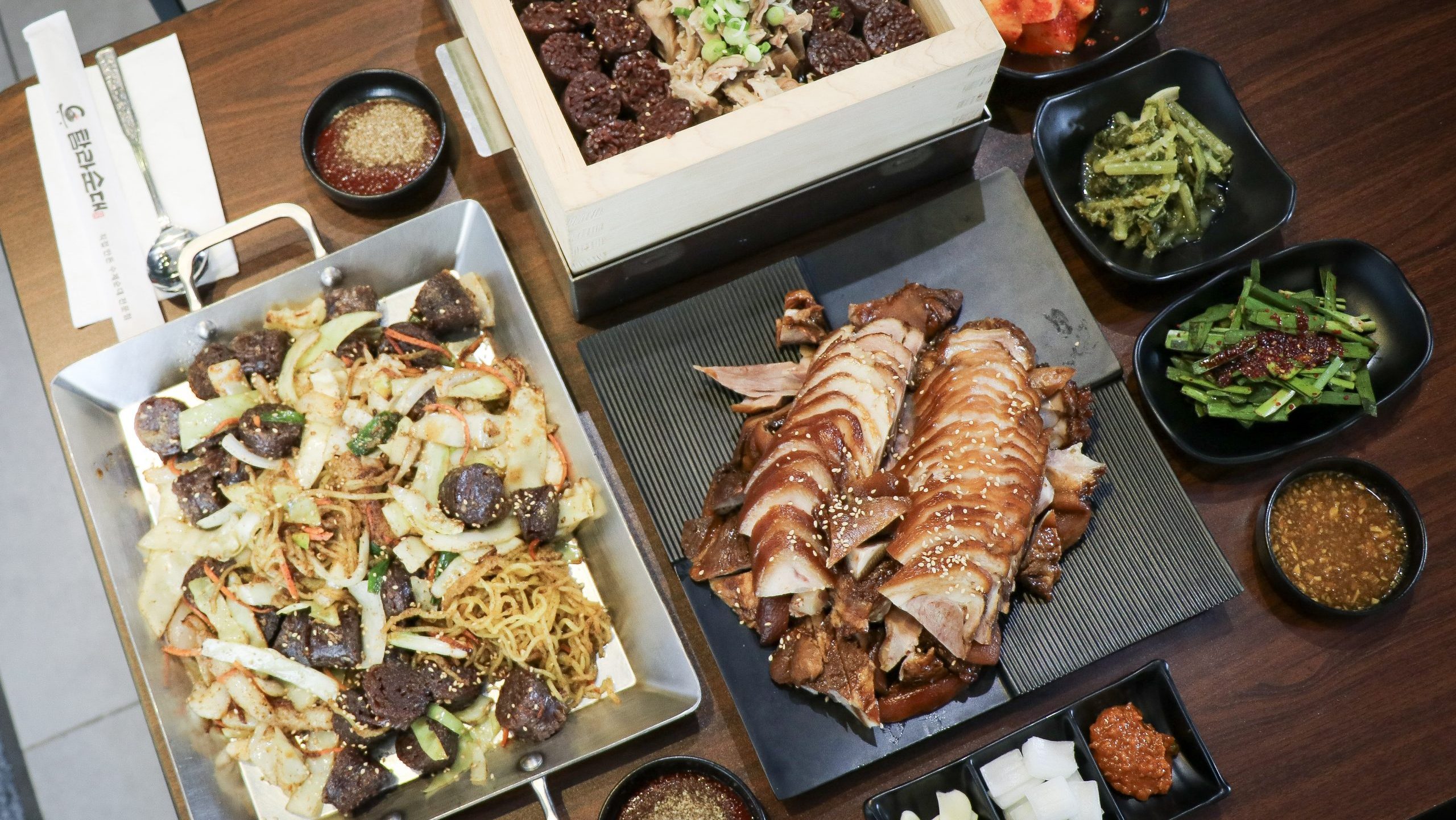
To complete the traditional Korean meal, Choe also makes the banchan — an array of small side dishes — himself: crunchy kkakdugi (cubed white radish kimchi), yulmu kimchi (green young radish leaf kimchi), and buchu muchim (seasoned chives). They’re all served in little dishes at the center of the table with the requisite condiments like perilla powder and red pepper paste already laid out on the side.
Now that Choe has gotten a firm handle on the workflow, he’s expanding the menu. In June, he added another old-school Korean comfort food: jokbal, which are pork trotters braised tender and unctuous. And one day he plans to offer kimchi soondae and squid soondae, a Korean coastal specialty.
“I haven’t found the Korean squid here — just the small ones used for calamari,” he said. “But I still want to do it.”