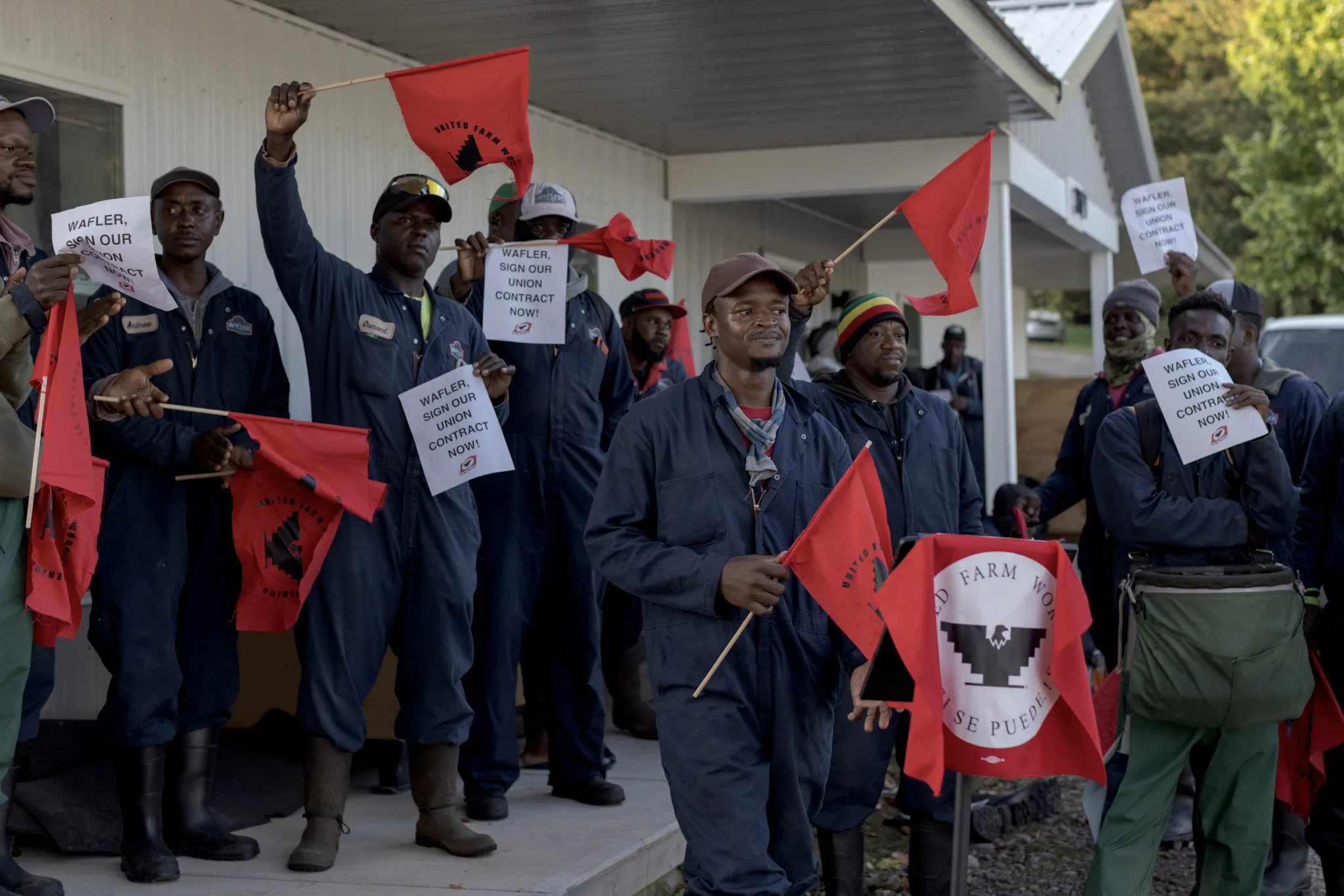


Above 600 acres of apple trees, dozens of farm workers trudged up a hill from an orchard in western New York toward a small podium on Tuesday evening. The men, almost all from Jamaica, represented more than 110 workers in their bargaining unit that alleged that their employer, Wafler Nursery, a family-owned farm in Wolcott, had failed to recognize their union contract.
“Without us, there’s no Wafler farm, yet we’re still treated as disposable tools,” said Mario Ming, a 30-year-old farm worker from Jamaica who had been at Wafler for four years, and who was leading the press conference of guest workers legally present in the United States under a federal visa program called H-2A.
Workers at the orchard say work is grueling, and requires long hours that are hard on their bodies and exposes them to pesticides, with little access to medical attention. Standing alongside other farmworkers, Ming argued that their demands for a wage increase, paid days off, a retirement plan, and the security of returning to the same farm year after year were basic rights.

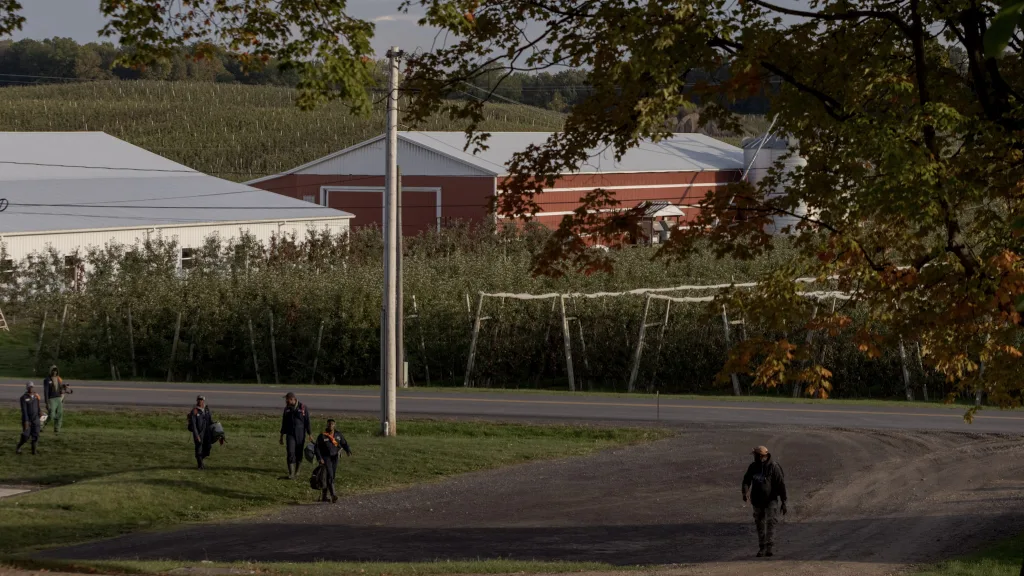
At Wafler, workers have nearly 11-hour shifts with Sundays off, as required under the 2019 law. The work is hard — in teams of eight, the men walk down orchard rows hand picking apples and dropping them into a crescent-shaped bag on their chests. Behind them, a robotic trailer with five large bins that can each hold 800 to 1,000 pounds of apples nips at their heels, moving about 12 feet per minute, according to Ming.
While Ming says they’re required to fill six trailers per day, Wafler workers often fill up to 13 trailers a day instead, or roughly 65 bins of fruit. Their union contract could address that, assuring that if they do additional work beyond their job contract, they can get paid a “piece rate” or extra income per additional bin.
Under an arbitrator, the union gained a contract with their representative, the United Farm Workers of America, a national labor union headquartered in California, on Feb. 24. Two months later, that contract was meant to be in effect, however, the Wafler family didn’t attend the arbitration negotiations or recognize the contract in April. So in May, the union filed an unfair labor practice charge with the New York State Public Employment Relations Board.
“The growers are looking for every available way to stop workers from organizing,” Armando Elenes, secretary treasurer of the United Farm Workers said. “The whole hope of Wafler and other growers is that workers get frustrated and demoralized and don’t want to participate.”
Read more: After Historic Union Wins, Farmworkers in New York Face Stiff Resistance to Organizing.
In early 2025, Wafler argued to a Wayne County Supreme Court Judge that guest workers don’t have the right to unionize, and that the farm received a temporary restraining order to prevent the implementation of the contract.
While the restraining order was meant to end Sunday, Sept. 21, a cancelled hearing on Friday, Sept. 19, means the judge’s decision has again been delayed until October, when most workers return home.
When Documented asked about their alleged refusal to recognize the contract, Jacob Wafler said Tuesday, in an email to Documented: “We are not refusing to acknowledge the contract.” He added that per New York State law the farm had the right to have the contract reviewed by a state judge. Moreover, the Wayne County judge ruled that the contract could not go into effect until the state judge reviewed it.
Wafler is one of eight farms in New York that the union was certified to represent after a 2019 state agricultural labor law ended the long exclusion of farm workers from the right to collectively bargain. Since negotiations began in 2023, only one farm has recognized a contract, four more have won contracts through arbitration but they’ve not yet been recognized by their farms, and three more are still negotiating.
In the fall of 2023, the New York State Vegetable Growers Association filed a lawsuit, along with five other farms, asking a court to overturn the 2019 Farm Laborers and Fair Labor Practices Act that granted farm workers the right to organize, including workers who are undocumented and guest workers on H-2A visas who can legally work in the U.S. for up to 10 months. The state upheld the worker’s right to unionize, and the case is now under appeal.
Lynn-Ette & Sons, a large vegetable producer in western New York that was also a plaintiff in the lawsuit, has refused to recognize the contracts workers won on July 1, during a season where more than 20 undocumented farm workers, including lead organizers for the union, were detained by ICE officials.
Read more: ICE Denies Random Raid, Claims Tip Led to Arrest of Farm Workers in New York.
While growers were pushing back against unionization efforts under the Biden administration, the Trump administration’s crackdown on immigration enforcement had reinforced growers’ refusal to implement contracts, according to Elenes.
“In agriculture, fear is what drives folks to not speak out, especially in very rural areas like New York state where workers are basically hidden away in orchards,” Elenes said. “Hanging over their heads is the idea that if you say something you’re not coming back.”
Gifford McDonald, a 51-year-old worker from Jamaica in his second season on Wafler, previously worked for a decade on H&H Dobbins & Son in Lyndonville. After he supported unionizing efforts there, farm owners didn’t renew contracts with McDonald and other workers, he said. They were forced to scatter to other farms.
About a mile down the road from Wafler is Cahoon Farms, the only farm in New York that has successfully recognized a contract.
“None of us would be here without it,” said Kenneth Smith, a 67-year-old union worker from Jamaica who has worked on three farms in the area since 1998. Smith said the only reason about 40 workers who organized for their contract were asked back this year was because the union challenged the farm’s assertion that the workers hadn’t met the required picking standards the year before, and then helped them get their jobs back.
Workers won increases in their hourly and piece rate work, a retirement plan with a three percent company match, nine paid holidays along with vacation time, sick days, and bereavement leave, and recalls for workers, meaning workers who met the work requirements should be asked back in order of seniority.
Workers at Cahoon are only required to work eight hours; Smith said if they voluntarily work longer, they’re paid a piece rate for the additional bins they fill in their overtime. They’re also paid about a dollar more, and they only work half-days on Saturday.
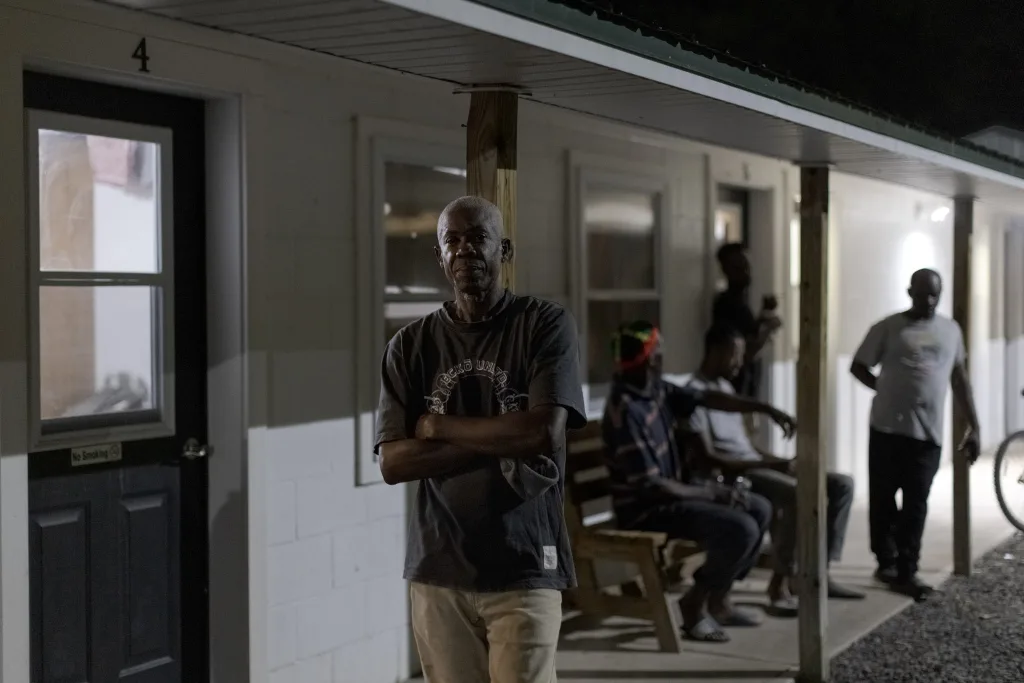
But living conditions are largely the same at unionized Cahoon as they are at Wafler. Workers are stuck on the farm beyond the buses they can take into town to shop at Wal-Mart or Save A Lot. Smith lives with almost 40 others in a long concrete building where workers share bunk beds four to a room that’s humid without air conditioning. They all share a bathroom with four stalls. There are no bath mats, just pieces of cardboard in front of five showers.
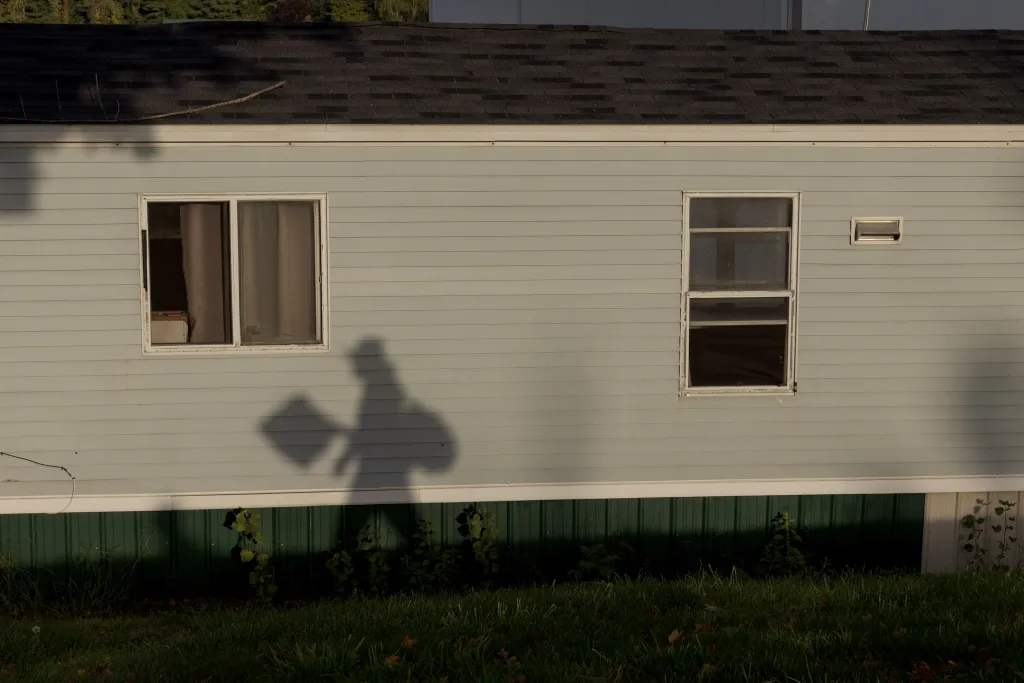
Ernel Francis, 43 and in his third year on Wafler, said what he was most looking for was respect and a stable income. Most workers live in cramped housing stripped down to basic necessities. At Wafler, trailer-like barracks house 10 people with one bathroom; three to four men typically share a bedroom. The workers said they have no dryer; in the colder months of September and October they sometimes wear damp clothes under their coveralls that protect those clothes from pesticides.
“These are rejected jobs,” said Owen, a 43-year-old who’s worked at Wafler for 10 seasons but did not share his last name for fear of retaliation. “The job is put to Americans first, but no one wants it.”