Approximately 70,000 New Yorkers earn a living working for app-based companies, according to city data. Delivery workers, sometimes known as deliveristas, often work 10 to 12-hour shifts and ride long distances to deliver items like food, groceries and everyday convenience items throughout the five boroughs.
Severe weather conditions, like rain and snow, can make that work more challenging. To help delivery workers prepare for the winter ahead, we spoke with two delivery workers — with more than two decades of combined experience — in order to put together a list of best practices.
Read more: Know your rights as an NYC deliverista

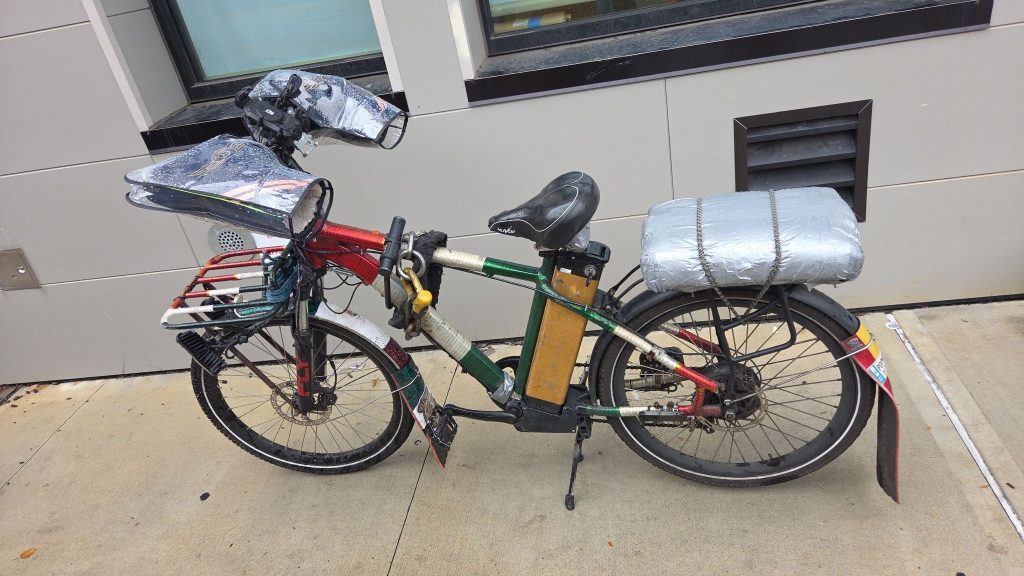
Use weather-appropriate attire and equipment
William Medina, 41, has been doing delivery work for the past eight years. He has experienced firsthand the additional challenges that come with working in a snowstorm or rain and recommends investing in clothing and equipment to help protect against the elements.
Purchase insulated bike mitts
A pair of handlebar mittens — sometimes called pogies — is essential to protect hands against cold weather and wind, according to Medina. The mittens are insulated and designed to keep the hands warm, while also serving as protection against light rain or snowflakes.
“I have also seen workers use heated mittens that are connected to bikes directly,” Medina said in Spanish. “Those gloves offer more protection against the cold, especially when the weather drops below zero.”
Wear clothes designed for snow, wind and cold
The other essentials that Medina recommended are a warm, waterproof winter jacket and gloves, and — most importantly — anti-slip waterproof boots. “You need to have really good boots because if you get any snow into your shoes, … you could get hypothermia or frostbite,” he said.
Medina reiterated that working in the cold without proper clothes can be dangerous because people could be more susceptible to developing respiratory illnesses.
During the rainy days, Sergio Solano, 43, who has been working as a delivery driver for 16 years, further recommended having a waterproof backpack. He also suggested having an extra pair of clothes in the backpack to wear in case the clothes get wet during a rainshower.
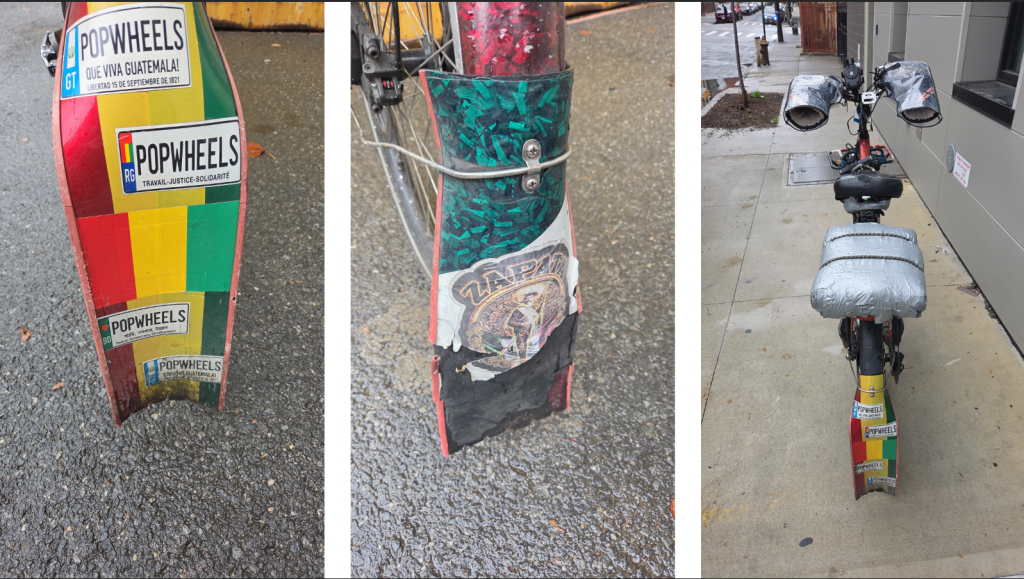
Install mud flaps to protect the tires from dirt
Solano also said that he installed mud flaps, also known as mudguards, on his bike to protect the tires from debris. “The dirt accumulates, so these trap all of it,” Solano said.
Purchase studded bike tires for icy roads
Solano warned that the day after a snowstorm can be just as dangerous, if not worse, due to icy roads that can make the tires very slippery — even if the bike has good brakes. In the case of icy roads, he recommended purchasing studded tires as the tires help the bike gain better traction.
Be alert and check your equipment
Both Solano and Medina said that people should lower the speeds of their bikes when there is a storm as icy roads can be especially troublesome for riders who do not have good brakes. Solano said that he uses his foot as a support to help slow down and avoid tipping over, explaining, “Using your feet helps a lot, especially if you feel like you are about to fall.”
Medina also has observed that pedestrians are often moving quickly during bad weather. “Many people want to get home fast and walk or rush across the street, without looking at their surroundings,” he told Documented. He said people should be extra careful when turning, and be on the lookout for water puddles and tree branches that may fall onto the street during strong winds.
Check your brakes regularly
Solano recommended checking the brakes of your bike or electric bike at least once a month, explaining, “The roads get more slippery when it rains, so if you drive with brakes that are not adjusted properly, it will start to make a lot of noise.”
He explained that brakes lose their grip over time, which could prevent the bike from slowing down and make the rider prone to an accident. He said that during snowy or rainy days, he usually brakes little by little to avoid stopping the vehicle so suddenly. “If you brake unexpectedly, you can end up falling,” he warned.
Check your electronics
Every e-bike has a battery management system (BMS) and a controller that is in charge of controlling the motor power, Solano explained. He said that during days of heavy rain, it is especially important to ensure that the battery pack — where the BMS and controller are housed — is dry and free of any debris.
During heavy rain, he recommended people avoid any roads that have flooded, as water could damage the battery pack — which could cost anywhere from $500 to $1,000 to replace. “Sometimes you don’t feel that it [has been damaged] in the moment, but perhaps you will notice the next day,” he said. “The water enters it and damages the whole system.”
Find an indoor space to charge your phone
Both Solano and Medina emphasized the importance of finding an indoor place to charge phones. “During a cold day, you cannot charge your phone, because they just won’t charge,” Solano said, adding an uncharged phone makes it impossible to do deliveries.
He recommended workers find a nearby warming center or an indoor charging station to charge their phone.
Earlier this year, the city unveiled the first Deliverista Hub near City Hall, which provides shelter for delivery workers during a snow or rainstorm. Delivery workers can also charge the phones and e-bike batteries. Learn more about the hub here.
Additionally, as Documented previously reported, the Delivering Together program makes the spaces of the 62 Public Libraries in Brooklyn available for delivery workers to rest and charge their equipment. Click here to learn more about the initiative and find the closest participating library.