

Earlier this month, acting director of Immigration and Customs Enforcement (ICE) Todd Lyons, invoked the Illegal Immigration Reform and Immigrant Responsibility Act of 1996 (IIRIRA), directing ICE agents to withhold bond hearings from any immigrant who entered the U.S. without authorization. Specifically, the memo, first reported by The Washington Post, states that immigrants who came to the United States illegally should be detained “for the duration of their removal proceedings.”
As a consequence of Lyons’ decision, advocates and legal experts warn that millions of immigrants will become trapped in detention centers for months, or even years, while their removal proceedings unfold.
“Detention is no longer the exception, it’s now the rule,” said Rosa Santana, co-executive director of Envision Freedom Fund, a New York-based organization that pays immigration bonds for people who cannot afford them. She added: “This is an escalation of state power that dehumanizes and criminalizes our communities. Bond was one of the only tools we had left and now it’s disappearing.”

An immigration bond is a financial guarantee paid to the U.S. government to secure the temporary release of an individual in immigration detention while they await the outcome of their proceedings. When an immigrant is detained by ICE, they can request a bond directly from the agency or they can ask for a bond hearing before an immigration judge. If they’ve put their request directly to ICE, then ICE will determine whether the detainee is eligible to be released on bond.
If ICE denies bond or sets an amount that the individual cannot afford, the person has the right to request a bond hearing before an immigration judge. During the hearing, a judge reviews the case and decides whether to grant or deny the bond. It’s at the discretion of the immigration judge to decide the amount of the bond, which may differ from ICE’s original figure.
The decision to grant a bond is based on several factors including whether the immigrant poses a flight risk or danger to the community. The judge also considers family ties, employment history, criminal background and immigration records.
Federal law requires that bond amounts be set at least $1,500, but judges often set them multiple times higher, sometimes even reaching $100,000 or more. Nationwide, the median bond amount is $5,000 and in New York, the median hovers around $10,000, according to an Envision Freedom Fund report.
“Too many families are forced to take on loans or fall prey to exploitative bail companies,” said Santana. “We’ve seen families pushed into poverty or debt for years just to bring a loved one home.”
Envision Freedom Fund raises and disburses community funds to cover these bonds without requiring repayment. Since its founding, the organization has supported thousands of immigrants in New York, New Jersey, and Pennsylvania, particularly Black immigrants, women, and individuals with serious health needs. But the recent ICE directive has made their work harder.
Before the new directive, Santana noted that in the New York Metro area, about 10 bonds would typically be processed and paid per week. Now, that number has dropped by half.
“We’re seeing fewer bonds granted,” Santana told Documented. “We expect this trend to continue as more people fall under the new restrictions.”
The human cost
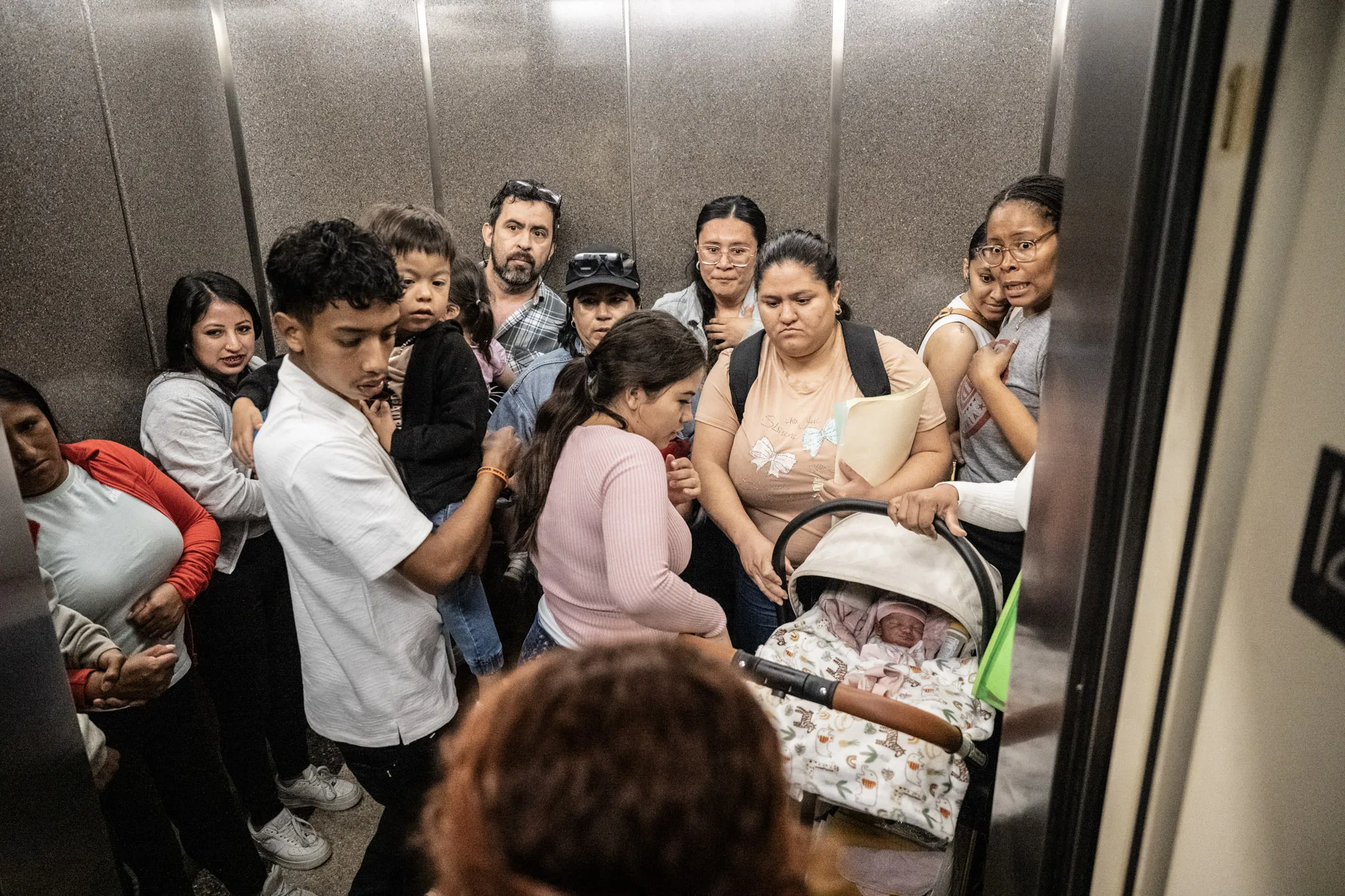
Behind every bond hearing denied, there is a person whose life is put on hold in immigration custody. After release, many immigrants still face staggering hurdles like housing insecurity, joblessness, lack of medical care, and severe trauma from their journey and detention.
“By stripping immigrants of their right to a bond hearing, the Trump administration is replacing due process with fast-tracked deportation,” said Murad Awawdeh, president and CEO of the New York Immigration Coalition (NYIC). “This policy will rip families apart, cut people from their livelihoods, and force them into inhumane conditions — including facilities in remote areas where legal support is inaccessible.”
The Haitian Bridge Alliance (HBA), a national advocacy group that supports Black immigrants, asylum seekers, and other vulnerable migrant groups, also condemns the policy shift.
“This is the continuation of an inhumane and illegal system of mass incarceration and anti-Black migration enforcement,” the organization stated in a press release on July 17. “Denying immigrants their right to a bond hearing is not only unconstitutional, it’s an intentional move to expand the machinery of detention for political gain.”
HBA has been involved in multiple lawsuits against the U.S. government regarding immigration issues. In March, the organization, alongside other plaintiffs, sued the Trump administration over its decision to end multiple humanitarian parole programs for immigrants, including United for Ukraine, and the CHNV humanitarian parole program.
Also Read: ICE May Still Have Massive Access to Rikers Island Data Despite City’s Sanctuary Status
Santana notes that an increasing number of asylum seekers, particularly from African and Caribbean nations, are facing compounding layers of discrimination. Many have survived brutal transcontinental journeys, including crossing the perilous Darién Gap, only to be jailed upon arrival in the U.S.
“A lot of our clients are starting from zero,” said Santana. “We try to help with everything from basic needs to mental health support. But it’s overwhelming.”
Due process denied
Legal groups, including those partnering with Envision Freedom Fund, are preparing litigation, arguing the policy violates constitutional due process rights.
“We are waiting to see the full fallout,” said Santana. “Attorneys are scrambling to find alternative pathways, but there’s no question: fewer people are getting out. It’s devastating.”
In the meantime, Envision Freedom Fund continues its work while navigating the complex Cash Electric Bonds system (CeBOND), a digital platform launched by ICE two years ago that has added more hurdles.
“It used to take hours. Now it takes days, even weeks,” Santana said. “But we won’t give up.”
While the new ICE directive hasn’t eliminated all bonds, it has cut off access to many who once qualified. Envision Freedom Fund is focusing its resources on those still eligible like green card holders, for instance, and detainees with existing ties to the U.S.
The organization also coordinates emergency support and transportation for those who have been released, often from far-flung detention centers in Texas or Louisiana.
According to Santana, the crisis has forced immigrant rights groups to adapt rapidly, but it has also reaffirmed their mission.
“We shouldn’t have to buy our freedom,” she said. “But as long as this system exists, we’ll keep showing up— with money, with legal support, and with love. Because no one belongs in a cage.”