



If you are an immigrant living in New York City, whether you have legal status or not, it’s important to know that you can call 911 in an emergency. This guide will help you understand what happens after you call, so you feel more prepared and less afraid.
This information is not a substitute for legal advice from a qualified attorney or accredited representative. The content was last updated July 2025.
911 responders will not ask if you are an immigrant
New York City is a Sanctuary City. This means that local emergency responders, including police officers, firefighters, and medical personnel, do not ask about your immigration status, and they do not share your information with Immigration and Customs Enforcement (ICE). New York City laws are designed to protect all residents, regardless of their place of birth or immigration status. If you are in danger or need urgent help, you can safely call 911.

Also Read: What Is a Sanctuary City and What Does That Mean for NYC Under Trump?
When should you call 911?
Call 911 only in situations that are urgent and life-threatening. This includes fires, severe injuries or medical problems, crimes in progress such as assault or robbery, car accidents with injuries, or if you or someone else feels physically unsafe.
If you are unsure whether it’s an emergency, it is still okay to call. The dispatcher will help determine if 911 is the right service or if they should connect you to another city agency, such as 311 (for non-emergency assistance).
What happens when you dial 911
When you dial 911, a trained emergency dispatcher will answer your call. They will begin speaking in English, but if you say the name of the language you speak, such as “Spanish,” “Mandarin,” “Cantonese,” or “Haitian Creole”, they will immediately connect you with an interpreter. Interpreters are available 24/7 in over 170 languages and will remain on the call to assist you and the dispatcher in communicating effectively.
The dispatcher will ask questions to understand what’s happening and where you are. Try to stay calm and respond as clearly as possible. You are not required to provide your name if you’re uncomfortable, although doing so may help emergency responders locate you more quickly. You also do not need to share your immigration status.
If you’re calling from a cell phone, dispatchers may be able to see your general location using GPS, but not specific details, such as your apartment or floor number. It’s important to clearly state your exact location, including the building number, floor, and apartment. If you don’t know the address, describe nearby landmarks, intersections, or stores.
Stay on the line until the dispatcher says it’s okay to hang up. This helps ensure that emergency workers have the correct information to locate you and provide the right kind of assistance.
If you’re unable to speak due to danger or another reason, you can text 911, but only do so if calling isn’t possible. Please note that Text-to-911 is only available in English and Spanish within the five boroughs of New York City.
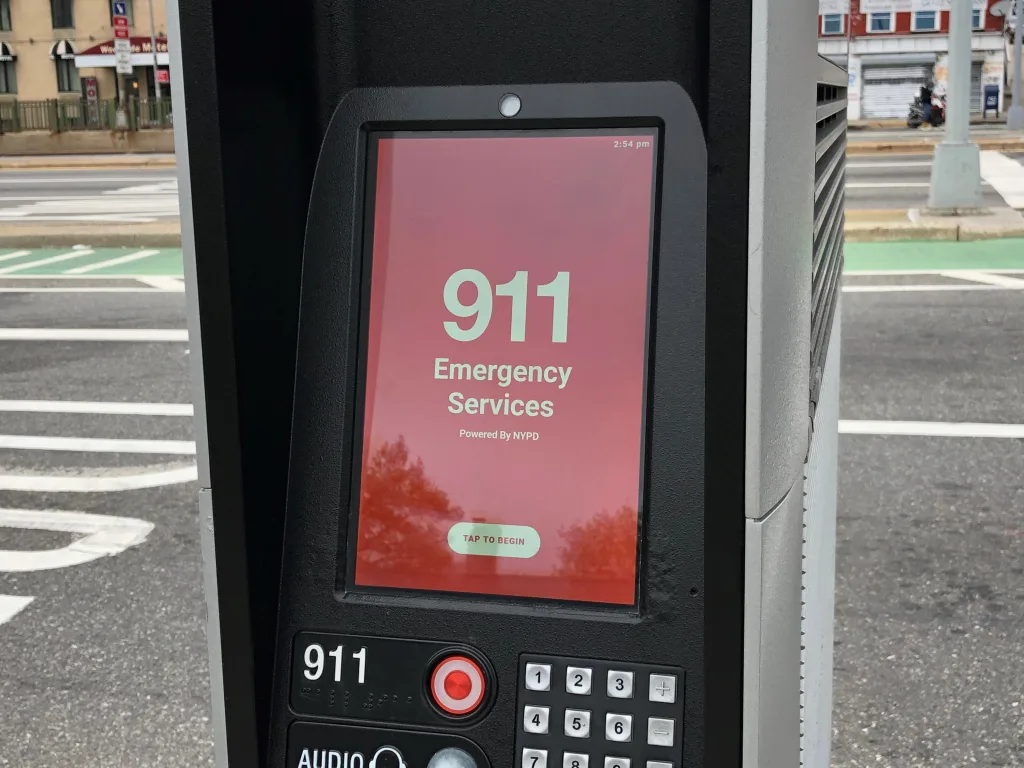
Call 911 without a phone in NYC
If you ever need to call 911 in NYC but don’t have a cell phone, there’s a really helpful option: LinkNYC kiosks. They are the tall, digital stands you see on sidewalks all over the city. Each one has a red 911 button right below the screen. Just press it twice, or hold it down for about 7 seconds, and you’ll be instantly connected to emergency services. You can find these kiosks throughout all five boroughs, often in spots where pay phones used to be.
Who will come to help?
Depending on what kind of emergency you describe, the dispatcher will send the right responders:
- Police officers (NYPD) respond to crimes, violence, or danger to public safety.
- Firefighters (FDNY) respond to fires, gas leaks, and building collapses, and sometimes assist with medical calls.
- Paramedics or EMTs (EMS) come in ambulances for serious medical problems.
In some cases, more than one team may arrive. For example, if someone is injured in a crime, both police and paramedics may come. They may arrive in uniforms with flashing lights or sirens. Their job is to respond to the emergency, not to investigate your immigration status.
After the emergency
Once the emergency is under control, responders might ask follow-up questions. You can answer what you’re comfortable with. If you’ve been a victim of a crime or domestic violence, or if you were trafficked, you may be eligible for protections like the U visa or T visa, even if you are undocumented. Speak to an immigration attorney to learn more about those options.
Also Read: Pro-Bono Lawyers And Free Legal Services in New York Immigration Courts
If the 911 call involves violence, danger, or criminal activity, NYPD officers may come to investigate. Police will ask questions to find out what happened.
You have the right to remain silent on certain topics and to request an interpreter if needed. The NYPD uses a service called Language Line, which offers over-the-phone interpretation in more than 170 languages. Patrol supervisors are equipped with cell phones programmed with Language Line’s number, allowing officers in the field to access interpretation services.
If you are a witness or involved in the incident, police may ask for your name and contact information. This does not mean you are being investigated; it helps them complete their report or assist others. If you feel uncomfortable, it’s okay to stay calm and say, “I’d like to speak with a lawyer before answering,” or “Can I have an interpreter?” These are your legal rights.
You also have the right to not answer questions about your immigration status.
If someone is taken to the hospital
If someone is seriously hurt, paramedics may take them to the nearest hospital. You can ask the EMTs or dispatcher where the person is being taken. If you are unsure, you can call 911 again later and explain the situation, and they can help you find out where your loved one is.
Hospitals in New York City, especially public hospitals, are considered safe zones for all immigrants.
ICE can enter the waiting rooms of a hospital, but they cannot enter a room where a patient is receiving care without a judicial warrant or the hospital’s approval.
Hospital staff will not report your immigration status to ICE. They only share patient information if you give them permission to do so or if they are required to share this information by law. You do not need a Social Security number or insurance to get emergency medical treatment.
Also Read: Can Doctors Share My Personal Information with ICE?
In moments of fear or danger, your life and safety are the most important things. Do not let fear of deportation or language barriers stop you from getting help. The 911 system in New York City is built to protect everyone, no matter who you are or where you’re from.


