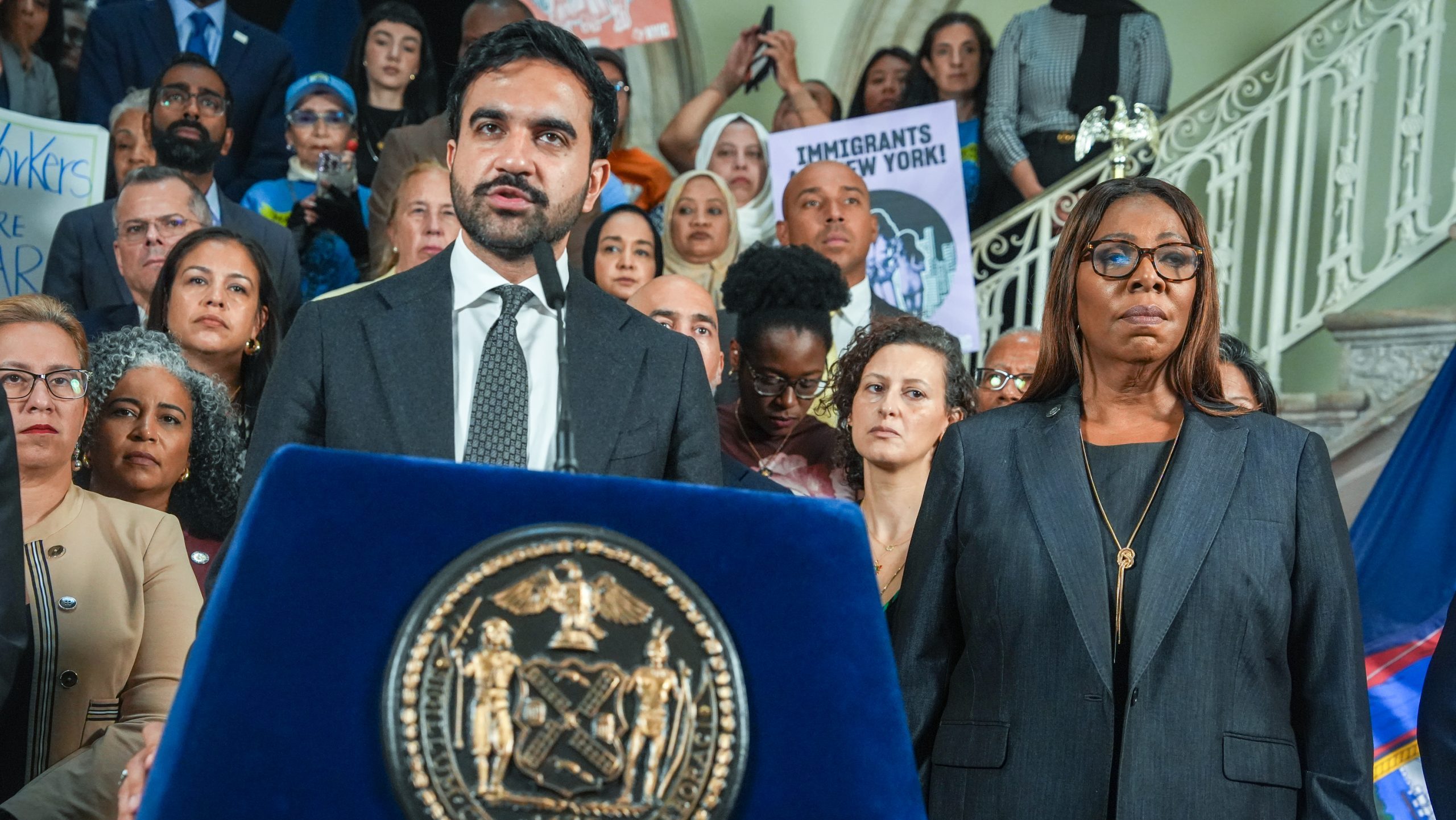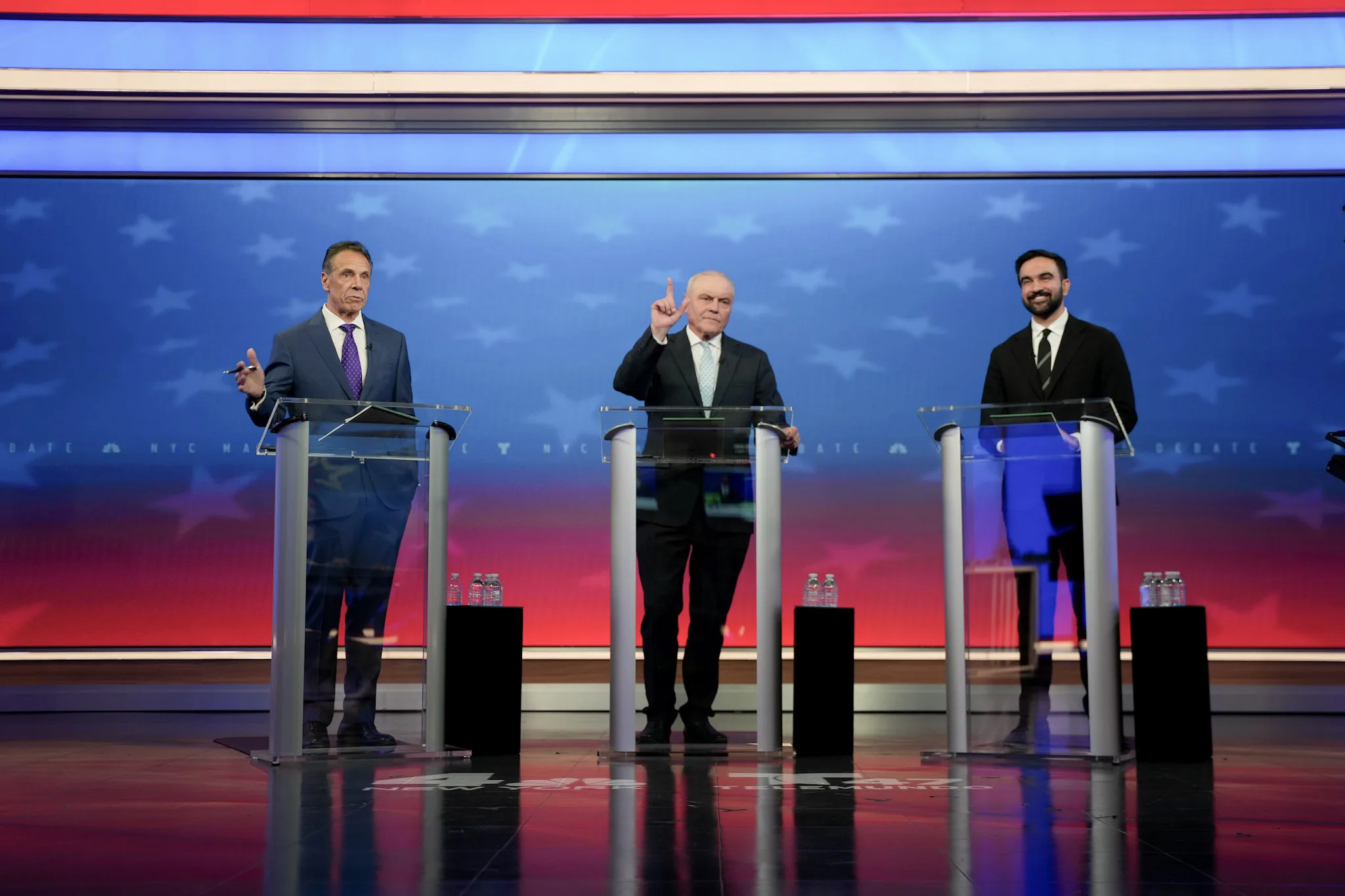


Starting Saturday, Oct. 25, New Yorkers will begin casting their ballots for a new mayor. Those running for New York City’s top job include: Democratic frontrunner, State Assemblymember Zohran Mamdani; Independent candidate and former Governor Andrew Cuomo, and Republican candidate Curtis Sliwa.
Cuomo, for his part, is running on a platform of old establishment stability, touting his gubernatorial record and prior head-to-heads with President Donald Trump as key strengths.
Mamdani, a bright upstart whose lack of executive leadership has been painted as a liability by his opponents, is running on a platform of change, emphasizing bold policies meant to speak to those who are fed up with the city’s broken systems.
Meanwhile, Sliwa, who made a name for himself as the creator of the Guardian Angels — a vigilante-style policing group that rose to prominence during the 1980s — is the Republican nominee running on a promise of law and order.

From issues like housing and affordability, to public safety, employment and immigration enforcement, here’s how the mayoral hopefuls stack up on the policies that matter most to New York’s immigrant communities.
Immigration Enforcement
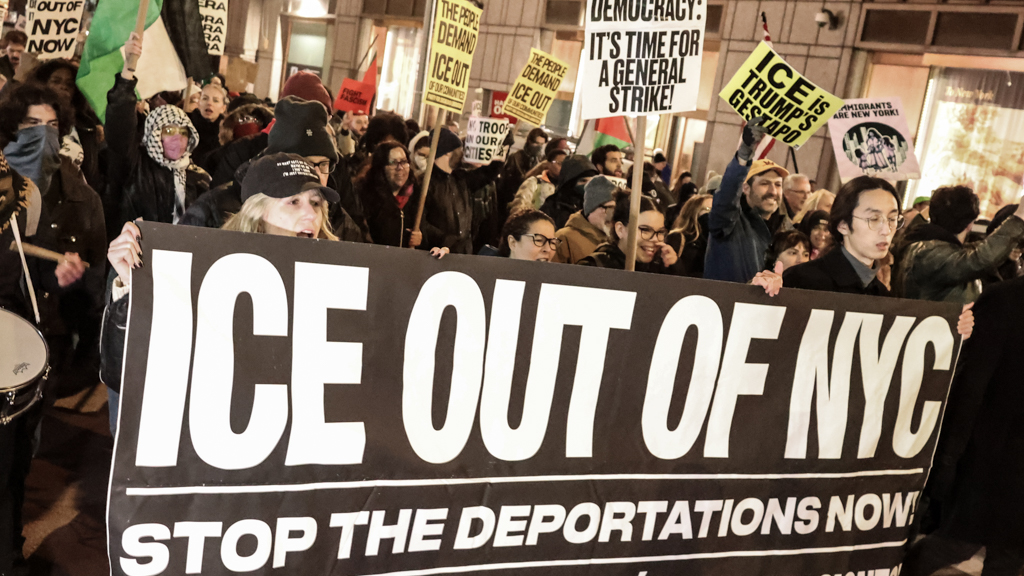
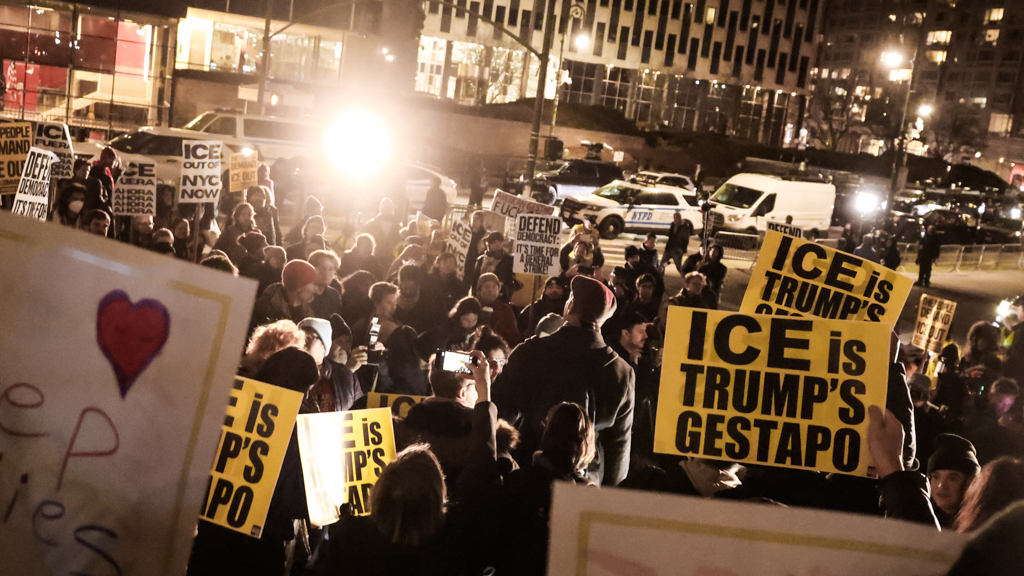
Against the backdrop of immigration crackdowns and military troop deployments in Democratic-led cities like Los Angeles, Washington D.C., and Chicago, the next mayor of New York City will likely have to grapple with increasingly invasive immigration enforcement measures. In New York City, ICE arrests accelerated over the summer as federal agents began targeting immigrants appearing for their case hearings and immigration check-ins at federal courthouses.
An analysis shows ICE arrests jumped 46% this May compared to the same time last year and, in June, there were 495 ICE arrests — more than twice than June of last year.
As a sanctuary city, New York’s detainer laws limit how the Department of Corrections (DOC) and the NYPD can respond to requests to transfer detainees by ICE (the DOC transferred 108 people into ICE custody between 2017 and 2023).
Advocates have pushed for strengthening the city’s sanctuary laws through legislation like Intro-184 and 185, which would close the legal gaps to prevent further collusion between local law enforcement with federal agents, and Intro 158, which would give families of detainees victimized by local police cooperating with ICE a legal pathway to sue.
“It would not necessarily reverse anything that has happened in that person’s immigration proceedings,” says Zach Ahmad, a senior counsel of the NYCLU, of the latter bill. “But it would provide them and their families some opportunity for remedy, and provide a deterrent effect for city agencies.”
Another safety concern is protecting immigrant residents’ sensitive personal data which sources noted is at risk of being surveilled by and shared to federal authorities. This is a safety risk for any noncitizen resident whose data may be kept by city agencies or by private entities such as companies employing immigrants that could then be shared without their consent. “You have, for instance, companies like Uber, GrubHub, that have enormous amounts of personal worker information,” says Guallpa of the WJP. “How do we protect that these companies are not collaborating with ICE?”
Here’s what the candidates suggest: On ICE, Cuomo wants to ensure legal support for immigrants with ongoing cases and stop ICE from performing non-immigration operations in the city, but suggests he would allow cooperation between ICE and local police for immigration-related enforcement. Sliwa, meanwhile, has made it clear he supports ICE enforcement completely unless they overstep into NYPD’s operations. But Mamdani wants to stop local authorities from cooperating with ICE altogether and increase city funding for legal resources to support targeted immigrants.
Andrew Cuomo’s proposal:
- Assign a lawyer to every immigrant undergoing review by the federal government
- Boost legal protections under the city
- Demand ICE agents unmask while operating in the city
- Allow coordination between local enforcement and immigration enforcement but will halt non-immigration enforcement by ICE by deploying NYPD forces
Zohran Mamdani’s proposal:
- ‘Trump-proof’ the city: get ICE out of all city sites and facilities and end any collaborations with federal government
- Add $165 million in funding to New York City’s legal support and defense services for immigrants
- Expand existing defense programs like the Rapid Response Legal Collaborative and the New York Immigrant Family Unit program
- Protect immigrant residents’ sensitive data from access by other jurisdictions
Curtis Sliwa’s proposal:
- No explicit proposals
- On cooperating with Trump: “If you try to get tough with Trump, the only people who will suffer are the people of New York City.”
- Allow ICE to perform immigration enforcement but not quality-of-life policing in the city
Housing and Affordability
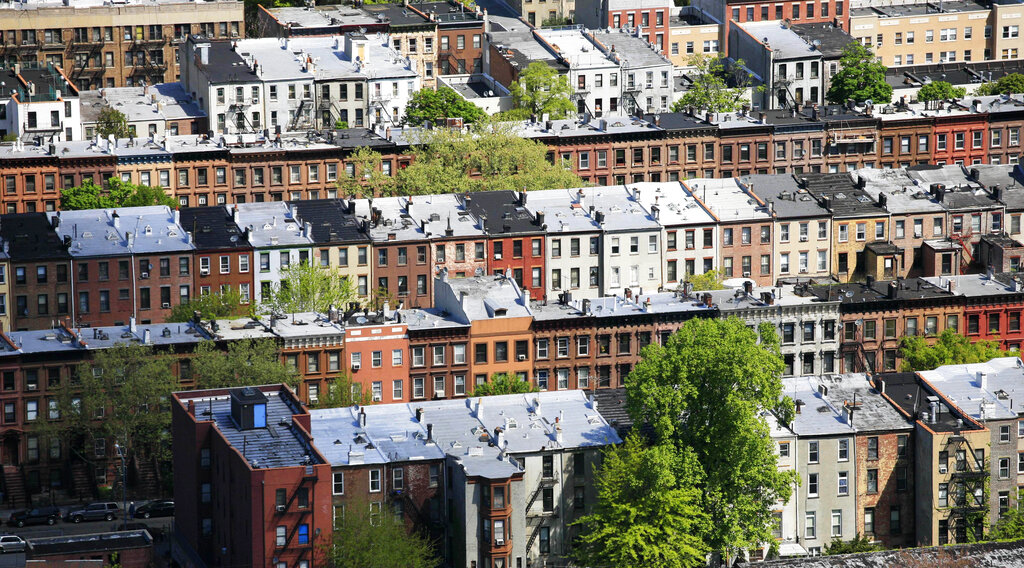
New York City is home to 8.4 million people. But making sure that residents have secure housing — and can actually afford it — has become increasingly difficult with the city’s dire housing shortage. Despite 1.2 million jobs created in New York in the past decade, only 400,000 housing units have been built within the same timeframe.
Additionally, nearly 70% of New York City households rent with a majority of those paying more than 30% of their income on rent, a percent considered “rent-burdened” as defined by city officials. Rising housing costs are also a growing concern for the city’s immigrants who experience rent burden at a higher rate compared to U.S.-born New Yorkers (44% compared to 40%). For immigrants, these high housing costs are often compounded by issues of crowded housing and poor or unmaintained housing conditions, such as heat and pest problems.
Advocates say the city can significantly alleviate the housing crisis by increasing the housing supply — an estimated 560,000 additional housing units are needed by 2030 to bridge the city’s housing gap — through tax incentives for developers and homeowners and aggressive housing legislation as it did at the tail end of last year.
Here’s what the candidates suggest. To increase housing and affordability in the city, Cuomo wants to empower NYC’s Housing Authority (NYCHA) and fortify programs that are already helping tenants as well as strengthen collaboration with the state. Sliwa wants to convert underused sites for affordable housing and boost legal protections for homeowners and small landlords. Meanwhile, Mamdani plans to increase investments in housing affordability programs, the city’s housing and development agencies, and reform property tax laws.
Andrew Cuomo’s proposal:
- Work with state government and developers on property tax exemption programs like 485-x
- Partner with NYCHA to add new affordable housing
- Strengthen rental assistance programs like CityFHEPS
- Strengthen enforcement of legal protections for tenants against discriminatory landlords
- Empower NYCHA on creative solutions like land swaps and transfers of assistance
Zohran Mamdani’s proposal:
- Freeze rent for all stabilized tenants
- Add 200,000 new low-income housing units over 10 years
- Expand affordability programs like the Extremely-Low and Low-Income Affordability (ELLA) program
- Reform city’s property taxes and create new Office of Deed Theft Prevention for homeowners
- Fully fund and staff the city’s housing and development agencies
Curtis Sliwa’s proposal:
- Repeal existing City of Yes policy which regulates zoning rules for development
- Repeal existing legislation limiting landlords’ authority
- Restore 28,000 vacant rent-controlled units
- Provide tax breaks for senior citizen homeowners
- Convert underutilized commercial spaces into housing
Public Safety
Public safety is consistently listed as a top priority for New York City voters — and has proven to be especially true for immigrant communities. According to a 24-year analysis of NYC’s crime data, while the city as a whole saw fewer murders and other violent crimes, some of the city’s immigrant-heavy communities have seen a significant increase in major crimes and other categories of offenses.
Off the city’s streets, subway safety is another consistent concern for New Yorkers. Although violent incidents on the subway are broadly still quite rare, assault cases on the subway have tripled since 2009, with one assault happening every 740,000 rides (by comparison, shooting incidents on average happen about once every 190 million rides).
The Trump administration’s recent immigration crackdown has introduced another facet of fear and safety for immigrant New Yorkers. Earlier this year, the president rescinded a Biden-era memo prohibiting ICE from making arrests at “sensitive locations” such as shelters, churches, hospitals, and schools. “Just the presence of [ICE] law enforcement creates a chilling effect and it impacts all students that are attending the school,” says Mabel Tso, a senior strategist with the NYCLU’s Education Policy Center.
Also Read: NYC Election Guide: Dates, Registration, and Voting Info
At least five NYC public school students so far have been detained by ICE with at least one of the students confirmed deported by City Council members (all incidents occurred off campus). Tso says one way the incoming administration could strengthen protections against potential ICE activity in schools is by codifying the ICE protocol into the Chancellor’s regulations to reinforce the city’s sanctuary protections for students and by providing adequate Know Your Rights training for all school occupants.
“Whoever the incoming mayor shall be, they should reaffirm that all young people in New York have the right to attend school no matter what their immigration status is or what their family’s immigration status is,” says Tso.
Here’s what the candidates suggest. To make the city safer, Cuomo said he wants to increase the NYPD by 5000 officers—and then deploy those officers in immigrant-heavy neighborhoods. Sliwa has gone even further, suggesting that the city should increase the force by 7,000 police officers, and create specialized forces like Anti-Crime and the Anti-Gang units. Mamdani, however, has said he’d want to instead invest more resources in gun violence prevention initiatives and integrate mental health and outreach services into the city’s subway system.
Andrew Cuomo’s proposal:
- Add 5,000 officers to NYPD, increase police presence in heavy immigrant areas like Queens’ Roosevelt Avenue
- Develop precision policing plans to tailor NYPD policing to each community’s needs
- Crack down on quality of life crimes
- Strengthen the city’s power for involuntary commitment in cases involving individuals with severe mental illness
- Update the city’s surveillance and policing through more investments in technology
Zohran Mamdani’s proposal:
- Create new Department of Community Safety to oversee city operations for mental health and gun violence prevention
- Add community outreach workers in subway stations and convert vacant subway lots into medical services posts
- Invest in gun prevention resources by increasing funding for the city’s Crisis Management System by 275%
- Expand funding for existing anti-hate and anti-bias initiatives
- Hold routine symposiums across city agencies to expand public safety methods
Curtis Sliwa’s proposal:
- Add 7,000 officers to NYPD
- Expand specialized crime-fighting NYPD forces like the Anti-Crime and the Anti-Gang units
- Launch citywide crime education campaign including in immigrant-heavy communities
- Reinstate the NYPD’s Homeless Outreach Unit
- Reform the Professional Standards Bureau (PSB) to improve standards in local law enforcement
Job Security and Employment
The jobs market in New York City has been on a negative tilt over the past few years. By the summer of last year, the city’s unemployment rate was still at 5.2%, way above its record-low rate of 3.8 right before the pandemic. In the first half of 2025, private sector employers significantly cut hiring, and in the public sector it has also diminished. As of August, more than 17,000 full-time positions in New York City’s government were vacant — these public sector positions are scattered across departments from school aides to park rangers.
“We cannot talk about affordability without talking about jobs. Housing, transit, childcare — none of it is truly affordable without stable, well-paying work,” Gregory J. Morris, CEO of the New York City Employment and Training Coalition, said in a statement following the private sector jobs news.
Labor advocates like the NYCETC have called for more investment in developing New York’s workforce through means such as building better work pathways, particularly for young adults from underserved communities, as well as for improved training programs for municipal work.
Still, New York keeps running — and much of that can be attributed to the city’s immigrants.
One of the fastest-growing industries that employ immigrants operating daily in the city are app deliveries with an estimated 80,000 deliveristas traveling across the boroughs to deliver lunches, groceries, and even medicine, according to Ligia Guallpa, the executive director of the Worker’s Justice Project (WJP), which represents a coalition of delivery workers, construction crew, and cleaners. These jobs have become essential not just to New York City’s fabric but for the immigrant workers themselves.
“More immigrant New Yorkers are relying on gig work, which is temporary work, low wage work, and where there is more labor abuse as well,” says Guallpa.
Using mayoral powers to strengthen enforcement of worker protection laws that labor advocates are championing and ensuring that agencies like the Department of Consumer and Worker Protection are fully-funded by the city are ways the incoming administration could boost job security for immigrant New Yorkers, Guallpa says.
Beyond on-the-job protections, there is also the issue of gender pay equity that the incoming administration could address as more women immigrants are entering male-dominated jobs like construction work to make these sectors more adaptable for women workers.
Here’s what the candidates suggest. To boost the city’s economy and job growth, Cuomo plans to strengthen the city’s business profile through new investments and expand existing work development programs targeting marginalized communities. Sliwa, on the other hand, is focused on expanding the city’s tax break policies and investing in career pathway pipelines. Meanwhile, Mamdani wants to boost the economy from the bottom up by raising the minimum wage, strengthening protections for gig delivery workers, and making public college tuition free.
Andrew Cuomo’s proposal:
- Expand existing work development programs that support minority and women-owned businesses
- Revitalize central business areas through office-to-residential conversions
- Invest in emerging business sectors like artificial intelligence
- Expand vocational and technical education schools
- Boost existing programs like CUNY Reconnect
Zohran Mamdani’s proposal:
- Increase the city’s minimum wage to $30/hour by 2030
- Create new Mom & Pops Czar to streamline processes for small businesses
- Expand legal protections and resources for app delivery workers
- Strengthen licensing requirements for app delivery companies
- Increase investment in CUNY system, make CUNY tuition-free again
Curtis Sliwa’s proposal:
- Streamline licensing processes and remove excessive fines and fees
- Expand tax breaks for businesses bringing more than 100 new jobs to the city
- Streamline permits for law-abiding street vendors, increase public enforcement against unlicensed vendors
- Add new vocational high schools and training programs for digital-era jobs like video content production
- Facilitate public-private partnerships with local universities to create job pipelines
Early voting begins Saturday, Oct. 25, and will run through Sunday, Nov. 2. Election Day is on Tuesday, Nov. 4. To find your nearest polling site, click here.