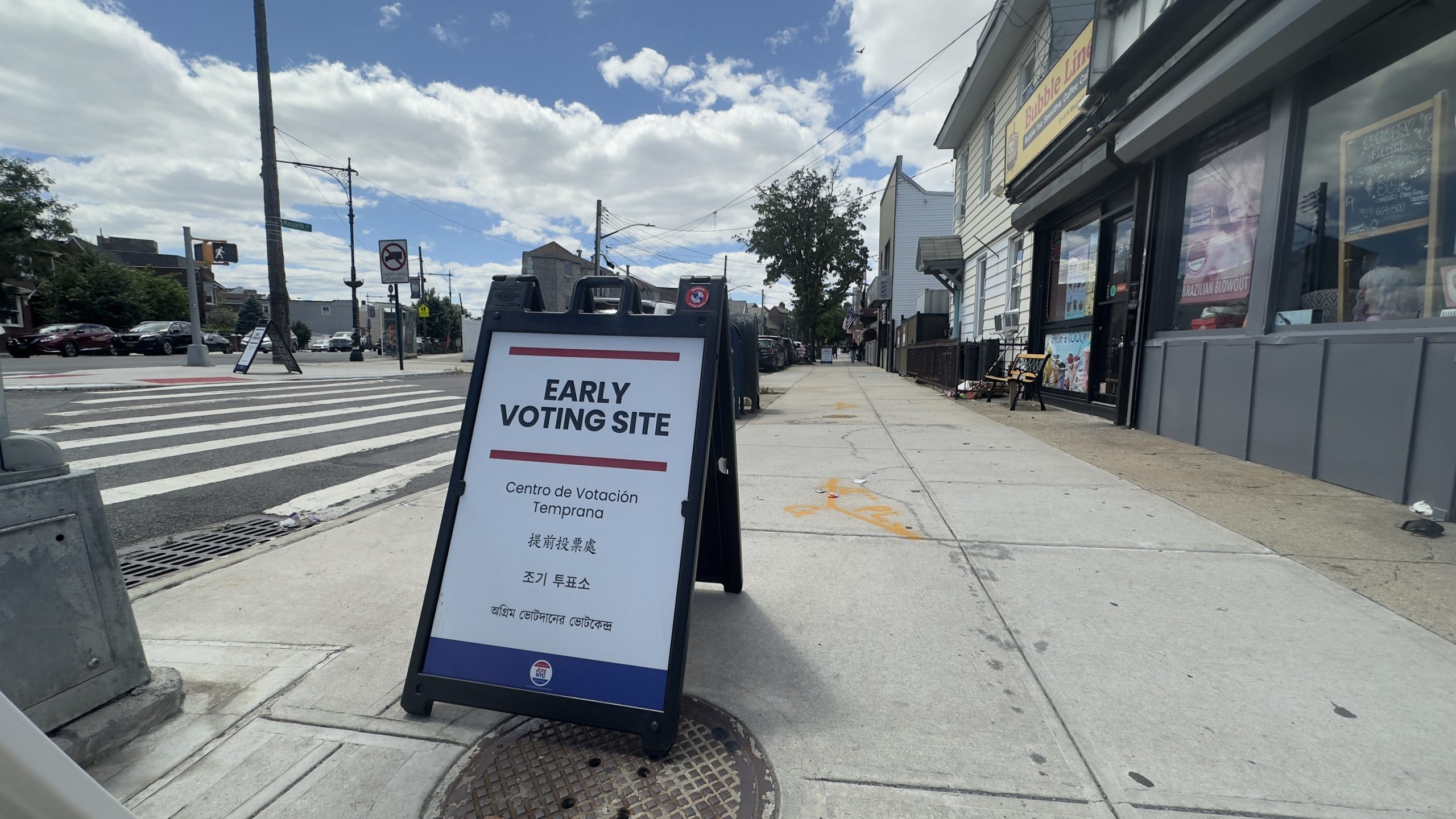


On a recent sunny morning in New York City, New Yorkers trickled into the polling site on Steinway Street in Astoria for early voting in this year’s primary election.
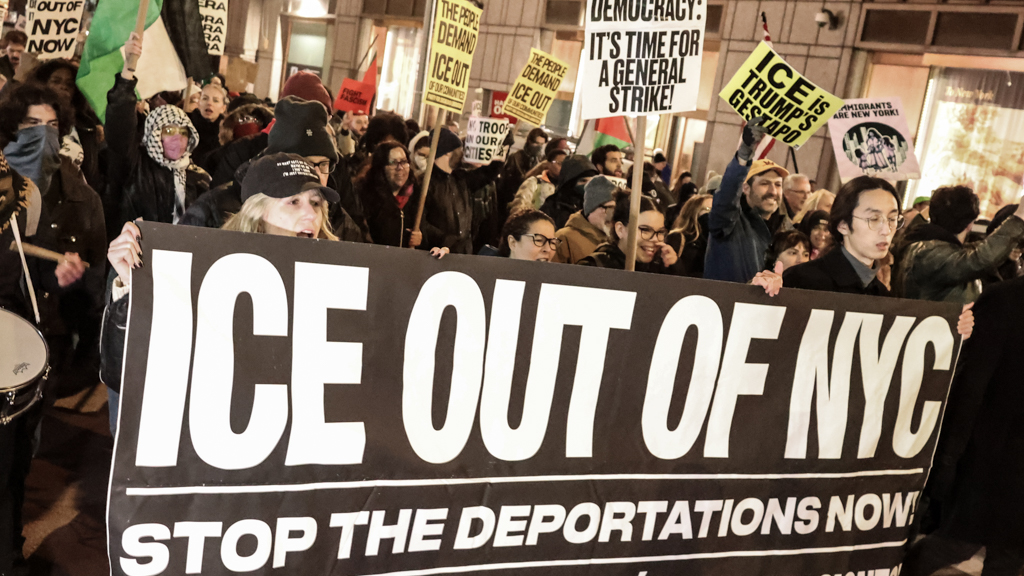
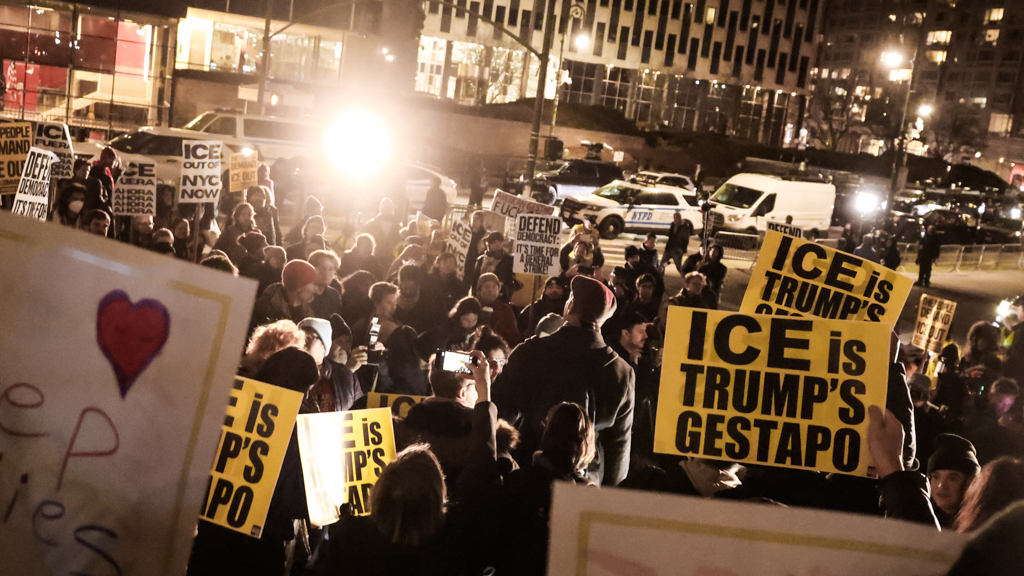
While many cited affordability, and housing as issues impacting their daily lives, another issue hovered in the background: immigration enforcement.
The Trump administration’s crackdown on immigrant communities has been a major campaign issue for some of the candidates on the ballot in Tuesday’s primary.
But in New York, home to more than 3 million immigrants who make up over a third of the city’s population, voting rights groups and some voters themselves have been paying close attention to the administration’s claims that it may deploy Immigration and Custom Enforcement (ICE) agents to voting sites. And Tuesday’s turnout will offer a glimpse into November’s general election, a pivotal moment that will decide control of Congress.

“People have fear in terms of going to poll sites, to be very honest, because they don’t know if they will have any interaction with other law enforcement agencies or not,” said Erum Hanif, CEO of APNA Brooklyn Community Center, which provides a range of services for immigrant communities in south Brooklyn.
The administration has, at times, been stoking that fear. In February, former Trump strategist Steve Bannon said on his podcast that he wanted ICE agents to surround polling places in November, a move legal experts say would be illegal under federal law. The White House press secretary Karoline Leavitt said in a briefing that same week that she hadn’t heard the president discuss any “formal plans” to station ICE outside polling locations. However, she added, “I can’t guarantee that an ICE agent won’t be around a polling location in November.” Afterward, the Department of Homeland Security denied any such plans, calling the idea “disinformation.”
Some advocates who work with immigrant groups have already seen an impact from the uncertainty. “Even those who are citizens, they are afraid if they meet them or if they get caught by ICE for any reason,” said Thekra El-Rowmeim, director of Family and Youth at Yemeni American Merchants Association. “If I’m going to know that ICE will be in any place, I’m going to have fears. Even if I’m a citizen. I don’t want to go through obstacles or problems.”
Also Read: Why Does the Congressional Primary Election Matter to Me?
Civil rights organisations like APNA and YAMA, alongside city agencies like NYC votes and New York City Civic Engagement Commission, have also been working to ensure residents understand their voting rights ahead of the primary election. Through “Know Your Rights” sessions, legal experts and community advocates educate voters on their rights at the polls, helping them cast their ballots confidently and without intimidation. The city has also made resources available for immigrant communities, including a dedicated webpage with guidance on navigating ICE enforcement and understanding legal protections.
When participating in early voting in Astoria last week, Hansol Choi, 34, who moved to the U.S. from South Korea as a child, said she fears the threats could silence the voices of people who are traditionally marginalized. “We are shaping our local policies, budgets, economies, who’s going to represent us in Congress at the state level and at the federal level, and I want to make sure that we get our power back,” said Choi, a director of high school programming. “The threat even of just the presence of ICE is enough for a lot of people to be fearful.”
Only U.S. citizens who meet New York’s voter eligibility requirements are permitted to vote. In March 2025, New York’s highest court struck down a New York City law that would have allowed certain noncitizens, including lawful permanent residents and individuals authorized to work in the United States, to vote in municipal elections.
The proposed measure was estimated to extend voting eligibility to more than 800,000 noncitizen residents in local elections. Beyond that struck-down law, advocates also point to protections established under the New York Voting Rights Act, a landmark law enacted in 2022 that expanded safeguards against voter suppression and discrimination, strengthened language-access requirements, and provided additional protections for underrepresented communities.
Kimani Howeo, 34, lives in the Bedford-Stuyvesant neighborhood of Brooklyn, and is a child of immigrants. He said he isn’t convinced foreign-born voters will stay away from the polls in New York City.
“I don’t think it’s going to scare them away because, I mean, if you live in this city, you’re pretty much not scared of anything,” he said. “So I don’t think it’s going to stop people from going and voting for the right person.
Anusha Arif, 36, who was born in the U.S., but was raised in Bangladesh before returning, said there is “real truth” to New Yorkers feeling unsafe amid the immigration crackdown and rhetoric around elections. Still, she hopes immigrants show up at the polls.
“But those who are documented should come forward,” she said. “I know it’s not as simple as that. People who are documented have still faced repercussions […] and if that’s the fight that I have to fight, I’ll take it when it comes.”