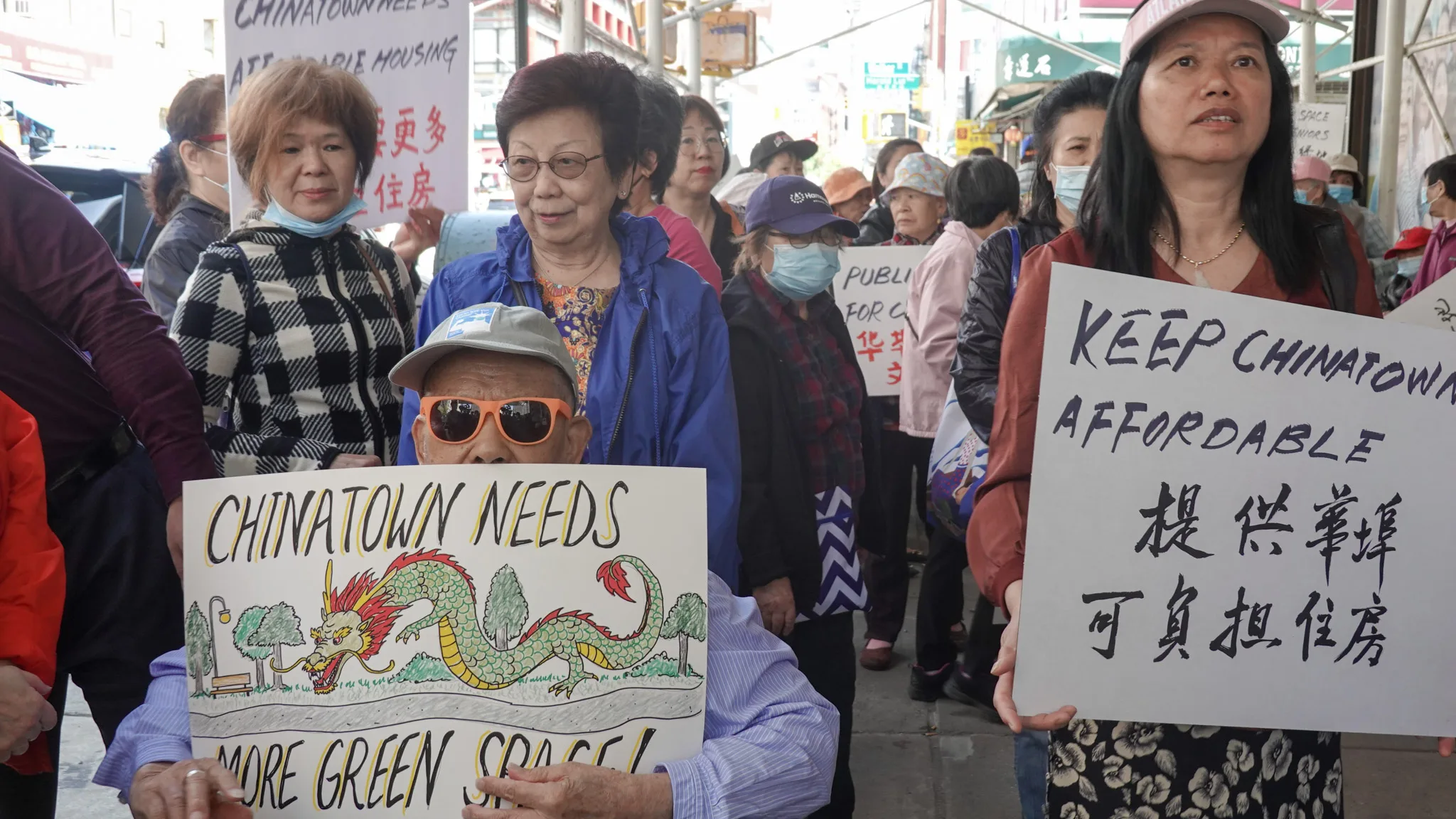


For the past 14 years, New York City has been the backdrop to every major adult milestone in Sam Wat’s life. After arriving in the city from Hong Kong in 2013, he earned a master’s degree, met his wife, got married, and bought a home on Staten Island. But recently, he’s been wondering whether it’s time to leave. He points to one issue: affordability.
“The cost of living in NYC is too high,” Wat told Documented in Mandarin. “Everything has gotten more expensive: utilities, groceries, you name it.”
Wat and his wife have been discussing moving out of NYC — something that many other Asian American and Pacific Islander (AAPI) adults like him have considered, according to a new survey by The Asian American Foundation (TAAF).

The survey of 1,400 respondents found that 55% of AAPI adults in New York City have thought about leaving the city because of the high cost of living. The survey, published last month, also raised growing concerns about affordability.
Half of respondents said they had struggled to afford essentials like food, housing, or utilities over the last 12 months, with 59% experiencing challenges with saving money, according to the survey. This concern was particularly pronounced among Bangladeshi New Yorkers: 55% said they faced challenges finding safe and stable housing. Nearly half of AAPI New Yorkers said they had trouble finding work or educational advancement.
“Opportunity really matters if you can afford to live here,” said Norman Chen, chief executive officer of The Asian American Foundation. “Because of the affordability issues and the fact that 6 in 10 AAPIs struggle to save toward their financial future, it really makes it difficult.”
Wat said he and his wife have considered moving to Texas, which in addition to a lower cost of living has no state or local income tax. Several families they know have already relocated there, he said, drawn by lower housing costs and a more affordable lifestyle.
Even with the challenges, AAPI New Yorkers continue to feel deeply connected to the city: 77% said they feel a sense of belonging in New York City, and 76% said they feel connected to their borough.
The survey’s findings are part of State of AAPIs, a new research series examining the experiences of AAPI communities nationally and in major metropolitan areas, beginning with New York City. Researchers surveyed 1,400 AAPI adults between Feb. 12 and March 11 across the city’s five boroughs. Surveys were conducted in English, Chinese, Korean and Bengali about public safety, economic insecurity, and the respondents’ sense of belonging.
The affordability concerns were particularly pronounced among those aged 40 to 49, Manhattan residents and respondents with annual household incomes below $49,000, according to the report.
“This relates to rising housing costs, the need for family-sustaining wages, and the cost of operating a small business,” Chen said. “It’s concerning because people do not feel they’re able to manage these affordability challenges.”
For Wat, leaving would mean losing the friendships, professional network and community he has spent more than a decade building. Still, he said, the financial pressure is becoming harder to ignore.
One of Wat’s friends moved to Texas two years ago after landing a job that matched his salary in New York. “He sold his house on Staten Island and moved there with his wife and two children,” Wat said. “With the same salary he had in NYC, they have a much better quality of life.”
Peter Z., who asked that only part of his name be used for privacy reasons, left his one-bedroom apartment in Rego Park, Queens, for Jersey City during the pandemic in early 2020.
An immigrant from China, Peter Z. cited public safety and affordability as reasons for moving. “With the same amount of rent, you can get a much newer and nicer apartment in Jersey City than in Queens,” he said.
Back in 2020, he was paying $1,500 a month for an about 500-square-foot apartment in Rego Park. But he said the building suffered from poor maintenance and persistent pest problems.
When he moved to Jersey City, he paid $2,600 a month for an apartment of more than 800 square feet. Although the rent is higher, he splits the cost with his partner and said the move has brought several advantages: a shorter commute to his office in Manhattan, a newer building with better amenities, no pest issues, and an included parking space.
“It’s a much better quality of life,” he said.
But even Jersey City has become more expensive as more New Yorkers have relocated there. “The community is facing gentrification and becoming less affordable,” he said.
The survey also revealed sharp differences across boroughs. When asked to rate “the job done by local law enforcement in keeping residents safe,” “the responsiveness of local government to residents’ needs,” and “residents’ ability to achieve economic stability,” respondents’ answers were starkly different depending on the borough they lived in.
Across all three measures, AAPI residents in the Bronx reported the lowest levels of confidence in local police, city government, and their own financial stability. Meanwhile, 58% of Staten Island respondents reported adverse treatment and physical attacks, the highest rate among five boroughs, while also expressing the greatest trust in local police.
“AAPIs are too often treated as a monolith and a Model Minority,” Chen said. “This research provides insight into the genuine hardships and real concerns for millions of people.”
He said policymakers should invest in public infrastructure, strengthen ties between government and immigrant communities, and expand support for economic mobility and small businesses.
“Despite the costs, despite the language challenges and despite the barriers to government engagement, if we can get resources to these community members and organizations, they can thrive,” Chen said.