

Aby was sitting at her work desk when she received a ping on her phone from a contact at Make the Road New York. After months of anticipation, the Supreme Court had upheld her 1-year-old son’s birthright to U.S. citizenship.
The Brooklynite was overcome with excitement and happy relief, she said.
“This is amazing, because as a DACA recipient I know the struggles of what it is to be undocumented and I did not want that future for any of my children,” she told Documented.

Aby was months into her pregnancy when President Donald Trump announced his executive order seeking to end citizenship rights for children like hers.
“They deserve to be here,” she said. “They deserve to have all the freedom and rights as a U.S. citizen, regardless of their parents’ backgrounds.”
I know the struggles of what it is to be undocumented and I did not want that future for any of my children.”
—Aby, immigrant New Yorker and mother of three
Aby, born in Mexico, requested to use her first name only due to safety concerns surrounding her immigration status.
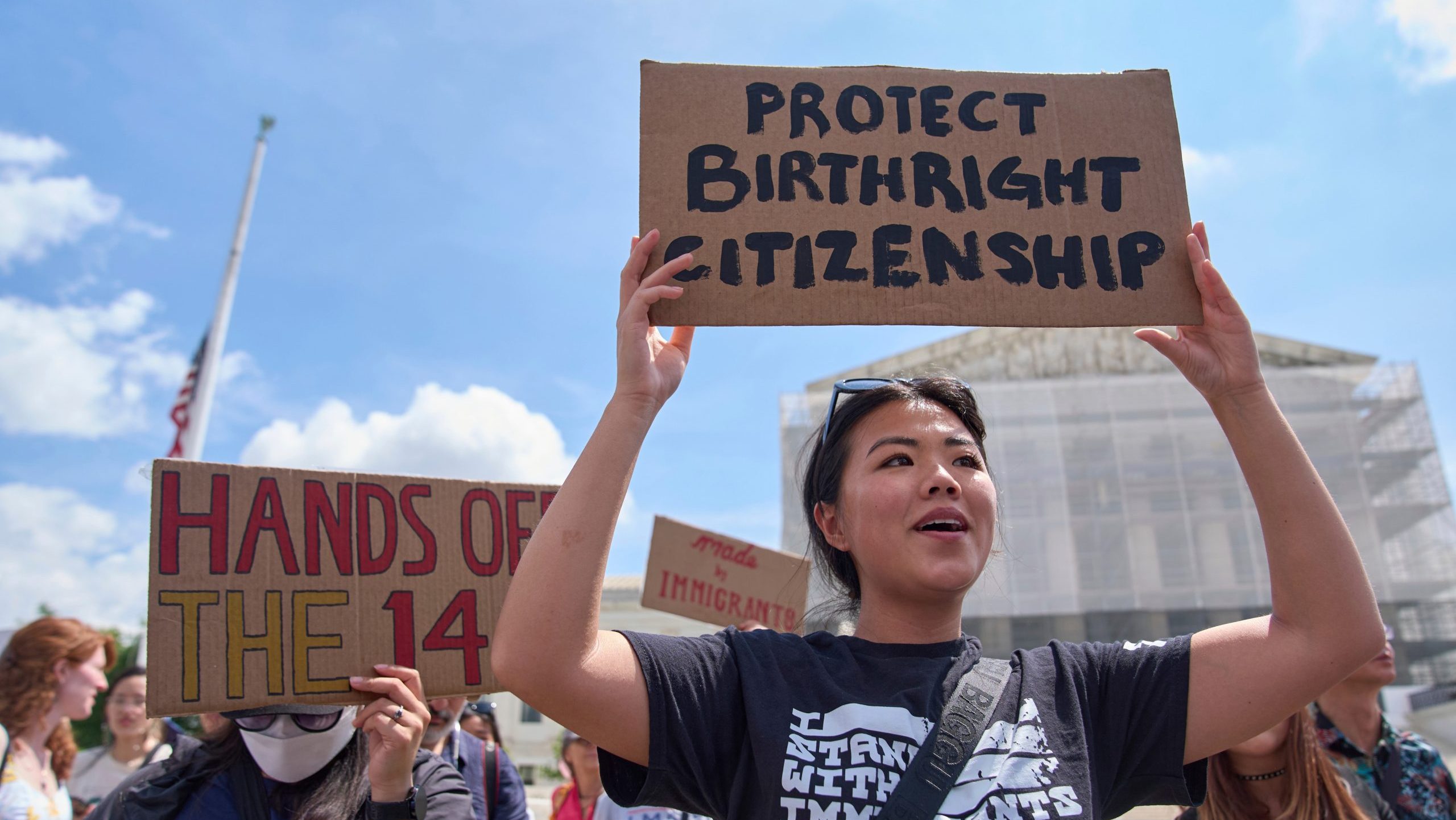
The Supreme Court upheld birthright citizenship in a 6-3 decision on Tuesday, quashing President Trump’s efforts to strip the right of citizenship from the children of immigrants.
The ruling, made on constitutional grounds, ensures that nearly anyone born in the United States will receive U.S. citizenship. Chief Justice John Roberts wrote the majority opinion and read it from the bench. He was joined in the opinion by five other judges across ideological lines.
Yaritza Mendez, deputy director of Make the Road New York, called the decision a historic win.
“In a city or in a state where we are constantly bombarded by ICE, and oftentimes questioned a lot whether or not we belong, this is a reaffirmation that this is our country, regardless of our immigration status … and our color,” she said. “Folks that are born in New York State or in the United States of undocumented or mixed status families no longer have to question if this country is accepting them for their full being, regardless of their family history.”
The History of the 14th Amendment
On Trump’s very first day of his second term in office, he signed an executive order seeking to limit citizenship to children of U.S. citizens and permanent residents. In doing so he threw roughly 255,000 children a year into limbo — the approximate number of children per year born to parents in the U.S. who would not meet the requirements for birthright citizenship under the executive order, according to the Migration Policy Institute.
The 14th Amendment to the Constitution, ratified by congress in 1868, states that “all persons born or naturalized in the United States, and subject to the jurisdiction thereof, are citizens of the United States and of the state wherein they reside.”
Since then, the Supreme Court has affirmed birthright citizenship — most notably, in the case United States v. Wong Kim Ark in 1898, which established the precedent that the citizenship clause was meant for anyone born on U.S. soil. At one time, enslaved people and Indigenous people who were born on reservations were not afforded citizenship.
Norman Wong, the great-grandson of Wong Kim Ark, told Documented last year that a country without birthright citizenship is “not the future I want for my children or grandchildren.”
“We have to settle this nonsense now so the future can be bright,” he said. “Because right now, the future doesn’t look good for America.”
In his order, President Trump argued that “the Fourteenth Amendment has never been interpreted to extend citizenship universally to everyone born within the United States,” and he was immediately challenged.
Within days, immigrants rights advocates filed multiple lawsuits across the U.S. calling Trump’s order unconstitutional. In case after case judges began siding with plaintiffs and blocked the order from taking effect as the suits wound their way through the courts.
Among them was a nationwide class-action suit filed in June by the American Civil Liberties Union, Barbara v. Trump — made on the behalf of expectant parents from Honduras, Taiwan and Brazil — which landed in front of the Supreme Court after the Trump administration asked the court to review the case.
As oral arguments were made and the case was being deliberated, immigrant families were left waiting to know whether their children would bear the burden they had carried as immigrants without permanent status in this country. Earlier this month, one mother, M.C., told Documented that she even worried her child would become stateless.
“If the parents are undocumented and are deported, the baby would end up with them in a country where they were not born and without any document proving where the baby was born,” she said.
What does this mean?
Tuesday’s decision dealt a decisive blow to Trump’s efforts to strip citizenship status from children born of immigrant parents on U.S. soil. It also gave a moment of relief and clarity to expectant mothers and fathers.
“Citizenship, then and now, was the right to have rights — to freely participate in our political community,” wrote Chief Justice John Roberts. “The Framers of the Fourteenth Amendment extended that promise to ‘every free-born person in this land.’ We keep that promise today.”
“Citizenship, then and now, was the right to have rights — to freely participate in our political community. The Framers of the Fourteenth Amendment extended that promise to ‘every free-born person in this land.’ We keep that promise today.”
—Supreme Court Chief Justice John Roberts
Roberts was joined in the opinion by three liberal justices as well as two Trump appointees — Justices Amy Coney Barret and Brett Kavanaugh — though Kavanaugh disagreed insofar that he would have struck the executive order down based on statutory, not constitutional grounds.
In his dissent, Justice Samuel Alito called the decision a “serious mistake” and “one of the most important decisions in the history of the Court,” noting that he believes the Fourteenth Amendment only confers citizenship to children who “at birth, owe allegiance solely to this country.”
During oral arguments in April, the Trump administration claimed that conferring citizenship onto children of immigrants who do not have permanent legal status rewarded what U.S. Solicitor General D. John Sauer called “illegal immigration.”
Tuesday’s ruling maintains an “easily administrable bright line rule,” said Gabriel Chin, a professor of Law at the University of California Davis and co-author of an amicus brief in the case. The opposite decision, he said, would have thrown the legal community into uncertainty about who — even retroactively — could call themselves a citizen.
Mendez of Make the Road called the decision a historic moment in a year of other wins, such as the state’s newest sanctuary laws.
“Being able to protect more New Yorkers at the state level, and passing legislations like ending 287(g), and banning the masking of agents that have brought a lot of fear and uncertainty to mixed status communities across across the state, [the Supreme Court decision] is more than anything a reaffirmation of all those pieces.”
As for the upcoming Fourth of July weekend, Aby said that she plans to spend time with her family — not all of whom are “into the whole politics stuff,” she told Documented. However, she plans to share the important news because no child, parent or human should be left to wonder if they belong, she said.
Specifically, her message to other immigrant New Yorkers, is a simple one: you’re not alone.
“This is just one of many victories that we’re pushing for,” said Aby. “Don’t be afraid, be united and keep pushing…If this is one win, how many more can we accomplish?”